
Self-Counsel Press
Livres Canada Books
View Rights Portal

Critical theory and Independent Living explores intersections between contemporary critical theory and disabled people's struggle for self-determination. The book highlights the affinities between the Independent Living movement and studies of epistemic injustice, biopower, and psychopower. It discusses in depth the activists' critical engagement with welfare-state paternalism, neoliberal marketisation, and familialism. This helps develop a pioneering comparison between various welfare regimes grounded in Independent Living advocacy. The book draws on the activism of disabled people from the European Network on Independent Living (ENIL) by developing case studies of the ENIL's campaigning for deinstitutionalisation and personal assistance. It is argued that this work helps rethink independence as a form of interdependence, and that this reframing is pivotal for critical theorising in the twenty-first century.
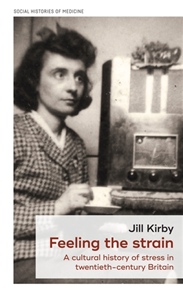
Examining the popular discourse of nerves and stress, this book provides a historical account of how ordinary Britons understood, explained and coped with the pressures and strains of daily life during the twentieth century. It traces the popular, vernacular discourse of stress, illuminating not just how stress was known, but the ways in which that knowledge was produced. Taking a cultural approach, the book focuses on contemporary popular understandings, revealing continuity of ideas about work, mental health, status, gender and individual weakness, as well as the changing socio-economic contexts that enabled stress to become a ubiquitous condition of everyday life by the end of the century. With accounts from sufferers, families and colleagues it also offers insight into self-help literature, the meanings of work and changing dynamics of domestic life, delivering a complementary perspective to medical histories of stress.
 Trusted Partner


Minor illness or a serious disease ? Through systematic questioning, pharmacists or pharmaceutical technicians can establish the possibilities and limits of self-medication. Each monograph on the over 100 indications for self-medication includes: - A flow chart: basis for the structured consultation - A brief description: additional information about the symptoms - Recommended medications/groups of medications: the treatment options - Additional advice: individual supportive and alternative treatment options - Specific knowledge for advising particular patient groups: e.g. pregnant women, children and senior citizens New for the 7th edition: Monographs that explore the possibilities of supportive self-medication for indications such as hypertension and diabetes. Information about what to do in the case of poisoning, scabies or inflammation of the nail bed (paronychia) is also provided! The details about active substances, products and additional tips have been updated. The pocket guide has long been the standard for providing advice on self-medication – a “must-have”!
Trusted Partner


Because of their problems with social interaction it is often presumed that people with an autism spectrum disorder (ASD) cannot have romantic relationships. This is not true; adults with ASD are certainly capable of having long-term relationships. Although some partners are satisfied with their relationship, there are also some who experience problems caused by ASD. Both, the partner with, as the partner without ASD, can feel unhappy and misunderstood in the relationship. This is where this book can be of help. This unique 10 step psychoeducational program helps women, whose partner suffers from an autism spectrum disorder, to understand the condition as well as their partner better. This book also offers tips for daily life that can help improve the relationship between the partners and giving the women more time to herself. Target Group: partners of people with autism, therapists.
Trusted Partner

 Trusted Partner

The basis for successful advice is having a sound knowledge of the effect and application of medicines, but also an instinct for the individual needs and characteristics of the person asking for your help. This skill can be trained! Entertaining explanations and numerous case examples taken from everyday pharmacy practice help with this. They show how pharmacy staff can react empathetically, avoid misunderstandings, and manage delicate situations with confidence. The 5th edition has become more colourful! This applies not only to the illustrations, but also to the team and customers of our model pharmacy. A personality model with distinctive colours representing the different characters promises exciting insights. Good communication creates satisfied customers who want to come back again and again!
Trusted Partner

Cough, hay fever or herpes are at least as troublesome during pregnancy and breast-feeding as under normal “conditions” - and yet everything is different. Physiological changes to the body in pregnancy and lactation, together with the vulnerability of the unborn baby or infant, set particular requirements when selecting the correct, safe medication. Especially in the area of self-medication, the needs of pregnant and breast-feeding women for information are great and call for competent advice! This comprehensive handbook is the key: General information about pharmacotherapy, supplementary measures, vaccinations, questions about diet and infections in pregnancy and lactation creates a broad knowledge base. The core feature of the book are the traffic light tables, with precise recommendations for medicinal products for all types of treatment. All the important indications for selfmedication in pregnancy and lactation are listed and the tables are supported by detailed explanations of the individual assessments. The sections “Advice from medical specialists” are particularly useful, with additional tips from gynaecologists and “Footnotes” with relevant information on the use of prescription- only medicines – and as the ultimate practical tool: the enclosed sales counter leaflets with all traffic light tables to enable quick reference for first-class advice!
Trusted Partner

Working at the sales counter is never dull: Every day, people come to you with the widest possible variety of questions and expect good advice. It does not matter whether it is about self-medication for adults, pregnant women, children, about aids and appliances, vegan diets or alternative medicine: Whatever your customer’s concerns – you always offer well-founded counselling. Based on real-life counselling situations routinely encountered in a pharmacy, the authors – all pharmacists with experience of retail sales – provide important information for such conversations and suggest helpful questions to ask when patients seek advice. Become a sales counter expert in no time!
Trusted Partner
An illuminating look at the world of cleanfluencers that asks why the burden of housework still falls on women. Housework is good for you. Housework sparks joy. Housework is beautiful. Housework is glamorous. Housework is key to a happy family. Housework shows that you care. Housework is women's work. Social media is flooded with images of the perfect home. TikTok and Instagram 'cleanfluencers' produce endless photos and videos of women cleaning, tidying and putting things right. Figures such as Marie Kondo and Mrs Hinch have placed housework, with its promise of a life of love and contentment, at the centre of self-care and positive thinking. And yet housework remains one of the world's most unequal institutions. Women, especially poorer women and women of colour, do most low-paid and unpaid domestic labour. In The return of the housewife, Emma Casey asks why these inequalities matter and why they persist after a century of dramatic advances in women's rights. She offers a powerful call to challenge the prevailing myths around housework and the 'naturally competent' woman homemaker.
Trusted Partner

People with dementia experience their condition as a big change in which, for example, new events are not linked to existing experiences and wishes, thoughts, and actions can no longer be connected to each other. This kind of experience of the self, due to the intergative function of the brainbeing temporarily or permanently lost, is called dissociative self-experience. Based on this understanding of dementia, the author develops an approach to effectively understand and support people with dementia in everyday activities. Typical everyday situations and behaviours are presented and reflected on in a practical context.
Trusted Partner

While there is increasing interest in the lives of medieval women, the documentary evidence for their activities remains little known. This book provides a collection of sources for an important and influential group of women in medieval England, and examines changes in their role and activities between 1066 and 1500. For most noble and gentry-women, early marriage led to responsibilities for family and household, and, in the absence of their husbands, for the family estates and retainers. Widowhood enabled them to take control of their affairs and to play an independent part in the local community and sometimes further afield. Although many women's lives followed a conventional pattern, great variety existed within family relationships, and individuality can also be seen in religious practices and patronage. Piety could take a number of different forms, whether a woman became a nun, a vowess or a noted philanthropist and benefactor to religious institutions. This volume provides a broad-ranging and accessible coverage of the role of noble women in medieval society. It highlights the significant role played by these women within their families, households, estates and communities.
Trusted Partner
Trusted Partner
Trusted Partner
In the decades following the Second World War, mothers' experiences of loneliness, boredom and unhappiness were increasingly widely acknowledged. The language of postnatal depression came to be attached to this, but mothers organised around their own discontent in ways that challenged the medical model. Unhappy mothers draws attention to the social, political, and professional contexts within which knowledge about unhappy mothering developed. Drawing upon an extensive range of archival material, the book addresses themes around expertise, feminism, and the value given to lived experience.
Trusted Partner

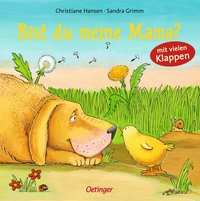
In "Bist du meine Mama?" begibt sich ein frisch geschlüpftes Küken auf die Suche nach seiner Mutter und trifft dabei auf verschiedene Tiere des Bauernhofs, die ihm bei der Suche helfen. Durch das Öffnen von Klappen entdecken die kleinen Leserinnen und Leser gemeinsam mit dem Küken, welche Tiere sich dahinter verbergen, und lernen deren Laute kennen. Diese liebevoll gereimte Geschichte fördert nicht nur die Sprachentwicklung, sondern auch die Feinmotorik durch das interaktive Element der Klappen. Die Suche endet schließlich erfolgreich, und das Küken findet seine Mama. "Bist du meine Mama?" ist ein entzückendes Buch für Kinder ab 18 Monaten, das zum Mitsprechen, Mitraten und Entdecken einlädt. Interaktives Erlebnis: Dank zahlreicher Klappen zum Öffnen wird die Neugier der Kinder geweckt und die Feinmotorik spielerisch gefördert. Tierlaute lernen: Das Buch bietet eine wunderbare Möglichkeit, Kindern die Laute verschiedener Bauernhoftiere näherzubringen und somit ihr Verständnis für die Tierwelt zu erweitern. Sprachförderung: Die gereimte Erzählweise und das wiederholende Element "Bist du meine Mama?" unterstützen das Sprachverständnis und regen zum Mitsprechen an. Liebevolle Illustrationen: Die detailreichen und kindgerechten Bilder laden zum Betrachten und Entdecken ein und machen das Buch zu einem visuellen Vergnügen. Emotionaler Mehrwert: Die Geschichte vermittelt Werte wie Hilfsbereitschaft und Zusammenhalt und stärkt das Verständnis für familiäre Bindungen. Gelistet bei Antolin.
Trusted Partner
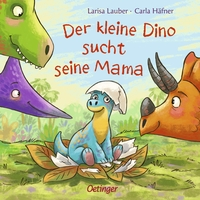
Ein Dino-Liebling für die Kleinsten. Krick, krack. Der kleine Brachiosaurus schlüpft aus seinem Ei. Nanu, wo ist denn nur seine Mama? Sie ist nirgendwo zu sehen. Der kleine Dino folgt ihren Fußspuren und begegnet auf seinem Weg vielen anderen Dinos, doch keiner davon ist seine Mama. Da ertönt ein Rufen aus dem Wald und ein langer Hals erhebt sich aus den Blättern – Mama?
Trusted Partner
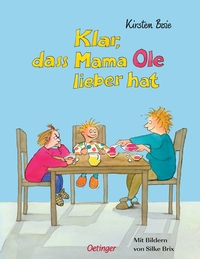
"Klar, dass Mama Anna/Ole lieber hat" von Kirsten Boie beleuchtet humorvoll und einfühlsam die alltäglichen Streitigkeiten und Rivalitäten zwischen Geschwistern aus beiden Perspektiven. Anna, fast sieben Jahre alt und Erstklässlerin, ist genervt von ihrem kleinen Bruder Ole, der noch nicht einmal vier ist und gerade erst in den Kindergarten gekommen ist. Sie empfindet ihn als ständige Quelle der Irritation, sei es durch das Essen ihrer Schokolade aus dem Adventskalender oder sein Drängen, bei ihren Spielen mitmachen zu dürfen, wobei sie glaubt, dass ihre Mutter stets Oles Seite ergreift. Ole hingegen fühlt sich von Anna ausgeschlossen, bekommt nie etwas von ihren Süßigkeiten ab und wird von der Mutter geschimpft, wenn er aus Frustration handgreiflich wird, sodass er überzeugt ist, dass seine Mutter Anna bevorzugt. Trotz dieser Konflikte zeigt Boie, dass Geschwister in Momenten der Angst und Unsicherheit auch Trost und Sicherheit im Beisammensein finden können, etwa wenn in der Dunkelheit "gefährliche Räuber" lauern, was die komplexe und letztlich liebevolle Beziehung zwischen Geschwistern unterstreicht. Fängt die realistischen Spannungen und Rivalitäten zwischen Geschwistern ein, wodurch es sich besonders für Familien mit mehreren Kindern eignet. Kirsten Boie beschreibt mit Humor und Verständnis die täglichen Herausforderungen im Geschwisteralltag, was das Buch sowohl amüsant als auch lehrreich macht. Beleuchtet die Geschichte aus beiden Blickwinkeln der Geschwister, wodurch Kinder lernen, Empathie für die Gefühle und Sichtweisen anderer zu entwickeln. Ideal für Geschwisterkinder, um Eifersucht zu thematisieren und den Liebesverlust der Eltern aus verschiedenen Perspektiven zu verstehen. Auch nach mehrmaligem Vorlesen bleibt die Geschichte interessant für Kinder und Erwachsene, dank der lebhaften Sprache und der detailreichen Handlungen. Für Kinder ab 4 Jahren ansprechend illustriert von Silke Brix.
Trusted Partner

Charles Dickens called his sister-in-law Georgina Hogarth his 'best and truest friend'. Georgina saw Dickens as much more than a friend. They lived together for twenty-eight years, during which time their relationship constantly changed. The sister of his wife Catherine, the sharp and witty Georgina moved into the Dickens home aged fifteen. What began as a father-daughter relationship blossomed into a genuine rapport, but their easy relations were fractured when Dickens had a mid-life crisis and determined to rid himself of Catherine. Georgina's refusal to leave Dickens and his desire for her to remain in his household led to rumours of an affair and even illegitimate children. He left her the equivalent of almost £1 million and all his personal papers in his will. Georgina's commitment to Dickens was unwavering but it is far from clear what he did to deserve such loyalty. There were several occasions when he misused her in order to protect his public reputation. Why did Georgina betray her once much-loved sister? Why did she fall out with her family and risk her reputation in order to stay with Dickens? And why did the Dickenses' daughter Katey say it was 'the greatest mistake ever' to invite a sister-in-law to live with a family?
Trusted Partner
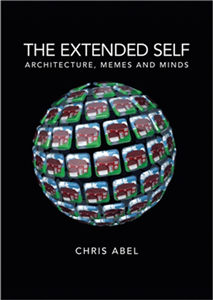
In his wide-ranging study of architecture and cultural evolution, Chris Abel argues that, despite progress in sustainable development and design, resistance to changing personal and social identities shaped by a technology-based and energy-hungry culture is impeding efforts to avert drastic climate change. The book traces the roots of that culture to the coevolution of Homo sapiens and technology, from the first use of tools as artificial extensions to the human body, to the motorized cities spreading around the world, whose uncontrolled effects are changing the planet itself. Advancing a new concept of the meme, called the 'technical meme,' as the primary agent of cognitive extension and technical embodiment, Abel proposes a theory of the 'extended self' encompassing material and spatial as well as psychological and social elements. Drawing upon research from philosophy, psychology and the neurosciences, the book presents a new approach to environmental and cultural studies that will appeal to a broad readership searching for insights into the origins of the crisis.
Trusted Partner

The Family of Love charts a successful love intrigue between the cash-strapped Gerardine, and Maria, the sequestered niece of the mercenary Doctor Glister. Their romance unfolds against the dissection of two citizen marriages, the Glisters' and the Purges'. Mistress Purge attends Familist meetings independently, arousing her husband's suspicions about her marital fidelity. Two libertines, Lipsalve and Gudgeon, go in search of sex and solubility (freedom from constipation), receiving more than they bargain for in respect of the latter. This scholarly edition of Family of Love marks the first occasion on which the comedy is attributed to Lording Barry in print. It brings together literary and historical discussion with a thorough analysis of the play's disputed authorship. Tomlinson highlights Barry's rich vein of burlesque humour in a comedy that combines magic, a trunk, and a mock-court session with vigorous colloquial language.



