
Your Search Results
-

-

Princeton University Press
Founded in 1905, Princeton University Press is a nonprofit publisher with close connections to Princeton University. The Press brings influential voices and ideas to the world stage through their academic scholarship, advancing the frontiers of scholarly knowledge and promoting the human conversation. PUP have offices in Princeton in the US, Oxford in the UK where the rights team is based, and in Beijing. We all work together to make Princeton a truly global publisher. We publish peer-reviewed books across the humanities, social sciences, and sciences.
View Rights Portal
-
Promoted Content

 Humanities & Social SciencesJanuary 2026
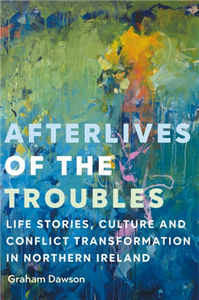
Afterlives of the Troubles
Life stories, culture and conflict transformation in Northern Ireland
by Graham Dawson
Focusing on experiential life stories across a range of forms and practices, this book investigates subjectivity, culture and the cultural politics of representation as a neglected dimension of conflict transformation in the Northern Irish peace process. Interdisciplinary critical perspectives from historical cultural studies, oral history and popular-memory theory inform close interpretive engagement with life stories in their cultural, historical and geographical contexts. This enables exploration of the complex temporal dynamics of 'post-conflict' subjectivities in the lengthening 'afterlife' of the Troubles, where feelings attached to conflict experiences are not 'past' but haunt the present, and memory-work carries future-oriented desires for truth, justice and reconciliation. Through case studies responding to the evolving peace process through this prism of life-storytelling, Afterlives maps a contested history of legacy policy-making and approaches to 'dealing with the past', from devolution in 2005-7 through to the Legacy and Reconciliation Act of 2023.
-
Promoted Content

 2024
2024The second half of your life - a manual
Tips and strategies for successful ageing
by Dr. Petra Kiedaisch
In the middle of our lives, the cards are reshuffled: marriages are divorced, careers are questioned, friendships are ended, questions of meaning are asked, bodies change - and not just hormonally. At the same time, children leave home and parents become carers. From the age of 45, the majority of our population is at the centre of a second upheaval that affects all facets of our lives and leaves us at a loss in many ways. Not only in our daily lives, but also when it comes to planning for our own old age. This guide is designed to help us find our way. It presents the most important information from all areas relevant to a good life after 45. Leading experts from the fields of medicine, nutrition, philosophy, theology, psychology, care, law and finance give recommendations on what to look out for and what tools are needed to get through these challenging years unscathed. Useful checklists round off the articles. The book shows us the unique opportunity to see these challenges not as a crisis but as a source of strength. Not only can we come through this period of our lives healthy and happy, but we can also shape it so that the next age threshold is no longer frightening. During the second phase of adolescence, we lay the foundations for whether and how we will grow older. Be it in terms of health or living together with family and friends. With contributions from: Prof. Dr. Martin Gessmann (philosophy), Dipl. Psych. Claudia Kühner (psychology), Dr Suso Lederle (medicine), Dr Petra Forster (nutrition), Christian Hald, Anja Heine (law), Prof Dr Philipp Schreiber (finance), Prof Dr Thomas Klie (nursing care insurance), Georg Eberhardt (religion).
-
 Trusted Partner
 April 2021
On the Purposes of Life and Whether They Exist
A philosophical fitting
by Axel Braig
The musician, doctor and philosopher Axel Braig considers philosophy a little like the weather: he looks for the right clothes for every situation. Braig is primarily concerned with practical, effective things from the two-and-a-half millennia fund of (Western) thinking, such as helpful approaches in existential crises. In this book, he introduces us to philosophical thinkers from Plato to Montaigne to Levinas and Feyerabend. Braig not only shares his own philosophical biography, but above all encourages us to philosophise ourselves.
-
Trusted Partner
 Humanities & Social SciencesJanuary 2023
Rural quality of life
by Pia Heike Johansen, Anne Tietjen, Evald Bundgård Iversen, Henrik Lauridsen Lolle, Jens Kaae Fisker
-
Trusted Partner
 Business, Economics & LawMay 2024
Governance, democracy and ethics in crisis-decision-making
The pandemic and beyond
by Caroline Redhead, Melanie Smallman
This book is a powerful addition to a developing literature informed by arts and humanities research carried out during the COVID-19 pandemic. Investigating the impacts of crisis governance and decision-making on people and populations, the book brings together microbial organisms and humans, children and data, decision-making and infection prevention, publics and process, global vaccine distribution and citizens' juries. Through its eight chapters, the book stimulates broadly-drawn discussions about exceptional executive powers in an emergency, the role of trust, and the importance of the principles of good governance - such as selflessness, ethics, integrity, accountability and honesty in leadership. The lessons drawn out in this book will support future decision-makers in both ordinary times and extra-ordinary emergencies.
-
Trusted Partner
 Humanities & Social SciencesOctober 2025
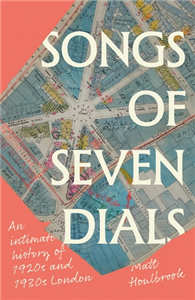
Songs of Seven Dials
An intimate history of 1920s and 1930s London
by Matt Houlbrook
The untold story of a remarkable neighbourhood and the battle to define modern London. Throughout the 1920s and 1930s, Seven Dials was one of London's most diverse neighbourhoods, home to migrant and working-class communities, bohemian clubs and cafes. But business leaders and city planners had other ideas. Beginning with a rancorous libel trial of 1927, in which a Sierra Leonean café owner and his wife confronted the racist newspaper that destroyed their business, Matt Houlbrook reveals the surprising history of this remarkable neighbourhood. He traces how tensions that simmered on the streets and finally exploded in court betrayed the politics of urban 'improvement' and the 'colour bar'. Underlying the trial was a series of troubling questions that would define Britain in the twentieth century - about race, class and the boundaries of belonging, gentrification and the kind of city London would become. Imaginative, powerful and deeply moving, Songs of Seven Dials is an important new history of London in the 1920s and 1930s.
-
Trusted Partner
-
Trusted Partner
-
Trusted Partner
 Biography & True StoriesMay 2026
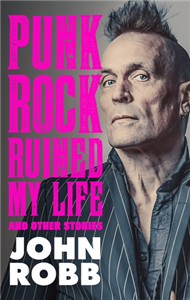
Punk rock ruined my life
And other stories
by John Robb
The irresistible story of a one-man cultural phenomenon. Minister for the Counterculture, Mancunian mainstay and alternative national treasure John Robb has lived a life in music. In this book he charts his adventures on the cultural frontline, chronicling the making of a DIY icon. Robb's quest began in his hometown of Blackpool - where punk was a battle against the odds - and went international when he toured the world with his band. The first person to interview Nirvana, he also discovered The Stone Roses for weekly newspaper Sounds and did early interviews with The Jesus and Mary Chain and The Manics, before moving on to legends such as Mark E. Smith, Nick Cave and Patti Smith. Along the way, he became an on-screen commentator and author of bestselling books. Robb's memoir tells of deep friendships with figures from Poly Styrene to Chris Packham. Packed with riotous stories, it provides an alternative account of British musical and cultural history and a triumphant blueprint for a punk rock life.
-
Trusted Partner
 AnthropologyMarch 2017
Ageing selves and everyday life in the north of England
Years in the making
by Series edited by Alexander Smith, Cathrine Degnen
Seeking to explore what it means to grow older in contemporary Britain from the perspective of older people themselves, this richly detailed ethnographic study engages in debates over selfhood and people's relationships with time. Based on research conducted in a former coal mining village in South Yorkshire, England, Cathrine Degnen explores how the category of 'old age' comes to be assigned and experienced in everyday life through multiple registers of interaction, including that of social memory, in a postindustrial context of great social transformation. Degnen argues that the complex interplay of social, cultural and physical attributes of ageing means that older people can come to have a different position in relation to time and to the self than younger people, unseating normative conventions about narrative and temporality.
-
Trusted Partner
 Humanities & Social SciencesMarch 2022
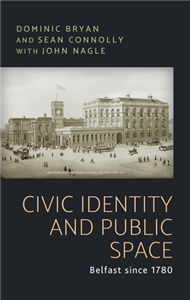
Civic identity and public space
Belfast since 1780
by Dominic Bryan, Sean J. Connolly, John Nagle
Civic identity and public space, focussing on Belfast, and bringing together the work of a historian and two social scientists, offers a new perspective on the sometimes lethal conflicts over parades, flags and other issues that continue to disrupt political life in Northern Ireland. It examines the emergence during the nineteenth century of the concept of public space and the development of new strategies for its regulation, the establishment, the new conditions created by the emergence in 1920 of a Northern Ireland state, of a near monopoly of public space enjoyed by Protestants and unionists, and the break down of that monopoly in more recent decades. Today policy makers and politicians struggle to devise a strategy for the management of public space in a divided city, while endeavouring to promote a new sense of civic identity that will transcend long-standing sectarian and political divisions.
-
Trusted Partner
-
Trusted Partner
 Humanities & Social SciencesJuly 2025
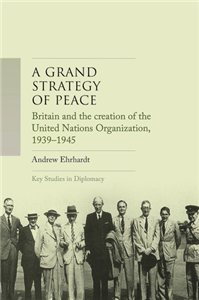
A grand strategy of peace
Britain and the creation of the United Nations Organization, 1939-1945
by Andrew Ehrhardt
A grand strategy of peace is the first detailed account of Britain's role in the creation of the United Nations Organization during the Second World War. As a work of traditional diplomatic history that brings in elements of intellectual history, the book describes how British officials, diplomats, politicians, and writers - previously seen to be secondary actors to the United States in this period - thought about, planned for, and helped to establish a future international order. While in the present day, many scholars and analysts have returned to the origins of the post- 1945 international system, this book offers an exhaustive account of how the statesmen and more importantly, the officials working below the statesmen, actually conceived of and worked to establish a post-war world order.
-
Trusted Partner
 Humanities & Social SciencesMarch 2016
The regulation of standards in British public life
by David Hine, Gillian Peele
-
Trusted Partner
 Humanities & Social SciencesMay 2022
Political and religious practice in the early modern British world
by William J. Bulman, Freddy C. Dominguez, Jason Peacey, Anthony Milton
-
Trusted Partner
 The ArtsJanuary 2019
The secret life of romantic comedy
by Celestino Deleyto
The secret life of romantic comedy offers a new approach to one of the most popular and resilient genres in the history of Hollywood. Steering away from the rigidity and ideological determinism of traditional accounts of the genre, this book advocates a more flexible theory, which allows the student to explore the presence of the genre in unexpected places, extending the concept to encompass films that are not usually considered romantic comedies. Combining theory with detailed analyses of a selection of films, including To Be or Not to Be (1942), Rear Window (1954), Kiss Me Stupid (1964), Crimes and Misdemeanors (1989) and Before Sunset (2004), the book aims to provide a practical framework for the exploration of a key area of contemporary experience - intimate matters - through one of its most powerful filmic representations: the genre of romantic comedy. Original and entertaining, The secret life of romantic comedy is perfect for students and academics of film and film genre.
-
Trusted Partner
 July 2021
My Life with Viruses
A researcher’s history of the fascinating world of pathogens
by Ernst-Ludwig Winnacker in association with Jeanne Rubner
In times of the coronavirus pandemic many people have certainly condemned them, but Professor Ernst-Ludwig Winnacker has dedicated his life to researching them and is intrigued by viruses – even if sometimes he is keenly aware of their fatal effects. To mark his 80th birthday the biochemist describes the co-evolution and co-existence as well as the eternal ‘battle’ between humans and viruses. Winnacker takes up the cause of these ‘biological elements between animate and inanimate nature’ because they play an important role in fundamental research and genetic technology, and without them human beings would not be what they are.
-
Trusted Partner
 The ArtsDecember 2013
The life of mise-en-scène
Visual style and British film criticism, 1946–78
by John Gibbs
The life of mise-en-scène offers a critical history of key debates about visual style in British film journals in the post-war period. It reclaims an often-ignored or misrepresented history, including: the concept of film poetry in the journal Sequence, changing attitudes in Sight and Sound during the 1950s, and the battle over the significance of film style which raged between a number of small journals and the national press in the early 1960s. It examines the British school, first associated with Movie in the 1960s, which, in Adrian Martin's words, is enjoying a 'widespread, international revival' - but also other critical movements, more hazily remembered. It explores the role of mise-en-scène in melodrama criticism, and considers what happened to detailed criticism as major theoretical movements emerged in the 1970s. In doing so, it provides a vital context for the contemporary practice of style-based criticism and challenges received notions of critical history, developing our understanding of a range of other key debates and concerns in the study of film. ;
-
Trusted Partner
 Science & MathematicsSeptember 2024
The elephant and the dragon in contemporary life sciences
A call for decolonising global governance
by Joy Y. Zhang, Saheli Datta Burton
This book provides a powerful diagnosis of why the global governance of science struggles in the face of emerging powers. Through unpacking critical events in China and India over the past twenty years, it demonstrates that the 'subversiveness' assumed in the two countries' rise in the life sciences reflects many of the regulatory challenges that are shared worldwide. It points to a decolonial imperative for science governance to be responsive and effective in a cosmopolitan world. By highlighting epistemic injustice within contemporary science, the book extends theories of decolonisation.
-

 Technology, Engineering & AgricultureMarch 1905
The First Book of Farming
by Charles L. Goodrich
This book is a result of the author's search for these facts and truths as a student and farmer and his endeavor as a teacher to present them in a simple manner to others. The object in presenting the book to the general public is the hope that it may be of assistance to farmers, students and teachers, in their search for the fundamental truths and principles of farming.


