
Company's Coming Publishing
Livres Canada Books
View Rights Portal

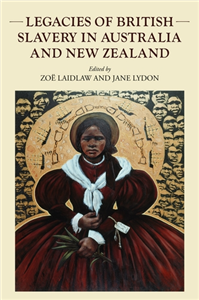
This book investigates the legacies of British slavery beyond Britain, focusing upon the colonisation of Australia and New Zealand, and explores why this history has been overlooked. After August 1833, when the British Parliament abolished slavery in the British Caribbean, Mauritius and the Cape, the former slave-owners were paid compensation for the loss of their 'property'. New research has begun to show that many beneficiaries had ties to other parts of the British Empire, including the settler colonies of Australia, New Zealand, Canada and South Africa. Through a range of case studies, contributors to this collection trace the movement of people, goods, capital, and practices from the Caribbean to the new Australasian settler colonies. Chapters consider a range of places, people and themes to reveal the varied ways that slavery continued to shape imperial relationships, economic networks, and racial labour regimes after 1833.

This book focuses on British efforts to suppress the traffic in female slaves destined for Egyptian harems during the late-nineteenth century. It considers this campaign in relation to gender debates in England, and examines the ways in which the assumptions and dominant imperialist discourses of these abolitionists were challenged by the newly-established Muslim communities in England, as well as by English people who converted to or were sympathetic with Islam. While previous scholars have treated antislavery activity in Egypt first and foremost as an extension of earlier efforts to abolish plantation slavery in the New World, this book considers it in terms of encounters with Islam during a period which it argues marked a new departure in Anglo-Muslim relations. This approach illuminates the role of Islam in the creation of English national identities within the global cultural system of the British Empire. This book would appeal to those with an interest in British imperial history; Islam; gender, feminism, and women's studies; slavery and race; the formation of national identities; global processes; Orientalism; and Middle Eastern studies.
 Trusted Partner

Ireland, slavery and the Caribbean is a complex and ground-breaking collection of essays. Grounded in history, it integrates perspectives from art historians, architectural and landscape historians, and literary scholars to produce a genuinely interdisciplinary collection that spans from 1620-1830: the high point of European colonialism. By exploring imperial, national and familial relationships from their building blocks of plantation, migration, property and trade, it finds new ways to re-create and question how slavery made the Atlantic world.
Trusted Partner
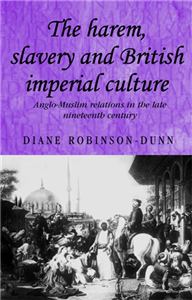
This book focuses on British efforts to suppress the traffic in female slaves destined for Egyptian harems during the late nineteenth century. It considers this campaign in relation to gender debates in England, and examines the ways in which the assumptions and dominant imperialist discourses of these abolitionists were challenged by the newly established Muslim communities in England, as well as by English people who converted to or were sympathetic with Islam. While previous scholars treated antislavery activity in Egypt first and foremost as an extension of earlier efforts to abolish plantation slavery in the New World, this book considers it in terms of encounters with Islam during a period which it argues marked a new departure in Anglo-Muslim relations. This approach illuminates the role of Islam in the creation of English national identities within the global cultural system of the British Empire. This book will appeal to those with an interest in British imperial history; Islam; gender, feminism and women's studies; slavery and race; the formation of national identities; global processes; Orientalism; and Middle Eastern studies. ;
Trusted Partner

This book challenges the idealised narrative of Canada as an antislavery haven for self-liberated people to explore Canada's complicated relationship with slavery. Examining advertisements, abolitionist texts and narratives about slavery in Canadian newspapers and the texts that were printed alongside them, it shows how Canadian readers and enslavers developed an image of themselves as belonging to an antislavery community even while recognising their own complicity in slavery. The book explores narratives that depict the lives of Black settlers in Canada and how slave narratives circulated in Canada. Canada's relationship with slavery is far more complicated than seeing it as either an antislavery haven or a slaveholding space. Canada was connected to Britain, France, the Caribbean and the United States and this was central to how Canadians and Canadian readers fashioned their self-image in relation to slavery.
Trusted Partner
 Trusted Partner
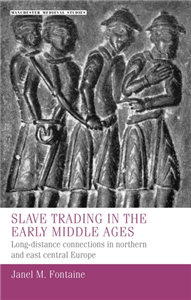
This book examines slave trading in northern and eastern central Europe from the seventh century through the eleventh century, tracing its growth, climax, and decline. Demand from the Islamic world in the ninth and tenth centuries prompted changes in warfare, trade logistics, and administrative responses to slavery in the slaving zones centred on the British Isles and the Czech lands. This study establishes slave trading as a core driver of connectivity and presents a model for this practice in politically fragmented areas of Europe.
Trusted Partner
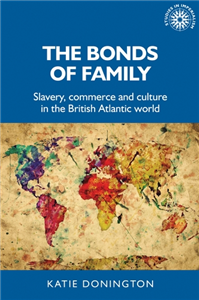
Moving between Britain and Jamaica The bonds of family reconstructs the world of commerce, consumption and cultivation sustained through an extended engagement with the business of slavery. Transatlantic slavery was both shaping of and shaped by the dynamic networks of family that established Britain's Caribbean empire. Tracing the activities of a single extended family - the Hibberts - this book explores how slavery impacted on the social, cultural, economic and political landscape of Britain. It is a history of trade, colonisation, enrichment and the tangled web of relations that gave meaning to the transatlantic world. The Hibberts's trans-generational story imbricates the personal and the political, the private and the public, the local and the global. It is both the intimate narrative of a family and an analytical frame through which to explore Britain's history and legacies of slavery.
Trusted Partner
 Trusted Partner
How should we as Britons remember transatlantic slavery? How has slavery been remembered in the past? 'Chords of freedom' sets out to answer these questions and, in doing so, traces the way in which British transatlantic slavery has been absorbed into the nation's collective memory. By combining two current historiographical preoccupations - the construction of public memory and British transatlantic slavery - this fascinating book focuses on the way in which the British traditionally have been taught to view transatlantic slavery through the moral triumph of abolition. The author traces the construction of this national history through a number of case studies, including visual images, literary memorials (the competing accounts of the anti-slavery movement produced by Thomas Clarkson and Robert and Samuel Wilberforce), monument-memorials, galleries and museums, and commemorative rituals from the nineteenth century to the present day. A separate chapter also considers how Britain's example in abolishing first the slave trade (1807) and then colonial slavery (1833-34) impacted on the rituals of the American anti-slavery movement, and served as a convenient symbol of the potential of freedom in the British West Indies. 'Chords of freedom' offers valuable new insights into the way in which a 'culture of abolition' took root in Britain, and how our views of transatlantic slavery and figures like William Wilberforce have been revised and amended to reflect the changing demands of a series of 'present days'. Its cross-disciplinary approach will appeal to a broad spectrum of specialists, as well as to undergraduates and postgraduates. ;
Trusted Partner

This Biography of a runaway slave is arguably the best-known book to have been written and published in revolutionary Cuba, being the testimonial narrative of Esteban Montejo, a former slave, runaway, and soldier in the Cuban wars of independence. The text is the collaboration between ethnographer Miguel Barnet and Montejo, the result of three years of tape-recorded interviews, transcribed, edited and annotated by Barnet. Montejo provides a first-hand account of slavery in nineteenth-century Cuba - the language, religion, music, and customs - and describes life in the sugar plantations and mills and as a runaway slave. Montejo's text also covers key historical moments, from slavery to Abolition, the Ten Years War, the Spanish American War, and US intervention in the new republic. Reflecting the growing interest in Latin American and Cuban Studies, this student edition includes the complete text in Spanish, notes in English, a time-line of Cuban history and themes for debate and discussion. The extensive introduction focuses on three main areas: an overview of Cuban history featuring slavery, wars of independence and the new republic; an overview of the genre of the testimonial narrative as it emerged as an important literary style in revolutionary Cuba; and an analysis of the relationship between the Cuban Revolution and the publication of the text. There is also an extensive bibliography. ;
Trusted Partner
Trusted Partner
Trusted Partner
Chosen peoples demonstrates how biblical themes, ideas and metaphors shaped racial, national and imperial identities in the long nineteenth century. Even as radical new ideas challenged the historicity of the Bible, biblical notions of lineage, descent and inheritance continued to inform understandings of race, nation and empire. European settler movements portrayed 'new' territories across the seas as lands of Canaan, but if many colonised and conquered peoples resisted the imposition of biblical narratives, they also appropriated biblical tropes to their own ends. These innovative case-studies throw new light on familiar areas such as slavery, colonialism and the missionary project, while forging exciting cross-comparisons between race, identity and the politics of biblical translation and interpretation in South Africa, Egypt, Australia, America and Ireland.
Trusted Partner

In this accessible and sophisticated exploration of the nature and workings of social and political power, Haugaard examines the interrelation between domination and empowerment. Building upon the perspectives of Steven Lukes, Michel Foucault, Amy Allen, Hannah Arendt, Anthony Giddens, Pierre Bourdieu and others, he offers a clear theoretical framework, delineating power in four interrelated dimensions. The first and second dimensions of power entail two different types of social conflict. The third dimension concerns tacit knowledge, uses of truth and reification. Drawing upon genealogical theory and accounts of slavery as social death, the fourth dimension of power concerns the power to create social subjects. The book concludes with an original normative pragmatist power-based account of democracy. Offering lucid and entertaining illustrations of complex theoretical perspectives, this book is essential reading for scholars and activists.
Trusted Partner
This book opens up new perspectives on the relationship between art, medicine, and science in late-medieval and early modern Europe. Looking beyond the traditional nexus of art, anatomy, and optics, the volume sheds light on a broader array of connections between artists and physicians: collaborations between painters and doctors on colour charts, handwork skills common to sculptors and surgeons, the transmission of art theory through medical texts long before the emergence of art writing itself as an independent genre, and the kinship of medical diagnosis with early modes of connoisseurship. Reconfiguring the histories of art, medicine, and science, the book also traverses conventional boundaries between physical and mental health, religious and medical modes of healing, menial and exalted forms of knowledge and labour, as well as vernacular and scientific understandings of human difference, including gender, race, and neurodiversity.
Trusted Partner

Do dogs belong with humans? Scientific accounts of dogs' 'species story,' in which contemporary dog-human relations are naturalised with reference to dogs' evolutionary becoming, suggest that they do. Dog politics dissects this story. This book offers a rich empirical analysis and critique of the development and consolidation of dogs' species story in science, asking what evidence exists to support it, and what practical consequences, for dogs, follow from it. It explores how this story is woven into broader scientific shifts in understandings of species, animals, and animal behaviours, and how such shifts were informed by and informed transformative political events, including slavery and colonialism, the Second World War and its aftermath, and the emergence of anti-racist movements in the twentieth and twenty-first centuries. The book pays particular attention to how species-thinking bears on 'race,' racism, and individuals.
Trusted Partner

Leprosy and colonialism investigates the history of leprosy in Suriname within the context of Dutch colonial power and racial conflict, from the plantation economy and the age of slavery to its legacy in the modern colonial state. It explores the relationship between the modern stigmatization and exclusion of people affected with leprosy, and the political tensions and racial fears originating in colonial slave society, exerting their influence until after the decolonization up to the present day. In the book colonial sources are read from shifting perspectives, of the colonial rulers and, 'from below', the ruled. Though leprosy is today a neglected tropical disease, recognizing influences of our colonial heritage in our global management of health and disease, and exploring the perspectives of other cultures are essential in a time in which migration movements make the permeability of boundaries, and transmission of diseases, more common then perhaps ever before.
Trusted Partner

The book traces the history of international humanitarianism from the anti-slavery movement to the end of the cold war. It is based on an extensive survey of the international literature and is retold in an original narrative that relies on a close examination of the sources. The reconstruction of humanitarianism's long history unfolds around some crucial moments and events: the colonial expansion of European countries, the two world wars and their aftermaths, the emergence of a new postcolonial order. In terms of its contents, narrative style, interpretative approach the book is aimed at a large and diverse public including: scholars who are studying and teaching humanitarianism; students who need to learn about humanitarianism as part of their training or research; operators and volunteers who are engaged in the field; non-specialist readers who are interested in the topic because of its relevance to current events.
Trusted Partner

The first book to provide an historical survey of images of black people in advertising during the colonial period. Analyses the various conflicting, and changing ideologies of colonialism and racism in British advertising. Reveals the historical and production context of many well known advertising icons, as well as the specific commercial interests that various companies' images projected. Provides a chronological understanding of changing colonial ideologies in relation to advertising, while each chapter explores images produced to sell specific products, such as soap, cocoa, tea and tobacco.



