August 2009
Your Search Results
-
Promoted Content


-
Promoted Content
-
 Trusted Partner
-
Trusted Partner
-
Trusted Partner
 October 2013
Soldat wider Willen
Wie ich den Ersten Weltkrieg sabotierte
by Skirth, Ronald / Herausgegeben von Barrett, Duncan; Übersetzt von Bausum, Christoph; Vorwort von Snow, Jon; Nachwort von Barrett, Duncan; Übersetzt von Bausum, Karola
-
Trusted Partner

 Children's & YA
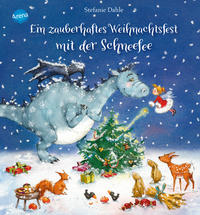
A Magical Christmas with the Snow Fairy
by Stefanie Dahle
Emmo would also like to celebrate Christmas for a change. He’s lucky that his best friend Gwendoline, the Snow Fairy, is there to help him with his preparations. A Christmas tree, presents, delicious biscuits, sweet-smelling baked apples, and of course glittering white snow - all in readiness for the most wonderful Christmas party the Silver Forest has ever seen. With Stefanie Dahle’s enchanting illustrations, this solid, read-aloud picture book will accompany big and little picture-book lovers through a wonderfully harmonious Advent and Christmas.
-
Trusted Partner
-
Trusted Partner
-
Trusted Partner
-
Trusted Partner

 September 1975
The Best of H. C. Artmann
by H. C. Artmann, Klaus Reichert
Von allen deutschen Autoren, die nach 1945 zu schreiben begannen, ist Artmann ohne jeden Zweifel der vielseitigste, originellste und erfinderischste. So wie Artmann in fast allen Gattungen gearbeitet hat, auch den angeblich antiquierten, und ohne sich um die Tagesparolen der mal reine Dichtung betreibenden, mal engagierten, mal die Literatur totsagenden Kollegen zu kümmern, so hat er seine Quellen, seine Herkunft überall: in der Artusepik, in barocker Schäferpoesie, in den Wörterbüchern und Grammatiken von gut zwei Dutzend Sprachen, in Irland und im England des Sherlock Holmes, bei Villon und dem Wiener Vorstadtdialekt, Lorca, Gomez de la Serna, den Surrealisten und Dadaisten, in den Detektivheftchen der 20er Jahre und den Comic strips von damals bis heute. Unsere Auswahl versucht, nicht nur einen repräsentativen Querschnitt durch das Werk Artmanns zu geben, sondern gleichzeitig Verstreutes, an entlegensten Orten Publiziertes zu sammeln.
-
Trusted Partner
-
Trusted Partner
-
Trusted Partner

 Literature & Literary StudiesMay 2026
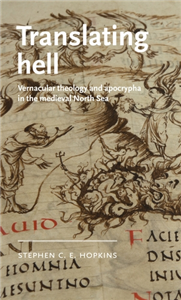
Translating hell
Vernacular theology and apocrypha in the medieval North Sea
by Stephen C. E. Hopkins
In the Middle Ages, hell was useful because it was vaguely defined. Canonical scriptures scarcely mention hell, leaving much to the imaginations of early Christians, who used it to sort out who belonged within the faith. This book explores how hell became a place for literary experiments with local challenges in theology and identity. Following the reception and transformations of two popular hell apocrypha, it argues that they served as this role because of their liminal textual authority. As noncanonical scriptures, apocrypha afforded medieval writers space to revise their hells (since they were not actually scripture), while also encouraging readers to revere those experiments as valid (since they seemed like scripture). The book brings together adaptations from early medieval England, Iceland, Ireland, and Wales, placing the early vernacular theologies of the North Sea in comparative conversation.
-
Trusted Partner
 Gender studies: menNovember 2007
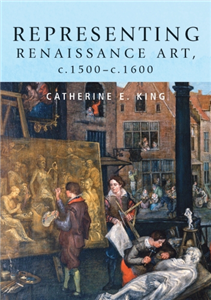
Representing Renaissance art, c.1500–c.1600
by Catherine E. King
Representing Renaissance art, c.1500-c.1600 is a study of change and continuity in the iconographies of art and the visual representation of artists during the sixteenth century, especially in Italy and the Netherlands. The issue of how, and how far, artists obtained higher status for their profession during the Renaissance is a key question for the study of the early modern period. This book considers the maintenance of well-established traditions for the visual representation of artists, and also examines the new iconographies that emerged in the sixteenth century. By highlighting art and architecture that artists designed for their personal use, including the decoration of their houses, this study provides insight into the tastes and 'ways of looking' specific to artists. By examining the visual evidence we see the opinions both of artists who expressed their views in literary texts, and additionally those of artists who did not publish their ideas in written form.
-
Trusted Partner
 Literature & Literary StudiesOctober 2025
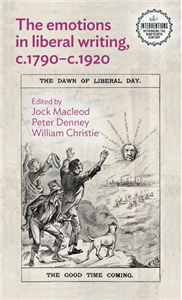
The emotions in liberal writing, c.1790–c.1920
by Jock Macleod, Peter Denney, William Christie
This volume of essays from a selection of distinguished international scholars is the first of its kind to explore in depth the emotional dimensions of liberal writing in Britain over the long nineteenth century. Addressing liberal writing in the public sphere rather than high political or parliamentary liberalism, it comprises a clear, context-setting introduction and eleven substantive chapters. The chapters analyse key texts and figures from the 1790s through to the 1920s and offer several different approaches to the central concern with the emotions and liberalism. These include examining the place of the emotions in the 'good life'; the social and political function of the emotions; emotional rhetoric in liberal writing; and liberal theories of the emotions. Both individually and as a collection, the essays provide an essential foundation for further scholarly work in this emerging field.
-
Trusted Partner
 Literature & Literary StudiesJanuary 2013
The English manor c.1200–c.1500
by Mark Bailey
Provides a comprehensive introduction and essential guide to one of the most important institutions in medieval England and to its substantial archive. This is the first book to offer a detailed explanation of the form, structure and evolution of the manor and its records. Offers translations of, and commentaries upon, each category of document to illustrate their main features. Examples of each category of record are provided in translation, followed by shorter extracts selected to illustrate interesting, commonly occurring, or complex features. A valuable source of reference for undergraduates wishing to understand the sources which underpin the majority of research on the medieval economy and society.
-
Trusted Partner

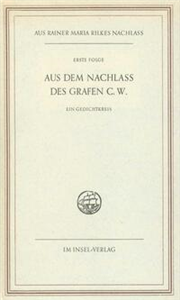 January 1950
Aus dem Nachlaß des Grafen C. W
Ein Gedichtkreis. Aus Rainer Maria Rilkes Nachlaß
by Rainer Maria Rilke
Diese im November 1920 und im Vorfrühling 1921 entstandenen Gedichte empfand Rilke als das »Diktat« eines imaginären »Vorwohners« seiner winterlichen Schweizer Zuflucht in Schloß Berg am Irchel. Die rätselhafte Fremdartigkeit der Verse bewog den Dichter, dies erste Aufklingen lang ersehnter Produktivität der schattenhaft angedeuteten Gestalt des »Grafen C. W.« zuzuschreiben.
-
Trusted Partner
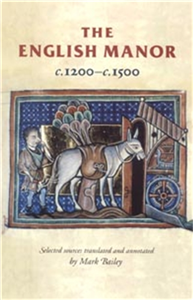 Literature & Literary StudiesJune 2002
The English manor c.1200–c.1500
by Rosemary Horrox, Simon Maclean, Mark Bailey
Provides a comprehensive introduction and essential guide to one of the most important institutions in medieval England and to its substantial archive. This is the first book to offer a detailed explanation of the form, structure and evolution of the manor and its records. Offers translations of, and commentaries upon, each category of document to illustrate their main features. Examples of each category of record are provided in translation, followed by shorter extracts selected to illustrate interesting, commonly occurring, or complex features. A valuable source of reference for undergraduates wishing to understand the sources which underpin the majority of research on the medieval economy and society. ;
-
Trusted Partner
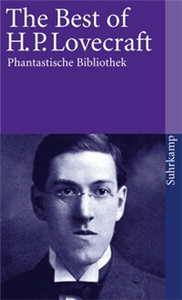 April 1996
The Best of H. P. Lovecraft
by H. P. Lovecraft, Rudolf Hermstein, H. C. Artmann
Mit seinem Cthulu-Mythos wollte H. P. Lovecraft eine Atmosphäre kosmischen Grauens schaffen, die Archaisches mit den modernen Erkenntnissen der Wissenschaft verbindet und unserer Zeit angemessen ist. Die Angst hielt er für das älteste und stärkste Gefühl, mit dem er in seinen Erzählungen gerne spielte. Die besten Erzählungen von H. P. Lovecraft sind in diesem Rand zusammengefaßt.
-
Trusted Partner