
Your Search Results
-

-

China Social Sciences Press
Established in June, 1978, China Social Sciences Press is sponsored by Chinese Academy of Social Sciences. CSSP is a national level publishing house focusing on academic publications mainly in the field of humanities and social sciences. In 1993, CSSP won the honorary title of “national outstanding press” granted by Propaganda Department of CPC and General Administration of Press and Publication.The missions and the publication targets of CSSP are: first, editing and publishing the most outstanding academic results of CASS and great achievements from the fields of social sciences and culture circle in China, including academic works, text books, reference books and popular books; second, translating Chinese versions of significant humanities and social sciences books written by western authors.
View Rights Portal
-
Promoted Content

 Business, Economics & LawMarch 2025
Tadeusz Kowalik and Poland’s return from socialism to capitalism
Full circle
by Gavin Rae
Tadeusz Kowalik lived through ten decades and three economic and political systems in Poland. He combined his academic study of economic ideas with his socialist ideals of building a fairer and more just society. This book covers the intellectual and political work of Kowalik, within the context of modern Polish history. Kowalik was part of a Polish School of critical left-wing political economists, that included Michal Kalecki and Oskar Lange. Kowalik contributed to the body of work produced by this group, which included his interpretation of their work. Kowalik participated in some of the most momentous events in post-war Polish history, helping to organise a group of intellectuals to advise the shipyard workers at the Gdansk shipyards in 1980. He became a vehement opponent of Poland's neoliberal form of capitalism and left a body of work that illuminates our understanding of capitalism and socialism today.
-
Promoted Content
 Humanities & Social SciencesApril 2026
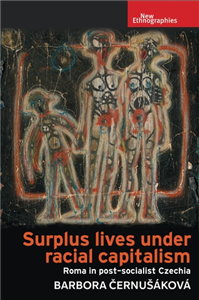
Surplus lives under racial capitalism
Roma in post-socialist Czechia
by Barbora Cernušáková
Surplus lives under racial capitalism is a critical contribution to the study of racial capitalism. It theorises the link between political economy, anti-Roma racism and modern forms of white supremacy in East Central Europe. The book shows how the introduction of capitalism in the 1990s overlapped with the rise of racialised disposability of Roma workers. Since then, their surplusing recurrently comes into sharp relief during the time of crisis. Surplus lives under racial capitalism is built on an investigation of how race and class structure the Czech labour regime and how they form a single site of struggle. One which binds workers across racialised divisions as surplusing continuously expands.
-
 Trusted Partner
 Humanities & Social SciencesMay 2026
Sexual violence in racial capitalism
by Alison Phipps
Most texts on sexual violence treat capitalism as backdrop or afterthought. In contrast, political economy is the core of this book. Phipps explores the centrality of sexual violence to racial capitalist processes: the enclosure of bodies, the extraction of labour, the expropriation of land and resources, and the disposal of unwanted populations. Importantly, she argues that both sexual violence and sexual fear create social control and surplus value. Through a framework called the coloniality of sexual violence, Phipps conjoins acts of sexual violence and ideas of sexual threat in an analysis of gendered and raced property relations and the split colonial/modern psyche. She argues that fantasies of sexual danger represent the infolded violence of racial capitalism, which is why fear of revolution is often fear of rape. Revolution, however, is always imminent: violence is necessary because power is incomplete.
-
Trusted Partner
-
Trusted Partner
-
Trusted Partner
-
Trusted Partner
-
Trusted Partner
 Business, Economics & LawJune 2025
Foundations of social ecological economics
The fight for revolutionary change in economic thought
by Clive L Spash
This book explores radical dissent from orthodox mainstream economics, and sets out a theoretically grounded vision for the emerging paradigm of social ecological economics. At the heart of this paradigmatic shift lies an acknowledgement of the inextricable embeddedness of economies in biophysical reality and social structure. The struggle for this transformative vision unfolds through a critical examination of mainstream environmental thought, followed by a nuanced evaluation of contributions from Marxists, socialists, critical institutionalists, feminists and Post-Keynesians grappling with the urgent environmental crisis. Synthesising insights from these diverse and heterodox schools, the book navigates the philosophical underpinnings of science, embracing a critical realist approach that challenges not only mainstream economic thought but also eclectic pluralism, relativism and strong constructionism. The question of what constitutes revolutionary science is explored in light of works by Kuhn, Schumpeter and Neurath, emphasising the pivotal role of values and ideology in works from Marx to Gramsci. Building on these radical and philosophical foundations, the book articulates a preanalytic vision of social ecological economics, dismantling entrenched notions of growth and efficiency in favour of a framework centered on social provisioning and needs embedded in ethics. In a thought-provoking conclusion, the book applies its analytical lens to the multiple crises of modernity within industrialised capital-accumulating economies. An agenda for social ecological transformation toward diverse alternative economies emerges, providing a compelling call to action in the face of contemporary challenges.
-
Trusted Partner
 Business, Economics & LawNovember 2020
Communists constructing capitalism
State, market, and the Party in China’s financial reform
by Julian Gruin
Why has China's 'transition' to a market economy not catalysed corresponding political transformation? In an era of deepening synergy between authoritarian politics and capitalist economics, this book offers a novel perspective on this central dilemma of contemporary Chinese development, shedding light on how the Chinese Communist Party achieved rapid economic growth while preserving political stability. Drawing on extensive fieldwork and over sixty interviews with policymakers, bankers and former party and state officials, the book delves into the role of China's state-owned banking system since 1989, showing how political control over capital has been central to the country's experience of capitalist development. It challenges existing state-market paradigms of political economy and reveals the Eurocentric assumptions underpinning liberal perspectives towards Chinese authoritarian resilience.
-

 Business, Economics & LawApril 1905
The Acquisitive Society
by R.H. Tawney
This 1926 survey, written by a distinguished social and economic historian, examines the role of religion in the rise of capitalism. Arguing that material acquisitiveness is morally wrong and a corrupting social influence, the author draws upon his profound knowledge of labor and politics to show how concentrated wealth distorts economic policies. Colorful but credible, this study offers a timeless vision of alternative means toward a just economic, social, and intellectual order.
-
Trusted Partner
 Sociology & anthropologyFebruary 2017
Environment, labour and capitalism at sea
'Working the ground' in Scotland
by Penny McCall Howard. Series edited by Alexander Smith
This book explores how fishers make the sea productive through their labour, using technologies ranging from wooden boats to digital GPS plotters to create familiar places in a seemingly hostile environment. It shows how their lives are affected by capitalist forces in the markets they sell to, forces that shape even the relations between fishers on the same boat. Fishers frequently have to make impossible choices between safe seamanship and staying afloat economically, and the book describes the human impact of the high rate of deaths in the fishing industry. The book makes a unique contribution to understanding human-environment relations, examining the places fishers create and name at sea, as well as technologies and navigation practices. It combines phenomenology and political economy to offer new approaches for analyses of human-environment relations and technologies. It contributes to the social studies of fisheries through an analysis of how deeply fishing practices and social relations are shaped by political economy. It will be read in universities by social scientists and anthropologists and also by those with an interest in maritime Scotland.
-
Trusted Partner
-
Trusted Partner
 Humanities & Social SciencesApril 2025
Islamophobia, anti-racism and the British left
by Scarlet Harris
Islamophobia is one of the most misunderstood and pernicious forms of racism in Britain. But how do those committed to challenging Islamophobia understand it? And what does this mean for their practices 'on the ground'? Islamophobia, anti-racism and the British left combines first-hand accounts from activists and community workers across two British cities with sociological theory, critically interrogating Islamophobia's relationship to 'race', racial capitalism and other modalities of racism. Setting this discussion against some of the most pertinent political shifts in Britain in recent years - from the resurgence of left nationalism to Black Lives Matter - the book assesses the limits of recent attempts to think about and tackle Islamophobia, and considers the possibilities of an alternative approach from and for the anti-racist left.
-
Trusted Partner
 Literature & Literary StudiesApril 2025
Speculative endeavors
Cultures of knowledge and capital in the long nineteenth century
by Selina Foltinek, Karin Hoepker, Katrin Horn
Speculative endeavours contributes to an emerging field of scholarship that focuses on alternative forms of knowledge production and speculation in nineteenth century US-American society. It sheds light on unofficial knowledges such as insider information, rumour, gossip, slander, emphasising how knowledges excluded by institutional discourses and authorities form a core part of the developing market economy. Ranging from the Early Republic to the Gilded Age, contributions analyse entanglements of financial, cultural, and social capital. They focus on social actors who differ from the newly minted ideal of the (free, white, male) entrepreneurial individual. The speculative endeavours discussed include illicit communications located in slave quarters and domestic spaces, communal interventions into a commercialised print market, debates on immigrant fiduciary and legal competency, and disciplinary techniques of pecuniary pedagogy. Taken together they offer unprecedented interdisciplinary insights into an emerging age of capital.
-
Trusted Partner
 Humanities & Social SciencesJune 2020
Karl Polanyi and twenty-first-century capitalism
by Radhika Desai, Kari Polanyi Levitt, Radhika Desai, Alan Freeman
-
Trusted Partner
Humanities & Social SciencesJanuary 2026
Karl Polanyi and twenty-first-century capitalism
by Radhika Desai, Kari Polanyi Levitt
-
Trusted Partner
 Humanities & Social SciencesFebruary 2023
Globalized urban precarity in Berlin and Abidjan
Young men and the digital economy
by Hannah Schilling
Digital technologies promise efficiency and comfort, but the smoothness of platform services relies on the hidden social labour of those who keep the gig economy running. This book presents a comparative ethnography of young men making a living through digital technologies: selling mobile airtime in Abidjan, Côte d'Ivoire, and app-based delivery riders in Berlin, Germany. These case studies explore the significance of symbolic capital in urban youth's social existence and organisation of livelihood in the digital economy, and the technological mechanisms producing a new form of urban precarity. Globalized urban precarity in Berlin and Abidjan puts forward an original comparative approach to develop a global urban sociology for the digital era. It provides an innovative analytical toolbox that decentres discussions of precarity from the standard of a normal employment contract. With its focus on symbolic capital, the ethnography shows the consequences of the proliferating gig economy for status struggles among urban youth, and carefully embeds the densification of software and services into the socio-material relations on which these new urban infrastructures are built.
-
Trusted Partner
 Gardens (descriptions, history etc)February 2017
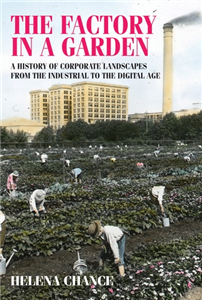
The factory in a garden
A history of corporate landscapes from the industrial to the digital age
by Helena Chance. Series edited by Christopher Breward
When we think about Victorian factories, 'Dark Satanic Mills' might spring to mind - images of blackened buildings and exhausted, exploited workers struggling in unhealthy and ungodly conditions. But for some employees this image was far from the truth, and this is the subject of 'The Factory in a Garden' which traces the history of a factory gardens movement from its late-eighteenth century beginnings in Britain to its twenty-first century equivalent in Google's vegetable gardens at their headquarters in California. The book is the first study of its kind examining the development of parks, gardens, and outdoor leisure facilities for factories in Britain and America as a model for the reshaping of the corporate environment in the twenty-first century. This is also the first book to give a comprehensive account of the contribution of gardens, gardening and recreation to the history of responsible capitalism and ethical working practices.
-
Trusted Partner
 Humanities & Social SciencesMay 2024
Off white
Central and Eastern Europe and the global history of race
by Catherine Baker, Bogdan C. Iacob, Anikó Imre, James Mark
This volume foregrounds racial difference as a key to an alternative history of the Central and Eastern European region, which revolves around the role of whiteness as the unacknowledged foundation of semi-peripheral nation-states and national identities, and of the region's current status as a global stronghold of unapologetic white, Christian nationalisms. Contributions address the pivotal role of whiteness in international diplomacy, geographical exploration, media cultures, music, intellectual discourses, academic theories, everyday language and banal nationalism's many avenues of expressions. The book offers new paradigms for understanding the relationships among racial capitalism, populism, economic peripherality and race.
-
Trusted Partner

