Your Search Results
-

-

emons Verlag
The Cologne-based publishing house Emons was founded by Hermann-Josef Emons in 1984. We now have over 80 regional crime series, taking place in every part of Germany and since 2009 Emons crime novels also take place abroad (Austria, Switzerland, Spain, Italy etc.). Our books were published in over 13 countries, like Japan, Slowenia and Finland. Since 2009 we also publish our 111places (111 Orte) series. This illustrated guidebook series presents cities, regions and even whole countries from a wonderfully different and personal perspective.
View Rights Portal
-
Promoted Content


Socially Competent Kids
How to Stimulate the Eight Key Social and Emotional Skills of your Child
by Steven Pont
What makes children truly happy? The answer to that question is simple, but challenging: their social-emotional competences. Socially competent kids feel good and are more successful in different aspects of life. One of the most important tasks of a parent is therefore to support their children in developing social skills. This book shows parents how to encourage the social-emotional development of their children. It distinguishes eight skills: awareness of the self, social awareness, self-management, goal oriented behaviour, relational skills, personal responsibility, decision making, and positive thinking. After giving a clear introduction on social-emotional development, the author explains these skills in more detail in eight chapters. Each chapter contains a detailed real-life example, psychological background information, and practical interventions ready for use by parents, teachers and other caretakers. The interventions and examples are aimed at four to twelve year olds.
-
Promoted Content

 Humanities & Social SciencesDecember 2022
Class, work and whiteness
Race and settler colonialism in Southern Rhodesia, 1919–79
by Nicola Ginsburgh
This book offers the first comprehensive history of white workers from the end of the First World War to Zimbabwean independence in 1980. It reveals how white worker identity was constituted, examines the white labouring class as an ethnically and nationally heterogeneous formation comprised of both men and women, and emphasises the active participation of white workers in the ongoing and contested production of race. White wage labourers' experiences, both as exploited workers and as part of the privileged white minority, offer insight into how race and class co-produced one another and how boundaries fundamental to settler colonialism were regulated and policed. Based on original research conducted in Zimbabwe, South Africa and the UK, this book offers a unique theoretical synthesis of work on gender, whiteness studies, labour histories, settler colonialism, Marxism, emotions and the New African Economic History.
-
 Trusted Partner
 Humanities & Social SciencesSeptember 2020
Class, work and whiteness
by Nicola Ginsburgh, Alan Lester
-
Trusted Partner
 Humanities & Social SciencesSeptember 2021
How to Build and Promote Social Competence
by Stenzel, Nikola M.; de Veer, Anna-Maria
Every person depends on communication with other people in everyday life. There is hardly any area of life that is not co-determined by interaction with others. The ability to shape relationships positively in the long term while achieving individualgoals plays a central role in human well-being. Accordingly, the promotion of social competence plays an important role in many psychotherapeutic contexts. This book provides information on scientifically established interventions as well as innovative concepts for building social competence. A practice-oriented guide primarily addresses the special therapeutic challenges that arise in the individual therapy setting for an interactive procedure such as social skills training: e.g., the practical implementation of role-playing and the difficulties that arise due to the dual role of “therapist - role-playing partner.” In addition, group therapy interventions are also described and numerous working materials are presented to support the implementation of the procedurein clinical practice. Target group: • medical and psychological psychotherapists• specialists working in psychiatry, psychotherapy,or psychosomatic medicine• clinical psychologists• training candidates (psychologists, physicians)in psychotherapy• lecturers of training courses and institutes forpsychotherapy
-
Trusted Partner

Work & Care – The Path to Compatibility Competence
Reconciling Work and Caring for Family Members
by Iren Bischofberger
The book focuses on people who, in addition to their gainful employment, are also responsible for caring for sick, impaired, or very old relatives - in other words, “work & care”. This topic is at the intersection of two scarce resources - the private unpaid care potential for loved ones on the one hand and the employment potential of family members on the other. The author examines what the professional, operational, and political consequences are for nursing science and practice as well as for service providers and payers. She makes suggestions for the development of personal, family, and organizational compatibility competence on the levels of action time-out and regeneration, knowledge and empowerment, coordination and organization, exchange and accompaniment. Finally, she offers options for action for nursing science and sheds light on the field of activity of scientific policy advice.
-
Trusted Partner
-
Trusted Partner
 Humanities & Social SciencesJune 2021
Emotional monasticism
Affective piety in the eleventh-century monastery of John of Fécamp
by Lauren Mancia
Medievalists have long taught that highly emotional Christian devotion, often called 'affective piety', appeared in Europe after the twelfth century and was primarily practiced by communities of mendicants, lay people and women. Emotional monasticism challenges this view. The first study of affective piety in an eleventh-century monastic context, it traces the early history of affective devotion through the life and works of the earliest known writer of emotional prayers, John of Fécamp, abbot of the Norman monastery of Fécamp from 1028-78. Exposing the early medieval monastic roots of later medieval affective piety, the book casts a new light on the devotional life of monks in Europe before the twelfth century and redefines how medievalists should teach the history of Christianity.
-
Trusted Partner
 The ArtsJanuary 2019
Popular cinema in Brazil, 1930–2001
by Stephanie Dennison, Lisa Shaw
Brazil has one of the most significant and productive film industries in Latin America. This ground-breaking study provides an entertaining insight into the Brazilian films that have most captured the imagination of domestic audiences over the years. The recent international success of films such as Central Station and City of God, has stimulated widespread interest in Brazilian film, but studies written in English focus on the 'auteur' cinema of the 1960s. This book focuses on individual films in their socio-historical context, drawing on extensive fieldwork in Brazil and Latin America. It argues that Brazilian cinema has almost always been grounded in intrinsically home-grown cultural forms, dating back to the nineteenth century, such as the Brazilian music-hall, the travelling circus, radio shows, carnival, and, later, comedy television. Combining a chronological structure with groundbreaking research and a lively approach, Popular cinema in Brazil is the ideal introduction to Brazilian cinema.
-
Trusted Partner
-
Trusted Partner

 November 2010
Die Pariser Weltausstellung 1889
Bilder von der Globalisierung
by Beat Wyss
Die gelungenste Weltausstellung aller Zeiten war die Exposition Universelle de Paris von 1889. Weit über 32 Millionen Menschen besuchten das gigantische Spektakel mit knapp 62.000 Ausstellern aus 54 Nationen und 17 französischen Kolonien. Das Wahrzeichen der Schau, der Eiffelturm, blieb Paris bis heute erhalten. Einen legendären Ruf erwarb sich auch das offizielle, wöchentlich erscheinende Journal der Weltausstellung. Auf großformatigen, mit Stahlstichen üppig illustrierten Seiten berichtete es von den Sensationen vor Ort, von dreirädrigen selbstfahrenden Karren und ethnologischen Dörfern, in denen es Kamelreiten für die Kinder und Bauchtänze für die Herren gab. Der Schweizer Kunsthistoriker Beat Wyss hat die hundert originellsten Abbildungen ausgewählt. Sie illustrieren, wie die Expo den Erdball auf ein »Weltdorf« zwischen Trocadéro und Champ de Mars schrumpfen lässt, wie räumliche Distanzen abgebaut und dabei kulturelle Differenzen freigelegt werden. Das späte 20. Jahrhundert wird dafür den Begriff der Globalisierung prägen. Beat Wyss zeigt, wie die Gesellschaften seit dem 19. Jahrhundert mit diesem Prozeß umgehen und mit der Verwestlichung der Welt eine Orientalisierung des Westens einhergeht. Dem Leser als Flaneur über die Bühne der Weltausstellung wird klar: Die Expo 1889 belegt nicht nur den aktuellen Zustand einer Zeit, sondern bietet über die spektakuläre Anordnung ihrer Exponate den Vorschein einer gesellschaftlichen Utopie.
-
Trusted Partner
 Humanities & Social SciencesDecember 2006
Socio-ideological fantasy and the Northern Ireland conflict
The Other side
by Adrian Millar, Peter Lawler, Emmanuel Pierre Guittet
Conducting a Lacanian-inspired psychoanalysis of some of the most candid interview materials ever gathered from former IRA members and loyalists, the author demonstrates through a careful examination of their slips of the tongue, jokes, rationalisations and contradictions, that it is the unconscious dynamics of socio-ideological fantasy, i.e. the unconscious pleasure people find in suffering, domination, submission, ignorance, failure and rivalry over jouissance, that lead to the reproduction of antagonism between the Catholic and Protestant communities in Northern Ireland. In the light of this, he concludes that traditional approaches to conflict resolution which overlook the unconscious are doomed to failure and that a Lacanian psychoanalytic understanding of socio-ideological fantasy has great potential for informing the way we understand and study all inter-religious and ethnic conflicts. Whether you find yourself agreeing with the arguments in this book or not, you are sure to find it a welcome change from both the existing, mainly conservative, analyses of the Northern Ireland conflict and traditional approaches to conflict resolution.
-
Trusted Partner
Health & Personal Development
Transcultural and Transcategorial Competence
by Dagmar Domenig
This textbook offers a foundational practical handbook on handling multiplicity, difference and diversity for healthcare professions. The first part deals with the social dynamics of pluralistic societies as well as economic flexibility, demographic change, and trends in mobility, migration and civil rights. The second part discusses “transitory categories”, using the example of disappearing terms such as “foreign cultures”, “second generation”, “religion” and “disability”. The third part focusses on “exclusion” through stigma, misanthropy and non-recognition as well as on basic and human rights. The meaning of transcategorical competence at different ages, different living environments and fields of practice is described in the fourth part, in articles on female circumcision, traumatization, migrant children and ageing. The fifth part is dedicated to healthcare provision, with a particular focus on women and men with experience of migration, on people with cognitive impairment and mental disorders and experience of migration. In the sixth part, various communication aspects in dealing with variation and difference are discussed.
-
Trusted Partner
 Literature & Literary StudiesSeptember 2017
The Pianoplayers
by Anthony Burgess
by Will Carr, Paul Wake, Andrew Biswell
This novel is one of Anthony Burgess's most accessible and entertaining works. By turns bawdy, raucous, tender and bittersweet, and full of music and songs, this is a warm and affectionate portrait of the working-class Lancashire of the 1920s and 1930s that he knew from his own early life. The Pianoplayers is a funny, moving, autobiographical novel that brings to life the world of silent cinemas and music-halls of 1920s Manchester and Blackpool. Fully annotated and with a new introduction, this is an authoritative text for a new generation of readers. Part of the forthcoming Irwell Edition of the Works of Anthony Burgess, this book offers an opportunity to reappraise an unjustly neglected novel important to our understanding of Burgess's wider oeuvre. The 2017 Burgess centenary makes this a key moment for reflection on the life and work of a major figure in twentieth century letters.
-
Trusted Partner
-
Trusted Partner
 Humanities & Social SciencesApril 2026
Vibes as value
Young workers and affective labour in the service economy
by David Farrugia, Julia Coffey, Steven Threadgold, Megan Sharp, Lena Molnar
Vibes as value explores the relationship between subjectivity, labour and value in the hospitality industry, and thereby how youth, gender, sexuality, race and social class are embodied and made productive in the service economy. It shows that the key product of hospitality labour is 'vibes', or moments of enjoyment and relationality co-produced through exploitative relationships amongst workers and consumers. In the process, the book theorises hospitality as a form of affective labour organised through the normative and structural relations of precarious service work. It shows how identity construction produces value within the highly unequal social terrain of the service economy, and how hospitality labour enacts hierarchies of value extending far beyond the limits of the industry itself.
-
Trusted Partner
 Psychology
Developing Anti-Racist Cultural Competence
by Rehman Abdulrehman
Learn to understand how you see others with this no-nonsense,practical guide• Teaches cultural humility• Provides practical guidance• Addresses internalized racismIn today’s society, anti-racist cultural competence is an essentialskill and not something meant only to be addressedby some. Issues tied to resolving racism and understandingand including diverse cultural points of view remain highlyconflictual – and the ability to deal with these issues effectivelyis often hindered by fear, anxiety, and a misunderstandingof what it means to be culturally competent withoutmaking people feel like outsiders. While many other modelsof cultural competence approach the issue as though lookinginto a fishbowl, this book views the issue as everyoneswimming in the water together, as part of a common ecosystemand community.
-
Trusted Partner
 Humanities & Social SciencesNovember 2024
Culture is bad for you
by Orian Brook, Dave O'Brien, Mark Taylor
-
Trusted Partner
-
Trusted Partner
 Humanities & Social SciencesMarch 2017
'The better class' of Indians
Social rank, Imperial identity, and South Asians in Britain 1858–1914
by A. Wainwright
This is the first book-length study to focus primarily on the role of class in the encounter between South Asians and British institutions in the United Kingdom at the height of British imperialism. In a departure from previous scholarship on the South Asian presence in Britain, 'The better class' of Indians emphasizes the importance of class as the register through which British polite society interpreted other social distinctions such as race, gender, and religion. Drawing mainly on unpublished material from the India Office Records, the National Archives, and private collections of charitable organizations, this book examines not only the attitudes of British officials towards South Asians in their midst, but also the actual application of these attitudes in decisions pertaining to them. This fascinating book will be of particular interest to scholars and general readers of imperialism, immigration as well as British and Indian social history.
-
Trusted Partner
 Humanities & Social SciencesApril 2025
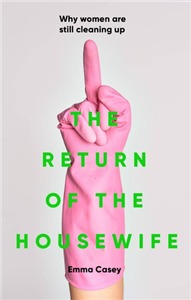
The return of the housewife
Why women are still cleaning up
by Emma Casey
An illuminating look at the world of cleanfluencers that asks why the burden of housework still falls on women. Housework is good for you. Housework sparks joy. Housework is beautiful. Housework is glamorous. Housework is key to a happy family. Housework shows that you care. Housework is women's work. Social media is flooded with images of the perfect home. TikTok and Instagram 'cleanfluencers' produce endless photos and videos of women cleaning, tidying and putting things right. Figures such as Marie Kondo and Mrs Hinch have placed housework, with its promise of a life of love and contentment, at the centre of self-care and positive thinking. And yet housework remains one of the world's most unequal institutions. Women, especially poorer women and women of colour, do most low-paid and unpaid domestic labour. In The return of the housewife, Emma Casey asks why these inequalities matter and why they persist after a century of dramatic advances in women's rights. She offers a powerful call to challenge the prevailing myths around housework and the 'naturally competent' woman homemaker.