
Your Search Results

-
Promoted Content

 Humanities & Social SciencesDecember 2024
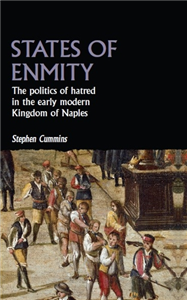
States of enmity
The politics of hatred in the early modern Kingdom of Naples
by Stephen Cummins
State of enmity explores how relations of hatred and enmity played political and social roles in the early modern Kingdom of Naples. Exploring the pervasive notion of enmity and practices of reconciliation, the book provides new insight into the social dynamics of southern Italy in the early modern period. In particular, widespread banditry and the violent tenor of local politics are analysed through a wide variety of criminal trials and other sources.
-
Promoted Content
 The ArtsJune 2025
Toronto New Wave cinema and the anarchist-apocalypse
by David Christopher
The Toronto New Wave (TNW) comprises a group of avant-garde filmmakers working in Canada from the 1980s and into the new millennium whose innovative film works share significant affinities with anarchist themes and aesthetics. Several of the TNW filmmakers openly identify as anarchists and/or acknowledge a debt to anarchism in their production of highly apocalyptic narratives as part of their cinematic political projects. However, recognition of anarchism's progressive apocalyptic theoretical relevance has yet to be substantially taken up by scholarship in cinema analysis. This analysis introduces an anarchist-inflected analytical methodology to understand the apocalyptic-revelatory political work these films attempt to accomplish in the perceptual space between the filmic texts and both their auteurs and potential viewers, and to re-locate the TNW within cinema history as an ongoing phenomenon with new significance in an apocalyptic era of digital distribution.
-
 Trusted Partner
-
Trusted Partner
 The ArtsJanuary 2019
Joseph Losey
by Colin Gardner
The career of Wisconsin-born Joseph Losey spanned over four decades and several countries. A self-proclaimed Marxist and veteran of the 1930s Soviet agit-prop theater, he collaborated with Bertholt Brecht before directing noir B-pictures in Hollywood. A victim of McCarthyism, he later crossed the Atlantic to direct a series of seminal British films such as "Time Without Pity," "Eve," "The Servant," and "The Go-Between," which mark him as one of the cinema's greatest baroque stylists. His British films reflect on exile and the outsider's view of a class-bound society in crisis through a style rooted in the European art house tradition of Resnais and Godard. Gardner employs recent methodologies from cultural studies and poststructural theory, exploring and clarifying the films' uneasy tension between class and gender, and their explorations of fractured temporality.
-
Trusted Partner
 Humanities & Social SciencesJanuary 2019
Labour united and divided from the 1830s to the present
by Emmanuelle Avril, Yann Béliard
Spanning a period which stretches from the 19th century to the present day, this book takes a novel look at the British labour movement by examining the interaction between trade unions, the Labour Party, other parties and groups of the Left, and the wider working class, to highlight the dialectic nature of these relationships, marked by consensus and dissention. It shows that, although perceived as a source of weakness, those inner conflicts have also been a source of creative tension, at times generating significant breakthroughs. The book brings together labour historians and political scientists who provide a range of case studies as well as more wide-ranging assessments of recent trends in labour organising. It will therefore be of interest to academics and students of history and politics, as well as to practitioners, in the British Isles and beyond.
-
Trusted Partner
-
Trusted Partner

 MedicineOctober 2015
Burnout and Chronic Occupational Stress
A Guide for Those Affected and Their Relatives
by Andreas Hillert/Stefan Koch/Dirk Lehr
In today’s work environment, which is dominated by high pressure, many professionals are experiencing chronic stress, some even "burn out". This guide provides information about the connection between occupational stress and burnout. It presents scientifically sound and proven strategies for counteracting chronic stress. The model of the “gratification crisis”, which states that an imbalance between professional engagement and the obtained gratifications, e.g. salary and appreciation, leads to persistent stress and an increased risk of physical and mental illness, is the focus of this guide. Based on case studies and concrete instructions, readers are supported in reviewing their own situation. The guide goes on to present coping strategies, e.g. how important decisions can be made in high stress situations, how to avoid vague assessments, how to strengthen the ability to distance oneself after work, and how to improve quality of leisure time. This title can be used as a stand-alone guide as well as supplemental material to coaching or therapy. Target Group: psychotherapists, specialists for psychiatry and psychotherapy, specialists for psychosomatic medicine and psychotherapy, clinical and health psychologists, occupational and organizational psychologist, rehabilitation psychologist, coaches, students and teachers of psychology, supervisors
-
Trusted Partner
 Humanities & Social SciencesJune 2021
The security dimensions of EU enlargement
by David Brown, Alistair Shepherd
-
Trusted Partner
 Health & Personal Development
More Peace, Less Stress
A Step-by-Step Guide for Adults with ASD
by Marja Boxhoorn
When you have autism, you probably have to cope with stress on a daily basis. Often, people with autism do not know how to recognize stress, what causes stress, and what they can do to reduce it. More peace, less stress offers a useful step-by-step plan. In seven steps, the reader learns what causes stress, how to recognise stress signals, and what they can do to feel more at ease. The book includes practical exercises so new knowledge can be applied right away. Being more at ease means to be able to: have better relationships with a partner, family, friends and colleagues, focus attention to get things done more easily, have a grip on life, instead of experiencing chaos, restlessness and insecurity and feel more powerful and have more self-esteem.
-
Trusted Partner
 Humanities & Social SciencesJune 2021
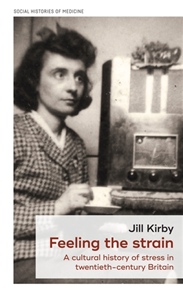
Feeling the strain
A cultural history of stress in twentieth-century Britain
by Jill Kirby
Examining the popular discourse of nerves and stress, this book provides a historical account of how ordinary Britons understood, explained and coped with the pressures and strains of daily life during the twentieth century. It traces the popular, vernacular discourse of stress, illuminating not just how stress was known, but the ways in which that knowledge was produced. Taking a cultural approach, the book focuses on contemporary popular understandings, revealing continuity of ideas about work, mental health, status, gender and individual weakness, as well as the changing socio-economic contexts that enabled stress to become a ubiquitous condition of everyday life by the end of the century. With accounts from sufferers, families and colleagues it also offers insight into self-help literature, the meanings of work and changing dynamics of domestic life, delivering a complementary perspective to medical histories of stress.
-
Trusted Partner
 The ArtsJanuary 2019
Francois Truffaut
by Diana Holmes, Robert Ingram
First in a series designed to situate and explain the films of French directors. A concise, accessible and original reading of Truffaut's films. A timely evaluation of the films of a popular director whose work features on most A-level French syllabuses and on the majority of University French Studies programmes both in the UK and the USA .
-
Trusted Partner
 Humanities & Social SciencesDecember 2020
Creativity and resistance in a hostile world
by Sarita Malik, Churnjeet Mahn, Michael Pierse, Ben Rogaly
-
Trusted Partner
 Lifestyle, Sport & LeisureNovember 2024
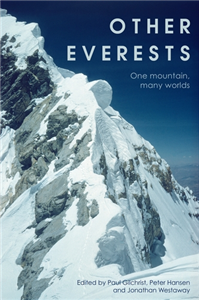
Other Everests
One mountain, many worlds
by Paul Gilchrist, Peter Hansen, Jonathan Westaway
A hundred years after the tragic 1924 British Everest expedition, this collection explores the wider social and cultural history of the mountain. Mount Everest looms large in the popular imagination. Since the deaths of mountaineers George Mallory and Andrew Irvine in 1924, histories of the mountain have overwhelmingly focused on the mythologies of western male adventure and conquest. But there are many more stories waiting to be told. Other Everests brings together new voices and perspectives on the historical and cultural significance of Everest in the modern world. The book shines a light on the overlooked role of local people and high-altitude workers, while also revealing the significant contributions women have made to climbing the mountain and writing its history. It explores the depiction of Everest in a range of media and investigates how the forces of nationalism and commercialism have shaped many different 'Everests'. After years of exploitation, Indigenous people are now reclaiming Mount Everest in the twenty-first century. Other Everests re-examines the past and present of the world's highest peak, presenting an exciting vision of what Everest might become in the future.
-
Trusted Partner
-
Trusted Partner

 March 2022
Tafiti und die Expedition zum Halbmondsee
by Julia Boehme / Julia Ginsbach
Tafiti and the Expedition to Half Moon Lake
-
Trusted Partner

 February 2022
The Great Rift
How Society Drifts Apart and How to Counter It. An Essay
by Jean-Pierre Wils
Chaos flourishes beneath the surface – a deep fissure runs through our society Inside the pressure-cooker of the coronavirus pandemic, we see more clearly the volatile status of how we live together. Why were we unprepared, in spite of the numerous warnings over the years? Jean-Pierre Wils speculates that our society, which is already marked by tension and hectic stalemate, is riven by a deep division. In this case, the reality of the crisis triggered by the pandemic is only the prelude to a much deeper crisis: climate change. But how can we manage it? To do so Wils advocates for a “culture of interim solutions” – a culture of thoughtfulness, soul-searching, slowing down and reorienting towards social and ecological sustainability ...
-
Trusted Partner
 The ArtsApril 2019
Daniel Calparsoro
by Nuria Triana-Toribio, Ann Davies, Andy Willis
Daniel Calparsoro, a director who has made a crucial contribution to contemporary Spanish and Basque cinema, has provoked strong reactions from the critics. Reductively dismissed as a works of crude violence by those lamenting a 'lost golden age' of Spanish filmmaking, Calparsoro's films in fact reveal a more complex interaction with trends and traditions in both Spanish and Hollywood cinema. This book is the first full-length study of the director's work, from his early social-realist films set in the Basque Country to his later forays into the genres of the war and horror. It offers an in-depth film-by-film analysis while simultaneously exploring the director's position in the contemporary Spanish context, the tension between directors and critics and the question of national cinema in an area - the Basque Country - of heightened national and regional sensitivities.
-
Trusted Partner
 The ArtsFebruary 2009
Daniel Calparsoro
by Ann Davies, Nuria Triana-Toribio, Andy Willis
Daniel Calparsoro, a director who has provided a crucial contribution to the contemporary scene in Spanish and Basque cinema, has provoked strong reactions from the critics. Reductively dismissed as a purveyor of crude violence by those critics lamenting a 'lost golden age' of Spanish filmmaking, Calparsoro's films reveal in fact a more complex interaction with trends and traditions in both Spanish and Hollywood cinema. This book is the first full-length study of the director's work, from his early social realist films set in the Basque Country to his later forays into the genres of the war and horror film. It offers an in-depth film-by-film analysis, while simultaneously exploring the function of the director in the contemporary Spanish context, the tension between directors and critics, and the question of national cinema in an area - the Basque Country - of heightened national and regional sensitivities. ;
-
Trusted Partner
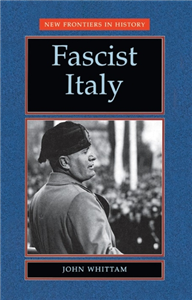 Humanities & Social SciencesJuly 1995
Fascist Italy
by John Whittam
Fascist Italy is a concise introduction to the phenomenon of Italian fascism and its impact. The author balances an up-to-date re-evaluation of political, diplomatic and military developments with a full assessment of the more neglected domestic and cultural dimensions of the subject. With the aid of documents and recent research on the subject, this book presents an analysis of the origins of the movement, the reasons behind its political success and the methods used to construct and consolidate a regime capable of resolving the problems of mass society in the 20th century. Within his broad-ranging analysis, Whittam places particular emphasis on the attempts to exert social control, the interaction of party and state, the tension between revolutionary and conservative tendencies and on the role of Il Duce. Mussolini's triumphs and failures in peace and war and his ultimate responsibility for the disintegration of the regime are discussed objectively. ;
-
Trusted Partner
 Film theory & criticismDecember 2000
100 years of European cinema
Entertainment or ideology?
by Diana Holmes, Alison Smith
Cinema provides entertainment, but it also communicates a set of values, a vision of the world or an ideology. From its beginnings more than a century ago, European cinema has dealt with the tension between these two functions in a variety of ways: at the extremes, dictatorial regimes have sweetened the pill of ideology with the sugar of entertainment. Meanwhile, spectators have persisted in seeking out, above all, the pleasure film can provide. Now available again in paperback, this book explores the complex relationship between entertainment, ideology and audiences in European film, through studies that range from the Stalinist musicals of the 1930s, to cinematic representations of masculinity under Franco, to recent French films and their Hollywood remakes. Diverse and entertaining, this study is addressed to students of film - especially French, German, Russian or Spanish - and to those readers and academics interested in both the history of cinema and in European culture.





