
Clockwork Books
Clockwork Books publishes for an African audience first, but we believe that our stories resonate with readers further afield. We would especially like to find new global audiences for our titles.
View Rights Portal
Clockwork Books publishes for an African audience first, but we believe that our stories resonate with readers further afield. We would especially like to find new global audiences for our titles.
View Rights Portal
We are a one-stop platform to read, write, self-publish and sell ebooks in any of the Indian languages. Our mission is to empower the author's community with the digital tools and techniques, and we take care of the online presence of professionals in the publishing landscape, be they authors, publishers, editors, designers, publicists, etc.
View Rights Portal
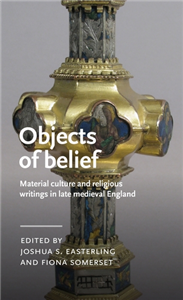
Objects in late medieval Europe were a means for lay people and clergy to negotiate their access to powers beyond the everyday, in folk practice as well as religious observance. As has been noted by scholars, this period is marked by a profusion of objects granted special importance, imaginary as well as material. These objects prompt reconsideration of cultural and intellectual frameworks, for example of superstition, reform, and heresy, that never quite successfully contain them. Essays in this volume center attention on these things themselves, from puppets to rosaries, as indeed do the written accounts through which they are often mediated. With a focus on England, contributors re-evaluate our understanding of works and authors including Geoffrey Chaucer, Walter Hilton, Nicholas Love, Julian of Norwich, miracles of the Virgin, Edward Hall's Chronicle, the Wycliffite Glossed Gospels, and the Croxton Play of the Sacrament.

A girl torn between two brothers. Regardless of which one she falls in love with it will be disastrous for the other. Christopher and Adrian have sworn that no girl will ever come between them again, because there is a sleeping monster inside Adrian, just waiting to hurt his brother. But then Jessa comes to High Moor Grange… Jessa would do anything to find her sister Alice, who has been registered as missing for five years. High Moor Grange is the first clue she has been given after all this time – but apart from a ruin shrouded in mist, all she finds there are the owners of this dilapidated manor house. Jessa suspects that they both know more about Alice’s disappearance than they admit. Christopher wants nothing more than to be rid of her, and constantly gets on her nerves with his arrogance – and even his warm-hearted brother Adrian seems to be harbouring some secrets. Jessica knows that she ought to stay away from the twin brothers, because instead of finding answers at High Moor Grange, she finds herself in danger of losing her heart in a battle against a 200-year-old curse. Dark, irresistible and deeply romantic – a modern Beauty and the Beast story by the queen of emotions!
 Trusted Partner
Trusted Partner
Trusted Partner

 Trusted Partner
Trusted Partner
Trusted Partner

 Trusted Partner
 Trusted Partner

 Trusted Partner
Trusted Partner
Trusted Partner
Trusted Partner
Trusted Partner


Learn which dark side of personality assessment to use and when • Introduces different assessment tools• Highlights the nuances between tests• Presents the relevant psychometric properties• Explores findings about human nature This volume explores the latest research on the assessment of the dark personality traits, including the dark triad of narcissism, Machiavellianism, and psychopathy, and more. The internationally renowned group of contributors provide a comprehensive, evidence- based overview of the personality traits currently being explored and the instruments used to measure them. This convergence of research from various measures can provide a broad mosaic of information about people colloquially called psychopaths, narcissists, spiteful, Machiavellian, and sadists. For:• researchers and students of test development• practitioners
Trusted Partner
 Trusted Partner
Trusted Partner
Trusted Partner
Tainted Tools makes a provocative intervention into the fraught intersection between new materialist and decolonial approaches. Despite a common project of challenging European philosophical and social categories and hierarchies, the discourses are considered incompatible. Most prominently, new materialisms have been accused of harbouring a White vision of the human while disregarding the racist resonances of the 'nonhuman'. The book traces this conflict to an earlier meeting point of new materialist and decolonial projects, which came about through the experimental combination of Marx and Nietzsche. Used to fight fascism, Stalinism and colonialism, this politically contentious fusion gradually became depoliticised, leading to unaddressed tensions today. While the book does not argue for a revival of these early 'new materialisms', it brings their strategies into dialogue with today's new materialisms and decolonial approaches to develop greater theoretical solidarity in times of crisis.
Trusted Partner

Any reader who has ever visited Asia knows that the great bulk of Western-language fiction about Asian cultures turns on stereotypes. This book, a collection of essays, explores the problem of entering Asian societies through Western fiction, since this is the major port of entry for most school children, university students and most adults. In the thirteenth century, serious attempts were made to understand Asian literature for its own sake. Hau Kioou Choaan, a typical Chinese novel, was quite different from the wild and magical pseudo-Oriental tales. European perceptions of the Muslim world are centuries old, originating in medieval Christendom's encounter with Islam in the age of the Crusades. There is explicit and sustained criticism of medieval mores and values in Scott's novels set in the Middle Ages, and this is to be true of much English-language historical fiction of the nineteenth and early twentieth centuries. Even mediocre novels take on momentary importance because of the pervasive power of India. The awesome, remote and inaccessible Himalayas inevitably became for Western writers an idealised setting for novels of magic, romance and high adventure, and for travellers' tales that read like fiction. Chinese fictions flourish in many guises. Most contemporary Hong Kong fiction reinforced corrupt mandarins, barbaric punishments and heathens. Of the novels about Japan published after 1945, two may serve to frame a discussion of Japanese behaviour as it could be observed (or imagined) by prisoners of war: Black Fountains and Three Bamboos.
Trusted Partner
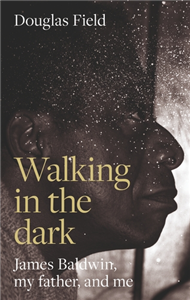
A moving exploration of the life and work of the celebrated American writer, blending biography and memoir with literary criticism. Since James Baldwin's death in 1987, his writing - including The Fire Next Time, one of the manifestoes of the Civil Rights Movement, and Giovanni's Room, a pioneering work of gay fiction - has only grown in relevance. Douglas Field was introduced to Baldwin's essays and novels by his father, who witnessed the writer's debate with William F. Buckley at Cambridge University in 1965. In Walking in the dark, he embarks on a journey to unravel his life-long fascination and to understand why Baldwin continues to enthral us decades after his death. Tracing Baldwin's footsteps in France, the US and Switzerland, and digging into archives, Field paints an intimate portrait of the writer's life and influence. At the same time, he offers a poignant account of coming to terms with his father's Alzheimer's disease. Interweaving Baldwin's writings on family, illness, memory and place, Walking in the dark is an eloquent testament to the enduring power of great literature to illuminate our paths.
Trusted Partner

Recognising that corruption is a serious problem in the globalised world of the early twenty-first century, the book takes the reader on a journey - beginning with what corruption is, why its study is important and how it can be measured. From there it moves on to explore corruption's causes, its consequences and how it can be tackled - before discovering how these things are playing out in the established liberal democracies, in the former communist regimes and in the newly industrialised and 'developing' world. On the way it takes a couple of detours - first, to explore corruption's mechanisms and dynamics and second to survey the scandals to which it may give rise. The book is therefore offered as an informative 'travel guide' of potential interest to journalists and policy makers as well as to students and academics.
Trusted Partner


The most dangerous people are those you trust. The dismembered body of a young woman is discovered in a forest near Hamburg. Her remains give a terrifyingly vivid account of the unimaginably cruel torture she suffered before her death. She won't be the only victim. Within a very short period of time, more women are discovered. Assistant District Attorney Alex Gutenberg and criminal psychologist Dr. Evelin Wolf feverishly try everything to bring down the serial killer before he takes his next victim. A clue leads them to a severely mentally disturbed inmate of an asylum for the criminally insane. He seems to be the key to solving the current crimes. But the interned remains silent. Evelin has only one chance: She must succeed in penetrating the inmate's tainted mind. But the price is high. Evelin tracks down a terrible secret and suddenly finds her own life at stake…
Trusted Partner

 Trusted Partner



