
Silke Heiss (Give Your Writing The Edge)
We are a one-woman charity, hoping to transform into a self-sustaining business, devoted to reminding readers of themselves.
View Rights Portal
We are a one-woman charity, hoping to transform into a self-sustaining business, devoted to reminding readers of themselves.
View Rights Portal
At the heart of Hathaway Education is our commitment to diversity, equity and inclusion in education. Our materials have a strong emphasis on embracing cultural and ethnic differences, exploring various social values and belief systems, and celebrating both the differences and similarities that make us human. Graded readers play a key role in language progression. They provide a controlled environment for students to access stories and themes that will lead to greater motivation, and accelerated learning.
View Rights Portal

The increasing hostility that Jews experience can no longer be explained away with fine rhetoric. Antisemitism is taking hold in a menacing way at the heart of society. Sigmund Gottlieb addresses his wake-up call to the population at large: stand up – not only against right-wing extremist violence and radical Islamism, but also against hatred in the social media, against unfair criticism of the state of Israel, against anti-Jewish abusive language in the school playground, against trivializing reports in the media and day-to-day indifference. The resurgent talk of ‘packed suitcases’ in Jewish communities is a moral indictment. And it is intolerable.
 Trusted Partner

 Trusted Partner

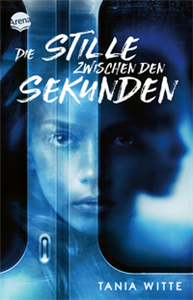
Wie fühlt es sich an, wenn man nur durch Zufall überlebt hat? Nur knapp ist Mara einem Bombenattentat in der U-Bahn entgangen. Ihre Mitschüler nennen sie seither „Das Mädchen, das überlebt hat“ und erwarten Betroffenheit von ihr. Aber Mara hat ganz andere Sorgen. Ihre Freundin Sirîn meldet sich immer seltener und scheint plötzlich komplett unerreichbar. Je mehr Mara ihr zu helfen versucht, desto mehr Unverständnis und Ablehnung erntet sie. Was verheimlichen alle vor ihr? Erst als sich ihr Schwarm Chriso in die Suche einschaltet, kommt die erschütternde Wahrheit ans Licht. „Ein Buch, das unter die Haut geht.“ Corinna Schmitz, Blog „buecherweltcorniholmes“ „Ein Buch, das aktueller nicht sein könnte!“ Timo Muth, Blog „rainbookworld“ „Ein Roman, der mich unsagbar berührt und völlig verloren und erschüttert zurückgelassen hat.“ Susanne Matiaschek, „Magische Momente Alys Bücherblog“ „Wer gerne feinfühlige, spannende, emotionale und lebensnahe Jugendbücher liest, sollte unbedingt zu „Die Stille zwischen den Sekunden“ von Tania Witte greifen. Mich hat die Geschichte komplett von den Füßen gerissen und ich bin in jeglicher Hinsicht begeistert.“ Blog „Buchstabenträumerei“
Trusted Partner

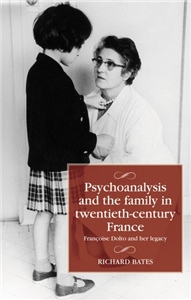
In the last quarter of the twentieth century, if French people had a parenting problem or dilemma there was one person they consulted above all: Françoise Dolto (1908-88). But who was Dolto? How did she achieve a position of such influence? What ideas did she communicate to the French public? This book connects the story of Dolto's rise to two broader histories: the dramatic growth of psychoanalysis in postwar France and the long-running debate over the family and the proper role of women in society. It shows that Dolto's continued reputation in France as a liberal and enlightened educational thinker is at best only partially deserved and that conservative and anti-feminist ideas often underpinned her prominent public interventions. While Dolto retains the status of a national treasure, her career has had far-reaching and sometimes harmful repercussions for French society, particularly in the treatment of autism.
Trusted Partner
Trusted Partner

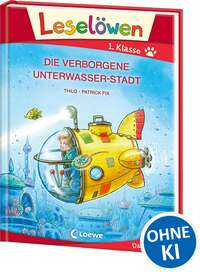
Mit seinem selbst gebauten U-Boot taucht Kalle hinab in den Schatzsee. Kann er das Geheimnis des Sees aufdecken? Plötzlich wird er von einem riesigen Kraken in die Tiefe gezogen und landet in der verborgenen Stadt von König Atlan. Mit den Leselöwen für die erste Klasse können Kinder schon ganz allein ihr erstes eigenes Buch lesen. In jedem Buch wartet eine spannende Geschichte zu einem beliebten Thema mit vielen bunten Bildern, kurzen Sätzen und kleinen Texteinheiten, die jeweils in Sinnschritte unterteilt sind. Die große Fibelschrift erleichtert das Lesenlernen und mit Rätseln und Sachwissen am Ende der Geschichte können die Kinder spielend leicht überprüfen, ob sie den Text richtig verstanden haben. So macht Lesenlernen Spaß!
Trusted Partner
Trusted Partner
Trusted Partner

In welchem Verhältnis stehen Künste wie Literatur, Malerei und Musik, aber auch Architektur, Design und Computerspiel zueinander? Gibt es eine verbindende Einheit oder ist jede Kunst aus sich heraus zu begreifen? Die Reflexion über Einheit und Pluralität der Künste führt zu Kernfragen der Kunsttheorie nach dem Wesen der Kunst, nach den Medien und den Funktionen der Künste sowie zum zentralen Thema, ob die klassische Konstellation der Künste sich in der Nachmoderne aufgelöst hat. Dieses Kompendium bietet einen umfassenden Überblick über die Debatte und versammelt klassische Beiträge, u. a. von Theodor. W. Adorno, Clement Greenberg und Jean-Luc Nancy, sowie aktuelle Perspektiven, u. a. von Lydia Goehr, Gertrud Koch, Juliane Rebentisch, Peter Osborne und Martin Seel.
Trusted Partner
Trusted Partner
Trusted Partner
Trusted Partner

We moderns were the inhabitants of an age of impetuous forward movement and voracious discontent. Our main virtue was to increase our reach. Increasing our having and accelerating our being were the signposts towards the future. We just could not get enough. Using the blinkers of ignorance and self-anaesthesia, however, we managed to forget the tremendous costs incurred by this intoxication. Now disillusionment has set in. We look to the future with anxiety. We know that we have long since crossed a line and that a revision of our lifestyle is imminent. We have a bad feeling, and doubts about progress often give way to anger and rebellion. Which stocks of the modern narrative should we defend; which would we do better to let go? How will we even "be able to stop"? The path to a different society needs an attractive goal, because without the prospect of a different, better life, we will not move forward. We should start practising immediately. There is no time to lose.
Trusted Partner
Trusted Partner
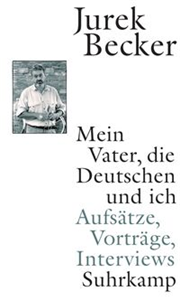
Jurek Becker gehört zu den großen deutschen Schriftstellern nach 1945. Daß er überhaupt ein deutscher Schriftsteller wurde, war jedoch keineswegs selbstverständlich. »Ich bin in Polen geboren, in der unschönen Stadt Lodz, als Kind von Eltern mit, wie man sagt, jüdischem Hintergrund. Der ist, ob ich will oder nicht, somit auch mein Hintergrund. Und wenn nicht bald nach meiner Geburt die deutsche Wehrmacht gekommen wäre, wenn sie nicht das Land besetzt und meine Eltern und mich in ein Ghetto und später in verschiedene Konzentrationslager gesteckt hätte, wenn die Rote Armee nicht das Lager Sachsenhausen, wo ich zuletzt weilte, befreit hätte, dann möchte ich nicht wissen, als was und vor wem ich heute stehen würde.« Jurek Becker aber wußte, als was und vor wem er stand – davon zeugen seine Aufsätze, Vorträge und Interviews. In der vorliegenden Sammlung findet das Selbst- und Weltverständnis dieses außergewöhnlichen Autors Ausdruck, der wie kein anderer die deutschen Verhältnisse in Ost und West, einst und jetzt, auszuloten vermochte – in der ihm eigenen seltenen Balance von sprachlicher Prägnanz, Witz und Klarsicht. Mein Vater, die Deutschen und ich basiert auf dem von Jurek Becker 1996 zusammengestellten Band Ende des Größenwahns. Die Neuausgabe enthält zudem wichtige Interviews, darunter jene, die ein Publikationsverbot in der DDR provozierten, sowie zahlreiche Texte aus dem Nachlaß, u. a. »Wie es zu Jakob dem Lügner kam«.
Trusted Partner
Trusted Partner
Trusted Partner
Trusted Partner






