
Teacher Created Materials
Teacher Created Materials publishes innovative, imaginative, and award-winning resources for teachers, parents, and students in all subjects for ages 4-18 worldwide.
View Rights Portal
Teacher Created Materials publishes innovative, imaginative, and award-winning resources for teachers, parents, and students in all subjects for ages 4-18 worldwide.
View Rights Portal
For over 40 years, Teacher Created Materials (TCM) has published innovative and imaginative resources for teachers and students, bringing exceptional curriculum content to classrooms worldwide. Our award-winning resources are sold and licensed in 89 countries. Everything we publish is created and approved by teachers. All our leveled reading books and curriculum kits are designed to engage students, improve literacy and reading comprehension, build content knowledge, and develop critical-thinking skills.
View Rights Portal
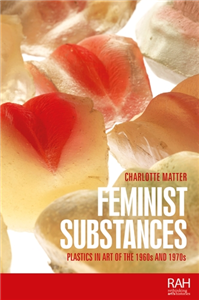
Numerous women artists engaged with industrial materials such as plastics in the 1960s and 1970s, contrary to what the discourse of the time would have us believe. As Feminist substances shows, their works offered unique approaches to plastics in art, introducing new material meanings through a feminist lens. With a focus on Europe and Latin America, the book discusses the practices of Carla Accardi, Lea Lublin and Alina Szapocznikow, combining close readings of selected artworks with broader considerations of their social contexts. It explores their use of Sicofoil, plexiglass, plastic inflatables, polyester resin and polyurethane foam to address key concerns of feminist thought in relation to social reproduction, motherhood, memory, desire and illness. Beyond commonplaces of plastics as generic bad materials, Feminist substances considers more complex ways of engaging with synthetic matter, taking into account our messy relationships with these controversial materials.
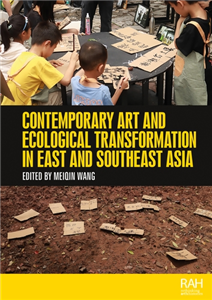
This anthology, presenting new research from fourteen scholars, delves into the interplay between contemporary art and ecological concerns in East and Southeast Asia. Focused on the concept of artistic remediation, the book unravels the diverse capacities of art to combat systemic anthropogenic destruction to the environment and ecology. At its core, the book articulates the ongoing ecological transformation in art and art history that embraces a paradigm shift in human-nature relationships, emphasizing interconnectedness of all life forms of the Earth. Bridging art studies, activism, and environmental studies, the book examines how artistic practices in the region have engaged with ecocritical reflection, biodiversity advocacy, sustainable practices, and environmental justice, among others. Providing a platform for critical and timely analysis of artistic interventions in the face of existential crises, the book acknowledges diverse voices of scholars who have situated their scholarship in the cultural and artistic specificities of various societies, locales, and communities in the region.
 Trusted Partner
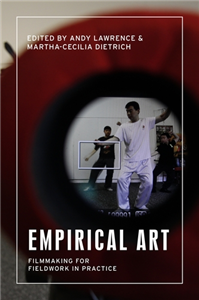
Empirical art: Filmmaking for fieldwork in practice is an insightful exploration of what the craft of filmmaking brings to social science research. Providing creative avenues on how to narrate encounters, relationships, and experiences during fieldwork, this comprehensive volume offers a rich tapestry of theoretical explorations and explorative methodologies. Skilfully connecting the worlds of ethnography, art and cinema, the contributors in this book act as a compass for filmmakers and researchers venturing to use a camera and microphone to relate and narrate their research collaborations and fieldsites. Drawing from the authors' extensive experience in disciplines like social anthropology, environmental humanities, and political science, "Empirical Art" breaks down the intricate process of crafting ethnographic films that departs from the researcher's subjectivity. Covering aspects of filmmaking from conceptualisation to production and distribution, readers are equipped with a treasure trove of collaborative techniques, innovative approaches, and ethical considerations necessary to generate and examine storytelling practices in contemporary fields of study. The authors discuss the significance of the multiple roles that technologies of filmmaking play in reflecting on cultural practices, social dynamics, and (beyond) human storytelling and their transformative potentials. Whether a seasoned filmmaker, an aspiring ethnographer, or an academic seeking new dimensions for their research, Empirical Art serves as a guide to integrating visual storytelling, cinema craft and empirical research.


A pioneering work in the movement to free art from its traditional bonds to material reality, this book is one of the most important documents in the history of modern art. Written by the famous nonobjective painter Wassily Kandinsky (1866–1944), it explains Kandinsky's own theory of painting and crystallizes the ideas that were influencing many other modern artists of the period. Along with his own groundbreaking paintings, this book had a tremendous impact on the development of modern art. Kandinsky's ideas are presented in two parts. The first part, called "About General Aesthetic," issues a call for a spiritual revolution in painting that will let artists express their own inner lives in abstract, non-material terms. Just as musicians do not depend upon the material world for their music, so artists should not have to depend upon the material world for their art. In the second part, "About Painting," Kandinsky discusses the psychology of colors, the language of form and color, and the responsibilities of the artist. An Introduction by the translator, Michael T. H. Sadler, offers additional explanation of Kandinsky's art and theories, while a new Preface by Richard Stratton discusses Kandinsky's career as a whole and the impact of the book. Making the book even more valuable are nine woodcuts by Kandinsky himself that appear at the chapter headings. This English translation of Über das Geistige in der Kunst was a significant contribution to the understanding of nonobjectivism in art. It continues to be a stimulating and necessary reading experience for every artist, art student, and art patron concerned with the direction of 20th-century painting.
Trusted Partner
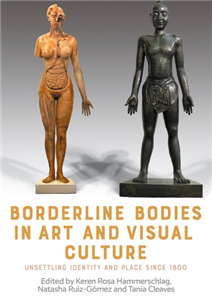
Borderline bodies offers original interpretations of visual representations of human bodies as bounded and unbounded, fortified and permeable, mobile and static-subject to borders and able to traverse and challenge them. It also takes as its focus images and objects that might be considered 'borderline' because they sit at the intersection of disciplines or sit outside accepted notions of what constitutes serious 'art.' By mapping the ways human bodies traverse borders and straddle-even dismantle-categories, this volume's essays approach afresh the relationship of bodies to traditional modes of representation, especially in art and medicine, and encourage us to think anew about how we understand the relationship between human corporeality, identity and place. Critical transdisciplinary and transnational analyses of objects and images from a range of geographies shed new light on the themes of: bodies and identity; typologies of the body; racialised bodies; 'normal' and 'abnormal' bodies; encounters between bodies; bodies in transition; bodies and mobility; and the bounded and unbounded human body. The outcome is a fresh approach to depictions of the human body produced for the purposes of artistic and medical education, aesthetic edification, and scientific and professional advancement, which disrupts assumptions about the normative human body perpetuated through Western image-making traditions.
Trusted Partner
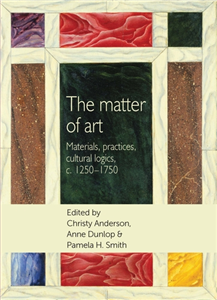
Materials carried the meaning of early modern art. Transformed and crafted from the matter of nature, art objects were the physical embodiment of both the inherent qualities of materials and the forces of culture that used, refined and produced them. The study of materials offers a new approach to this important period in the history of art, science and culture, linking the close study of painting, sculpture and architecture to much wider categories of the everyday and the exotic. Drawing on new research and models from anthropology, material culture and the history of art, scholars in The matter of art explore topics as diverse as Inka stonework, gold in panel painting, cork platforms for shoes, and the Christian Eucharist.
Trusted Partner

This study examines Exeter riddles, Anglo-Saxon biblical poems (Exodus, Andreas, Judith) and Beowulf in order to uncover the poetics of spolia, an imaginative use of recycled fictional artefacts to create sites of metatextual reflection. Old English poetry famously lacks an explicit ars poetica. This book argues that attention to particularly charged moments within texts - especially those concerned with translation, transformation and the layering of various pasts - yields a previously unrecognised means for theorising Anglo-Saxon poetic creativity. Borrowed objects and the art of poetry works at the intersections of materiality and poetics, balancing insights from thing theory and related approaches with close readings of passages from Old English texts.
Trusted Partner
Trusted Partner
Trusted Partner
Trusted Partner
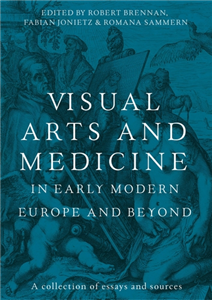
This book opens up new perspectives on the relationship between art, medicine, and science in late-medieval and early modern Europe. Looking beyond the traditional nexus of art, anatomy, and optics, the volume sheds light on a broader array of connections between artists and physicians: collaborations between painters and doctors on colour charts, handwork skills common to sculptors and surgeons, the transmission of art theory through medical texts long before the emergence of art writing itself as an independent genre, and the kinship of medical diagnosis with early modes of connoisseurship. Reconfiguring the histories of art, medicine, and science, the book also traverses conventional boundaries between physical and mental health, religious and medical modes of healing, menial and exalted forms of knowledge and labour, as well as vernacular and scientific understandings of human difference, including gender, race, and neurodiversity.
Trusted Partner
Trusted Partner
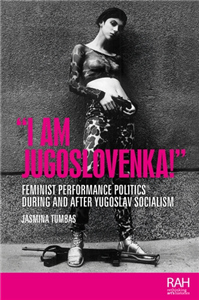
"I am Jugoslovenka" argues that queer-feminist artistic and political resistance were paradoxically enabled by socialist Yugoslavia's unique history of patriarchy and women's emancipation. Spanning performance and conceptual art, video works, film and pop music, lesbian activism and press photos of female snipers in the Yugoslav wars, the book analyses feminist resistance in a range of performative actions that manifest the radical embodiment of Yugoslavia's anti-fascist, transnational and feminist legacies. It covers celebrated and lesser-known artists from the 1970s to today, including Marina Abramovic, Sanja Ivekovic, Vlasta Delimar, Tanja Ostojic, Selma Selman and Helena Janecic, along with music legends Lepa Brena and Esma Redzepova. "I am Jugoslovenka" tells a unique story of women's resistance through the intersection of feminism, socialism and nationalism in East European visual culture.
Trusted Partner
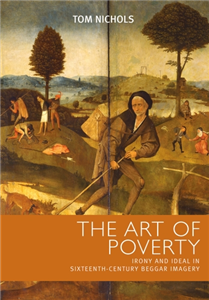
The art of poverty is the first book in English to analyse depictions of beggars in sixteenth-century European art. Featuring works from Germany, the Low Countries, Britain, France and Italy, it discusses a diverse body of imagery in many different media, from crude woodcuts to monumental church altarpieces. It develops a striking thesis, arguing that these works largely conformed to two paradoxical, though mutually supportive, representational approaches. The earlier chapters follow the emergence of a trenchantly negative approach in Northern art, in which beggars are shown as vagabonds, whose idleness and thievery threatened the values of sixteenth-century society (especially its growing emphasis on the need to work). In the other predominant visual mode, beggars are exalted as examples of sacred purity. In many Italian religious paintings, beggars are morally exalted with reference to sacred texts, and made formally beautiful with reference to revered artistic models. Though these approaches reflect the impact of religious reform, it is shown that, by the end of the century, they happily co-existed within Protestant and Catholic cultures. The final part of the book is concerned with the issue of artistic style and with the growing tendency of the beggar image to mediate and dissolve the didactic traditions through which it had originally been defined. The art of poverty will be of special interest to scholars and students of Renaissance art history, and its progressive approach and cross-disciplinary theme and perspective will also make it vital reading for those concerned with the development of early modern European culture. ;
Trusted Partner
Trusted Partner
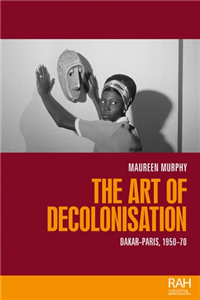
The art of decolonisation examines how artists challenged colonial legacies and reconfigured power through transnational networks of art and diplomacy. Adopting a global and transhistorical perspective, it explores artistic, political, and institutional relations between France and Senegal during decolonisation and the Cold War. From the emergence of a national modern art in Senegal to contested cultural policies and high-profile exhibitions-such as those featuring Picasso and Soulages in Dakar, or contemporary Senegalese art in Paris-this book traces the circulation of artworks, ideas, and influence across borders. It reveals how visual artists and filmmakers shaped a new artistic geopolitics between 1950 and 1970. Reconsidering the accepted chronology of the 'global turn', The art of decolonisation shows that the roots of global art discourse run deeper than the 1990s, and were already forming during the era of independence struggles.
Trusted Partner
Trusted Partner
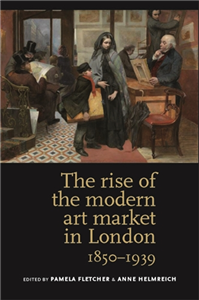
Now available in paperback for the first time, this study of the modern London art market establishes the central importance of London for the development of the modern retail market in fine art. Leading experts track the emergence and development of the structures and practices that have come to characterize the commercial art system, including the commercial art gallery, the professional dealer, the exhibition cycle and its accompanying rhetoric of press coverage and publicity, and an international network for the circulation of goods. This new commercial system involved a massive transformation of the experience of viewing art; of the relationships between artists, dealers, collectors, art objects and audiences; and of the very criteria of aesthetic value itself. Its history is thus a vital part of the history of modern art, and this anthology will be of interest to art historians as well as scholars of Victorian Studies, Museum Studies, and Social History.
Trusted Partner
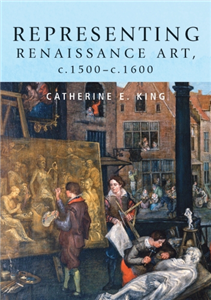
Representing Renaissance art, c.1500-c.1600 is a study of change and continuity in the iconographies of art and the visual representation of artists during the sixteenth century, especially in Italy and the Netherlands. The issue of how, and how far, artists obtained higher status for their profession during the Renaissance is a key question for the study of the early modern period. This book considers the maintenance of well-established traditions for the visual representation of artists, and also examines the new iconographies that emerged in the sixteenth century. By highlighting art and architecture that artists designed for their personal use, including the decoration of their houses, this study provides insight into the tastes and 'ways of looking' specific to artists. By examining the visual evidence we see the opinions both of artists who expressed their views in literary texts, and additionally those of artists who did not publish their ideas in written form.
Trusted Partner



