
Live It Publishing
Live It Publishing is an innovative independent publishing house discovering new titles through its Live It Publishing and Britain's Next Bestseller (BNBS) imprints.
View Rights Portal
Live It Publishing is an innovative independent publishing house discovering new titles through its Live It Publishing and Britain's Next Bestseller (BNBS) imprints.
View Rights Portal
AlFulk Translation & Publishing: An independent publishing house, launched in October 2015 and based in Abu Dhabi. It specialisation is translating children and young adult literature from different languages into Arabic. AlFulk aims for:1. To enrich the Arabic library with diverse cultural collections, in order to aware the readers of the intercultural communication importance. 2. To establish a reading habits base for children from 0-4.3. To increase the level of YA books -both Fantasy, fiction and non-fiction- in terms of their content and illustrations.As the majority in the publishing industry, we have been affected by COVID-19 epidemic. However, we have decided to participate at Frankfurter Buchmesse this year to look at what is new in the industry and to expand our network. We seek long term partnerships.
View Rights Portal
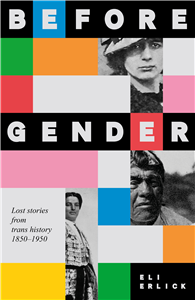
Discover the trailblazing lives of thirty trans people who will radically change everything you've been told about transgender history. Highlighting influential individuals from 1850 to 1950 who are all but unknown today, Eli Erlick shares thirty remarkable stories from romance to rebellion and mystery to murder. These narratives chronicle the grit, joy and survival of trans people long before gender became an everyday term. Organised into four parts, paralleling today's controversies over gender identity - kids, activists, workers and athletes - Before Gender introduces figures whose forgotten stories transform the discussion. These ground-breaking histories include two of the first teens to access gender-affirming medical treatment, a countess who instigated an LGBTQ+ riot forty years before Stonewall and the greatest female billiards player of the 1910s. Bold and visionary, Erlick's debut uncovers these lost stories from the depths of the archives to narrate trans lives in a way that has never been attempted before.
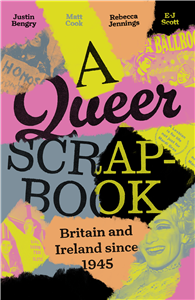
A beautifully illustrated compendium of LGBTIQ+ life. A queer scrapbook offers a treasure trove of LGBTIQ+ histories from across Britain and Ireland. Packed with materials, from interviews and newspaper articles to photographs and flyers, the book explores urban, rural and regional queer life since 1945. Commentaries and short essays introduce a changing queer landscape, spotlighting four broad themes: home and family, sex and socialising, arts and culture and politics and activism. The book delves into the meaning and experiences of domesticity and parenting and explores the sometimes unexpected places LGBTIQ+ people met to have fun. It examines the importance of creative work in forming community and identity and shows how people fought injustice and advocated for equal rights. Collecting has been a way for the marginalised to explore and assert identity and community. A queer scrapbook vividly illustrates the diversity of queer and trans lives across the British and Irish isles since the Second World War.
 Trusted Partner
Trusted Partner
Trusted Partner

This book attempts to establish a more holistic approach to the rehabilitation of war-injured civilians, one that adjusts to the patients' long-term needs. Kovacic not only offers an insight into the daily realities of patients during and after rehabilitation, but seeks to develop a new way to perceive, respect and involve them in health care. Based on comprehensive interviews with patients and MSF staff, as well as extended field observations, Reconstructing lives follows Syrian and Iraqi war-injured civilians in their journey to recovery. From their improvised medical treatment in their home countries, to the MSF-run hospital in Amman Jordan, to their return home, Kovacic explores how individuals attempt to pick up the pieces of their previous lives, add new elements from their treatment and travel experiences, and finally establish a new reconstructed reality. The book explores how the interaction between MSF staff and their patients contributes to the immense task of healing that awaits victims of war. The reader visits the intimate medical and domestic spaces that usually remain closed to the outside observer, spaces rich with human contact, perceptions, emotions, conflicts and reconciliations.
Trusted Partner
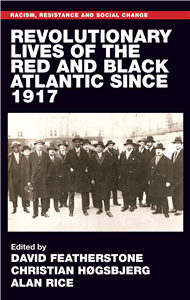
Revolutionary lives of the Red and Black Atlantic brings to light the life histories of a wide range of radical figures whose political activity in relation to the black liberation struggle was profoundly shaped by the global impact and legacy of the Russian Revolution of October 1917. The volume introduces new perspectives on the intellectual trajectories of well-known figures and critical activists including C. L. R. James, Paul Robeson, Walter Rodney and Grace P. Campbell. This biographical approach brings a vivid and distinctive lens to bear on how racialised social and political worlds were negotiated and experienced by these revolutionary figures, and on historic black radical engagements with left political movements, in the wake of the Russian Revolution.
Trusted Partner

David Livingstone, the 'missionary-explorer', has attracted more commentary than nearly any other Victorian hero. Beginning in the years following his death, he soon became the subject of a major biographical tradition. Yet out of this extensive discourse, no unified image of Livingstone emerges. Rather, he has been represented in diverse ways and in a variety of socio-political contexts. Until now, no one has explored Livingstone's posthumous reputation in full. This book meets the challenge. In approaching Livingstone's complex legacy, it adopts a metabiographical perspective: in other words, this book is a biography of biographies. Rather than trying to uncover the true nature of the subject, metabiography is concerned with the malleability of biographical representation. It does not aim to uncover Livingstone's 'real' identity, but instead asks: what has he been made to mean? Crossing disciplinary boundaries, Livingstone's 'lives' will interest scholars of imperial history, postcolonialism, life-writing, travel-writing and Victorian studies.
Trusted Partner
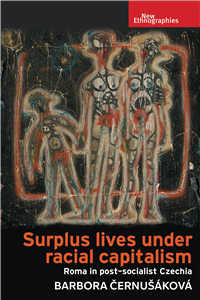
Surplus lives under racial capitalism is a critical contribution to the study of racial capitalism. It theorises the link between political economy, anti-Roma racism and modern forms of white supremacy in East Central Europe. The book shows how the introduction of capitalism in the 1990s overlapped with the rise of racialised disposability of Roma workers. Since then, their surplusing recurrently comes into sharp relief during the time of crisis. Surplus lives under racial capitalism is built on an investigation of how race and class structure the Czech labour regime and how they form a single site of struggle. One which binds workers across racialised divisions as surplusing continuously expands.
Trusted Partner

The new activity of trans-continental civil flying in the 1930s is a useful vantage point for viewing the extension of British imperial attitudes and practices. Cultures and caricatures of British imperial aviation examines the experiences of those (mostly men) who flew solo or with a companion (racing or for leisure), who were airline passengers (doing colonial administration, business or research), or who flew as civilian air and ground crews. For airborne elites, flying was a modern and often enviable way of managing, using and experiencing empire. On the ground, aviation was a device for asserting old empire: adventure and modernity were accompanied by supremacism. At the time, however, British civil imperial flying was presented romantically in books, magazines and exhibitions. Eighty years on, imperial flying is still remembered, reproduced and re-enacted in caricature. ;
Trusted Partner


A how-to guide to affirmative counseling with transgender clients• Presents the best evidence-basedcare• Instructions for strategies to improveinclusivity• Illustrated with case studies• Printable tools for clinical use This volume provides fundamental and evidence-based information on working with transgender and gender diverse people in mental health services. The authors, who are experts in the field, outline the key qualities of affirming mental health services, as well as explore strategies for improving inclusivity and what evidence-based care with trans clients looks like. They also provide insight into current topics, such as working with youth, the harmful and ill-advised approach known as rapid onset gender dysphoria, and whether and how autism is a co-occurring diagnostic concern. Practitioners will find the printable resources provided invaluable for their clinical practice, including sample letters of support for trans clients who are seeking gender affirming medical care. For:• clinical psychologists• psychiatrists• psychotherapists• family practitioners• counselors• students
Trusted Partner
Trusted Partner
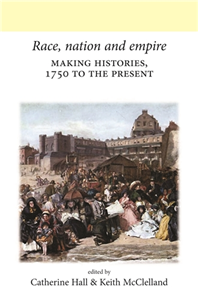
The essays in this collection show how histories written in the past, in different political times, dealt with, considered, or avoided and disavowed Britain's imperial role and issues of difference. Ranging from enlightenment historians to the present, these essays consider both individual historians, including such key figures as E. A. Freeman, G. M. Trevelyan and Keith Hancock, and also broader themes such as the relationship between liberalism, race and historiography and how we might re-think British history in the light of trans-national, trans-imperial and cross-cultural analysis. 'Britishness' and what 'British' history is have become major cultural and political issues in our time. But as these essays demonstrate, there is no single national story: race, empire and difference have pulsed through the writing of British history. The contributors include some of the most distinguished historians writing today: C. A. Bayly, Antoinette Burton, Saul Dubow, Geoff Eley, Theodore Koditschek, Marilyn Lake, John M. MacKenzie, Karen O'Brien, Sonya O. Rose, Bill Schwarz, Kathleen Wilson. ;
Trusted Partner

 Trusted Partner
Trusted Partner
Trusted Partner
 Trusted Partner
Trusted Partner
Trusted Partner
 Trusted Partner


In the middle of our lives, the cards are reshuffled: marriages are divorced, careers are questioned, friendships are ended, questions of meaning are asked, bodies change - and not just hormonally. At the same time, children leave home and parents become carers. From the age of 45, the majority of our population is at the centre of a second upheaval that affects all facets of our lives and leaves us at a loss in many ways. Not only in our daily lives, but also when it comes to planning for our own old age. This guide is designed to help us find our way. It presents the most important information from all areas relevant to a good life after 45. Leading experts from the fields of medicine, nutrition, philosophy, theology, psychology, care, law and finance give recommendations on what to look out for and what tools are needed to get through these challenging years unscathed. Useful checklists round off the articles. The book shows us the unique opportunity to see these challenges not as a crisis but as a source of strength. Not only can we come through this period of our lives healthy and happy, but we can also shape it so that the next age threshold is no longer frightening. During the second phase of adolescence, we lay the foundations for whether and how we will grow older. Be it in terms of health or living together with family and friends. With contributions from: Prof. Dr. Martin Gessmann (philosophy), Dipl. Psych. Claudia Kühner (psychology), Dr Suso Lederle (medicine), Dr Petra Forster (nutrition), Christian Hald, Anja Heine (law), Prof Dr Philipp Schreiber (finance), Prof Dr Thomas Klie (nursing care insurance), Georg Eberhardt (religion).
Trusted Partner
 Trusted Partner


Steh auf für ein gleichberechtigtes Miteinander! Verstecke niemals deine eigene Identität! Setz dich dafür ein, dass niemand diskriminiert wird! Die Autorinnen machen sich (und dich) stark für die Gleichberechtigung von Männern und Frauen, von Menschen mit Migrationshintergrund, von trans-, nicht binären und intergeschlechtlichen Menschen. Denn dass hier keine Unterschiede gemacht werden dürfen, sollte selbstverständlich sein. Und wenn beim Diskutieren darüber doch mal die Argumente fehlen, hier sind sie.
Trusted Partner

Steht auf für ein gleichberechtigtes Miteinander, versteckt niemals eure Identität, setzt euch dafür ein, dass niemand diskriminiert wird – hier kommen die Argumentationshilfen: von Pay Gap bis LGBTQI+. Die Autorinnen machen sich (und die Hörer:innen) stark für Gleichberechtigung von Männern und Frauen, von Menschen mit Migrationshintergrund, von trans-, nicht binären und intergeschlechtlichen Menschen. Dass hier keine Unterschiede gemacht werden dürfen, sollte eigentlich selbstverständlich sein. Falls beim Diskutieren doch mal die Argumente fehlen, hier sind sie.



