Your Search Results

      • AlFulk Translation and Publishing

        AlFulk Translation & Publishing: An independent publishing house, launched in October 2015 and based in Abu Dhabi. It specialisation is translating children and young adult literature from different languages into Arabic. AlFulk aims for:1. To enrich the Arabic library with diverse cultural collections, in order to aware the readers of the intercultural communication importance. 2. To establish a reading habits base for children from 0-4.3. To increase the level of YA books -both Fantasy, fiction and non-fiction- in terms of their content and illustrations.As the majority in the publishing industry, we have been affected by COVID-19 epidemic. However, we have decided to participate at Frankfurter Buchmesse this year to look at what is new in the industry and to expand our network. We seek long term partnerships.

        View Rights Portal
      • Literature Translation Institute of Korea

        LTI Korea is a government-affiliated organization that aims to disseminate Korean culture and literature throughout the world in line with the government’s efforts to shape Korean literature in the world culture.  website: https://www.ltikorea.or.kr/en/main.do  Korean Literature Now(literary magazine): https://www.ltikorea.or.kr/en/board/kln_en/boardList.do

        View Rights Portal
      • Trusted Partner
        Humanities & Social Sciences
        January 2026

        Understanding displacement aesthetics

        History, art and museums

        by Ana Carden-Coyne, Charles Green, Chrisoula Lionis, Angeliki Roussou

        Since the Second World War and the formalisation of the international refugee regime, forced displacement has been marked by a set of aesthetic, practical, and institutional concerns. Understanding Displacement Aesthetics examines how visual culture and art practice constructs and challenges ideas about forced displacement and refugees. The novel framework for 'displacement aesthetics' moves beyond conventional understandings of aesthetics as merely representational, demonstrating the entanglement of visual culture, art practices, and forced displacement in postmigrant contexts. Bringing together the fields of cultural history, art history, and curatorial studies, Understanding Displacement Aesthetics identifies four areas for consideration: visual tropes of refugeedom; language and identity; institutional and artistic responses to displacement; and lived experiences of artists with backgrounds of displacement. Through archival research, visual culture and art, interviews, and collaborative curatorship, Understanding Displacement Aesthetics offers new insight into overcoming the limitations that contexts of displacement can present for artists, art galleries and institutions addressing refugeedom and its legacies.

      • Trusted Partner
        Humanities & Social Sciences
        July 2025

        Conservatism, Christian Democracy and the dynamics of transformation

        Traditions, cooperation and influence in North-West Europe, 1945-91

        by Gary Love, Christian Egander Skov

        Conservatism, Christian Democracy, and the Dynamics of Transformation compares the centre-right political traditions of Britain, the Nordic countries, France, West Germany, and Austria and looks for evidence of political cooperation and influence across borders during the period 1945-90. The book explores howa variety of intellectuals, politicians, and political parties transformed their politics in response to major economic, social, and political challenges and seeks to explain why conservatives and Christian democrats came to feel that they belonged to a wider centre-right political family by the end of this period. It also examines why these political traditions found it difficult to cooperate with each other after the Second World War and why they decided to invest more political capital in inter-party relations and wider transnational projects from the 1960s. As the book shows, these developments resulted in two new centre-right internationals: the European Democrat Union and the International Democrat Union.

      • Trusted Partner
        Humanities & Social Sciences
        March 2024

        Diaspora as translation and decolonisation

        by Ipek Demir

        This innovative study engages critically with existing conceptualisations of diaspora, arguing that if diaspora is to have analytical purchase, it should illuminate a specific angle of migration or migrancy. To reveal the much-needed transformative potential of the concept, the book looks specifically at how diasporas undertake translation and decolonisation. It offers various conceptual tools for investigating diaspora, with a specific focus on diasporas in the Global North and a detailed empirical study of the Kurdish diaspora in Europe. The book also considers the backlash diasporas of colour have faced in the Global North.

      • Trusted Partner
        Business, Economics & Law
        June 2025

        Foundations of social ecological economics

        The fight for revolutionary change in economic thought

        by Clive L Spash

        This book explores radical dissent from orthodox mainstream economics, and sets out a theoretically grounded vision for the emerging paradigm of social ecological economics. At the heart of this paradigmatic shift lies an acknowledgement of the inextricable embeddedness of economies in biophysical reality and social structure. The struggle for this transformative vision unfolds through a critical examination of mainstream environmental thought, followed by a nuanced evaluation of contributions from Marxists, socialists, critical institutionalists, feminists and Post-Keynesians grappling with the urgent environmental crisis. Synthesising insights from these diverse and heterodox schools, the book navigates the philosophical underpinnings of science, embracing a critical realist approach that challenges not only mainstream economic thought but also eclectic pluralism, relativism and strong constructionism. The question of what constitutes revolutionary science is explored in light of works by Kuhn, Schumpeter and Neurath, emphasising the pivotal role of values and ideology in works from Marx to Gramsci. Building on these radical and philosophical foundations, the book articulates a preanalytic vision of social ecological economics, dismantling entrenched notions of growth and efficiency in favour of a framework centered on social provisioning and needs embedded in ethics. In a thought-provoking conclusion, the book applies its analytical lens to the multiple crises of modernity within industrialised capital-accumulating economies. An agenda for social ecological transformation toward diverse alternative economies emerges, providing a compelling call to action in the face of contemporary challenges.

      • Trusted Partner
        Humanities & Social Sciences
        February 2013

        The Jews in western Europe, 1400–1600

        by Translated and Edited by John Edwards

        As European politics, society, economy and religion underwent epoch-making changes between 1400 and 1600, the treatment of Europe's Jews by the non-Jewish majority was, then as in later periods, a symptom of social problems and tensions in the Continent as a whole. Through a broad-ranging collection of documents, John Edwards sets out to present a vivid picture of the Jewish presence in European life during this vital and turbulent period. Subjects covered include the Jews' own economic presence and culture, social relations between Jews and Christians, the policies and actions of Christian authorities in Church and State. He also draws upon original source material to convey ordinary people's prejudices about Jews, including myths about Jewish 'devilishness', money-grabbing, and 'ritual murder' of Christian children. Full introductory and explanatory material makes accessible the historical context of the subject and highlights the insights offered by the documents as well as the pitfalls to be avoided in this area of historical enquiry. This volume aims to provide a coherent working collection of texts for lecturers, teachers and students who wish to understand the experience of Jewish Europeans in this period. ;

      • Trusted Partner
        Humanities & Social Sciences
        November 2011

        The Transformation of European Football

        Towards the Europeanisation of the national game

        by Arne Niemann, Borja Garcia, Wyn Grant

        The book examines the transformation of European football in recent years by focusing on the impact of Europe in general and the EU in particular on the way that the game has evolved in a broad cross section of European states. The book brings together two significant research agendas: first, that on the governance of sport in Europe/the European Union; secondly, that within European integration studies on 'Europeanisation' (most commonly understood at the process of change in the domestic arena resulting from European integration). The concept of Europeanisation and in particular' top down' Europeanisation is used to shape the individual country case studies. Other transformational factors such as globalization are also assessed. The three chapters in the introductory section set the context within which the transformation of European football has occurred with particular emphasis on the role of UEFA and EU institutions. The ten country studies in the central part of the book include the five leading football nations in Europe and smaller countries that are facing new challenges in the competitive environment of modern European football. They include an example of a country that is a recent accession state and one outside the EU. What emerges from these chapters is both the shaping influence of Europeanisation but also the extent to which it is countered and modified by national culture and structures. What is also noticeable the sense of decline amongst some of the small and even larger footballing nations in the continent. This book will be of interest to students of European politics, sports governance and football, it also represents a substantial contribution to the debate on Europeanisation. ;

      • Trusted Partner
        September 2021

        Crisis and Transformation

        by Jean-Pierre Wils (Ed.)

        We live in an age of upheaval and crisis; our existence is at the threshold of a new epoch that leaves nothing as it was before. It became clear that the natural materials of our world in transformation were a finite and exhaustible resource. The ambitious projects of humankind were already beset by doubts and the optimism of something better in store for us in the future became ever more subdued. An era of sceptical thinking dawned. What was only recently celebrated as an achievement is today placed in question: democracy, human rights and the bond of solidarity between the generations. But the art of dialogue must always be preserved. The capacity for critical reflection must be repeatedly practised and the sensitivity of our perception deepened.

      • Trusted Partner
      • Trusted Partner
      • Trusted Partner
        April 1997

        Philosophie der Logik

        Eine Einführung

        by Read, Stephen

      • Trusted Partner
        October 1989

        Dylan Thomas

        by Read, Bill

      • Trusted Partner
        Literature & Literary Studies
        August 2025

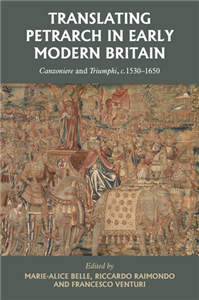
        Translating Petrarch in early modern Britain

        Canzoniere and Triumphi, c. 1530–1650

        by Marie-Alice Belle, Riccardo Raimondo, Francesco Venturi

        Translating Petrarch in early modern Britain gathers twelve essays by international scholars focusing on the translation of Petrarch's vernacular verse (Canzoniere and Triumphi) into English, from the Tudor age to the mid-seventeenth century (and beyond). Approaching translation as an interpretive process, but also a mode of literary emulation and cultural engagement with Petrarch's prestigious precedent, the collection explores the complex and interconnected trajectories of both poetic works in English and Scottish literary milieux. While situating each translation in its distinct historical, material, and literary context, the essays trace the reception of Petrarch's works in early modern Britain through the combined processes of linguistic and metric innovation, literary imitation, musical adaptation and cultural and material 'domestication'. The collection sheds light on the origins and development of early modern English Petrarchism as part of wider transnational - and indeed, translational-European literary culture.

      • Trusted Partner
        Literature & Literary Studies
        May 2026

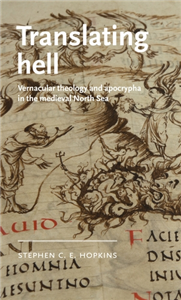
        Translating hell

        Vernacular theology and apocrypha in the medieval North Sea

        by Stephen C. E. Hopkins

        In the Middle Ages, hell was useful because it was vaguely defined. Canonical scriptures scarcely mention hell, leaving much to the imaginations of early Christians, who used it to sort out who belonged within the faith. This book explores how hell became a place for literary experiments with local challenges in theology and identity. Following the reception and transformations of two popular hell apocrypha, it argues that they served as this role because of their liminal textual authority. As noncanonical scriptures, apocrypha afforded medieval writers space to revise their hells (since they were not actually scripture), while also encouraging readers to revere those experiments as valid (since they seemed like scripture). The book brings together adaptations from early medieval England, Iceland, Ireland, and Wales, placing the early vernacular theologies of the North Sea in comparative conversation.

      • Trusted Partner
        Humanities & Social Sciences
        March 2014

        Transforming conflict through social and economic development

        Practice and policy lessons from Northern Ireland and the Border Counties

        by Sandra Buchanan

        Transforming conflict through social and economic development examines lessons learned from the Northern Ireland and Border Counties conflict transformation process through social and economic development and their consequent impacts and implications for practice and policymaking, with a range of functional recommendations produced for other regions emerging from and seeking to transform violent conflict. It provides, for the first time, a comprehensive assessment of the region's transformation activity, largely amongst grassroots actors, enabled by a number of specific funding programmes, namely the International Fund for Ireland, Peace I, II and III and INTERREG I, II and IIIA. These programmes have been responsible for a huge increase in grassroots practice which to date has attracted virtually no academic analysis; this book seeks to fill this gap. In focusing on the politics of the socioeconomic activities that underpinned the elite negotiations of the peace process, key theoretical transformation concepts are firstly explored, followed by an examination of the social and economic context of Northern Ireland and the border counties. The three programmes and their impacts are then assessed before considering what policy lessons can be learned and what recommendations can be made for practice. This is underpinned by a range of semi-structured interviews and the author's own experience as a project promoter through these programmes in the border counties for more than a decade. The book will be essential reading for students, practitioners and policymakers in the fields of peace and conflict studies, conflict transformation, peacebuilding, post-agreement reconstruction and the political economy of conflict and those interested in contemporary developments in the Northern Ireland peace process. ;

      • Trusted Partner
        Humanities & Social Sciences
        July 2018

        Security sector reform in transforming societies

        Croatia, Serbia and Montenegro

        by Timothy Edmunds

        This book is about the relationship between societies and their security forces at times of great political and societal change. It uses the experiences of Croatia, Serbia and Montenegro to examine the control, management and reform of armed forces, police and intelligence agencies in the aftermath of conflict and authoritarianism. The book assesses the theory and practice of security sector reform programmes in the context of Europe and the Western Balkans, the relationship between security sector reform and normative international policy more generally, and the broader dynamics of post-conflict and post-authoritarian transformation. In so doing it addresses two underlying questions. First, how and in what ways does reform in the security sector interrelate with processes of domestic political and societal transformation, particularly democratisation. Second, how and in what ways do these processes relate and respond to internationally-driven efforts to promote a particular type of security sector reform as a component of wider peacebuilding and democracy promotion strategies.

      • Trusted Partner
        Humanities & Social Sciences
        August 1994

        The Black Death

        by Translated and edited by Rosemary Horrox

      • Trusted Partner
        Humanities & Social Sciences
        August 2018

        Living displacement

        by Mateja Celestina, Alexander Smith

      • Trusted Partner
        Literature & Literary Studies
        May 2024

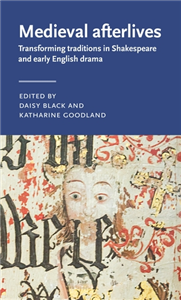
        Medieval afterlives

        Transforming traditions in Shakespeare and early English drama

        by Daisy Black, Katharine Goodland

        A collection of essays which show how early drama traditions were transformed, recycled, re-used and reformed across time to form new relationships with their audiences. Medieval afterlives brings new insight to the ways in which peoples in the sixteenth century understood, manipulated and responded to the history of their performance spaces, stage technologies, characterisation and popular dramatic tropes. In doing so, this volume advocates for a new understanding of sixteenth-seventeenth century theatre makers as highly aware of the medieval traditions that formed their performance practices, and audiences who recognised and appreciated the recycling of these practices between plays.

      Subscribe to our

      newsletter