
Thekla Verlag
We are a publisher from Germany with a selected list of children's and young adult books.
View Rights Portal
We are a publisher from Germany with a selected list of children's and young adult books.
View Rights Portal
Theart Press is a South African publisher specialisingin inspirational books - including poetry, children's books and biography.
View Rights Portal

This innovative study engages critically with existing conceptualisations of diaspora, arguing that if diaspora is to have analytical purchase, it should illuminate a specific angle of migration or migrancy. To reveal the much-needed transformative potential of the concept, the book looks specifically at how diasporas undertake translation and decolonisation. It offers various conceptual tools for investigating diaspora, with a specific focus on diasporas in the Global North and a detailed empirical study of the Kurdish diaspora in Europe. The book also considers the backlash diasporas of colour have faced in the Global North.

 Trusted Partner
Trusted Partner
Trusted Partner
This study examines Exeter riddles, Anglo-Saxon biblical poems (Exodus, Andreas, Judith) and Beowulf in order to uncover the poetics of spolia, an imaginative use of recycled fictional artefacts to create sites of metatextual reflection. Old English poetry famously lacks an explicit ars poetica. This book argues that attention to particularly charged moments within texts - especially those concerned with translation, transformation and the layering of various pasts - yields a previously unrecognised means for theorising Anglo-Saxon poetic creativity. Borrowed objects and the art of poetry works at the intersections of materiality and poetics, balancing insights from thing theory and related approaches with close readings of passages from Old English texts.
Trusted Partner

De-centering queer theory seeks to reorient queer theory to a different conception of bodies and sexuality derived from Eastern European Marxism. The book articulates a contrast between the concept of the productive body, which draws its epistemology from Soviet and avant-garde theorists, and Cold War gender, which is defined as the social construction of the body. The first part of the book concentrates on the theoretical and visual production of Eastern European Marxism, which proposed an alternative version of sexuality to that of western liberalism. In doing so it offers a historical angle to understand the emergence not only of an alternative epistemology, but also of queer theory's vocabulary. The second part of the book provides a Marxist, anti-capitalist archive for queer studies, which often neglects to engage critically with its liberal and Cold War underpinnings.
Trusted Partner
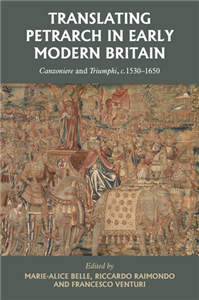
Translating Petrarch in early modern Britain gathers twelve essays by international scholars focusing on the translation of Petrarch's vernacular verse (Canzoniere and Triumphi) into English, from the Tudor age to the mid-seventeenth century (and beyond). Approaching translation as an interpretive process, but also a mode of literary emulation and cultural engagement with Petrarch's prestigious precedent, the collection explores the complex and interconnected trajectories of both poetic works in English and Scottish literary milieux. While situating each translation in its distinct historical, material, and literary context, the essays trace the reception of Petrarch's works in early modern Britain through the combined processes of linguistic and metric innovation, literary imitation, musical adaptation and cultural and material 'domestication'. The collection sheds light on the origins and development of early modern English Petrarchism as part of wider transnational - and indeed, translational-European literary culture.
Trusted Partner
For Spring Summer 2020, Gucci showed a collection questioning identity politics and capitalism. Rather than the usual explanation of the material, shapes or inspirations behind the collection, the press release handed out at the show quoted the philosopher Michel Foucault and questioned the very nature of fashion itself. Gucci's press release reflects the popularization of critical theory in public discourse and fashion in particular. Philosophers, activists and academics are increasingly recruited to collaborate with luxury brands, and main-stream fashion brands have begun to adopt a discourse about politics and critical thinking using, in their communication, concepts such as "resistance", "gender fluidity", "national identity" or "cultural heritage" without accompanying these discourses with any form of political engagement or activism. Based on this intellectualization of the fashion industry and the recent proliferation of critical theory in fashion education, this book stresses the importance of rethinking the relationship between fashion and theory. Drawing together eleven chapters and four conversations by and with philosophers, cultural theorists, historians, anthropologists, activists, performers and designers, the book investigates both the theorization of fashion and the ways in which fashion offers a useful landscape in understanding the current state of critical theory today.
Trusted Partner

Lukácsian film theory and cinema explores Georg Lukács' writings on film. The Hungarian Marxist critic Georg Lukács is primarily known as a literary theorist, but he also wrote extensively on the cinema. These writings have remained little known in the English-speaking world because the great majority of them have never actually been translated into English - until now. Aitken has gathered together the most important essays and the translations appear here, often for the first time. This book thus makes a decisive contribution to understandings of Lukács within the field of film studies, and, in doing so, also challenges many existing preconceptions concerning his theoretical position. For example, whilst Lukács' literary theory is well known for its repudiation of naturalism, in his writings on film Lukács appears to advance a theory and practice of film that can best be described as naturalist. Lukácsian film theory and cinema is divided into two parts. In part one, Lukács' writings on film are explored, and placed within relevant historical and intellectual contexts, whilst part two consists of the essays themselves. This book will be of considerable interest to scholars and students working within the fields of film studies, literary studies, intellectual history, media and cultural studies. It is also intended to be the final volume in a trilogy of works on cinematic realism, which includes the author's earlier European film theory and cinema (2001), and Realist film theory and cinema (2006).
Trusted Partner


Die Kernfrage der heutigen analytischen Philosophie, die Frage, die sie von allen früheren und allen konkurrierenden philosophischen Ansätzen abhebt, ist die Frage nach dem Wesen der Bedeutung sprachlicher Ausdrücke. Davidson zeigt, daß eine Theorie der von ihm ins Auge gefaßten Art empirischen Charakter hat, ihre Axiome und Lehrsätze also gesetzesartig sein müssen. Wie die Theorie für sprachphilosophische Einzelprobleme fruchtbar gemacht werden kann, demonstriert Davidson in Aufsätzen über das Problem der Übersetzung, die Möglichkeiten und Schwierigkeiten des Zitierens, das Verhältnis von Glauben und Bedeutung, Sprache und Wirklichkeit sowie in seinen Auseinandersetzungen mit Quine und Dummett, Carnap und Church, Chomsky und Frege.
Trusted Partner

This book offers a unique and timely reading of the early Frankfurt School in response to the recent 'affective turn' within the arts and humanities. Resisting the overly rationalist tendencies of political philosophy, it argues that critical theory actively cultivates a powerful connection between thinking and feeling, and rediscovers a range of often neglected concepts that were of vital importance to the first generation of critical theorists, including melancholia, hope, (un)happiness, objects and mimesis. In doing so, it brings the dynamic work of Walter Benjamin, Theodor Adorno, Ernst Bloch and Siegfried Kracauer into conversation with more recent debates around politics and affect. An important intervention in the fields of affect studies and social and political thought, Critical theory and feeling shows that sensuous experience is at the heart of the Frankfurt School's affective politics.
Trusted Partner
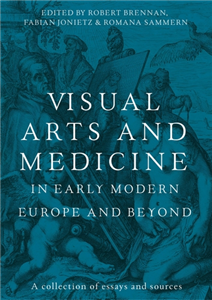
This book opens up new perspectives on the relationship between art, medicine, and science in late-medieval and early modern Europe. Looking beyond the traditional nexus of art, anatomy, and optics, the volume sheds light on a broader array of connections between artists and physicians: collaborations between painters and doctors on colour charts, handwork skills common to sculptors and surgeons, the transmission of art theory through medical texts long before the emergence of art writing itself as an independent genre, and the kinship of medical diagnosis with early modes of connoisseurship. Reconfiguring the histories of art, medicine, and science, the book also traverses conventional boundaries between physical and mental health, religious and medical modes of healing, menial and exalted forms of knowledge and labour, as well as vernacular and scientific understandings of human difference, including gender, race, and neurodiversity.
Trusted Partner
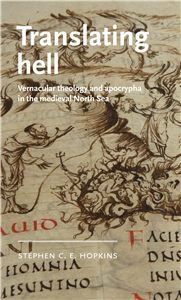
In the Middle Ages, hell was useful because it was vaguely defined. Canonical scriptures scarcely mention hell, leaving much to the imaginations of early Christians, who used it to sort out who belonged within the faith. This book explores how hell became a place for literary experiments with local challenges in theology and identity. Following the reception and transformations of two popular hell apocrypha, it argues that they served as this role because of their liminal textual authority. As noncanonical scriptures, apocrypha afforded medieval writers space to revise their hells (since they were not actually scripture), while also encouraging readers to revere those experiments as valid (since they seemed like scripture). The book brings together adaptations from early medieval England, Iceland, Ireland, and Wales, placing the early vernacular theologies of the North Sea in comparative conversation.
Trusted Partner

'Realist film theory and cinema' embraces studies of cinematic realism and 19th century tradition, the realist film theories of Lukács, Grierson, Bazin and Kracauer, and the relationship of realist film theory to the general field of film theory and philosophy. This is the first book to attempt a rigorous and systematic application of realist film theory to the analysis of particular films. The book suggests new ways forward for a new series of studies in cinematic realism, and for a new form of film theory based on realism. It stresses the importance of the question of realism both in film studies and in contemporary life. Aitken's work will be of interest to scholars and advanced students of film studies, literary studies, media studies, cultural studies and philosophy.
Trusted Partner
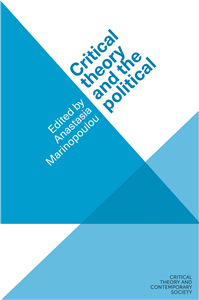
The book addresses what is political in critical theory and which aspects, arguments or notions of critical theory maintain political significance for the 20th and the 21st centuries. The collection of essays comprises itself of a series of clear and critical perspectives that analyze the extent to which critical theory relates political argument to modern societies and, thereby, exerts a critique of the multiple social and political phenomena of late modernity. The contributors focus on a multiplicity of universal phenomena such as globalization, multiple crises, late capitalism and the social role of the sciences, and posit some novel criticism of the contemporary social sphere, as it is situated within the wider system of global capitalism. They also present a plurivalent critique that links arguments in Marxism and Freud to all three generations of critical theory.
Trusted Partner
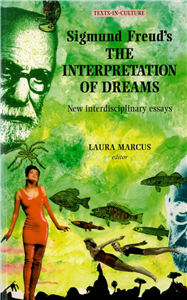
Freud's The Interpretation of Dreams, published in 1900, has been one of the most influential texts of the modern era, fundamentally changing the ways in which people have thought about their waking lives as well as their dreams. This book, more than any other in Freud's massive oeuvre, has shaped a vast amount of work in linguistics and semiotics, literary studies, film theory, psychology, philosophical hermeneutics and the history of ideas. This influence is reflected in the editor's introduction, which includes a substantial discussion of the theory and practice of representation, and the six essays specially commissioned for this volume. The contributors are renowned for their knowledge of Freudian theory and for their interdisciplinary expertise in a wide range of fields. They examine, for example, the relationship of Freud's text to theories of interpretation, autobiography and literary production. The book as a whole gives a clear sense both of the context of Freud's text and of its influence throughout the twentieth century. This volume is an ideal introduction to Freud's work for students and teachers of English and other literatures, philosophy and social and cultural studies, as well as the wider audience concerned with psychoanalysis and its cultural ramifications. ;
Trusted Partner
In diesem Buch geht es darum, die interpretationsbestimmten Grundlagen der Verständigung, des Weltbezugs und des Handelns in Lebenswelt, Wissenschaft, Ethik und Kunst herauszuarbeiten. Da sich alle Wissenschaften, Künste und Handlungen in sprachlichen und nichtsprachlichen Zeichen vollziehen und daher immer schon auf Interpretationsprozesse bezogen sind, läßt sich der Ansatz in diesen Bereichen zur Analyse der Grundlagen und der interdisziplinären Zusammenhänge heranziehen.
Trusted Partner
Trusted Partner
Since constitutional arrangements are what make politics work, they are a central concern of political theory. This book, now completely updated, was the first comprehensive exploration of the political theory of constitutions. Jan-Erik Lane begins by examining the origins and history of constitutionalism and answers key questions such as: what is a constitution? Why are there constitutions? From where does constitutionalism originate? How is the constitutional state related to democracy and justice? Constitutions play a major role in domestic and international politics in the early 21st century and an updated version of this classic textbook will introduce students to a number of different areas - theoretical, empirical and moral - which will aid their understanding of this important topic. ;
Trusted Partner
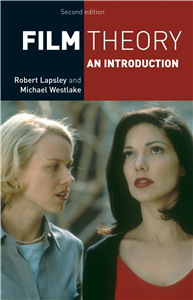
Film theory: an introduction offers a highly readable account of film theory and is an indispensable resource for students. The discussion ranges from the late 1960s to the present, a period in which a number of conceptual strands, notably politics, semiotics and psychoanalysis were woven together in an ambitious synthesis. In this book, the authors chart the construction of this synthesis and its subsequent fragmentation, and clearly explain the various intellectual currents which have contributed to it. Divided into two parts, the first covers the conceptual background of film theory, dealing with historical materialism, semiotics and psychoanalysis, whilst in the second the authors concentrate on particular topics such as authorship, narrative, realism, the avant-garde and postmodernism. For this new edition, the authors have added a new foreword, a fully updated and expanded bibliography, and a 60-page Retrospect outlining developments within film theory since the book's original publication in 1988. This Retrospect identifies a number of broad readings of Theory, each with a different perspective on the main content of the book. As such, it provides a new and original mapping of the 'post-theory' moment in this complex and often fractured terrain. Accessible and authoritative, this book is essential reading for students of film theory, or indeed anyone seeking a deeper understanding of modern cinema. ;
Trusted Partner
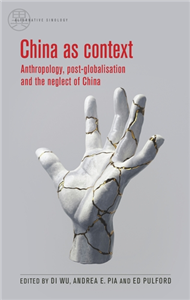
Decades-old calls to promote the significance of China for anthropological theory and the social sciences more generally ring more urgently today given China's importance to social, political and economic life globally. Yet Chinese-grounded ideas remain marginal to the discipline, and scholarly discussions retain a sense of China as an 'Other' apart from the 'real' world, and thus unsuitable or generating widely applicable theoretical ideas. Inspired by East Asian postcolonial scholarship, this volume tackles this unsettling situation head-on, arguing that without taking China seriously as a powerful agent, a locus of knowledge production, and a new discursive topos of an emerging post-global imaginary, anthropologists and other social scientists may fail to adequately analyse the global present and make sense of both the material and immaterial forces that animate it, wherever and however they work. Amid the end of Western globalisation and shifting anthropological understandings of relations between ethnography and theory, we show how 'China' must be understood as the ordinary 'context' for anthropological research practices worldwide.


