
The Endocrine Society
The Endocrine Society is a global organization of 18,000 researchers, educators, and clinicians advancing breakthroughs in hormone science and improving public health.
View Rights Portal
The Endocrine Society is a global organization of 18,000 researchers, educators, and clinicians advancing breakthroughs in hormone science and improving public health.
View Rights Portal
Social democratic parties struggle to appeal to a divided electorate. Particularly prescient is the clash between working-class voters thatare socially conservative and middle-class voters who are liberally inclined but economicallyleft. Are politics and policies that appeal to both even a possibility? Nowhere is thatdebate more acute than in European cities, yet in no other political space are answers more likely to be found.Where urban voters turn left, they are increasingly attracted by radical and green alternatives to social democracy.Social democracy and urban politicsdelves into the changing relationship between these three party families on the urban scene. Mapping electoral geography, governing strategies and the interface between parties and social movements on the left, the authors reflect upon the formation and dilemmas of a broader progressive alliance.

This volume is the first ever attempt to unite and translate some of the key texts which informed Johan Huizinga's famous study of the Burgundian court, The Waning of the Middle Ages, a work which has never gone out of print. It combines these texts with sources that Huizinga did not consider, those that illuminate the wider civic world that the Burgundian court inhabited and the dynamic interaction between court and city. Through these sources, and an introduction offering new perspectives on recent historiography, the book tests whether Huizinga's controversial vision of the period still stands. Covering subjects including ceremonial events, such as the spectacles and gargantuan banquets that made the Burgundian dukes the talk of Europe, the workings of the court, and jousting, archery and rhetoric competitions, the book will appeal to students of late medieval and early modern Europe and to those with wider interests in court culture, ritual and ceremony.
 Trusted Partner
Where civil society is often seen as a driving force for equality, this book addresses a challenging topic: civil society elites. Drawing on a comprehensive study of Italy, Poland, Sweden, and the UK, this ground-breaking research investigates the often-overlooked power structures within civil society. By combining elite studies with civil society research, the book uncovers how a distinct civil society elite emerges and how it interacts with leaders in politics and business. The findings reveal a fascinating paradox. While this elite may be a powerful engine for social change, its integration into wider power circles risks reproducing the very inequalities it seeks to dismantle. By exploring how this elite can become disconnected from its grassroots, the book provides essential insights into the future of civil society and its democratic promise.
Trusted Partner

This book provides scholars and students alike with a set of texts that can deepen their understanding of the culture and society of the twelfth-century German kingdom. The sources translated here bring to life the activities of five noblemen and noblewomen from Rome to the Baltic coast and from the Rhine River to the Alpine valleys of Austria. To read these five sources together is to appreciate how interconnected political, military, economic, religious and spiritual interests could be for some of the leading members of medieval German society-and for the authors who wrote about them. Whether fighting for the emperor in Italy, bringing Christianity to pagans in what is today northern Poland, or founding, reforming and governing monastic communities in the heartland of the German kingdom, the subjects of these texts call attention to some of the many ways that noble life shaped the world of central medieval Europe.
Trusted Partner

This book provides an accessible collection of translated legal sources through which the exploits of criminals and developments in the English criminal justice system (c.1215-1485) can be studied. Drawing on the wealth of archival material and an array of contemporary literary texts, it guides readers towards an understanding of prevailing notions of law and justice and expectations of the law and legal institutions. Tensions are shown emerging between theoretical ideals of justice and the practical realities of administering the law during an era profoundly affected by periodic bouts of war, political in-fighting, social dislocation and economic disaster. Introductions and notes provide both the specific and wider legal, social and political contexts in addition to offering an overview of the existing secondary literature and historiographical trends. This collection affords a valuable insight into the character of medieval governance as well as revealing the complex nexus of interests, attitudes and relationships prevailing in society during the later Middle Ages.
Trusted Partner

Touting informal settlements or informality in general as illegal, crime-ridden, unsafe, filthy, chaotic, and formal developments as legal, orderly or safe, and so forth has not solved anything and informality as a way of life or an economic reality lingers and grows. Demystifying informal urban design and planning delves deeper into this conundrum and seeks to debunk some common misguided perceptions about it. Borrowing popular philosophical and political analogies from Isaiah Berlin and Gregory Treverton and others, it encourages urban designers and planners to become multitaskers like foxes rather than hedgehogs who can do one thing right. The book ends with some general takeaways on assuming more proactive roles in informal urban design issues and avoiding two potential pitfalls while interacting with them.
Trusted Partner


Sooner or later everything is thrown away. In the consumer society, however, usable and serviceable products that may be as good as new are also thrown away. Such behaviour is the result of a long-term process that has developed over a period of one-and-a-half centuries. The change was led by the USA, and the Federal Republic of Germany followed. It started at the turn of the last century with personal hygiene: articles such as toilet paper, sanitary towels, nappies and paper handkerchiefs. After the Second World War, a large number of other disposable articles were soon added, such as paper cups and plastic dishes, nylon stockings and pens, razor blades, beverage cans and much more besides. Wolfgang König shows how business and consumers have together made throwing things away perfectly normal – and discusses how the throwaway society may be overcome.
Trusted Partner

Digital technologies promise efficiency and comfort, but the smoothness of platform services relies on the hidden social labour of those who keep the gig economy running. This book presents a comparative ethnography of young men making a living through digital technologies: selling mobile airtime in Abidjan, Côte d'Ivoire, and app-based delivery riders in Berlin, Germany. These case studies explore the significance of symbolic capital in urban youth's social existence and organisation of livelihood in the digital economy, and the technological mechanisms producing a new form of urban precarity. Globalized urban precarity in Berlin and Abidjan puts forward an original comparative approach to develop a global urban sociology for the digital era. It provides an innovative analytical toolbox that decentres discussions of precarity from the standard of a normal employment contract. With its focus on symbolic capital, the ethnography shows the consequences of the proliferating gig economy for status struggles among urban youth, and carefully embeds the densification of software and services into the socio-material relations on which these new urban infrastructures are built.


This 1926 survey, written by a distinguished social and economic historian, examines the role of religion in the rise of capitalism. Arguing that material acquisitiveness is morally wrong and a corrupting social influence, the author draws upon his profound knowledge of labor and politics to show how concentrated wealth distorts economic policies. Colorful but credible, this study offers a timeless vision of alternative means toward a just economic, social, and intellectual order.
Trusted Partner

The Derby Philosophers focuses upon the activities of a group of Midland intellectuals that included the evolutionist and physician Erasmus Darwin, Rev. Thomas Gisborne the evangelical philosopher and poet, Robert Bage the novelist, Charles Sylvester the chemist and engineer, William George and his son Herbert Spencer, the internationally renowned evolutionist philosopher who coined the phrase 'survival of the fittest', and members of the Wedgwood and Strutt families. The book explores how, inspired by science and through educational activities, publications and institutions including the famous Derbyshire General Infirmary (1810) and Derby Arboretum (1840), the Derby philosophers strove to promote social, political and urban improvements with national and international consequences. Much more than a parochial history of one intellectual group or town, this book examines science, politics and culture during one of the most turbulent periods of British history.
Trusted Partner

French society in revolution aims to retrieve the social history of the French Revolution from unjustified neglect. This study examines both the structural and cultural elements behind the breakdown of the eighteenth-century monarchic state and its aris. . . . ;
Trusted Partner
 Trusted Partner
 Trusted Partner

This collection, dealing with case studies drawn from South Africa, Zimbabwe, Mozambique and Mauritius, examines the relationship between scientific claims and practices, and the exercise of colonial power. It challenges conventional views that portray science as a detached mode of reasoning with the capacity to confer benefits in a more or less even-handed manner. That science has the potential to further the collective good is not fundamentally at issue, but science can also be seen as complicit in processes of colonial domination. Not only did science assist in bolstering aspects of colonial power and exploitation, it also possessed a significant ideological component: it offered a means of legitimating colonial authority by counter-poising Western rationality to native superstition and it served to enhance the self-image of colonial or settler elites in important respects. This innovative volume ranges broadly through topics such as statistics, medicine, eugenics, agriculture, entomology and botany.
Trusted Partner
This book examines the television serials created by influential showrunner David Simon. The book argues that Simon's main theme is the state of the contemporary American city and that all of his serials (barring one about the Iraq War) explore different facets of the metropolis. Each series offers distinctly different visions of the American city, but taken together they represent a sustained and intricate exploration of urban problems in modern America. From deindustrialisation in The Wire and residential segregation in Show Me a Hero to post-Katrina New Orleans in Treme and the transformation of the urban core in The Deuce, David Simon's American city traces the urban through-line in Simon's body of work. Based on sustained analysis of these serials and their engagement with contemporary politics and culture, David Simon's American city offers a compelling examination of one of television's most arresting voices.
Trusted Partner
American society today provides a balanced introduction to the defining features of contemporary American society. Includes the ways in which the US can be considered 'exceptional' - the character of the 'American dream', the role of ethnicity and race, and the differences between the regions. Considers in depth a number of contemporary debates including the claim that the US economy has lost its capacity to generate wealth and stimulate mobility, that there has been a process of civic disengagement as voluntary organisations have lost members, and that the traditional family is in decline. Includes a thorough investigation of the effects of the terrorist attacks of September 11 and their aftermath. Looks at the arguments put forward by those who assert that a common American identity has given way to a multitude of conflicting identities structured around factors such as race, ethnicity, gender and sexuality. ;
Trusted Partner
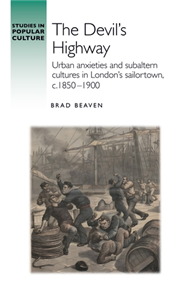
Between 1850 and 1900, Ratcliffe Highway was the pulse of maritime London. Sailors from every corner of the globe found solace, and sometimes trouble, in this bustling district. However, for social investigators, it was a place of fascination and fear as it harboured chaotic and dangerous 'exotic' communities. Sailortowns were transient, cosmopolitan and working class in character and provide us with an insight into class, race and gendered relations. They were contact zones of heightened interaction where multi-ethnic subaltern cultures met, sometimes negotiated and at other times clashed with one another. The book argues that despite these challenges sailortown was a distinctive and functional working-class community that was self-regulating and self-moderating. The book uncovers a robust sailortown community in which an urban-maritime culture shaped a sense of themselves and the traditions and conventions that governed subaltern behaviour in the district.
Trusted Partner

The imperatives of public health shaped our understanding of the cities of the global north in the first industrial revolutions of the nineteenth and twentieth centuries. They are doing so again today, reflecting new geographies of the urban age of the twenty-first. Emergent cities in parts of the globe experiencing most profound urban growth face major problems of economic, ecological and social sustainability when making sense of new health challenges and designing policy frameworks for public health infrastructures. The rapid evolution of complex 'systems of systems' in today's cities continually reconfigure the urban commons, reshaping how we understand urban public health, defining new problems and drawing on new data tools for analysis that work from the historical legacies and geographical variations that structure public health systems.
Trusted Partner
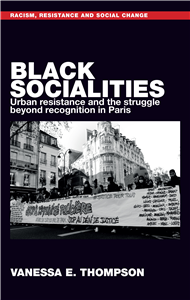
From author: This is a cutting-edge exploration of black urban politics in Parisian racialized working class and working poor districts, the formation of abolition geography, and the possibilities of new forms of political blackness. In Black Socialities. Urban resistance and the struggle beyond recognition in Paris, Vanessa E. Thompson argues that black urban politics in the French banlieues are multi-racial and spatially grounded towards abolition. Based on a close engagement with urban black activist practices against racial imagery in the city, policing and state racism, and housing insecurity, she shows how radical anti-racism goes beyond struggles for recognition and unfolds alongside new formations of political blackness that is based on urban conviviality. This form of black politics has much to teach us in this current conjuncture of liberal anti-racism and state recognition politics.
Trusted Partner
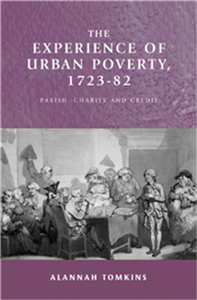
This comparative study of urban poverty is the first to chart the irregular pulse of poverty's encounters with officialdom. It exploits an unusual methodology to secure new perspectives from familiar sources. The highly localised characteristics of the welfare economy generated a peculiarly urban environment for the poor. Separate chapters examine the parameters of workhouse life when the preconceptions of contemporaries have been stripped away; the reach of institutional charities such as almshouses, schools and infirmaries; and the surprisingly broad clientele of urban pawnbrokers. Detailed analysis of the poor is achieved via meticulous matching of individuals who fell within the purview of two or more authorities. The result is a unique insight into the survival economics of urban poverty, arising not from a tidy network of welfare but from a loose assembly of options, where the impoverished positioned themselves repeatedly to fit official, philanthropic, or casual templates of the 'deserving'. This book will be essential reading for historians of English poverty and welfare, and eighteenth-century social and economic life. ;


