Your Search Results

      • Trusted Partner

        Books from Chile - Longlist (Fiction, Essays, Poetry)

        Chile is Guest of Honour at Frankfurter Buchmesse 2027. At the Chilean organiser’s invitation, an open call was conducted among Chilean publishers to find out which titles they would recommend for translation. This is the result. The Chilean Ministry of Foreign Affairs supports the translation and production of Chilean books through the programmeTranslating Chile. Next call for all languages 2026-2027: November 2025 More information:https://www.dirac.gob.cl/open-call-2026-for-translating-chilean-literature

        View Rights Portal
      • Guangdong Petrel Electronic & Audio-Visual Publishing House

        Founded in 1996 as an affiliate of Southern Publishing & Media Co.Ltd.(SPM),Guangdong Petrel Electronic & Audio-Visual Publishing House (PEPH) has now become an all-media publisher specializing in online publishing, as well as creating, publishing and distributing audio-visual products, electronic reading materials, and books,etc.                                                                               PEPH has designed and produced lots of electronic &audio-visual publications and hundreds of books related to social,science,education,language,science and technology, culture,art,among which several series of books were oriented toward international copyright exchanges.                                                                                                             Till now, PEPH has already established cooperative relationships with publishers from South-East Asia and North America, totally exporting more than 200 titles.

        View Rights Portal

      • Trusted Partner
        Literature & Literary Studies
        April 2026

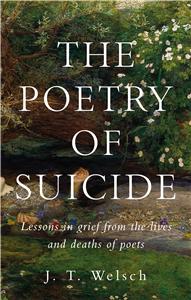
        The poetry of suicide

        Lessons in grief from the lives and deaths of poets

        by J. T. Welsch

        A profound exploration of the connection between poetry and suicide. 'Suicides have a special language,' Anne Sexton wrote in her 1964 poem 'Wanting to Die'. But is it a language we can learn to read? In The poetry of suicide, J. T. Welsch interweaves stories of poets who took their own lives with the long history of suicide in his own family, searching for a new way of understanding these difficult deaths. Beginning with Hamlet's 'To be or not to be?', he delves into the work of Dante, Sylvia Plath, Vladimir Mayakovsky and others, asking what it can teach us about suicide's messy reality. Suicide is more like poetry than we realise, Welsch argues. Both are filled with ambiguities, contradictions and unknowable intentions. Both demand and resist interpretation. Recovering the personal dimension often lost in our medicalised public discourse, Welsch finds practical ways of confronting suicide's poem-like difficulties.

      • Trusted Partner
        Literature & Literary Studies
        December 2000

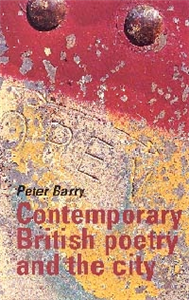
        Contemporary British poetry and the city

        by Peter Barry, Kim Latham

        Though poets have always written about cities, the commonest critical categories (pastoral poetry, nature poetry, Romantic poetry, Georgian poetry, etc.) have usually stressed the rural, so that poetry can seem irrelevant to a predominantly urban populati. Explores a range of contemporary poets who visit the 'mean streets' of the contemporary urban scene, seeking the often cacophonous music of what happens here. Poets discussed include: Ken Smith, Iain Sinclair, Roy Fisher, Edwin Morgan, Sean O'Brien, Ciaran Carson, Peter Reading, Matt Simpson, Douglas Houston, Deryn Rees-Jones, Denise Riley, Ken Edwards, Levi Tafari, Aidan Hun, and Robert Hampson. Approaches contemporary poetry within a broad spectrum of personal, social, literary, and cultural concerns. Includes 'loco-specific' chapters, on cities including Hull, Liverpool, London, and Birmingham, with an additional chapter on 'post-industrial' cities such as Belfast, Glasgow and Dundee. ;

      • Trusted Partner
        Literature & Literary Studies
        December 2003

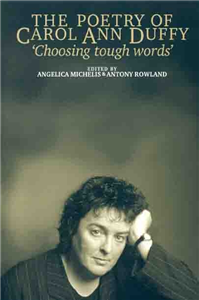
        The poetry of Carol Ann Duffy

        Choosing tough words

        by Angelica Michelis, Anthony Rowland

        The first full-length collection of essays on the poetry of Carol Ann Duffy. Duffy's poetry is both respected by academics, and widely read and enjoyed by both children and adults. Approaches Duffy's work from a variety of literary theoretical perspectives, including feminism, masculinity, national identity and post-structuralism. Situates Duffy's work in relation to current debates about the state, value and social relevance of contemporary British poetry. Will become the benchmark anthology on Duffy. ;

      • Trusted Partner
        Literature & Literary Studies
        January 2019

        Pastoral poetry of the English Renaissance

        An anthology

        by J. B. Lethbridge, Sukanta Chaudhuri

        Renaissance pastoral poetry is gaining new interest for its distinctive imaginative vein, its varied allusive content, and the theoretical implications of the genre. This is by far the biggest ever anthology of English Renaissance pastoral poetry, with 277 pieces spanning two centuries. Spenser, Sidney, Jonson and Drayton are amply represented alongside their many contemporaries. There is a wide range of pastoral lyrics, weightier allusive pieces, and translations from classical and vernacular pastoral poetry; also, more unusually, pastoral ballads and poems set in all kinds of prose works. Each piece has been freshly edited from the original sources, with full apparatus and commentary. This book will be complemented by a second volume, to be published in 2017, which includes a book-length introduction, textual notes and analytic indices.

      • Trusted Partner
      • Trusted Partner
        Literature & Literary Studies
        March 2005

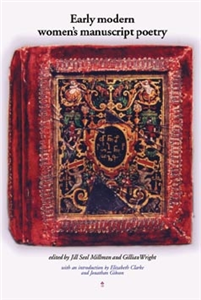
        Early modern women's manuscript poetry

        by Jill Millman, Gillian Wright

        'Early modern women's manuscript poetry' is an anthology of texts by fourteen women poets writing between 1589 and 1706. It is the only currently available anthology of early modern women's writing which focuses exclusively on manuscript material. Authors include Mary Sidney, Lucy Hutchinson and Katherine Philips; central figures in the emerging canon of early modern women writers, but whose work appears in a fresh and very different light in the manuscript context emphasised by this anthology. The volume also includes substantial excerpts from a recently discovered verse paraphrase of Genesis, thought to be by the previously unknown seventeenth-century writer Mary Roper, as well as selections from the unjustly neglected poet, Hester Pulter. The mix of canonical and non-canonical writers makes this book ideal for use on undergraduate and early postgraduate courses, while specialists will be particularly interested in the sophisticated and varied material taken from less familiar sources. ;

      • Trusted Partner
      • Trusted Partner
        The Arts
        November 2006

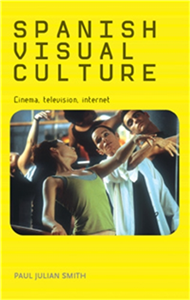
        Spanish visual culture

        Cinema, television, internet

        by Paul Julian Smith, Susan Williams

        This book is the first to explore three visual media in contemporary Spain: cinema, television and the internet. It also examines cultural products in each of these media in terms of three vital themes: emotion, location and nostalgia. The first two chapters focus on emotion. They analyze the 'emotional imperative' in a recent Almodóvar feature film and in Spanish television's top-rated period drama, and investigate the politics of affect in TV drama in the last decade. The next pair of chapters deal with location. They use cultural geography to re-read contradictory accounts of the movida (the post-Franco cultural boom) and examine an attempt to anchor a US-derived genre (the youth movie) in the urban landscape of Madrid. The fifth and sixth chapters introduce the theme of location into nostalgia. They treat the unique cases of a successful Spanish heritage movie and a contemporary Spanish thriller remade in Hollywood. The peunultimate chapter investigates electronic artists and the virtual universe, and the book ends with a look at the implications of Hispano-Mexican co-productions and the interconnectedness of economic and aesthetic cultural forms. ;

      • Trusted Partner
        Literature & Literary Studies
        October 2013

        Literary and visual Ralegh

        by J. B. Lethbridge

        This collection of essays by scholars from Great Britain, the United States, Canada and Taiwan covers a wide range of topics about Ralegh's diversified career and achievements. Some of the essays shed light on less familiar facets such as Ralegh as a father and as he is represented in paintings, statues, and in movies; others re-examine him as poet, historian, as a controversial figure in Ireland during Elizabeth's reign, and look at his complex relationship with and patronage of Edmund Spenser. A recurrent topic is the Hatfield Manuscript in Ralegh's handwriting, which contains his long, unfinished poem 'The Ocean to Cynthia', usually considered a lament about his rejection by Queen Elizabeth after she learned of his secret marriage to one of her ladies-in-waiting. The book is appropriate for students of Elizabethan-Jacobean history and literature. Among the contributors are well-known scholars of Ralegh and his era, including James Nohrenberg, Anna Beer, Thomas Herron, Alden Vaughan and Andrew Hiscock. ;

      • Trusted Partner
        Literature & Literary Studies
        June 2026

        Geoffrey Hill and the ends of poetry

        by Tom Docherty

      • Trusted Partner
        Literature & Literary Studies
        January 2017

        Literary and visual Ralegh

        by J. B. Lethbridge, Christopher Armitage

      • Trusted Partner
        Literature & Literary Studies
        August 2021

        Spenser and Donne

        Thinking poets

        by Yulia Ryzhik

        The names Edmund Spenser and John Donne are typically associated with different ages in English poetry, the former with the sixteenth century and the Elizabethan Golden Age, the latter with the 'metaphysical' poets of the seventeenth century. This collection of essays, part of The Manchester Spenser series, brings together leading Spenser and Donne scholars to challenge this dichotomous view and to engage critically with both poets, not only at the sites of direct allusion, imitation, or parody, but also in terms of common preoccupations and continuities of thought, informed by the literary and historical contexts of the politically and intellectually turbulent turn of the century. Juxtaposing these two poets, so apparently unlike one another, for comparison rather than contrast changes our understanding of each poet individually and moves towards a more holistic, relational view of their poetics.

      • Trusted Partner
      • Trusted Partner
        The Arts
        June 2026

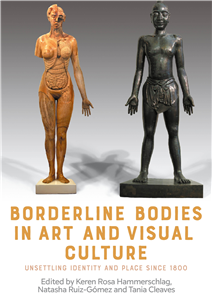
        Borderline bodies in art and visual culture

        Unsettling identity and place since 1800

        by Keren Hammerschlag, Natasha Ruiz-Gómez, Tania Anne Cleaves

        Borderline bodies offers original interpretations of visual representations of human bodies as bounded and unbounded, fortified and permeable, mobile and static-subject to borders and able to traverse and challenge them. It also takes as its focus images and objects that might be considered 'borderline' because they sit at the intersection of disciplines or sit outside accepted notions of what constitutes serious 'art.' By mapping the ways human bodies traverse borders and straddle-even dismantle-categories, this volume's essays approach afresh the relationship of bodies to traditional modes of representation, especially in art and medicine, and encourage us to think anew about how we understand the relationship between human corporeality, identity and place. Critical transdisciplinary and transnational analyses of objects and images from a range of geographies shed new light on the themes of: bodies and identity; typologies of the body; racialised bodies; 'normal' and 'abnormal' bodies; encounters between bodies; bodies in transition; bodies and mobility; and the bounded and unbounded human body. The outcome is a fresh approach to depictions of the human body produced for the purposes of artistic and medical education, aesthetic edification, and scientific and professional advancement, which disrupts assumptions about the normative human body perpetuated through Western image-making traditions.

      • Trusted Partner
        Literature & Literary Studies
        January 2019

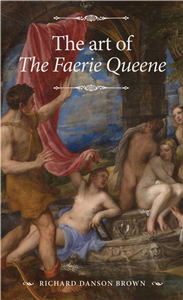
        The art of The Faerie Queene

        by J. B. Lethbridge, Richard Brown

        The Art of The Faerie Queene is the first book centrally focused on the forms and poetic techniques employed by Spenser. It offers a sharp new perspective on Spenser by rereading The Faerie Queene as poetry which is at once absorbing, demanding and experimental. Instead of the traditional conservative model of Spenser as poet, this book presents the poem as radical, edgy and unconventional, thus proposing new ways of understanding the Elizabethan poetic Renaissance. The book moves from the individual words of the poem to metre, rhyme and stanza form onto its larger structures of canto and book. It will be of particular relevance to undergraduates studying Elizabethan poetry, graduate students and scholars of Renaissance poetry, for whom the formal aspect of the poetry has been a topic of growing relevance in recent years.

      • Trusted Partner
        Literature & Literary Studies
        September 2020

        The art of The Faerie Queene

        by Richard Danson Brown, Joshua Samuel Reid

        The Art of The Faerie Queene is the first book centrally focused on the forms and poetic techniques employed by Spenser. It offers a sharp new perspective on Spenser by rereading The Faerie Queene as poetry which is at once absorbing, demanding and experimental. Instead of the traditional conservative model of Spenser as poet, this book presents the poem as radical, edgy and unconventional, thus proposing new ways of understanding the Elizabethan poetic Renaissance. The book moves from the individual words of the poem to metre, rhyme and stanza form onto its larger structures of canto and book. It will be of particular relevance to undergraduates studying Elizabethan poetry, graduate students and scholars of Renaissance poetry, for whom the formal aspect of the poetry has been a topic of growing relevance in recent years.

      • Trusted Partner
        Literature & Literary Studies
        January 2021

        The art of The Faerie Queene

        by Richard Danson Brown

        The Art of The Faerie Queene is the first book centrally focused on the forms and poetic techniques employed by Spenser. It offers a sharp new perspective on Spenser by rereading The Faerie Queene as poetry which is at once absorbing, demanding and experimental. Instead of the traditional conservative model of Spenser as poet, this book presents the poem as radical, edgy and unconventional, thus proposing new ways of understanding the Elizabethan poetic Renaissance. The book moves from the individual words of the poem to metre, rhyme and stanza form onto its larger structures of canto and book. It will be of particular relevance to undergraduates studying Elizabethan poetry, graduate students and scholars of Renaissance poetry, for whom the formal aspect of the poetry has been a topic of growing relevance in recent years.

      • Trusted Partner
        Literature & Literary Studies
        September 2025

        Shakespeare the Reviser

        A Lover's Complaint

        by Marina Tarlinskaya

        The project researches the difference between a revision vs. a rewriting. The book explores the English poems and plays of the Early New English period, from the sixteenth to the beginning of seventeenth century, with over 50 entries examined. The main material is the poem A Lover's Complaint; the play Double Falsehood by Lewis Theobald; the revised and rewritten post-Restoration plays such as Richard II (revised by Lewis Theobald), and The Fatal Secret (rewritten Webster's The Duchess of Malfi) by Lewis Theobald. An example of authorial revision is Sonnets 2 and 138.

      Subscribe to our

      newsletter