Your Search Results

      • Guangdong Petrel Electronic & Audio-Visual Publishing House

        Founded in 1996 as an affiliate of Southern Publishing & Media Co.Ltd.(SPM),Guangdong Petrel Electronic & Audio-Visual Publishing House (PEPH) has now become an all-media publisher specializing in online publishing, as well as creating, publishing and distributing audio-visual products, electronic reading materials, and books,etc.                                                                               PEPH has designed and produced lots of electronic &audio-visual publications and hundreds of books related to social,science,education,language,science and technology, culture,art,among which several series of books were oriented toward international copyright exchanges.                                                                                                             Till now, PEPH has already established cooperative relationships with publishers from South-East Asia and North America, totally exporting more than 200 titles.

        View Rights Portal
      • Trusted Partner
      • Trusted Partner
        The Arts
        June 2026

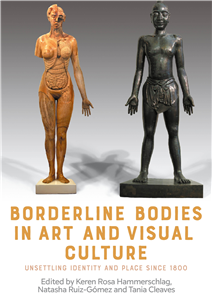
        Borderline bodies in art and visual culture

        Unsettling identity and place since 1800

        by Keren Hammerschlag, Natasha Ruiz-Gómez, Tania Anne Cleaves

        Borderline bodies offers original interpretations of visual representations of human bodies as bounded and unbounded, fortified and permeable, mobile and static-subject to borders and able to traverse and challenge them. It also takes as its focus images and objects that might be considered 'borderline' because they sit at the intersection of disciplines or sit outside accepted notions of what constitutes serious 'art.' By mapping the ways human bodies traverse borders and straddle-even dismantle-categories, this volume's essays approach afresh the relationship of bodies to traditional modes of representation, especially in art and medicine, and encourage us to think anew about how we understand the relationship between human corporeality, identity and place. Critical transdisciplinary and transnational analyses of objects and images from a range of geographies shed new light on the themes of: bodies and identity; typologies of the body; racialised bodies; 'normal' and 'abnormal' bodies; encounters between bodies; bodies in transition; bodies and mobility; and the bounded and unbounded human body. The outcome is a fresh approach to depictions of the human body produced for the purposes of artistic and medical education, aesthetic edification, and scientific and professional advancement, which disrupts assumptions about the normative human body perpetuated through Western image-making traditions.

      • Trusted Partner
        Literature & Literary Studies
        October 2013

        Literary and visual Ralegh

        by J. B. Lethbridge

        This collection of essays by scholars from Great Britain, the United States, Canada and Taiwan covers a wide range of topics about Ralegh's diversified career and achievements. Some of the essays shed light on less familiar facets such as Ralegh as a father and as he is represented in paintings, statues, and in movies; others re-examine him as poet, historian, as a controversial figure in Ireland during Elizabeth's reign, and look at his complex relationship with and patronage of Edmund Spenser. A recurrent topic is the Hatfield Manuscript in Ralegh's handwriting, which contains his long, unfinished poem 'The Ocean to Cynthia', usually considered a lament about his rejection by Queen Elizabeth after she learned of his secret marriage to one of her ladies-in-waiting. The book is appropriate for students of Elizabethan-Jacobean history and literature. Among the contributors are well-known scholars of Ralegh and his era, including James Nohrenberg, Anna Beer, Thomas Herron, Alden Vaughan and Andrew Hiscock. ;

      • Trusted Partner
        Humanities & Social Sciences
        January 2026

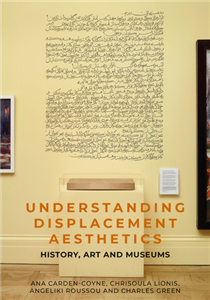
        Understanding displacement aesthetics

        History, art and museums

        by Ana Carden-Coyne, Charles Green, Chrisoula Lionis, Angeliki Roussou

        Since the Second World War and the formalisation of the international refugee regime, forced displacement has been marked by a set of aesthetic, practical, and institutional concerns. Understanding Displacement Aesthetics examines how visual culture and art practice constructs and challenges ideas about forced displacement and refugees. The novel framework for 'displacement aesthetics' moves beyond conventional understandings of aesthetics as merely representational, demonstrating the entanglement of visual culture, art practices, and forced displacement in postmigrant contexts. Bringing together the fields of cultural history, art history, and curatorial studies, Understanding Displacement Aesthetics identifies four areas for consideration: visual tropes of refugeedom; language and identity; institutional and artistic responses to displacement; and lived experiences of artists with backgrounds of displacement. Through archival research, visual culture and art, interviews, and collaborative curatorship, Understanding Displacement Aesthetics offers new insight into overcoming the limitations that contexts of displacement can present for artists, art galleries and institutions addressing refugeedom and its legacies.

      • Trusted Partner
      • Trusted Partner
        Humanities & Social Sciences
        July 2022

        The looking machine

        Essays on cinema, anthropology and documentary filmmaking

        by David MacDougall

        This new collection of essays presents the latest thoughts of one of the world's leading ethnographic filmmakers and writers on cinema. It will provide essential reading for students in cinema studies, filmmaking, and visual anthropology. The dozen wide-ranging essays give unique insights into the history of documentary, how films evoke space, time and physical sensations, and the intellectual and emotional links between filmmakers and their subjects. In an era of reality television, historical re-enactments, and designer packaging, MacDougall defends the principles that inspired the earliest practitioners of documentary cinema. He urges us to consider how the form can more accurately reflect the realities of our everyday lives. Building on his own practice in filmmaking, he argues that this means resisting the pressures for self-censorship and the inherent ethnocentrism of our own society and those we film.

      • Trusted Partner
        Films, cinema
        November 2006

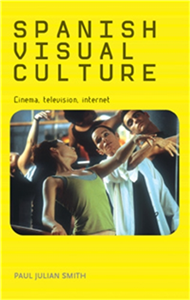
        Spanish visual culture

        by Paul Julian Smith

      • Trusted Partner
        Literature & Literary Studies
        January 2017

        Literary and visual Ralegh

        by J. B. Lethbridge, Christopher Armitage

      • Trusted Partner
      • Trusted Partner
        The Arts
        September 2025

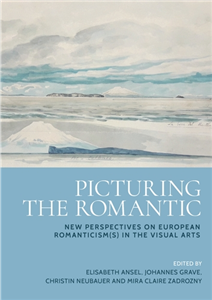
        Picturing the Romantic

        New perspectives on European Romanticism(s) in the visual arts

        by Elisabeth Ansel, Johannes Grave, Christin Neubauer, Mira Claire Zadrozny

        European Romanticism in the visual arts has always been defined by transnational transfer processes. It is surprising that international aspects of Romantic movements have been, in contrast to literary studies, a gap in art historical research. Picturing the Romantic addresses this issue and reveals new perspectives on European Romanticism(s) in the visual arts by reconsidering the phenomenon's traditional canon, geographical dimensions and terminology and analysing various examples of the complex and heterogeneous works of Romantic painting. In sixteen original essays, renowned and early career researchers examine the question of whether to speak of several independently considered Romanticisms or one European Romanticism. They adopt a transnational perspective on Romantic art in and beyond Europe, focusing on the interconnections between the countries.

      • Trusted Partner
        The Arts
        December 2024

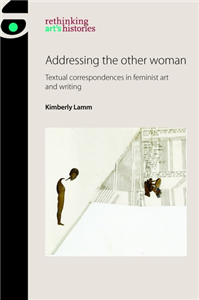
        Addressing the other woman

        Textual correspondences in feminist art and writing

        by Kimberly Lamm

        This book analyses how three artists - Adrian Piper, Nancy Spero and Mary Kelly - worked with the visual dimensions of language in the 1960s and 1970s. These artists used text and images of writing to challenge female stereotypes, addressing viewers and asking them to participate in the project of imagining women beyond familiar words and images of subordination. The book explores this dimension of their work through the concept of 'the other woman', a utopian wish to reach women and correspond with them across similarities and differences. To make the artwork's aspirations more concrete, it places the artists in correspondence with three writers - Angela Davis, Valerie Solanas, and Laura Mulvey - who also addressed the limited range of images through which women are allowed to become visible.

      • Trusted Partner
        Humanities & Social Sciences
        June 2019

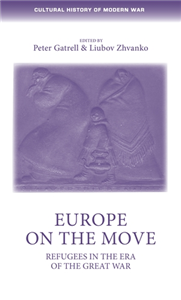
        Europe on the move

        Refugees in the era of the Great War

        by Peter Gatrell, Liubov Zhvanko, Penny Summerfield

        Mass population displacement affected millions of Europe's civilians across the different theatres of war in 1914-18. At the end of the war, a senior Red Cross official wrote 'there were refugees everywhere. It was as if the entire world had to move or was waiting to move'. Europe on the move is the first attempt to understand their experiences as a whole and to establish the political, social and cultural significance and ramifications of the wartime refugee crisis. Drawing on original research by leading specialists from more than a dozen countries, it will become the definitive work on the subject and will appeal to anyone who wishes to understand how governments and public opinion responded to refugees a century ago.

      • Trusted Partner
        The Arts
        June 2021

        Cinesonica

        Sounding film and video

        by Andy Birtwistle

        Cinesonica: sounding film and video explores previously neglected and under-theorised aspects of film and video sound, drawing on detailed case study analyses of Hollywood cinema, art cinema, animated cartoons, and avant-garde film and video. Adopting an interdisciplinary approach to the study of the soundtrack, and breaking away from the focus on narrative and signification that has tended to dominate the study of film sound, the book examines the way in which sound's materiality figures within audiovisual experience. Through a close examination of sound-image relations in a range of film and video forms and genres - including Warner Bros. cartoons, scratch video, and artist's film and video - Cinesonica recasts the film and video text as the meeting point of audio and visual materialities, cultural practices and perceptual activity. The interdisciplinary approach adopted by the book makes its discussion of sound of interest to those studying and working in a range of subject disciplines, including film studies, sound studies, sonic arts, cultural studies, music and art history.

      • Trusted Partner
      • Trusted Partner
        The Arts
        August 2011

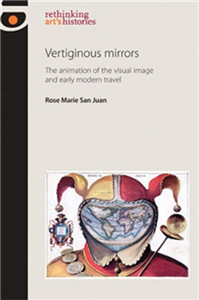
        Vertiginous Mirrors

        The animation of the visual image and early modern travel

        by Rose Marie San Juan, Amelia Jones, Marsha Meskimmon

        In early modern Europe, the visual image began to move, not only as it traveled across great distances but also due to the introduction of innovative visual formats that produced animation within the image itself. This book traces the arduous journeys of visual images through evidence of their use and reproduction along missionary routes from Europe to India, Japan, China, Brazil and Chile. It argues that missionary world travel was crucial to the early modern re-animation of the image through devices such as the reflection of the mirror, the multiple registers of vision of the anthropomorphic image, the imaginative and disorienting possibilities of the utopic image, and even the reconstitution of the sacred image with memories of the relation of travel to life and death. Within the journeys traced in the book, the visual image forged new connections between different locations and across different cultures, accumulating increasingly entangled histories. Even more intriguingly, these images frequently returned to Europe, changed but still recognisable, there to be used again with an awareness of their earlier travels. ;

      • Trusted Partner
        Humanities & Social Sciences
        July 2025

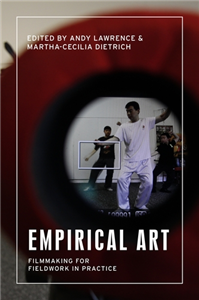
        Empirical art

        Filmmaking for fieldwork in practice

        by Andy Lawrence, Martha-Cecilia Dietrich

        Empirical art: Filmmaking for fieldwork in practice is an insightful exploration of what the craft of filmmaking brings to social science research. Providing creative avenues on how to narrate encounters, relationships, and experiences during fieldwork, this comprehensive volume offers a rich tapestry of theoretical explorations and explorative methodologies. Skilfully connecting the worlds of ethnography, art and cinema, the contributors in this book act as a compass for filmmakers and researchers venturing to use a camera and microphone to relate and narrate their research collaborations and fieldsites. Drawing from the authors' extensive experience in disciplines like social anthropology, environmental humanities, and political science, "Empirical Art" breaks down the intricate process of crafting ethnographic films that departs from the researcher's subjectivity. Covering aspects of filmmaking from conceptualisation to production and distribution, readers are equipped with a treasure trove of collaborative techniques, innovative approaches, and ethical considerations necessary to generate and examine storytelling practices in contemporary fields of study. The authors discuss the significance of the multiple roles that technologies of filmmaking play in reflecting on cultural practices, social dynamics, and (beyond) human storytelling and their transformative potentials. Whether a seasoned filmmaker, an aspiring ethnographer, or an academic seeking new dimensions for their research, Empirical Art serves as a guide to integrating visual storytelling, cinema craft and empirical research.

      • Trusted Partner
        The Arts
        July 2021

        Cue and Cut

        A practical approach to working in multi-camera studios

        by Roger Singleton-Turner

        Cue & Cut is a 'practical approach to working in television studios' for anyone who might want to work in that medium. It's full of useful information about kit, and how you would use it to create multi-camera content. Written by a multi-camera producer-director with years of drama and teaching experience, it presents both a way of handling studios and a source of information about how things have changed from the days of monochrome to HD tapeless modes - with some thoughts on 3D HDTV The book is firmly based in first-hand teaching experience and experience of producing, direction, floor managing (and so on) and on working with top flight Actors, Writers, Musicians, Designers of all disciplines and Sound and Camera crews, both at the BBC and in ITV. The book will certainly cover multi-camera aspects of Undergraduate, HND and B.Tech courses and should be useful to those on short courses, whether practical or post-graduate.

      • Trusted Partner
        The Arts
        July 2021

        Cue and Cut

        A practical approach to working in multi-camera studios

        by Roger Singleton-Turner

        Cue & Cut is a 'practical approach to working in television studios' for anyone who might want to work in that medium. It's full of useful information about kit, and how you would use it to create multi-camera content. Written by a multi-camera producer-director with years of drama and teaching experience, it presents both a way of handling studios and a source of information about how things have changed from the days of monochrome to HD tapeless modes - with some thoughts on 3D HDTV The book is firmly based in first-hand teaching experience and experience of producing, direction, floor managing (and so on) and on working with top flight Actors, Writers, Musicians, Designers of all disciplines and Sound and Camera crews, both at the BBC and in ITV. The book will certainly cover multi-camera aspects of Undergraduate, HND and B.Tech courses and should be useful to those on short courses, whether practical or post-graduate.

      Subscribe to our

      newsletter