
Your Search Results
-

-

ZNN Network Literary and Illustrator Agency
- International Copyright, Licensing, and Literary Agency - International Illustrator Agency and Management Services - Creative Content Development Services
View Rights Portal
-
Promoted Content

 Humanities & Social SciencesJune 2025
Living with water
Everyday encounters and liquid connections
by Charlotte Bates, Kate Moles
Living with water brings together sociologists, geographers, artists, writers and poets to explore the ways in which water binds, immerses and supports us. Drawing from international research on river crossings, boat dwelling, wild swimming, sea fishing, and drought impacts, and navigating urban waters, glacial lagoons, barrier reefs and disappearing tarns, the collection illuminates the ways that we live with and without water, and explores how we can think and write with water on land. Water offers a way of attending to emerging and enduring social and ecological concerns and making sense of them in lively and creative ways. By approaching Living with water from different disciplinary and methodological perspectives, and drawing on research from around the world, this collection opens up discussions that reinvigorate and renew previously landlocked debates. This book is relevant to United Nations Sustainable Development Goal 6, Clean water and sanitation
-
Promoted Content

 April 2023
The Battle for Water
In the century of drought
by Jürgen Rahmig
— Water as a reason for war and a political instrument of power — Unique overview of global water conflicts — Foreword by Wolfgang Ischinger Every year, droughts in African countries cause hundreds of thousands of deaths and much suffering. Europe also experienced drought in 2022's summer of record temperatures. Without water, there can be no life. More and more people are suffering from water shortages. Climate change is fuelling the distribution battles for water; violent conflicts over this precious resource are the order of the day. Whether the protests in Iraq, the war in Syria, in the Himalayas, the Nile conflict and in many other places, water is already a reason for war and is being misused as a political instrument of power. The construction of huge dams, the targeted closure of locks, river diversions, water and land grabbing bring wars over the "blue gold" with them. In a unique overview, journalist Jürgen Rahmig describes the struggle for water in the 21st century. Where do dangers lurk today; where will they be tomorrow, and how can we prevent wars over precious water?
-
 Trusted Partner

 February 2016
Alea Aquarius 2. Die Farben des Meeres
by Tanya Stewner, Laura Maire, Tanya Stewner, Guido Frommelt, Alea Aquarius, Antje Seibel, Frank Gustavus, Claudia Carls
Seit die zwölfjährige Alea bei einem Sturm von Bord der Crucis fiel, weiß das Meermädchen endlich, wer sie ist und wo sie hingehört. Doch was geschah vor elf Jahren mit ihrer Mutter? Warum wirkt die Unterwasserwelt so ausgestorben? Und weshalb fühlt sie eine so starke Verbindung zu dem dreizehnjährigen Lennox, als hätten sie sich schon immer gekannt? Eine magische Botschaft aus dem Bauch eines Wales führt Alea und die Alpha Cru zu unglaublichen Antworten, die neue Fragen aufwerfen. Inklusive Alea Aquarius- Song, komponiert und gesungen von der Autorin.
-
Trusted Partner


Does Movement Really Make Us Smart?
by Petra Jansen, Stefanie Richter
Media reports often praise movement as a cure-all. But apart from its undisputed positive effect on health, does movement really make us smarter? Consider a national football team, for example – are these excessively sports-driven players automatically the smartest people? Should we simply replace all school subjects with sports? The authors provide a detailed summary of the latest scientific findings on the influence of movement on cognitive ability. They describe the effects of movement, on old age, embodiment, emotion, school as well as other factors that influence cognition. Target Group: teachers, lecturers, psychologists, psychiatrists, neurologists, psychotherapists, movement therapists.
-
Trusted Partner
The ArtsNovember 2023
Colouring the Caribbean
Race and the art of Agostino Brunias
by Mia L. Bagneris
Colouring the Caribbean offers the first comprehensive study of Agostino Brunias's intriguing pictures of colonial West Indians of colour - so called 'Red' and 'Black' Caribs, dark-skinned Africans and Afro-Creoles, and people of mixed race - made for colonial officials and plantocratic elites during the late-eighteenth century. Although Brunias's paintings have often been understood as straightforward documents of visual ethnography that functioned as field guides for reading race, this book investigates how the images both reflected and refracted ideas about race commonly held by eighteenth-century Britons, helping to construct racial categories while simultaneously exposing their constructedness and underscoring their contradictions. The book offers provocative new insights about Brunias's work gleaned from a broad survey of his paintings, many of which are reproduced here for the first time.
-
Trusted Partner
Technology, Engineering & AgricultureOctober 2025
Murky water
by Luca Calafati, Julie Froud, Colin Haslam, Sukhdev Johal, Karel Williams
-
Trusted Partner
-

 The ArtsJanuary 1905
The Elements of Drawing
by John Ruskin
Can drawing — sound, honest representation of the world as the eye sees it, not tricks with the pencil or a few "effects" — be learned from a book? One of the most gifted draftsmen, who is also one of the greatest art critics and theorists of all time, answers that question with a decided "Yes." He is John Ruskin, the author of this book, a classic in art education as well as a highly effective text for the student and amateur today. The work is in three parts, cast in the form of letters to a student, successively covering "First Practice," "Sketching from Nature," and "Colour and Composition." Starting with the bare fundamentals (what kind of drawing pen to buy; shading a square evenly), and using the extremely practical method of exercises which the student performs from the very first, Ruskin instructs, advises, guides, counsels, and anticipates problems with sensitivity. The exercises become more difficult, developing greater and greater skills until Ruskin feels his reader is ready for watercolors and finally composition, which he treats in detail as to the laws of principality, repetition, continuity, curvature, radiation, contrast, interchange, consistency, and harmony. All along the way, Ruskin explains, in plain, clear language, the artistic and craftsmanlike reasons behind his practical advice — underlying which, of course, is Ruskin's brilliant philosophy of honest, naturally observed art which has so much affected our aesthetic. Three full-page plates and 48 woodcuts and diagrams (the latter from drawings by the author) show the student what the text describes. An appendix devotes many pages to the art works which may be studied with profit.
-
Trusted Partner
 Business, Economics & LawSeptember 2024
Global solidarities against water grabbing
by Caitlin Schroering
-
Trusted Partner
Business, Economics & LawJune 2026
Water struggles as resistance to neoliberal capitalism
by Madelaine Moore
-
Trusted Partner
-
Trusted Partner

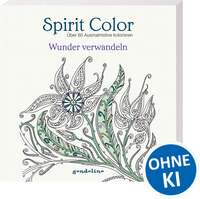 September 2016
Spirit Color: Über 60 Ausmalmotive kolorieren - Wunder verwandeln
Malbuch für Erwachsene und Kinder - Ideal zur Stressbewältigung und Entspannung
by Luzie Charlotte Gerb
Loewe-Bücher: garantiert ohne KI Wunder finden sich immer wieder und dies auch in kleinen Dingen, wenn wir sie nur sehen wollen. Einfach einmal abschalten und zwanglos dem Zeichenstift der Illustratorin folgen. Zum Ausmalen gibt es keine Vorgaben oder Regeln. Die farbige Ausgestaltung ist ganz Dir überlassen. Dies ist eine Einladung zur Entspannung und geistigen Befreiung von all den täglich erlebten oder auch nur selbstempfundenen Zwängen und Beschrän-kungen. Lass Dich verführen und probier es selbst aus! So werden die Ausmalbilder zu Kunstwerken – auch zum Verschenken mit einer Widmung auf der Rückseite !
-
Trusted Partner
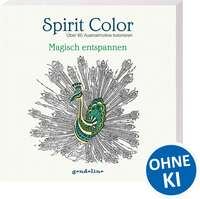 September 2016
Spirit Color: Über 60 Ausmalmotive kolorieren - Magisch entspannen
Malbuch für Erwachsene und Kinder - Ideal zur Stressbewältigung und Entspannung
by Luzie Charlotte Ger
Loewe-Bücher: garantiert ohne KI Magie öffnet Türen und schafft neue Einsichten. Einfach einmal abschalten und zwanglos dem Zeichenstift der Illustratorin folgen. Zum Ausmalen gibt es keine Vorgaben oder Regeln . Die farbige Ausgestaltung ist ganz Dir überlassen. Dies ist eine Einladung zur Entspannung und geistigen Befreiung von all den täglich erlebten oder auch nur selbstempfundenen Zwängen und Beschrän-kungen. Lass Dich verführen und probier es selbst aus! So werden die Ausmalbilder zu Kunstwerken – auch zum Verschenken mit einer Widmung auf der Rückseite!
-
Trusted Partner
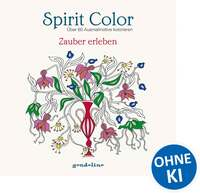 February 2017
Spirit Color: Über 60 Ausmalmotive kolorieren - Zauber erleben
Malbuch für Erwachsene und Kinder - Ideal zur Stressbewältigung und Entspannung
by Luzie Charlotte Gerb
Loewe-Bücher: garantiert ohne KI Den Zauber in der Welt um Dich herum zu erleben, ist leichter als Du denkst. Einfach einmal abschalten und zwanglos dem Zeichenstift der Illustratorin folgen. Zum Ausmalen gibt es keine Vorgaben oder Regeln. Die farbige Ausgestaltung ist ganz Dir überlassen. Dies ist eine Einladung zur Entspannung und geistigen Befreiung von all den täglich erlebten oder auch nur selbstempfundenen Zwängen und Beschränkungen. Lass Dich verführen und probier es selbst aus! So werden die Ausmalbilder zu Kunstwerken – auch zum Verschenken mit einer Widmung auf der Rückseite !
-
Trusted Partner
-
Trusted Partner

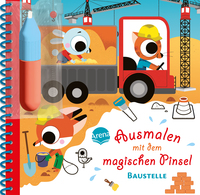 January 2026
Ausmalen mit dem magischen Pinsel. Auf der Baustelle
Malbuch mit Wassertankstift für Kinder ab 3 Jahren. Selbstständige Beschäftigung. Malen ohne Flecken
by Marta Sorte, Sandra Meyer
Mit Wasser malen, ganz ohne Flecken! Vorsicht, Baustelle! Hier geht’s zum Wassermalspaß: In diesem Malbuch mit Wassertankpinsel laden lustige Baustellen-Szenen Kinder ab 3 Jahren dazu ein, die Bilder zum Leuchten zu bringen. Einfach den Zauberpinsel mit Wasser befüllen und dann über das Bild streichen – schon erscheinen Bagger, Kran und Co. in bunten Farben.Ob zu Hause, im Auto oder im Wartezimmer: Der Wassermalspaß ist perfekt für unterwegs. Das Malen mit Wasser gibt keine Flecken und der Pinsel wird in einer kleinen Tasche am Buch aufbewahrt. Nebenbei sorgt das Malen für Entspannung und fördert die Feinmotorik, Konzentration und das logische Denken.Garantierter Wassermalspaß für kleine Hände! Einfach Pinsel mit Wasser befüllen und losmalen Immer-wieder-malen Kleine Suchspiele und viel zu entdecken Ideal für unterwegs: Kleine Pinseltasche
-
Trusted Partner
June 2026
Ausmalen mit dem magischen Pinsel. Pferde und Ponys
Malbuch mit Wassertankstift für Kinder ab 3 Jahren. Selbstständige Beschäftigung. Malen ohne Flecken
by Stéphanie Rousseau, Sandra Meyer
Mit Wasser malen, ganz ohne Flecken! – Für Pferdefans Hier geht’s zum Wassermalspaß : In diesem Malbuch mit Wassertankpinsel laden tolle Pferde- und Pony-Szenen Kinder ab 3 Jahren dazu ein, die Bilder in Farbe erscheinen zu lassen . Einfach den Zauberpinsel mit Wasser befüllen und über das Bild streichen – schon ist alles bunt. Auf den wimmeligen Ausmalbildern gibt es viel zu entdecken: Welches Pony trägt einen Strohhut? Welches Pferd belegt den ersten Platz beim Turnier? Und schau, wie viel Spaß sie am Strand haben! Ob zu Hause, im Auto oder im Wartezimmer: Der Wassermalspaß ist perfekt für unterwegs. Beim Malen mit Wasser gibt es keine Flecken und der Pinsel wird in einer kleinen Tasche am Buch aufbewahrt. Nebenbei sorgt das Malen für Entspannung und fördert die Feinmotorik, Konzentration und die Kreativität . Garantierter Wassermalspaß für kleine Hände!
-
Trusted Partner
 Humanities & Social SciencesFebruary 2023
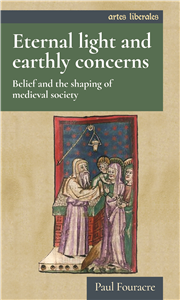
Eternal light and earthly concerns
Belief and the shaping of medieval society
by Paul Fouracre
In early Christianity it was established that every church should have a light burning on the altar at all times. In this unique study, Eternal light and earthly concerns, looks at the material and social consequences of maintaining these 'eternal' lights. It investigates how the cost of lighting was met across western Europe throughout the whole of the Middle Ages, revealing the social organisation that was built up around maintaining the lights in the belief that burning them reduced the time spent in Purgatory. When that belief collapsed in the Reformation the eternal lights were summarily extinguished. The history of the lights thus offers not only a new account of change in medieval Europe, but also a sustained examination of the relationship between materiality and belief.
-
Trusted Partner

 2022
2022Talking to Customersin Pharmacies
A conversation guidefor newcomers and old hands
by Dr Kirsten Lennecke, Illustrated by Barbara Kohm
The basis for successful advice is having a sound knowledge of the effect and application of medicines, but also an instinct for the individual needs and characteristics of the person asking for your help. This skill can be trained! Entertaining explanations and numerous case examples taken from everyday pharmacy practice help with this. They show how pharmacy staff can react empathetically, avoid misunderstandings, and manage delicate situations with confidence. The 5th edition has become more colourful! This applies not only to the illustrations, but also to the team and customers of our model pharmacy. A personality model with distinctive colours representing the different characters promises exciting insights. Good communication creates satisfied customers who want to come back again and again!
-
Trusted Partner



