
Your Search Results
-

-

Ediciones Uniandes / Universidad de los Andes
Ediciones Uniandes, Universidad de los Andes’s press, in Bogotá, Colombia, publishes scholarly books and music CDs, thus making available the research and arts production of professors and researchers within the university. Our aim is to consolidate a rigorous catalog with high academic and editorial standards, and to publish relevant titles while promoting collaboration with other key institutions, both in Colombia and abroad, and intercultural exchange; we also support editorial policies such as open access. Our catalog includes a wide range of topics with special emphasis on Social Sciences, Humanities and Law, but also Economics, Sciences, Management, Architecture, Design, and Medicine.
View Rights Portal
-
Promoted Content

 Humanities & Social SciencesJuly 2025
European Union health policy
Markets, integration and modes of governance
by Eleanor Brooks
The first book-length analysis of EU health policy since the COVID-19 pandemic, encompassing the creation of the European Health Union and the Recovery and Resilience Facility, this volume offers a timely and accessible analysis of the EU's health policy, institutions and governance. Focusing on the EU's health objectives and how they are pursued, it offers a detailed overview of the development of EU health policy, and five in-depth case studies of specific policy fields. The book will appeal to academic and policy audiences interested in the EU's health objectives and how it pursues them.
-
Promoted Content
 Humanities & Social SciencesAugust 2022
Britain and its internal others, 1750–1800
Under rule of law
by Dana Rabin
The rule of law, an ideology of equality and universality that justified Britain's eighteenth-century imperial claims, was the product not of abstract principles but imperial contact. As the Empire expanded, encompassing greater religious, ethnic and racial diversity, the law paradoxically contained and maintained these very differences. This book revisits six notorious incidents that occasioned vigorous debate in London's courtrooms, streets and presses: the Jewish Naturalization Act and the Elizabeth Canning case (1753-54); the Somerset Case (1771-72); the Gordon Riots (1780); the mutinies of 1797; and Union with Ireland (1800). Each of these cases adjudicated the presence of outsiders in London - from Jews and Gypsies to Africans and Catholics. The demands of these internal others to equality before the law drew them into the legal system, challenging longstanding notions of English identity and exposing contradictions in the rule of law.
-
 Trusted Partner
 Humanities & Social SciencesOctober 2021
Ireland and the European Union
Economic, political and social crises
by Michael Holmes, Kathryn Simpson, Dimitris Papadimitriou, Kathryn Simpson, Paul Tobin
This book examines how Ireland's relationship with the EU was affected by a succession of crises in both the Republic of Ireland and Northern Ireland. The financial crisis, the Brexit crisis and the migration crisis were not of equal significance on the island of Ireland. The financial crisis was a huge issue for the Republic but not Northern Ireland, Brexit had a major impact in both polities, the migration and populism issues were less controversial, while foreign policy challenges had a minimal impact. The book provides a summary of the main features of each of the crises to be considered, from both the EU and the Irish perspective. Ireland and the European Union is the first volume of its kind to provide a comprehensive analysis on British-Irish relations in the context of Brexit. It assesses the Withdrawal Agreement and Protocol on Ireland/Northern Ireland, the devolution settlement and the 1998 Agreement, as well as the European dimension to Northern Ireland's peace process. The contributors explore a number of policy areas that are central to the understanding of each of the crises and the impact of each for Ireland. Chapters examine issues such as security, migration and taxation as well as protest politics, political parties, the media, public opinion and the economic impact of each of these crises on Ireland's relationship with the EU.
-
Trusted Partner
 Humanities & Social SciencesApril 2023
Who governs Britain?
Trade unions, the Conservative Party and the failure of the Industrial Relations Act 1971
by Sam Warner
Providing fresh insights from the archival record, Who governs Britain? revisits the 1970-74 Conservative government to explain why the Party tried - and failed - to reform the system of industrial relations. Designed to tackle Britain's strike problem and perceived disorder in collective bargaining, the Industrial Relations Act 1971 established a formal legal framework to counteract trade union power. As the state attempted to disengage from and 'depoliticise' collective bargaining practices, trade union leaders and employers were instructed to discipline industry. In just three-and-a-half years, the Act contributed to a crisis of the British state as industrial unrest engulfed industry and risked undermining the rule of law. Warner explores the power dynamics, strategic errors and industrial battles that destroyed this attempt to tame trade unions and ultimately brought down a government, and that shape Conservative attitudes towards trade unions to this day.
-
Trusted Partner
 Humanities & Social SciencesJune 2025
Revolution in China and Russia
Reorganizing empires into nation states
by Luyang Zhou
Most scholars believe that China's nationality policy, like that of other socialist states, imitated the Soviet nationality model, a system which has been termed an "affirmative action empire." This book offers two contributions to the literature which run counter to this convention. First, it argues that the People's Republic of China (PRC) and the Soviet Union (USSR) were different; while the PRC was aimed to build an ideal-typical nation-state, the USSR was an open union of nation-states that was only temporarily confined to a physical territory. Second, while scholars who have noted this difference attribute it to contextual factors, such as ethnic structure, geopolitical status, and Russia's intervention into the Chinese Revolution, this book contends that context shaped the Sino-Soviet difference, yet it did not determine it. Rather, there was significant leeway between the implications of the contextual factors, and what the policy-designers ultimately established. This book probes who held agency, and how these individuals bridged this gap.
-
Trusted Partner
-
Trusted Partner
 Humanities & Social SciencesOctober 2020
The European Union and its eastern neighbourhood
Europeanisation and its twenty-first-century contradictions
by Mike Mannin, Paul Flenley
This volume is timely in that it explores key issues which are currently at the forefront of the EU's relations with its eastern neighbours. It considers the impact of a more assertive Russia, the significance of Turkey, the limitations of the Eastern Partnership with Belarus and Moldova, the position of a Ukraine in crisis and pulled between Russia and the EU, security and democracy in the South Caucasus. It looks at the contested nature of European identity in areas such as the Balkans. In addition it looks at ways in which the EU's interests and values can be tested in sectors such as trade and migration. The interplay between values, identity and interests and their effect on the interpretation of europeanisation between the EU and its neighbours is a core theme of the volume.
-
Trusted Partner
 Humanities & Social SciencesNovember 2025
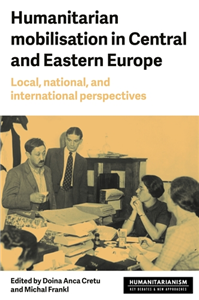
Humanitarian mobilisation in Central and Eastern Europe
Local, national, and international perspectives
by Doina Anca Cretu, Michal Frankl
By focusing on aid Central and Eastern Europe, the volume adds to the existent scholarly explorations of modern humanitarianism, its actors and practices. In the twentieth century, aid workers assisted victims of war and earthquakes, delivered food, supported health care, provided childcare, or sheltered refugees. The contributors not only reconstruct these diverse histories and their protagonists, but also bring international, national, and local actors together: from grassroots activists to private associations to state-driven "socialist humanitarians" to large Western aid organizations. In doing so, they challenge the often unidirectional, from West-to-East, and asymmetrical perspective on donor-recipient relationships in humanitarian processes.
-
Trusted Partner

 July 2021
The World of the North
Between Ragnarok and welfare utopia: A cultural-historical deconstruction
by Bernd Henningsen
— Analysis of how we view Europe's North and how this image emerged — An outsider's perspective on Nordic societies and their self image — Serves as an introduction into Northern European culture and society Our image of Northern Europe has been shaped by projections and desires in the long history of encounters: berserkers and war atrocities, bad weather, beautiful nature, stable political systems, social welfare, equality and prosperity, peacefulness, low corruption, hygge and Bullerby – all this is part of the Nordic narrative. But what about the religious, linguistic and ethnic homogeneity, what about the muchvaunted Nordic cooperation? How do politics "work" in the North? Why are Northern Europeans the happiest people?
-
Trusted Partner
 Humanities & Social SciencesMarch 2017
From Jack Tar to Union Jack
Representing naval manhood in the British Empire, 1870–1918
by Mary A. Conley
Jack Tar to Union Jack examines the intersection between empire, navy, and manhood in British society from 1870 to 1918. Through analysis of sources that include courts-martial cases, sailors' own writings, and the HMS Pinafore, Conley charts new depictions of naval manhood during the Age of Empire, a period which witnessed the radical transformation of the navy, the intensification of imperial competition, the democratisation of British society, and the advent of mass culture. Jack Tar to Union Jack argues that popular representations of naval men increasingly reflected and informed imperial masculine ideals in Victorian and Edwardian Britain. Conley shows how the British Bluejacket as both patriotic defender and dutiful husband and father stood in sharp contrast to the stereotypic image of the brave but bawdy tar of the Georgian navy. This book will be essential reading for students of British imperial history, naval and military history, and gender studies.
-
Trusted Partner
 Humanities & Social SciencesOctober 2023
Towards a just Europe
A theory of distributive justice for the European Union
by João Labareda
This highly original book constitutes one of the first attempts to examine the problem of distributive justice in the European Union in a systematic manner. João Labareda argues that the set of shared political institutions at EU level, including the European Parliament and the Court of Justice of the EU, generate democratic duties of redistribution among EU citizens. Furthermore, the economic structure of the EU, comprising a common market, a common currency and a free-movement area, triggers duties of reciprocity among member states. The responsibilities to fulfil these duties, Labareda argues, should be shared by the local, national and supranational levels of government. Not only should the EU act as a safety net to the national welfare systems, applying the principle of subsidiarity, but common market and Eurozone regulations should balance their efficiency targets with fair cooperation terms. The concrete policy proposals presented in this book include a threshold of basic goods for all EU citizens, an EU labour code, a minimum EU corporate tax rate and an EU fund for competitiveness. Labarada argues that his proposals match the political culture of the member states, are economically feasible, can be translated into functioning institutions and policies and are consistent with the limited degree of social solidarity in Europe. This book is a major contribution to the understanding of what a just Europe would look like and what it might take to get us there. This book is relevant to United Nations Sustainable Development Goal 10, Reduced inequalities
-
Trusted Partner
 Humanities & Social SciencesOctober 2021
The EU and crisis response
by Roger Mac Ginty, Sandra Pogodda, Oliver P. Richmond
-
Trusted Partner
-
Trusted Partner
 Humanities & Social SciencesFebruary 2026
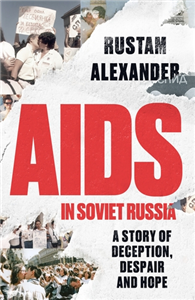
AIDS in Soviet Russia
A story of deception, despair and hope
by Rustam Alexander
The first book to tell the shocking story of the AIDS crisis in Soviet Russia. Throughout the 1980s, as the world was grappling with the escalating crisis of AIDS, Soviet Russia continued to deny there was a problem. Arguing that the disease was limited to foreigners and 'immoral' groups, the government failed to take meaningful action, long past the point other countries had begun to recognise the full scale of the threat. In this ground-breaking book, Rustam Alexander tells the story of AIDS in Soviet Russia. Fixated on disinformation, censorship and the persecution of marginalised communities, the Soviet authorities wasted precious time, allowing the epidemic to strike at the very heart of the nation: its children. Yet, despite the government's failure, a number of brave journalists, doctors and nascent gay groups decided to take matters into their own hands and engage in full-fledged AIDS activism. Tracing the political and social response to AIDS in the final years of the Soviet era, Alexander sheds light on the devastating consequences of government inaction. He draws on personal stories, media reports and archival materials to provide a riveting account of the Russian people's fight against AIDS amid the tumultuous transformations of Gorbachev's perestroika.
-
Trusted Partner
 Business, Economics & LawFebruary 2025
The political economy of Turkey’s integration to Europe
Uneven development and hegemony
by Elif Uzgören
This book examines Turkey's integration with Europe within structural dynamics of globalisation from a critical political economy perspective. Critical approaches have been sidelined within European Studies. Turkish enlargement is not an exemption. The analyses are based on original data generated by 109 interviews conducted in 2010, 2017 and 2023 with five categories of actors: representatives of capital and labour, political parties, state officials, and struggles around ecology, patriarchy and migration. It argues that the pro-membership was hegemonic in the 2000s which was contested by two rival class strategies, Ha-vet and neo-mercantilism. In the 2010s, pro-membership is no longer hegemonic within rising critical tone of social forces supporting rival class strategies. Unevenness of Turkey's trajectory of integration to Europe is likely to be consolidated through market integration and management of migration through transactional approach.
-
Trusted Partner
 Humanities & Social SciencesMarch 2017
Sex, politics and empire
A postcolonial geography
by Richard Phillips
Colonial governments, institutions and companies recognised that in many ways the effective operation of the Empire depended upon sexual arrangements. For example, nuclear families serving agricultural colonization, and prostitutes working for single men who powered armies and plantations, mines and bureaucracies. For this reason they devised elaborate systems of sexual governance, such as attending to marriage and the family. However, they also devoted disproportionate energy to marking and policing the sexual margins. In Sex, Politics and Empire, Richard Phillips investigates controversies surrounding prostitution, homosexuality and the age of consent in the British Empire, and revolutionises our notions about the importance of sex as a nexus of imperial power relations.
-
Trusted Partner
 Humanities & Social SciencesApril 2026
Visions for Europe
Debating the future of the European Union with great political thinkers
by João Labareda
This book offers a fresh look at some of the most challenging dilemmas of European integration and proposes innovative solutions to them by building on perspectives and insights from twelve classical authors in the history of political thought. The book simultaneously offers an original introduction to critical debates in EU studies and makes key political thinkers more accessible to contemporary readers by presenting present-day policy applications of their doctrines. While each chapter discusses a specific challenge for the EU, five key themes appear recurrently throughout the book: (i) the prospects for peace in Europe; (ii) the conditions for an inclusive EU democracy; (iii) socioeconomic inequalities in the EU; (iv) strategies to promote political change in Europe; and (v) the requisites for a fully-fledged EU citizenship. The authors discussed are Plato, Aristotle, Augustine, Machiavelli, Hobbes, Rousseau, Kant, Wollstonecraft, Marx, Arendt, Rawls and hooks.
-
Trusted Partner
 Humanities & Social SciencesOctober 2022
Germany's Russia problem
The struggle for balance in Europe
by John Lough
The relationship between Germany and Russia is Europe's most important link with the largest country on the continent. But despite Germany's unparalleled knowledge and historical experience, its policymakers struggle to accept that Moscow's efforts to rebalance Europe at the cost of the cohesion of the EU and NATO are an attack on Germany's core interests. This book explains the scale of the challenge facing Germany in managing relations with a changing Russia. It analyses how successive German governments from 1991 to 2014 misread Russian intentions, until Angela Merkel sharply recalibrated German and EU policy towards Moscow. The book also examines what lies behind efforts to revise Merkel's bold policy shift, including attitudes inherited from the GDR and the role of Russian influence channels in Germany.
-
Trusted Partner
 Humanities & Social SciencesSeptember 2005
Britain in the European Union Today
Third edition
by Duncan Watts, Bill Jones, Colin Pilkington
Duncan Watts, the author of three previous books on the European Union and Britain's relationship with it, has produced a new account of this 'uneasy partnership'. This edition is based on the original by Colin Pilkington and provides a review of how European Unity has been handled by British governments and politics. The contents has been updated to include all new developments including the proposed new consititution and the euro-elections of 2004. Additional material aslo considers the role of pressure groups within the Union and the approach adopted by British Lobbyists. As an up-to-date edition of a well established text, this book will be essential reading for students and teachers interested in the relationship between Britain and Europe. ;
-
Trusted Partner
 Humanities & Social SciencesFebruary 2010
Committee governance in the European Union
by Thomas Christiansen, Emil Kirchner, Emil Kirchner, Thomas Christiansen
Committees are a pervasive presence in the EU policy process yet little is known about the way in which they operate. This volume, newly available in paperback, brings together an international group of experts from a number of disciplinary backgrounds to provide a comprehensive account of the role played by committees in the European Union. The book looks at committees in the context of inter-institutional relations, a focus based on the recognition that the relationships between Commission, Council, Parliament and national authorities - rather than the institutions themselves - are crucial to the understanding of European policy-making. Much of that interaction is regularised in various kinds of committees and the book provides an in-depth analysis of the nature and the effects of 'committee governance' in the EU system. A number of case studies (monetary, policy, trade, environment, spatial planning and foreign policy) examine the role of committees in specific areas. These are framed by broader perspectives which provide theoretical, statistical and normative analyses of the phenomenon of committee governance. ;



