
Your Search Results
-

-

Armin Lear Press
Armin Lear Press is home to award-winning editorial and design talent.
View Rights Portal
-
Promoted Content

 Humanities & Social SciencesMarch 2017
Guardians of Empire
The Armed Forces of the Colonial Powers, C.1700-1964
by Andrew Thompson, John M. MacKenzie, David Killingray
For imperialists, the concept of guardian is specifically to the armed forces that kept watch on the frontiers and in the heartlands of imperial territories. Large parts of Asia and Africa, and the islands of the Pacific and the Caribbean were imperial possessions. This book discusses how military requirements and North Indian military culture, shaped the cantonments and considers the problems posed by venereal diseases and alcohol, and the sanitary strategies pursued to combat them. The trans-border Pathan tribes remained an insistent problem in Indian defence between 1849 and 1947. The book examines the process by which the Dutch elite recruited military allies, and the contribution of Indonesian soldiers to the actual fighting. The idea of naval guardianship as expressed in the campaign against the South Pacific labour trade is examined. The book reveals the extent of military influence of the Schutztruppen on the political developments in the German protectorates in German South-West Africa and German East Africa. The U.S. Army, charged with defending the Pacific possessions of the Philippines and Hawaii, encountered a predicament similar to that of the mythological Cerberus. The regimentation of military families linked access to women with reliable service, and enabled the King's African Rifles to inspire a high level of discipline in its African soldiers, askaris. The book explains the political and military pressures which drove successive French governments to widen the scope of French military operations in Algeria between 1954 and 1958. It also explores gender issues and African colonial armies.
-
Promoted Content
 June 2026
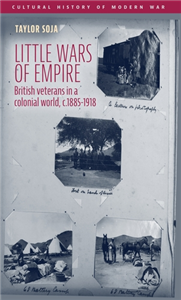
Little wars of empire
British veterans in a colonial world, c.1885–1918
by Taylor Soja
Little Wars of Empire is a group biography of British veterans who experienced multiple wars across the British empire. Throughout the nineteenth century, Britain was constantly at war in its colonies, defending against anti-colonial resistance or trying to expand its influence. The veterans of these wars did not disappear once they were over, and many of them went on to later experience World War I. By using personal sources such as letters, diaries, and photograph albums, this book works to show how colonial violence and British military history depend upon one another, and argues that colonial war fundamentally shaped the British experience of empire. This was true for all kinds of British veterans, from British Army soldiers and officers to nurses and military families, whose experiences demonstrate the central place of colonial violence to British life.
-
 Trusted Partner
 The ArtsJanuary 2019
Postcolonial African cinema
Ten directors
by David Murphy, Patrick Williams
This is the first introduction of its kind to an important cross-section of postcolonial African filmmakers from the 1950s to the present. Building on previous critical work in the field, this volume will bring together ideas from a range of disciplines - film studies, African cultural studies, and, in particular, postcolonial studies - in order to combine the in-depth analysis of individual films and bodies of work by individual directors with a sustained interrogation of these films in relation to important theoretical concepts. Structurally, the book is straightforward, though the aim is to incorporate diversity and complexity of approach within the overall simplicity of format. Chapters provide both an overview of the director's output to date, and the necessary background - personal or national, cultural or political - to enable readers to achieve a better understanding of the director's choice of subject matter, aesthetic or formal strategies, or ideological stance. They also offer a particular reading of one or more films, in which the authors aim to situate African cinema in relation to important critical and theoretical debates. This book thus constitutes a new departure in African film studies, recognising the maturity of the field, and the need for complex yet accessible approaches to it, which move beyond the purely descriptive while refusing to get bogged down in theoretical jargon. Consequently, the volume should be of interest not only to specialists but also to the general reader.
-
Trusted Partner
 Humanities & Social SciencesMarch 2021
African cities and collaborative futures
Urban platforms and metropolitan logistics
by Michael Keith, Andreza Aruska de Souza Santos, Susan Parnell
This groundbreaking volume brings together scholars from across the globe to discuss the infrastructure, energy, housing, safety and sustainability of African cities, as seen through local narratives of residents. Drawing on a variety of fields and extensive first-hand research, the contributions offer a fresh perspective on some of the most pressing issues confronting urban Africa in the twenty-first century. At a time when the future of the region as a whole will be determined in large part by its cities, the implications of these developments are profound. With case studies from cities in Ethiopia, Kenya, Malawi, Niger, Nigeria, South Africa and Tanzania, this volume explores how the rapid growth of African cities is reconfiguring the relationship between urban social life and its built forms. While the most visible transformations in cities today can be seen as infrastructural, these manifestations are cultural as well as material, reflecting the different ways in which the city is rationalised, economised and governed. How can we 'see like a city' in twenty-first-century Africa, understanding the urban present to shape its future? This is the central question posed throughout this volume, with a practical focus on how academics, local decision makers and international practitioners can collaborate to meet the challenge of rapid growth, environmental pressures and resource gaps.
-
Trusted Partner
 Teaching, Language & ReferenceApril 2025
Anti-colonial research praxis
Methods for knowledge justice
by Caroline Lenette
How can anti-colonial research methodologies be transformative and achieve knowledge justice? This book brings together an eclectic group of leading scholars from around the world to share methodological knowledge grounded in First Nations and majority-world expertise and wisdom. The authors challenge western-centric and colonial approaches to knowledge production and redefine the possibilities of what we can achieve through social research. First Nations and majority-world perspectives are contextual and unique. They share a common aim of disrupting established beliefs on research methodologies and the unquestioned norms that dictate whose knowledge the academy values. The ten chapters in this edited collection describe how the authors draw on Indigenous knowledge systems, feminist frameworks, and creative methodologies as anti-colonial research praxis. The examples span several disciplines such as development studies, geography, education, sexual and reproductive health, humanitarian studies, and social work. Authors use a reflexive approach to discuss specific factors that shape how they engage in research ethically, to lead readers through a reflection on their own practices and values. The book reimagines social research using an anti-colonial lens and concludes with a collaboratively developed and co-written set of provocations for anti-colonial research praxis that situate this important work in the context of ongoing colonial violence and institutional constraints. This book is an essential guide for researchers and scholars within and beyond the academy on how anti-colonial research praxis can produce meaningful outcomes, especially in violent and troubled times. Cover art courtesy of Tawny Chatmon
-
Trusted Partner
 Humanities & Social SciencesMarch 2017
Rethinking settler colonialism
History and memory in Australia, Canada, Aotearoa New Zealand and South Africa
by Annie Coombes
Rethinking settler colonialism focuses on the long history of contact between indigenous peoples and the white colonial communities who settled in Australia, Aotearoa New Zealand, Canada and South Africa. It interrogates how histories of colonial settlement have been mythologised, narrated and embodied in public culture in the twentieth century (through monuments, exhibitions and images) and charts some of the vociferous challenges to such histories that have emerged over recent years. Despite a shared familiarity with cultural and political institutions, practices and policies amongst the white settler communities, the distinctiveness which marked these constituencies as variously, 'Australian', 'South African', 'Canadian' or 'New Zealander', was fundamentally contingent upon their relationship to and with the various indigenous communities they encountered. In each of these countries these communities were displaced, marginalised and sometimes subjected to attempted genocide through the colonial process. Recently these groups have renewed their claims for greater political representation and autonomy. The essays and artwork in this book insist that an understanding of the political and cultural institutions and practices which shaped settler-colonial societies in the past can provide important insights into how this legacy of unequal rights can be contested in the present. It will be of interest to those studying the effects of colonial powers on indigenous populations, and the legacies of imperial rule in postcolonial societies.
-
Trusted Partner
Humanities & Social SciencesMarch 2017
Air power and colonial control
by David Omissi
Air policing was used in many colonial possessions, but its most effective incidence occurred in the crescent of territory from north-eastern Africa, through South-West Arabia, to North West Frontier of India. This book talks about air policing and its role in offering a cheaper means of 'pacification' in the inter-war years. It illuminates the potentialities and limitations of the new aerial technology, and makes important contributions to the history of colonial resistance and its suppression. Air policing was employed in the campaign against Mohammed bin Abdulla Hassan and his Dervish following in Somaliland in early 1920. The book discusses the relationships between air control and the survival of Royal Air Force in Iraq and between air power and indirect imperialism in the Hashemite kingdoms. It discusses Hugh Trenchard's plans to substitute air for naval or coastal forces, and assesses the extent to which barriers of climate and geography continued to limit the exercise of air power. Indigenous responses include being terrified at the mere sight of aircraft to the successful adaptation to air power, which was hardly foreseen by either the opponents or the supporters of air policing. The book examines the ethical debates which were a continuous undercurrent to the stream of argument about repressive air power methods from a political and operational perspective. It compares air policing as practised by other European powers by highlighting the Rif war in Morocco, the Druze revolt in Syria, and Italy's war of reconquest in Libya.
-
Trusted Partner
 Humanities & Social SciencesMarch 2017
Ordering Africa
Anthropology, European imperialism and the politics of knowledge
by Helen Tilley, Robert Gordon
African research played a major role in transforming the discipline of anthropology in the twentieth century. Ethnographic studies, in turn, had significant effects on the way imperial powers in Africa approached subject peoples. Ordering Africa provides the first comparative history of these processes. With essays exploring metropolitan research institutes, Africans as ethnographers, the transnational features of knowledge production, and the relationship between anthropology and colonial administration, this volume both consolidates and extends a range of new research questions focusing on the politics of imperial knowledge. Specific chapters examine French West Africa, the Belgian and French Congo, the Anglo-Egyptian Sudan, Italian Northeast Africa, Kenya, and Equatorial Africa (Gabon) as well as developments in Britain, France, Germany, Italy, and Switzerland. A major collection of essays that will be welcomed by scholars interested in imperial history and the history of Africa.
-
Trusted Partner
The ArtsNovember 2023
Colouring the Caribbean
Race and the art of Agostino Brunias
by Mia L. Bagneris
Colouring the Caribbean offers the first comprehensive study of Agostino Brunias's intriguing pictures of colonial West Indians of colour - so called 'Red' and 'Black' Caribs, dark-skinned Africans and Afro-Creoles, and people of mixed race - made for colonial officials and plantocratic elites during the late-eighteenth century. Although Brunias's paintings have often been understood as straightforward documents of visual ethnography that functioned as field guides for reading race, this book investigates how the images both reflected and refracted ideas about race commonly held by eighteenth-century Britons, helping to construct racial categories while simultaneously exposing their constructedness and underscoring their contradictions. The book offers provocative new insights about Brunias's work gleaned from a broad survey of his paintings, many of which are reproduced here for the first time.
-
Trusted Partner
 Humanities & Social SciencesMarch 2017
The South African War reappraised
by Andrew Thompson, John M. MacKenzie
The South African War was a catalyst in the creation of modern South Africa and was a major international event which had profound implications for British rule in other parts of their colonial empire. This was South Africa's own 'Great War' - the largest conflict waged by the British in the century between the Napoleonic Wars and the First World War. It shaped political discourse among South Africa's various communities and moulded the outlook of a generation of imperial administrators, soldiers and anti-colonial activists. The war launched South Africa as a moral issue of global significance, involving leading humanitarians, foreign 'pro-Boer' volunteers as well as pro-imperial contingents from various dominions and colonies of settlement, and would later find echoes in the campaign against apartheid. This volume includes a historiographical review of a century of writing on the war. It examines South Africa's place in the imperial structure and reappraises its impact on imperial defence and the political identities of Africans, Asians, Boer commandos and Cape Afrikaners. An analysis of the role of the media and the effects of the war on nationalists in India, Ireland and the Dominions is also included. The South African War reappraised will be of particular interest to students of imperialism, modern South Africa, nationalism and the media.
-
Trusted Partner
 Teaching, Language & ReferenceAugust 2022
Dividing the spoils
Perspectives on military collections and the British empire
by Henrietta Lidchi, Stuart Allan
At a time of heightened international interest in the colonial dimensions of museum collections, Dividing the Spoils provides new perspectives on the motivations and circumstances whereby collections were appropriated and acquired during colonial military service. Combining approaches from the fields of material anthropology, imperial and military history, this book argues for a deeper examination of these collections within a range of intercultural histories that include alliance, diplomacy, curiosity and enquiry, as well as expropriation and cultural hegemony. As museums across Europe reckon with the post-colonial legacies of their collections, Dividing the Spoils explores how the amassing of objects was understood and governed in British military culture, and considers how objects functioned in museum collections thereafter, suggesting new avenues for sustained investigation in a controversial, contested field.
-
Trusted Partner
-
Trusted Partner
-
Trusted Partner
 Humanities & Social SciencesMarch 2021
African cities and collaborative futures
by Michael Keith, Andreza Aruska de Souza Santos
-
Trusted Partner
-
Trusted Partner
 Humanities & Social SciencesSeptember 2011
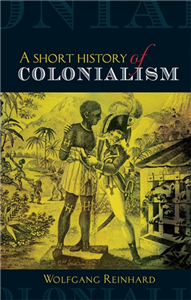
A short history of colonialism
by Wolfgang Reinhard
This well-written and comprehensive book by an outstanding expert provides students of history and the general reader with reliable up-to-date information on an essential part of the history of mankind: the global impact of European colonial expansion from the late Middle Ages to the present. It deals with the discoveries, with Portuguese, Dutch and English trade systems in Asia, with the Spanish, Portuguese, Dutch, French and British Colonies in America, the American plantation economy and the trade in African slaves, with settler colonies in the southern hemisphere, with US-, Russian and Chinese continental imperialism, with western colonial rule in Asia and Africa and the several waves of decolonisation between 1775 and 1989. Twenty-four maps illustrate the narrative. A useful teaching text, it combines traditional and more recent perspectives to produce a final balance sheet of Western colonialism and its global heritage. A carefully selected bibliography encourages further reading. ;
-
Trusted Partner
 April 2026
Settler/colonialism in Kashmir
Sovereignty, catastrophe, indigeneity
by Goldie Osuri
Sovereignty, catastrophe, Indigeneity examines Indian rule in occupied Jammu and Kashmir through settler/colonial geopolitics. Engaging with settler colonial, decolonial and Indigenous studies, the book explores how European sovereignty was shaped by settler/colonialism. Settler/colonialism was catastrophic for Indigenous worlds and generated the climate crisis. The book explores how India draws on settler/colonialism's catastrophic mechanisms to rule Kashmir, thus fuelling the climate crisis and participating in the geopolitical settler/colonial world order. Sites of analysis include the India China rivalry, Kashmir's political economy, and India's indigenisation of its Hindu sacred geography in Kashmir. Through this exploration, the author argues for asserting Kashmiri resistance as an Indigenous anti-colonial struggle. The intersections between sovereignty, catastrophe, Indigeneity, and ecology, illuminate Kashmir's place in the geopolitical settler/colonial world order. The book contributes to timely debates regarding settler/colonialism and planetary crises.
-
Trusted Partner
 The ArtsApril 2011
Postnationalist African Cinemas
by Alexie Tcheuyap
Postnationalist African cinemas convincingly interrogates the ways in which African narratives locate postcolonial identities and forms beyond essentially nationalist frameworks. It investigates how the emergence of new genres, discourses and representations, all unrelated to an overtly nationalist project, influences the formal choices made by contemporary directors. By foregrounding the narrative, generic, discursive, representational and aesthetic structures of films, this book shows how directors are beginning to regard film as a popular form of entertainment rather than political praxis. Tcheuyap investigates filmic genres such as comedy, dance, crime and epic alongside cultural aspects including witchcraft, sexuality, pornography and oracles. ;
-
Trusted Partner
 Humanities & Social SciencesSeptember 2018
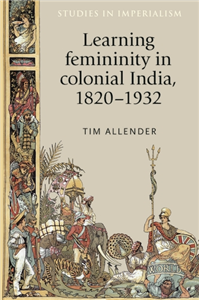
Learning femininity in colonial India, 1820–1932
by Tim Allender, Andrew Thompson, John M. MacKenzie
Learning femininity in colonial India explores the colonial mentalities that shaped and were shaped by women living in colonial India between 1820 and 1932. Using a broad framework the book examines the many life experiences of these women and how their position changed, both personally and professionally, over this long period of study. Drawing on a rich documentary record from archives in the United Kingdom, India, Pakistan, North America, Ireland and Australia this book builds a clear picture of the colonial-configured changes that influenced women interacting with the colonial state. This book will appeal to students and academics working on the history of empire and imperialism, gender studies, postcolonial studies and the history of education.
-
Trusted Partner
 Humanities & Social SciencesJuly 2025
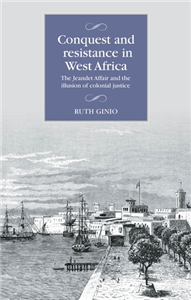
Conquest and resistance in West Africa
The Jeandet Affair and the illusion of colonial justice
by Ruth Ginio
This book is an enthralling account of a legal scandal, which erupted in colonial Senegal in 1890 and reached the French metropolitan press and the parliament. The murder of a colonial administrator, Abel Jeandet, by one of his soldiers led to the brutal and illegal executions without trial of the killer and two local dignitaries. The volume follows the fascinating story of Ndiereby Ba, the widow of one of the dignitaries, who with the help of powerful métis men in the capital Saint Louis sued the French administrators who had supervised the executions for the murder of her husband. Through this captivating tale the book articulates the French expansion into West Africa, the resistance to colonial rule both violent and non-violent, and the lack of interest on the part of French politicians in the brutal conquest of a territory they know nothing about.


