
Your Search Results
-

-

Hanska Literary&Film Agency S.L.
Hanska Literary & Film Agency represents internationally Spanish writers and scriptwriters. Specializing in Spanish commercial and up-market commercial adult fiction: women's fiction, historical novel, crime, thriller, noir, romance, family saga.
View Rights Portal
-
Promoted Content

 The ArtsJanuary 2019
Algerian national cinema
by Guy Austin
This topical and innovative study is the first book on Algerian cinema to be published in English since the 1970s. At a time when North African and Islamic cultures are of increasing political significance, Algerian National Cinema presents a dynamic, detailed and up to date analysis of how film has represented this often misunderstood nation. Algerian National Cinema explores key films from The Battle of Algiers (1966) to Mascarades (2007). Introductions to Algerian history and to the national film industry are followed by chapters on the essential genres and themes of filmmaking in Algeria, including films of anti-colonial struggle, representations of gender, Berber cinema, and filming the 'black decade' of the 1990s. This thoughtful and timely book will appeal to all interested in world cinemas, in North African and Islamic cultures, and in the role of cinema as a vehicle for the expression of contested identities. By the author of the critically-acclaimed Contemporary French Cinema.
-
Promoted Content
 The ArtsJune 2021
Algerian national cinema
by Guy Austin
This topical and innovative study is the first book on Algerian cinema to be published in English since the 1970s. At a time when North African and Islamic cultures are of increasing political significance, Algerian National Cinema presents a dynamic, detailed and up to date analysis of how film has represented this often misunderstood nation. Algerian National Cinema explores key films from The Battle of Algiers (1966) to Mascarades (2007). Introductions to Algerian history and to the national film industry are followed by chapters on the essential genres and themes of filmmaking in Algeria, including films of anti-colonial struggle, representations of gender, Berber cinema, and filming the 'black decade' of the 1990s. This thoughtful and timely book will appeal to all interested in world cinemas, in North African and Islamic cultures, and in the role of cinema as a vehicle for the expression of contested identities. By the author of the critically-acclaimed Contemporary French Cinema.
-
 Trusted Partner
 The ArtsJanuary 2019
Hispanic and Lusophone women filmmakers
Theory, practice and difference
by Parvati Nair, Julian Gutierrez-Albilla
This volume examines the films of Hispanic and Lusophone women filmmakers from the 1930s to the present day. It establishes productive connections between film practices across these geographical areas by identifying common areas of concern on the part of these female filmmakers. Focusing on aesthetic, theoretical and socio-historical analyses, it questions the manifest or latent gender and sexual politics that inform and structure the emerging cinematic productions by women filmmakers in Portugal, Spain, Latin America and the US. With a combination of scholars from the UK, the US, Spain and Latin America, the volume documents and interprets a fascinating corpus of films made by Hispanic and Lusophone women and proposes research strategies and methodologies that can expand our understanding of socio-cultural and psychic constructions of gender and sexual politics. An essential resource to rethink notions of gender identity and subjectivity, it is a unique contribution to Spanish and Latin American Film Studies and Film Studies.
-
Trusted Partner
 The ArtsDecember 2012
Hispanic and Lusophone women filmmakers
Theory, practice and difference
by Parvati Nair, Julian Gutierrez-Albilla
This volume examines the films of Hispanic and Lusophone women filmmakers from the 1930s to the present day. It establishes productive connections between film practices across these geographical areas by identifying common areas of concern on the part of these female filmmakers. Focusing on aesthetic, theoretical and socio-historical analyses, it questions the manifest or latent gender and sexual politics that inform and structure the emerging cinematic productions by women filmmakers in Portugal, Spain, Latin America and the US. With a combination of scholars from the UK, the US, Spain and Latin America, the volume documents and interprets a fascinating corpus of films made by Hispanic and Lusophone women and proposes research strategies and methodologies that can expand our understanding of socio-cultural and psychic constructions of gender and sexual politics. An essential resource to rethink notions of gender identity and subjectivity, it is a unique contribution to Spanish and Latin American Film Studies and Film Studies. ;
-
Trusted Partner
-
Trusted Partner
 The ArtsJanuary 2019
Reframing difference
Beur and banlieue filmmaking in France
by Carrie Tarr
Reframing difference is the first major study of two overlapping strands of contemporary French cinema, cinema beur (films by young directors of Maghrebi immigrant origin) and cinema de banlieue (films set in France's disadvantaged outer-city estates). Carrie Tarr's insightful account draws on a wide range of films, from directors such as Mehdi Charef, Mathieu Kassovitz and Djamel Bensalah. Her analyses compare the work of male and female, majority and minority film-makers, and emphasise the significance of authorship in the representation of gender and ethnicity. Foregrounding such issues as the quest for identity, the negotiation of space and the recourse to memory and history, she argues that these films challenge and reframe the symbolic spaces of French culture, addressing issues of ethnicity and difference which are central to today's debates about what it means to be French. This timely book is essential reading for anyone interested in the relationship between cinema and citizenship in a multicultural society.
-
Trusted Partner
 The ArtsJune 2026
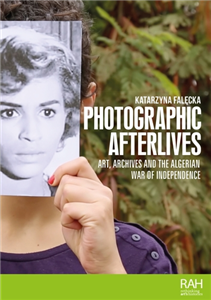
Photographic afterlives
Art, archives and the Algerian War of Independence
by Katarzyna Falecka
Photographic afterlives explores the cultural, social and political contexts in which photographs from the Algerian War of Independence (1954-1962) emerge in contemporary art and photobooks. It situates these practices against the backdrop of the wider archival turn in the humanities and the ongoing debates about archives in Algeria. Tracing the movement of historical photographs across multiple spaces, the book unravels the subsequent layers of meaning accrued by these images. It argues that as much as archival contemporary art performs an inquiry into the past, it equally speaks volumes about the distinct and ever-shifting needs of the present. Focused on the work of artists and photographers who excavate side-lined histories of the war, remediate well-known narratives and imagine histories that cannot be recovered from archives, Photographic afterlives shows the great potential of archives of decolonisation.
-
Trusted Partner
 Humanities & Social SciencesJuly 2022
The looking machine
Essays on cinema, anthropology and documentary filmmaking
by David MacDougall
This new collection of essays presents the latest thoughts of one of the world's leading ethnographic filmmakers and writers on cinema. It will provide essential reading for students in cinema studies, filmmaking, and visual anthropology. The dozen wide-ranging essays give unique insights into the history of documentary, how films evoke space, time and physical sensations, and the intellectual and emotional links between filmmakers and their subjects. In an era of reality television, historical re-enactments, and designer packaging, MacDougall defends the principles that inspired the earliest practitioners of documentary cinema. He urges us to consider how the form can more accurately reflect the realities of our everyday lives. Building on his own practice in filmmaking, he argues that this means resisting the pressures for self-censorship and the inherent ethnocentrism of our own society and those we film.
-
Trusted Partner
 The ArtsJune 2017
Monstrous adaptations
Generic and thematic mutations in horror film
by Richard Hand, Jay McRoy
The fifteen groundbreaking essays contained in this book address the concept of adaptation in relation to horror cinema. Adaptation is not only a key cultural practice and strategy for filmmakers, but it is also a theme of major importance within horror cinema as a hole. The history of the genre is full of adaptations that have drawn from fiction or folklore, or that have assumed the shape of remakes of pre-existing films. The horror genre itself also abounds with its own myriad transformations and transmutations. The essays within this volume engage with an impressive range of horror texts, from the earliest silent horror films by Thomas Edison and Jean Epstein through to important contemporary phenomena, such as the western appropriation of Japanese horror motifs. Classic works by Alfred Hitchcock, David Cronenberg and Abel Ferrara receive cutting-edge re-examination, as do unjustly neglected works by Mario Bava, Guillermo del Toro and Stan Brakhage.
-
Trusted Partner
 Humanities & Social SciencesJuly 2025
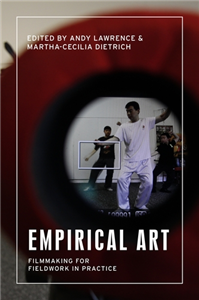
Empirical art
Filmmaking for fieldwork in practice
by Andy Lawrence, Martha-Cecilia Dietrich
Empirical art: Filmmaking for fieldwork in practice is an insightful exploration of what the craft of filmmaking brings to social science research. Providing creative avenues on how to narrate encounters, relationships, and experiences during fieldwork, this comprehensive volume offers a rich tapestry of theoretical explorations and explorative methodologies. Skilfully connecting the worlds of ethnography, art and cinema, the contributors in this book act as a compass for filmmakers and researchers venturing to use a camera and microphone to relate and narrate their research collaborations and fieldsites. Drawing from the authors' extensive experience in disciplines like social anthropology, environmental humanities, and political science, "Empirical Art" breaks down the intricate process of crafting ethnographic films that departs from the researcher's subjectivity. Covering aspects of filmmaking from conceptualisation to production and distribution, readers are equipped with a treasure trove of collaborative techniques, innovative approaches, and ethical considerations necessary to generate and examine storytelling practices in contemporary fields of study. The authors discuss the significance of the multiple roles that technologies of filmmaking play in reflecting on cultural practices, social dynamics, and (beyond) human storytelling and their transformative potentials. Whether a seasoned filmmaker, an aspiring ethnographer, or an academic seeking new dimensions for their research, Empirical Art serves as a guide to integrating visual storytelling, cinema craft and empirical research.
-
Trusted Partner
 The ArtsJanuary 2019
Postcolonial African cinema
Ten directors
by David Murphy, Patrick Williams
This is the first introduction of its kind to an important cross-section of postcolonial African filmmakers from the 1950s to the present. Building on previous critical work in the field, this volume will bring together ideas from a range of disciplines - film studies, African cultural studies, and, in particular, postcolonial studies - in order to combine the in-depth analysis of individual films and bodies of work by individual directors with a sustained interrogation of these films in relation to important theoretical concepts. Structurally, the book is straightforward, though the aim is to incorporate diversity and complexity of approach within the overall simplicity of format. Chapters provide both an overview of the director's output to date, and the necessary background - personal or national, cultural or political - to enable readers to achieve a better understanding of the director's choice of subject matter, aesthetic or formal strategies, or ideological stance. They also offer a particular reading of one or more films, in which the authors aim to situate African cinema in relation to important critical and theoretical debates. This book thus constitutes a new departure in African film studies, recognising the maturity of the field, and the need for complex yet accessible approaches to it, which move beyond the purely descriptive while refusing to get bogged down in theoretical jargon. Consequently, the volume should be of interest not only to specialists but also to the general reader.
-
Trusted Partner
 The ArtsJuly 2025
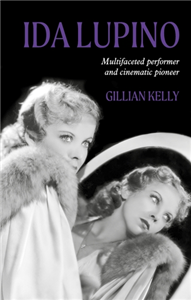
Ida Lupino
Multifaceted performer and cinematic pioneer
by Gillian Kelly
This book contributes to a welcome new wave focusing on the importance of female filmmakers, providing a reappraisal of Ida Lupino, a cinematic figure of significant importance. Given her ability to move between popular and independent cinemas and her status as both a Hollywood star and director/writer/producer of socially relevant films overlooked by the mainstream, Lupino is a particularly interesting case study. Employing a range of critical approaches, including feminist theory, auteur theory and critical theory, this book investigates key themes and motifs that developed across Lupino's unusual and unique career as one of the most significant female players in film history. Investigating her oeuvre as actress, director, writer and producer, it discusses Lupino as a complex and important filmmaker whose career, on both sides of the camera, requires substantially more critical attention than it has been awarded thus far.
-
Trusted Partner
 The ArtsDecember 2019
Screening the Paris suburbs
From the silent era to the 1990s
by Philippe Met, Annie Fourcaut, Roland-François Lack, Jean-Louis Pautrot, Keith Reader, Margaret Flinn, Eric Bullot, Tristan Jean, Malcolm Turvey, Elisabeth Cardonne-Arlyck, Térésa Faucon, Philippe Met, Camille Canteux, Derek Schilling, Guillaume Soulez, David Vasse, Derek Schilling
Decades before the emergence of a French self-styled 'hood' film around 1995, French filmmakers looked beyond the gates of the capital for inspiration and content. In the Paris suburbs they found an inexhaustible reservoir of forms, landscapes and social types in which to anchor their fictions, from bourgeois villas and bucolic riverside cafés to post-war housing estates and postmodern new towns. For the first time in English, contributors to this volume address key aspects of this long film history, marked by such towering figures as Jean Renoir, Jacques Tati and Jean-Luc Godard. Idyllic or menacing, expansive or claustrophobic, the suburb served divergent aesthetic and ideological programmes across the better part of a century. Themes central to French cultural modernity - class conflict, leisure, boredom and anti-authoritarianism - cut across the fifteen chapters.
-
Trusted Partner
 HistoryJuly 2016
From empire to exile
History and memory within the pied-noir and harki communities, 1962–2012
by Series edited by Maire Cross, David Hopkin, Claire Eldridge
This book explores the commemorative afterlives of the Algerian War of Independence (1954-62), one of the world's most iconic wars of decolonisation. It focuses on the million French settlers - pieds-noirs - and the tens of thousands of harkis - the French army's native auxiliaries - who felt compelled to migrate to France when colonial rule ended. Challenging the idea that Algeria was a 'forgotten' war that only returned to French public attention in the 1990s, this study reveals a dynamic picture of memory activism undertaken continuously since 1962 by grassroots communities connected to this conflict. Reconceptualising the ways in which the Algerian War has been debated, evaluated and commemorated in the subsequent five decades, From empire to exile makes an original contribution to important discussions surrounding the contentious issues of memory, migration and empire in contemporary France that will appeal to students and scholars of history and cultural studies.
-
Trusted Partner
 Lifestyle, Sport & LeisureJune 2024
Round our way
Sam Hanna's visual legacy
by Heather Nicholson
Sam Hanna (1903-96), a pioneering filmmaker from Burnley, Lancashire, was dubbed the 'Lowry of filmmaking' by BBC broadcaster Brian Redhead in the 1980s. The well-meant label stuck, even though it misses the variety of Hanna's remarkable output. Hanna's intimate glimpses into the lives of strangers enable us to imagine the possible stories that lie behind the images. Away from mid-century exponents of documentary filmmaking and photography, Hanna shows us humanity and a microcosm of a world in change, where his subjects are caught up in issues far beyond their grasp that we, as onlookers years later, encounter and see afresh. Written and curated by historian Heather Norris Nicholson, Round our way combines stills, essays and archive photography to document Hanna's unique visual record on film, particularly in northern England, but also further afield, during decades of profound change.
-
Trusted Partner
 Humanities & Social SciencesFebruary 2017
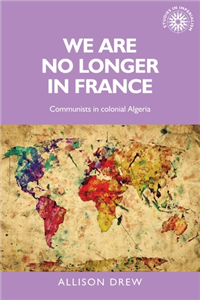
We are no longer in France
Communists in colonial Algeria
by Andrew Thompson, Allison Drew, John M. MacKenzie
This book recovers the lost history of colonial Algeria's communist movement. Meticulously researched - and the only English-language book on the Parti Communiste Algérien - it explores communism's complex relationship with Algerian nationalism. During international crises, such as the Popular Front and Second World War years, the PCA remained close to its French counterpart, but as the national liberation struggle intensified, the PCA's concern with political and social justice attracted growing numbers of Muslims. When the Front de Libération Nationale launched armed struggle in November 1954, the PCA maintained its organisational autonomy - despite FLN pressure. They participated fully in the national liberation war, facing the French state's wrath. Independence saw two conflicting socialist visions, with the PCA's incorporated political pluralism and class struggle on the one hand, and the FLN demand for a one-party socialist state on the other. The PCA's pluralist vision was shattered when it was banned by the one-party state in November 1962. This book is of particular interest to students and scholars of Algerian history, French colonial history and communist history.
-
Trusted Partner
 The ArtsJanuary 2019
Spanish cinema 1973–2010
Auteurism, politics, landscape and memory
by Maria M. Delgado, Robin Fiddian
This collection offers a new lens through which to examine Spain's cinema production following the isolation imposed by the Franco regime. The seventeen key films analysed in the volume span a period of 35 years that have been crucial in the development of Spain, Spanish democracy and Spanish cinema. They encompass different genres (horror, thriller, melodrama, social realism, documentary), both popular (Los abrazos rotos/Broken Embraces, Vicky Cristina Barcelona) and more select art house fare (En la ciudad de Sylvia/In the City of Sylvia, El espíritu de la colmena/Spirit of the Beehive) and are made in English (as both first and second language), Basque, Castilian, Catalan and French. Offering an expanded understanding of 'national' cinemas, the volume explores key works by Guillermo del Toro and Lucrecia Martel alongside an examination of the ways in which established auteurs (Almodóvar, José Garci, Carlos Saura) and younger generations of filmmakers (Cesc Gay, Amenábar, Bollaín) have harnessed cinematic language towards a commentary on the nation-state. The result is a bold new study of the ways in which film has created new prisms that have determined how Spain is positioned in the global marketplace.
-
Trusted Partner
 Trade unionsJuly 2013
The international dimension of the failed Algerian transition
by Francesco Cavatorta
-
Trusted Partner
 March 2005
Style and Meaning
Studies in the Detailed Analysis of Film
by Susan Williams
The first edition of New challenges for documentary provided a major stimulus for teaching about documentary film and television and fresh encouragement for critical thinking about practice. This second edition brings together many new contributions both from academics and filmmakers, reflecting shifts both in documentary production itself, and in ways of discussing it. Once again, the emphasis has been on clear and provocative writing, sympathetic to the practical challenges of documentary film-making but making connections with a range of work in media and communications analysis. With its wide range of contributors and the international scope of its agenda, New challenges for documentary will be essential reading for general filmmakers and documentary students both of academic and practical inclinations.
-
Trusted Partner
 The ArtsFebruary 2005
New challenges for documentary
Second edition
by Alan Rosenthal, John Corner, Martin Hargreaves
The first edition of New challenges for documentary provided a major stimulus for teaching about documentary film and television and fresh encouragement for critical thinking about practice. This second edition brings together many new contributions both from academics and filmmakers, reflecting shifts both in documentary production itself, and in ways of discussing it. Once again, the emphasis has been on clear and provocative writing, sympathetic to the practical challenges of documentary film-making but making connections with a range of work in media and communications analysis. With its wide range of contributors and the international scope of its agenda, New challenges for documentary will be essential reading for general filmmakers and documentary students both of academic and practical inclinations. ;


