
The Arts
Description
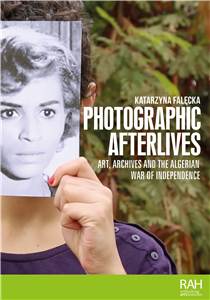
Photographic afterlives explores the cultural, social and political contexts in which photographs from the Algerian War of Independence (1954-1962) emerge in contemporary art and photobooks. It situates these practices against the backdrop of the wider archival turn in the humanities and the ongoing debates about archives in Algeria. Tracing the movement of historical photographs across multiple spaces, the book unravels the subsequent layers of meaning accrued by these images. It argues that as much as archival contemporary art performs an inquiry into the past, it equally speaks volumes about the distinct and ever-shifting needs of the present. Focused on the work of artists and photographers who excavate side-lined histories of the war, remediate well-known narratives and imagine histories that cannot be recovered from archives, Photographic afterlives shows the great potential of archives of decolonisation.
More Information
Rights Information
Albania, Algeria, Angola, Argentina, Armenia, Australia, Austria, Bahrain, Belgium, Belize, Benin, Bolivia, Bosnia and Herzegovina, Botswana, Brazil, Bulgaria, Burkina Faso, Burundi, Cameroon, Canada, Cape Verde, Central African Republic, Chad, Chile, China, Colombia, Comoros, Congo [DRC], Congo, Republic of the, Costa Rica, Ivory Coast, Croatia, Czech Republic, Denmark, Djibouti, Ecuador, Egypt, El Salvador, Equatorial Guinea, Eritrea, Estonia, Ethiopia, Faroe Islands, Finland, France, French Guiana, Gabon, Gambia, Georgia, Germany, Ghana, Greece, Guatemala, Guinea, Guinea-Bissau, Guyana, Honduras, Hongkong, Hungary, Iceland, India, Indonesia, Iran, Iraq, Ireland, Israel, Italy, Japan, Jordan, Kazakhstan, Kenya, Kuwait, Latvia, Lebanon, Lesotho, Liberia, Libya, Lithuania, Luxembourg, Macau, China, Macedonia [FYROM], Madagascar, Malawi, Malaysia, Mali, Malta, Mauritania, Mauritius, Mayotte, Mexico, Mongolia, Montenegro, Morocco, Mozambique, Namibia, Netherlands, New Zealand, Nicaragua, Niger, Nigeria, Norway, Oman, Pakistan, Panama, Paraguay, Peru, Philippines, Poland, Portugal, Puerto Rico, Qatar, Reunion, Romania, Russia, Rwanda, Saint Helena, Sao Tome and Principe, Saudi Arabia, Senegal, Serbia, Seychelles, Sierra Leone, Singapore, Slovakia, Slovenia, Somalia, South Africa, South Korea, Spain, Sri Lanka, Sudan, Suriname, Swaziland, Sweden, Switzerland, Syria, Taiwan, Tanzania, Thailand, Timor-Leste, Togo, Tokelau, Tunisia, Turkey, Uganda, Ukraine, United Arab Emirates, United Kingdom, United States, Uruguay, Venezuela, Vietnam, Western Sahara, Yemen, Zambia, Zimbabwe, South Sudan, Cyprus, Palestine, Bangladesh, Cambodia, Liechtenstein, Azerbaijan, Jamaica, Kyrgyzstan, Dominican Republic, Myanmar, Monaco
Endorsements
'Through a rich and wide-ranging evidence base and the sophisticated application of theories of photography, Photographic afterlives makes an important intervention into how artists have grappled with narrating both the past and present.' -Natalya Vince, University College Oxford Photographic afterlives explores the resurfacing of photographs from the Algerian War of Independence (1954-62) in contemporary art and photobooks. Since the late 1980s, artists have increasingly turned to the photographic archives of Algerian decolonisation, incorporating historical images into their artworks. Their interest in these collections developed in parallel to two phenomena: ongoing restitution debates concerning the removal of archives from Algeria by the French at the end of the war, and the surge in independent archiving practices in North Africa. Photographic afterlives proposes that works by Zineb Sedira, Nadja Makhlouf, Dennis Adams, Sofiane Zouggar, Bruno Boudjelal, Lydia Ourahmane and others reframe the photographic archives of the war as sites of retrospective picturing and unravel their interpretative potential. These works expand state-led restitution debates predominantly focused on questions of national sovereignty and reveal the multiple uses to which historical photographs can be put. By tracing the capacity of contemporary artworks to channel family histories, gendered narratives of war, migratory experiences and affective encounters with history, the book considers them vital for exploring the multidirectionality of historical photographs from the Algerian War of Independence. Owing to its complex circulation routes and multiple iterations, photography perpetually escapes being rooted in the collective memory of any specific social group, complicating any fixed affinities between images and identities. Photographic afterlives follows some of these unexpected paths along which photographs travel and argues that contemporary archival art can equip viewers with the necessary tools for reading the broader archives of Algerian decolonisation - in anticipation of their uncertain futures.
Reviews
'Through a rich and wide-ranging evidence base and the sophisticated application of theories of photography, Photographic afterlives makes an important intervention into how artists have grappled with narrating both the past and present.' -Natalya Vince, University College Oxford Photographic afterlives explores the resurfacing of photographs from the Algerian War of Independence (1954-62) in contemporary art and photobooks. Since the late 1980s, artists have increasingly turned to the photographic archives of Algerian decolonisation, incorporating historical images into their artworks. Their interest in these collections developed in parallel to two phenomena: ongoing restitution debates concerning the removal of archives from Algeria by the French at the end of the war, and the surge in independent archiving practices in North Africa. Photographic afterlives proposes that works by Zineb Sedira, Nadja Makhlouf, Dennis Adams, Sofiane Zouggar, Bruno Boudjelal, Lydia Ourahmane and others reframe the photographic archives of the war as sites of retrospective picturing and unravel their interpretative potential. These works expand state-led restitution debates predominantly focused on questions of national sovereignty and reveal the multiple uses to which historical photographs can be put. By tracing the capacity of contemporary artworks to channel family histories, gendered narratives of war, migratory experiences and affective encounters with history, the book considers them vital for exploring the multidirectionality of historical photographs from the Algerian War of Independence. Owing to its complex circulation routes and multiple iterations, photography perpetually escapes being rooted in the collective memory of any specific social group, complicating any fixed affinities between images and identities. Photographic afterlives follows some of these unexpected paths along which photographs travel and argues that contemporary archival art can equip viewers with the necessary tools for reading the broader archives of Algerian decolonisation - in anticipation of their uncertain futures.
Author Biography
Katarzyna Falecka is a Lecturer in Art History at Newcastle University
 Trusted Partner

Manchester University Press
Manchester University Press is a leading UK publisher known for excellent research in the humanities and social sciences.
View all titlesBibliographic Information
- Publisher Manchester University Press
- Publication Date June 2026
- Orginal LanguageEnglish
- ISBN/Identifier 9781526181695 / 152618169X
- Publication Country or regionUnited Kingdom
- FormatPrint PDF
- Pages224
- ReadershipGeneral/trade
- Publish StatusPublished
- Dimensions234 X 156 mm
- Biblio NotesDerived from Proprietary 6314
- SeriesRethinking Art's Histories
- Reference Code16820
Thank you for proceeding with this offer.
Manchester University Press has chosen to review this offer before it proceeds.
You will receive an email update that will bring you back to complete the process.
You can also check the status in the My Offers area
Manchester University Press has chosen to review this offer before it proceeds.
You will receive an email update that will bring you back to complete the process.
You can also check the status in the My Offers area

Please wait while the payment is being prepared.
Do not close this window.

(c) Copyright 2026 - Frankfurter Buchmesse GmbH. All Right Reserved