
Your Search Results
-

-

Egyptian Office for Publishing & Distribution
Founded Egyptian Office For Publishing & Distribution in 1992 and until now . our goal is to provide culture for all segments of society and raise the level of public awareness and knowledge and the development of intellectual and creative possibilities for each . Over the past years we have published more than 1,000 cultural educational titles for the whole family through enlist the best authors in Egypt and the Arab world.
View Rights Portal
-
Promoted Content

 Humanities & Social SciencesMarch 2023
Golden Mummies of Egypt
Interpreting identities from the Graeco-Roman period
by Campbell Price, Julia Thorne
Golden Mummies of Egypt presents new insights and a rich perspective on beliefs about the afterlife during an era when Egypt was part of the Greek and Roman worlds (c. 300 BCE-200 CE). This beautifully illustrated book, featuring photography by Julia Thorne, accompanies Manchester Museum's first-ever international touring exhibition. Golden Mummies of Egypt is a visually spectacular exhibition that offers visitors unparalleled access to the museum's outstanding collection of Egyptian and Sudanese objects - one of the largest in the UK.
-
Promoted Content
 Humanities & Social SciencesJuly 2020
Victorian literary culture and ancient Egypt
by Eleanor Dobson
-
 Trusted Partner
-
Trusted Partner
 Humanities & Social SciencesOctober 2024
Egypt and the rise of fluid authoritarianism
Political ecology, power and the crisis of legitimacy
by Maria Gloria Polimeno
Egypt and the rise of fluid authoritarianism focuses on the struggle of the post-2013 political authorities for internal political legitimacy after the crisis following the 2013 coup d'état. It explores the microstructural and macro-systemic dynamics of leadership, power, protests and the authority-making process in political systems. These cannot simply be defined as structural, political, social and economic projections of the authoritarianism of the past, but rather as a rupture with that past. The book offers a complex, ground-breaking socio-political and economic analysis into how the forging of an internal political legitimacy claim has eventually modified the regime in Egypt along the authoritarian spectrum, turning into a fluid autocracy closer to a non-exclusivist personalist regime. This shift had implications that resonated both politically and economically.
-
Trusted Partner
 Humanities & Social SciencesSeptember 2016
Mummies, magic and medicine in ancient Egypt
by Campbell Price, Roger Forshaw, Andrew Chamberlain, Paul Nicholson
-
Trusted Partner
 Humanities & Social SciencesJune 2016
Mummies, magic and medicine in ancient Egypt
by Campbell Price, Roger Forshaw, Andrew Chamberlain, Paul Nicholson, Robert Morkot, Joyce Tyldesley
-
Trusted Partner
 Humanities & Social SciencesMarch 2026
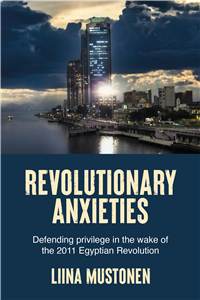
Revolutionary anxieties
Defending privilege in the wake of the 2011 Egyptian Revolution
by Liina Mustonen
Revolutionary anxieties sheds light on an unexplored dimension of the 2011 Egyptian revolution: the anxieties experienced by Cairo-based liberal elite, socialites, and cultural actors who opposed the rise of the new political actors, the Muslim Brotherhood. This book provides fresh insights into the failure of the Egyptian revolution by examining the perspectives of those who had a vested interest in maintaining the status-quo. It engages with post-colonial theory and examines the elite milieu in Cairo through the lenses of gender and race. Based on over two years of ethnographic research in various elite locations such as the Cairo Opera House, an Egyptian-European film festival, and an elite sporting club in Cairo, the book illustrates how members of Egyptian liberal upper class insisted on their privilege in a moment when the country's class hierarchies were challenged. By revealing the prevalence of counter-revolutionary sentiment among Cairo's liberal and affluent elite, the book tells an untold story of the Arab Spring.
-
Trusted Partner
-
Trusted Partner
 Humanities & Social SciencesMarch 2017
Britain in China
by Robert Bickers
This is a study of Britain's presence in China both at its peak, and during its inter-war dissolution in the face of assertive Chinese nationalism and declining British diplomatic support. Using archival materials from China and records in Britain and the United States, the author paints a portrait of the traders, missionaries, businessmen, diplomats and settlers who constituted "Britain-in-China", challenging our understanding of British imperialism there. Bickers argues that the British presence in China was dominated by urban settlers whose primary allegiance lay not with any grand imperial design, but with their own communities and precarious livelihoods. This brought them into conflict not only with the Chinese population, but with the British imperial government. The book also analyzes the formation and maintenance of settler identities, and then investigates how the British state and its allies brought an end to the reign of freelance, settler imperialism on the China coast. At the same time, other British sectors, missionary and business, renegotiated their own relationship with their Chinese markets and the Chinese state and distanced themselves from the settler British.
-
Trusted Partner
-
Trusted Partner
-
Trusted Partner
 Teaching, Language & ReferenceMay 2025
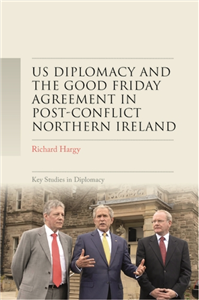
US diplomacy and the Good Friday Agreement in post-conflict Northern Ireland
by Richard Hargy
Richard Haass and Mitchell Reiss, as autonomous diplomats in the George W. Bush State Department, were able to alter US intervention in Northern Ireland and play critical roles in the post-1998 peace process. Their contributions have not been fully appreciated or understood. The restoration of Northern Ireland's power-sharing government in 2007 was made possible by State Department-led intervention in the peace process. There are few references to Northern Ireland in work examining the foreign policy legacy of the George W. Bush presidency. Moreover, the ability to control US foreign policy towards the region brought one of George W. Bush's Northern Ireland special envoys into direct diplomatic conflict with the most senior actors inside the British government. This book will uncover the extent of this fall-out and provide original accounts on how diplomatic relations between these old allies became so fraught.
-
Trusted Partner
 Teaching, Language & ReferenceFebruary 2020
A writer's guide to Ancient Rome
by Carey Fleiner, Jerome de Groot
-
Trusted Partner
 Humanities & Social SciencesJuly 2018
Syria and the chemical weapons taboo
Exploiting the forbidden
by Michelle Bentley
This book analyses the Syria crisis and the role of chemical weapons in relation to US foreign policy. The Syrian government's use of such weapons and their subsequent elimination has dominated the US response to the conflict, where these are viewed as particularly horrific arms - a repulsion known as the chemical taboo. On the surface, this would seem to be an appropriate reaction: these are nasty weapons and eradicating them would ostensibly comprise a 'good' move. But this book reveals two new aspects of the taboo that challenge this prevailing view. First, actors use the taboo strategically to advance their own self-interested policy objectives. Second, that applying the taboo to Syria has actually exacerbated the crisis. As such, this book not only provides a timely analysis of Syria, but also a major and original rethink of the chemical taboo, as well as international norms more widely.
-
Trusted Partner
 Humanities & Social SciencesSeptember 2025
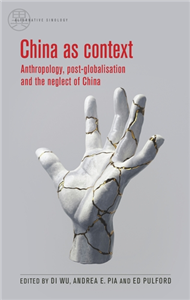
China as context
Anthropology, post-globalisation and the neglect of China
by Di Wu, Andrea E. Pia, Ed Pulford
Decades-old calls to promote the significance of China for anthropological theory and the social sciences more generally ring more urgently today given China's importance to social, political and economic life globally. Yet Chinese-grounded ideas remain marginal to the discipline, and scholarly discussions retain a sense of China as an 'Other' apart from the 'real' world, and thus unsuitable or generating widely applicable theoretical ideas. Inspired by East Asian postcolonial scholarship, this volume tackles this unsettling situation head-on, arguing that without taking China seriously as a powerful agent, a locus of knowledge production, and a new discursive topos of an emerging post-global imaginary, anthropologists and other social scientists may fail to adequately analyse the global present and make sense of both the material and immaterial forces that animate it, wherever and however they work. Amid the end of Western globalisation and shifting anthropological understandings of relations between ethnography and theory, we show how 'China' must be understood as the ordinary 'context' for anthropological research practices worldwide.
-
Trusted Partner
 Humanities & Social SciencesDecember 2024
Iran, Saudi Arabia and the United States
Power, identity and strategy in the Persian Gulf triangle
by Luíza Cerioli
This book offers a nuanced snapshot of the complex geopolitical dynamics in the Persian Gulf, underlining the interaction between Iran, Saudi Arabia, and the US. Examining their interwoven relations since the 1970s, Luíza Cerioli's framework reveals how changes in US-Saudi ties have ripple effects on Iran-US and Iran-Saudi relations and vice versa. Using a historical lens, she explores how enduring US-Saudi connections hinge on order expectations, delves into the cognitive factors shaping US-Iran enmity and traces the source of oscillation in the Saudi-Iran ties. Employing Neoclassical Realism, the book investigates status-seeking, national identities and leadership preferences, offering a deeper understanding of the region's multipolar system. By combining International Relations and Middle East Studies, Cerioli's work contributes to both fields, unravelling the intricate interplay between international structures, regional nuances and agency in shaping Persian Gulf geopolitics.
-
Trusted Partner
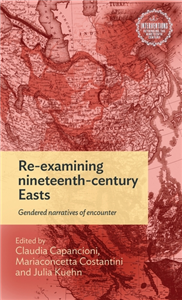 Literature & Literary StudiesApril 2026
Re-examining nineteenth-century Easts
Gendered narratives of encounter
by Claudia Capancioni, Julia Kuehn, Mariaconcetta Costantini
Re-examining nineteenth-century Eastscontributes novel approaches to gendered and gendering fictions and travel writing in and of the cultural-geographical-ideological contexts surrounding nineteenth-century Easts. It examines underexplored stories of travel and narratives of encounter to reconsider the western allure of travelling to the Easts - from the Balkans to the Middle and Far East, through a range of diverse critical approaches. It discusses writers - travellers, novelists, and short-story writers - who authored texts based on their varied experiences in eastern lands. It also analyses how views of eastern places became a rich source of material for identity formations related to Empire but also discussions about masculinity and femininity at 'home'.
-
Trusted Partner
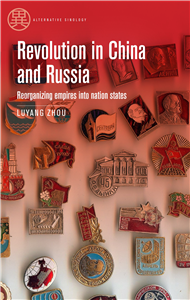 Humanities & Social SciencesJune 2025
Revolution in China and Russia
Reorganizing empires into nation states
by Luyang Zhou
Most scholars believe that China's nationality policy, like that of other socialist states, imitated the Soviet nationality model, a system which has been termed an "affirmative action empire." This book offers two contributions to the literature which run counter to this convention. First, it argues that the People's Republic of China (PRC) and the Soviet Union (USSR) were different; while the PRC was aimed to build an ideal-typical nation-state, the USSR was an open union of nation-states that was only temporarily confined to a physical territory. Second, while scholars who have noted this difference attribute it to contextual factors, such as ethnic structure, geopolitical status, and Russia's intervention into the Chinese Revolution, this book contends that context shaped the Sino-Soviet difference, yet it did not determine it. Rather, there was significant leeway between the implications of the contextual factors, and what the policy-designers ultimately established. This book probes who held agency, and how these individuals bridged this gap.
-
Trusted Partner
Humanities & Social SciencesNovember 2024
US public diplomacy in socialist Yugoslavia, 1950–70
Soft culture, cold partners
by Carla Konta
The first comprehensive account of the public and cultural diplomacy campaigns carried out by the US in Yugoslavia during the height of the Cold War, this book examines the political role of culture in US-Yugoslav bilateral relations and the fluid links between information and propaganda. Tito allowed the US Information Agency and the State Department's cultural programmes to enter Yugoslavia, liberated from Soviet control. The exchange of intellectual and political personnel helped foster the US-Yugoslav relationship, yet it posed severe ideological challenges for both sides. By providing new insights into porous borders between freedom and coercion in Tito's regime, this book shows how public diplomacy acted as an external input for Yugoslav liberalisation and dissident movements. Using extensive archival research and interviews, Konta analyses the links between information and propaganda, and the unintended effects of propaganda beyond the control of producers and receivers.
-
Trusted Partner
 December 1994
Abd al-Rahman al-Jabarti: History of Egypt. Band 1-3
Aja'ib al-Athar fi'l-Tarajim wa'l-Akhbar
by Herausgegeben von Philipp, Thomas; Herausgegeben von Perlmann, Moshe; Überarbeitet von Schwald, Guido



