
Your Search Results
-

-

Bernd Liske
Bernd Liske, born in 1956, studied mathematics in Chemnitz and is the owner of Liske information management systems. From its founding in 1998 until May 2015, Bernd Liske was a member of the main board of BITKOM, where he worked in the defense, education and knowledge management working groups. In the course of his efforts to deal with the revelations of Edward Snowden in the NSA affair, he was expelled from BITKOM in 2015. From 1998 to 2003 he was a member of the board of the Association of Organizations and Information Systems (VOI). Bernd Liske has been dealing with socio-political issues for many years. In his analyzes and concepts, he deals with social, political and economic problems in our society in order to make contributions to maintaining Germany as a business location. His book “PRISM A Lesson for our Democracy”, published in September, grew out of this. The diversity of the topics he deals with as well as the systemic principles used for their treatment can be followed on his homepage at and on his TWITTER channels @BerndLiske, @LiskeAphorismen and @LiskeZitate. He now regards his aphorisms as an open source operating system for the analysis and design of social processes and has been using them successfully for years.
View Rights Portal
-
Promoted Content

 Literature & Literary StudiesNovember 2007
Goddesses and Queens
by Annaliese Connolly, Lisa Hopkins, Rebecca Mortimer
-
Promoted Content
-
 Trusted Partner
-
Trusted Partner
 Literature & Literary StudiesMarch 2013
Goddesses and Queens
by Edited by Annaliese Connolly and Lisa Hopkins
-
Trusted Partner

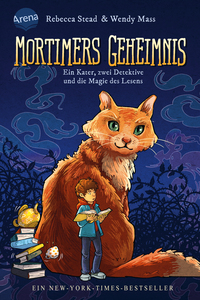 January 2026
Mortimers Geheimnis. Ein Kater, zwei Detektive und die Magie des Lesens
Zu Herzen gehender Krimi und New-York-Times-Bestseller über beste Freunde, kluge Katzen, Familiengeheimnisse und Lieblingsbücher ab 9 Jahren
by Rebecca Stead, Wendy Mass, Ulrike Köbele
Cosy Krimi trifft Buchzauber: Auf den Spuren eines geheimnisvollen Katers, einer Geisterbibliothekarin und eines wendungsreichen Rätsels Eines Morgens taucht ein Schränkchen mit gebrauchten Büchern vor Evans Schule auf – eine kleine Freiluftbibliothek! Bewacht wird sie von einem freundlichen, rot getigerten Kater namens Mortimer. Evan nimmt zwei Bücher mit nach Hause und findet alte Ausleihscheine darin. Gab es früher etwa eine richtige Bibliothek in der Stadt? Warum ist sie nicht mehr da? Evans Vater weicht seinen Fragen aus und auch die anderen Erwachsenen scheinen etwas zu verbergen. Zusammen mit seinem besten Freund Rafi begibt sich Evan auf die Spur der verschwundenen Bibliothek. Dabei kreuzt der geheimnisvolle Kater immer wieder den Weg der beiden. Mortimer scheint auf ganz besondere Weise mit der Geschichte der Bibliothek verbunden zu sein. Was Evan schließlich herausfindet, stellt nicht nur sein eigenes Leben auf den Kopf, es bringt auch eine Wahrheit ans Licht, die ihre Stadt für immer verändern wird. Der New-York-Times-Bestseller und #1 Indie Bestseller erzählt von Büchern und Freundschaften, die uns ein Leben lang begleiten. Eine herzerwärmende Geschichte ab 9 Jahren zum Gemeinsam- und Selberlesen. Kurze Kapitel lassen die Seiten vorbeifliegen und mit jeder neuen Entdeckung steigt die Spannung. Wer vor dem Lesen noch kein Bücherwurm ist, wird es danach garantiert sein. Auszeichnungen für die englische Ausgabe von Mortimers Geheimnis:NEW YORK TIMES BESTSELLER#1 INDIE BESTSELLER!Amazon #1 Best Kids' Book of 2023Amazon Best Book of the Month
-
Trusted Partner
-
Trusted Partner
-
Trusted Partner
-
Trusted Partner
 Literature & Literary StudiesNovember 2007
Female performance practice on the fin-de-siècle popular stages of London and Paris
by Catherine Hindson, Kate Dorney, Maggie B. Gale, Rebecca Mortimer
-
Trusted Partner
 Humanities & Social SciencesMay 2012
Public relations and the making of modern Britain
by Scott Anthony, Rebecca Mortimer
-
Trusted Partner
 Literature & Literary StudiesSeptember 2016
A Fig for Fortune by Anthony Copley
by Susannah Monta, J. B. Lethbridge, Susannah Monta, Rebecca Mortimer
-
Trusted Partner
 Literature & Literary StudiesAugust 2023
Poison on the early modern English stage
Plants, paints and potions
by Lisa Hopkins, Bill Angus
Many early modern plays use poison, most famously Hamlet, where the murder of Old Hamlet showcases the range of issues poison mobilises. Its orchard setting is one of a number of sinister uses of plants which comment on both the loss of horticultural knowledge resulting from the Dissolution of the Monasteries and also the many new arrivals in English gardens through travel, trade, and attempts at colonisation. The fact that Old Hamlet was asleep reflects unease about soporifics troubling the distinction between sleep and death; pouring poison into the ear smuggles in the contemporary fear of informers; and it is difficult to prove. This book explores poisoning in early modern plays, the legal and epistemological issues it raises, and the cultural work it performs, which includes questions related to race, religion, nationality, gender, and humans' relationship to the environment.
-
Trusted Partner
 Literature & Literary StudiesAugust 2009
Michael Ondaatje
by Lee Spinks, John Thieme, Rebecca Mortimer
-
Trusted Partner
 The ArtsOctober 2007
Theatre, education and the making of meanings
by Anthony Jackson, Rebecca Mortimer, Chantal Hamill
-
Trusted Partner
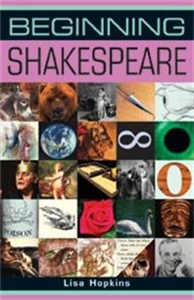 Literature & Literary StudiesMarch 2005
Beginning Shakespeare
by Lisa Hopkins, Peter Barry, John McLeod
'Beginning Shakespeare' introduces students to the study of Shakespeare, and grounds their understanding of his work in theoretical discourses. After an introductory survey of the dominant approaches of the past, seven chapters examine the major current critical approaches to Shakespeare; psychoanalysis, New Historicism, Cultural Materialism, gender studies, queer theory, postcolonial criticism and performance criticism. A further chapter looks at the growing roles of biography, attribution studies and textual studies. Each chapter analyses the strengths and weaknesses of a particular perspective, allowing students to gain a clear critical purchase on the respective approaches, and to make informed choices between them. Each chapter ends with a list of suggested further reading and interactive exercises based on the key issues raised. An invaluable introduction, essential for anyone studying Shakespeare, 'Beginning Shakespeare' offers students a map of the current critical practices, and a sense of the possibilities for developing their own approaches. ;
-
Trusted Partner
 Literature & Literary StudiesJune 2011
The Lady’s Trial
by Lisa Hopkins, David Bevington, Lisa Hopkins, Richard Dutton, Alison Findlay, Helen Ostovich
-
Trusted Partner
 Humanities & Social SciencesMay 2006
The debate on the rise of the British Empire
by Anthony Webster, Roger Richardson, Rebecca Mortimer
-
Trusted Partner
 Humanities & Social SciencesDecember 2012
Sir Robert Filmer (1588–1653) and the patriotic monarch
by Cesare Cuttica, Peter Lake, Anthony Milton, Jason Peacey, Alexandra Gajda, Rebecca Mortimer
-
Trusted Partner
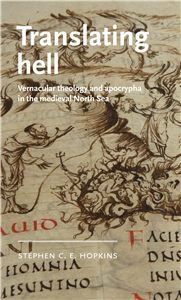 Literature & Literary StudiesMay 2026
Translating hell
Vernacular theology and apocrypha in the medieval North Sea
by Stephen C. E. Hopkins
In the Middle Ages, hell was useful because it was vaguely defined. Canonical scriptures scarcely mention hell, leaving much to the imaginations of early Christians, who used it to sort out who belonged within the faith. This book explores how hell became a place for literary experiments with local challenges in theology and identity. Following the reception and transformations of two popular hell apocrypha, it argues that they served as this role because of their liminal textual authority. As noncanonical scriptures, apocrypha afforded medieval writers space to revise their hells (since they were not actually scripture), while also encouraging readers to revere those experiments as valid (since they seemed like scripture). The book brings together adaptations from early medieval England, Iceland, Ireland, and Wales, placing the early vernacular theologies of the North Sea in comparative conversation.
-
Trusted Partner
 Literature & Literary StudiesFebruary 2018
The genres of Renaissance tragedy
by Daniel Cadman, Andrew Duxfield, Lisa Hopkins




