Your Search Results

      • Springer Nature

        For over 175 years Springer Nature has been advancing discovery by providingthe best possible service to the whole research community.We help researchers uncover new ideas, makesure all the research we publish is significant, robust and stands up to objectivescrutiny, that it reaches all relevant audiences in the best possible format, and can be discovered, accessed, used, re-used and shared.Wesupport librarians and institutions with innovations in technology and data; and providequality publishing support to societies. As a research publisher, Springer Nature is home to trusted brands including Springer, Nature Research, BMC, Palgrave Macmillan and Scientific American. https://group.springernature.com/gp/group

        View Rights Portal
      • Springboard Edition

        Inspirational stories about experiences Philosophical studies Educational perspectives bringing theories to life Transformational exercises or lessons Motivational business stories

        View Rights Portal
      • Trusted Partner
        Humanities & Social Sciences
        April 2016

        Zionism in Arab discourses

        by Ofir Winter, Uriya Shavit

        Zionism in Arab discourses presents a ground-breaking study of the Arab-Israeli conflict. Through analyses of hundreds of texts written by Arab Islamists and liberals from the late-nineteenth century to the 'Arab Spring', the book demonstrates that the Zionist enterprise has played a dual function of an enemy and a mentor. Islamists and liberals alike discovered, respectively, in Zionism and in Israeli society qualities they sought to implement in their sown homelands. Focusing on Palestinian, Egyptian, Syrian and Jordanian political discourses, this study uncovers fascinating and unexpected Arab points of views on different aspects of Zionism; from the first Zionist Congress to the First Lebanon War; from gardening in the early years of Tel Aviv to women's service in the Israeli Defence Forces; from the role of religion in the creation of the state to the role of democracy in its preservation. This study presents the debates between and within contesting Arab ideological trends on a conflict that has shaped, and is certain to continue and shape, one of the most complicated regions in the world. ;

      • Trusted Partner
        Humanities & Social Sciences
        April 2016

        Zionism in Arab discourses

        by Uriya Shavit, Ofir Winter

      • Trusted Partner
        Humanities & Social Sciences
        March 2016

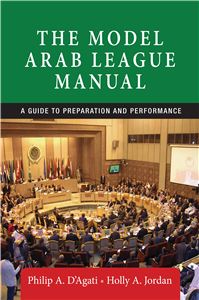
        The Model Arab League manual

        A guide to preparation and performance

        by Philip D’Agati, Holly Jordan

        This textbook provides a comprehensive overview of the Model Arab League (MAL) programme for first time and returning students. Drawing on over fourteen years of combined experience in successfully leading award-winning MAL delegations, Philip D'Agati and Holly A. Jordan provide students with an introduction to being a delegate and tips on effective research techniques as well as simplifying the complex process of taking on the identity of a state and then representing it effectively in a MAL debate. ;

      • Trusted Partner
        Humanities & Social Sciences
        October 2024

        Egypt and the rise of fluid authoritarianism

        Political ecology, power and the crisis of legitimacy

        by Maria Gloria Polimeno

        Egypt and the rise of fluid authoritarianism focuses on the struggle of the post-2013 political authorities for internal political legitimacy after the crisis following the 2013 coup d'état. It explores the microstructural and macro-systemic dynamics of leadership, power, protests and the authority-making process in political systems. These cannot simply be defined as structural, political, social and economic projections of the authoritarianism of the past, but rather as a rupture with that past. The book offers a complex, ground-breaking socio-political and economic analysis into how the forging of an internal political legitimacy claim has eventually modified the regime in Egypt along the authoritarian spectrum, turning into a fluid autocracy closer to a non-exclusivist personalist regime. This shift had implications that resonated both politically and economically.

      • Trusted Partner
        Humanities & Social Sciences
        March 2023

        Golden Mummies of Egypt

        Interpreting identities from the Graeco-Roman period

        by Campbell Price, Julia Thorne

        Golden Mummies of Egypt presents new insights and a rich perspective on beliefs about the afterlife during an era when Egypt was part of the Greek and Roman worlds (c. 300 BCE-200 CE). This beautifully illustrated book, featuring photography by Julia Thorne, accompanies Manchester Museum's first-ever international touring exhibition. Golden Mummies of Egypt is a visually spectacular exhibition that offers visitors unparalleled access to the museum's outstanding collection of Egyptian and Sudanese objects - one of the largest in the UK.

      • Trusted Partner
        Humanities & Social Sciences
        January 2026

        Surviving repression

        The Egyptian Muslim Brotherhood after the 2013 coup

        by Lucia Ardovini

        Surviving repression tells the story of the Muslim Brotherhood following the 2013 coup d'état in Egypt. The Brotherhood gained legal recognition and quickly rose to power after the 2011 Arab uprisings, but its subsequent removal from office marked the beginning of the harshest repression of its troubled history. Forced into exile, the Brotherhood and its members are now faced with a monumental task as they rebuild this fragmented organisation. Drawing on extensive fieldwork and interviews with current and former members of the Brotherhood, the book explores this new era in the movement's history, emphasising first-hand experiences, perspectives and emotions to better understand how individual responses to repression are affecting the movement as a whole. Surviving repression offers a unique insight into the main strategic, ideological and organizational debates dividing the Brotherhood.

      • Trusted Partner
        Humanities & Social Sciences
        January 2026

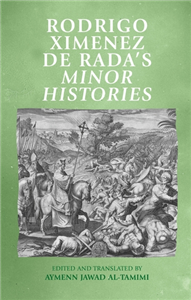
        Rodrigo Ximenez de Rada’s Minor Histories

        by Aymenn Al-Tamimi

        This work provides the first complete English translation of works by Toledan archbishop Rodrigo Ximénez de Rada (1170-1247 CE), whose 'Minor Histories' are sequels to his larger 'Gothic History' and thus round off his grand history of Spain project that he began at the request of King Ferdinand III. The 'Minor Histories' include Rodrigo's 'History of the Arabs' that can be considered the first surviving Western monograph focused on Arab and Islamic history and thus occupies a unique position in the medieval Latin corpus of writings. In addition to the translation, this book provides a thorough and accessible introduction to the life and works of Rodrigo, making sense of the context in which he wrote and his historical method. The translations are thoroughly annotated including cross-references to other Latin and Arabic sources for comparison.

      • Trusted Partner
        Literature & Literary Studies
        December 2009

        Intertextuality in modern Arabic literature since 1967

        by Luc Deheuvels, Mike Thompson, Barbara Michalak-Pikulska, Paul Starkey

        This volume of essays is the first to be dedicated to the subject of intertextuality in modern Arabic literature. Beginning with a general overview of the topic by Roger Allen, it brings together essays on a range of writers from all parts of the Arab world, including, among others, Edwar al-Kharrat, Sa'd Allah Wannus, Najib Mahfuz, Rabi' Jabir, Salim Matar and the recently deceased Sudanese writer al-Tayyib Salih, whose seminal work Season of Migration to the North heralded a new phase in the modern Arabic literary tradition. The volume, which also includes two essays on aspects of intertextuality in Gulf literature, also discusses transformations of popular medieval literature such as the Alf Layla wa-Layla (the Thousand and One Nights) in modern Arabic literature. ;

      • Trusted Partner
        Humanities & Social Sciences
        June 2026

        The Persian Gulf triangle

        Strategic relations between Iran, Saudi Arabia and the United States

        by Luíza Cerioli

        This book offers a nuanced snapshot of the complex geopolitical dynamics in the Persian Gulf, underlining the interaction between Iran, Saudi Arabia, and the US. Examining their interwoven relations since the 1970s, Luíza Cerioli's framework reveals how changes in US-Saudi ties have ripple effects on Iran-US and Iran-Saudi relations and vice versa. Using a historical lens, she explores how enduring US-Saudi connections hinge on order expectations, delves into the cognitive factors shaping US-Iran enmity and traces the source of oscillation in the Saudi-Iran ties. Employing Neoclassical Realism, the book investigates status-seeking, national identities and leadership preferences, offering a deeper understanding of the region's multipolar system. By combining International Relations and Middle East Studies, Cerioli's work contributes to both fields, unravelling the intricate interplay between international structures, regional nuances and agency in shaping Persian Gulf geopolitics.

      • Trusted Partner
        Humanities & Social Sciences
        March 2026

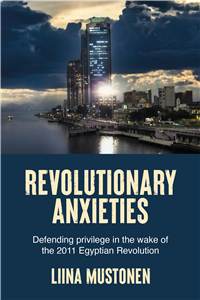
        Revolutionary anxieties

        Defending privilege in the wake of the 2011 Egyptian Revolution

        by Liina Mustonen

        Revolutionary anxieties sheds light on an unexplored dimension of the 2011 Egyptian revolution: the anxieties experienced by Cairo-based liberal elite, socialites, and cultural actors who opposed the rise of the new political actors, the Muslim Brotherhood. This book provides fresh insights into the failure of the Egyptian revolution by examining the perspectives of those who had a vested interest in maintaining the status-quo. It engages with post-colonial theory and examines the elite milieu in Cairo through the lenses of gender and race. Based on over two years of ethnographic research in various elite locations such as the Cairo Opera House, an Egyptian-European film festival, and an elite sporting club in Cairo, the book illustrates how members of Egyptian liberal upper class insisted on their privilege in a moment when the country's class hierarchies were challenged. By revealing the prevalence of counter-revolutionary sentiment among Cairo's liberal and affluent elite, the book tells an untold story of the Arab Spring.

      • Trusted Partner
        Humanities & Social Sciences
        July 2018

        Syria and the chemical weapons taboo

        Exploiting the forbidden

        by Michelle Bentley

        This book analyses the Syria crisis and the role of chemical weapons in relation to US foreign policy. The Syrian government's use of such weapons and their subsequent elimination has dominated the US response to the conflict, where these are viewed as particularly horrific arms - a repulsion known as the chemical taboo. On the surface, this would seem to be an appropriate reaction: these are nasty weapons and eradicating them would ostensibly comprise a 'good' move. But this book reveals two new aspects of the taboo that challenge this prevailing view. First, actors use the taboo strategically to advance their own self-interested policy objectives. Second, that applying the taboo to Syria has actually exacerbated the crisis. As such, this book not only provides a timely analysis of Syria, but also a major and original rethink of the chemical taboo, as well as international norms more widely.

      • Trusted Partner
        Humanities & Social Sciences
        February 2022

        Transitional justice in process

        by Mariam Salehi, Simon Mabon

      • Trusted Partner
        Humanities & Social Sciences
        December 2023

        Transitional justice in process

        Plans and politics in Tunisia

        by Mariam Salehi

        After the fall of the Ben Ali regime in 2011, Tunisia swiftly began dealing with its authoritarian past and initiated a comprehensive transitional justice process, with the Truth and Dignity Commission as its central institution. However, instead of bringing about peace and justice, transitional justice soon became an arena of contention. Through a process lens, the book explores why and how the process evolved, and explains how it relates to the country's political transition. Based on extensive field research in Tunisia and the US, and interviews with a broad range of international stakeholders and decision-makers, this is the first book to comprehensively study the Tunisian transitional justice process. It provides an in-depth analysis of a crucial period, examining the role of justice professionals in different stages, as well as the alliances and frictions between different actor groups that cut across the often-assumed local-international divide.

      • Trusted Partner
        Humanities & Social Sciences
        January 2023

        Saudi Arabia and the United Arab Emirates

        by Robert Mason

      • Trusted Partner
        Humanities & Social Sciences
        July 2024

        Coup in Damascus

        Husni al-Za'im and the birth of Syrian military rule

        by Carl Rihan

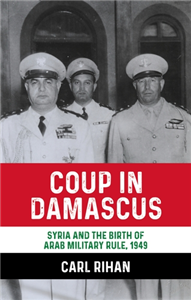
        Coup in Damascus is a history of Syria's first military regime. It plots the the fall of Syria's democracy and the rise of its military rulers, particularly Husni al-Zaim, whose brief rule in 1949 represented a profoundly transformative moment for the Syrian nation. It is a history of the thoughts, intentions and motives of political actors underpinning the events that have marked Syria's history after the first Arab-Israeli war, and focuses mainly on the interaction between local, regional and international actors. Unlike most histories of the modern Middle East that tackle broad intervals and that focus on the sequences of events, this history seeks to reconstruct the thought processes behind the events, and anchor them within the epoch's existing political and socioeconomic conditions. It draws on several methodological influences, particularly R.G. Collingwood's 'history as re-enactment of the past'.

      • Trusted Partner
        The Arts
        January 2026

        Decolonizing images

        by Ronnie Close

      • Trusted Partner
        Humanities & Social Sciences
        July 2025

        International Relations in a multipolar Middle East

        by Francesco Belcastro, Edward Wastnidge

        This volume explores the international relations of today's Middle East, a region that has become increasingly multi-polar. The tumult following the Arab Uprisings has expanded the arenas competed over by regional powers, global actors and non-state players. The United States, once seemingly intent on a hegemonic 'Pax Americana' has stepped back, leaving powers such as Russia, China, India and the EU, with opportunities to increase their reach and expand their influence. Meanwhile, regional rivalries and alliances have continued to shape conflict and cooperation in the Middle East. As global politics moves towards a new, multipolar era, this volume sheds important light on how this transition will impact on the region. Comprised of two macro sections that offer theoretical reflections and empirical case studies, this volume is essential reading for scholars of the politics and international relations of the Middle East.

      • Trusted Partner
        Humanities & Social Sciences
        January 2025

        Crisis and change in European Union foreign policy

        by Nikki Ikani

      Subscribe to our

      newsletter