Vanny Gani
The Awakening of the Stars, a novel in the mystical fiction category & Aerial Roots a drama and comedy about the author grandmother.
View Rights Portal
The Awakening of the Stars, a novel in the mystical fiction category & Aerial Roots a drama and comedy about the author grandmother.
View Rights Portal
Cosmos Culture Ltd., established in March 1998, is composed of intellectuals from different professions. The staff is devoted to cultural education and hopes to make a significant contribution to the inheritance and development of world culture by providing knowledge and high quality reference books to our readers. Contributing to the world’s culture is an endless road. Today’s world is a global village. Skill with two or more languages is crucial if an individual wants to play a role in the rapid growth of worldwide human communication and cultural exchanges.
View Rights Portal Trusted Partner
Trusted Partner
Trusted Partner
Trusted Partner
Trusted Partner

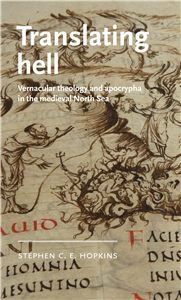
In the Middle Ages, hell was useful because it was vaguely defined. Canonical scriptures scarcely mention hell, leaving much to the imaginations of early Christians, who used it to sort out who belonged within the faith. This book explores how hell became a place for literary experiments with local challenges in theology and identity. Following the reception and transformations of two popular hell apocrypha, it argues that they served as this role because of their liminal textual authority. As noncanonical scriptures, apocrypha afforded medieval writers space to revise their hells (since they were not actually scripture), while also encouraging readers to revere those experiments as valid (since they seemed like scripture). The book brings together adaptations from early medieval England, Iceland, Ireland, and Wales, placing the early vernacular theologies of the North Sea in comparative conversation.
Trusted Partner
Trusted Partner

 Trusted Partner
Trusted Partner
Trusted Partner
 Trusted Partner
 Trusted Partner
Trusted Partner
Trusted Partner
Trusted Partner
Trusted Partner

Von allen deutschen Autoren, die nach 1945 zu schreiben begannen, ist Artmann ohne jeden Zweifel der vielseitigste, originellste und erfinderischste. So wie Artmann in fast allen Gattungen gearbeitet hat, auch den angeblich antiquierten, und ohne sich um die Tagesparolen der mal reine Dichtung betreibenden, mal engagierten, mal die Literatur totsagenden Kollegen zu kümmern, so hat er seine Quellen, seine Herkunft überall: in der Artusepik, in barocker Schäferpoesie, in den Wörterbüchern und Grammatiken von gut zwei Dutzend Sprachen, in Irland und im England des Sherlock Holmes, bei Villon und dem Wiener Vorstadtdialekt, Lorca, Gomez de la Serna, den Surrealisten und Dadaisten, in den Detektivheftchen der 20er Jahre und den Comic strips von damals bis heute. Unsere Auswahl versucht, nicht nur einen repräsentativen Querschnitt durch das Werk Artmanns zu geben, sondern gleichzeitig Verstreutes, an entlegensten Orten Publiziertes zu sammeln.
Trusted Partner
 Trusted Partner
Trusted Partner
Trusted Partner
Trusted Partner
Trusted Partner
Trusted Partner
Trusted Partner
Trusted Partner
Trusted Partner
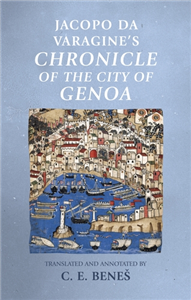
This book offers the first English translation of the Chronicle of the city of Genoa by the thirteenth-century Dominican Jacopo da Varagine, an author best known for his monumental book of saints' lives, the Golden legend. Jacopo's Chronicle presents a coherent vision of Genoa's place in history, the cosmos and Creation as written by the city's own archbishop - mixing eyewitness accounts with scholarly research about the city's origins and didactic reflections on the proper conduct of public and private life. Accompanied by an extensive introduction, this complete translation provides a unique perspective on a dynamic medieval city-state from one of its most important officials, broadening the available literature in English on medieval Italian urban life.
Trusted Partner
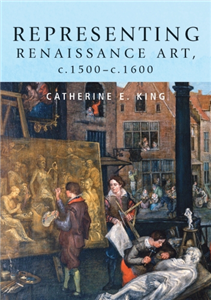
Representing Renaissance art, c.1500-c.1600 is a study of change and continuity in the iconographies of art and the visual representation of artists during the sixteenth century, especially in Italy and the Netherlands. The issue of how, and how far, artists obtained higher status for their profession during the Renaissance is a key question for the study of the early modern period. This book considers the maintenance of well-established traditions for the visual representation of artists, and also examines the new iconographies that emerged in the sixteenth century. By highlighting art and architecture that artists designed for their personal use, including the decoration of their houses, this study provides insight into the tastes and 'ways of looking' specific to artists. By examining the visual evidence we see the opinions both of artists who expressed their views in literary texts, and additionally those of artists who did not publish their ideas in written form.