Your Search Results


-
Promoted Content

 February 2001
Wie ein Anker im Strudel der Gewalt
Ein Ratgeber für Freunde und Verwandte misshandelter Frauen
by Brewster, Susan Clark
-
Promoted Content

 Humanities & Social SciencesMarch 2017
The Arctic in the British imagination 1818–1914
by Andrew Thompson, John M. MacKenzie, Rob David
The Arctic region has been the subject of much popular writing. This book considers nineteenth-century representations of the Arctic, and draws upon an extensive range of evidence that will allow the 'widest connections' to emerge from a 'cross-disciplinary analysis' using different methodologies and subject matter. It positions the Arctic alongside more thoroughly investigated theatres of Victorian enterprise. In the nineteenth century, most images were in the form of paintings, travel narratives, lectures given by the explorers themselves and photographs. The book explores key themes in Arctic images which impacted on subsequent representations through text, painting and photography. For much of the nineteenth century, national and regional geographical societies promoted exploration, and rewarded heroic endeavor. The book discusses images of the Arctic which originated in the activities of the geographical societies. The Times provided very low-key reporting of Arctic expeditions, as evidenced by its coverage of the missions of Sir John Franklin and James Clark Ross. However, the illustrated weekly became one of the main sources of popular representations of the Arctic. The book looks at the exhibitions of Arctic peoples, Arctic exploration and Arctic fauna in Britain. Late nineteenth-century exhibitions which featured the Arctic were essentially nostalgic in tone. The Golliwogg's Polar Adventures, published in 1900, drew on adult representations of the Arctic and will have confirmed and reinforced children's perceptions of the region. Text books, board games and novels helped to keep the subject alive among the young.
-
 Trusted Partner
-
Trusted Partner
-
Trusted Partner
-
Trusted Partner
-
Trusted Partner
 Humanities & Social SciencesMarch 1977
The Leibniz-Clarke Correspondence
With extracts from Newton's 'Principia' and 'Optiks'
by Robert Gavin Alexander
n 1715 Leibniz wrote to his friend the Princess of Wales to warn her of the dangers Newton's philosophy posed for natural religion. Seizing this chance of initiating an exchange between the two greatest minds in Europe, the princess showed his letter to the eminent Newtonian scientist and natural theologian, Samuel Clarke. From his reply developed an exchange of papers which was published in 1717. The correspondence was immediately seen as a crucial discussion of the significance of the new science, and it became one of the most widely read philosophical works of its time.In this edition, an introduction outlines the historical background, and there is a valuable survey of the subsequent discussions of the problem of space and time in the philosophy of science. Significant references to the controversy in Leibniz's other correspondence have also been collected, and the relevant passages from Newton's Principia and Opticks are appended. In 1715 Leibniz wrote to his friend the Princess of Wales to warn her of the dangers Newton's philosophy posed for natural religion. Seizing this chance of initiating an exchange between two of the greatest minds in Europe, the princess showed his letter to the eminent Newtonian scientist and natural theologian, Samuel Clarke. From his reply developed an exchange of papers which was published in 1717. The correspondence was immediately seen as a crucial discussion of the significance of the new science, and it became one of the most widely read philosophical works of its time. Kant developed his theory of space and time from the problems at issue, and the post-Newtonian physics of the twentieth century has brought a revival of interest in Leibniz's objections: some of the problems are still not finally resolved. In this edition an introduction outlines the historical background, and there is a valuable survey of the subsequent discussions of the problem of space and time in the philosophy of science. Significant references to the controversy in Leibniz's other correspondence have also been collected, and the relevant passages from Newton's "Principia" and "Opticks" are appended. ;
-
Trusted Partner

 June 1989
Lady Susan
Ein Roman in Briefen
by Jane Austen, Angelika Beck, Elizabeth Gilbert
Lady Susan, die Mutter einer im heiratsfähigen Alter befindlichen Tochter quartiert sich im Haus ihres Bruders ein und stiftet dort erhebliche Unruhe, als sie ihres Amüsements wegen dem Bruder ihrer Schwägerin den Kopf verdreht.
-
Trusted Partner
-
Trusted Partner
-
Trusted Partner
 Humanities & Social SciencesJuly 2018
Order and conflict
Anthony Ascham and English political thought (1648–50)
by Peter Lake, Marco Barducci, Anthony Milton, Jason Peacey, Alexandra Gajda
This book provides a careful and systematic analysis of Anthony Ascham's career and writings for the first time in English. During the crucial period between the Second Civil War and the establishment of the English Republic, when he served as official pamphleteer of the Parliament and the republican government, Ascham put forward a complex argument in support of Parliament's claims for obedience which drew on the political thought of Grotius, Hobbes, Selden, Filmer and Machiavelli. He combined ideas taken from these authors and turned them into a powerful instrument of propaganda to be deployed in the service of the political agenda of his Independent patrons in Parliament. This investigation of Ascham's works brings together an intellectual analysis of his political thought and an exploration of the interaction between politics, propaganda and political ideas.
-
Trusted Partner
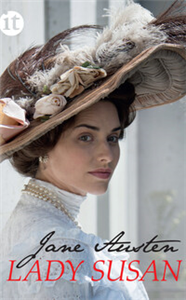 December 2016
Lady Susan
Ein Roman in Briefen
by Jane Austen, Angelika Beck
Die attraktive Lady Susan sorgt für Aufregung in der Gesellschaft: Frisch verwitwet, weiß sie ihre Reize nur zu gut einzusetzen und kokettiert bereits wieder mit ihren Verehrern. Gerüchte über angebliche Affären machen die Runde. Um den Gerede zu entgehen zieht sie sich auf das Anwesen ihres Bruders zurück. Dort kann sie ihren Plan in Ruhe weiterverfolgen: einen neuen wohlhabenden Ehemann zu finden. Objekt ihrer Begierde ist der adrette Reginald DeCourcy, der jüngere Bruder ihrer Schwägerin. Es werden fleißig Intrigen gesponnen, um unliebsame Konkurrentinnen aus dem Feld zu schlagen. Doch als eines Tages ihre Tochter Frederica auftaucht, geraten Lady Susans Pläne in Gefahr. Hatte sie für die Tochter doch den reichen, recht einfältigen Sir James Martin auserwählt, was der allerdings überhaupt nicht passt … Lady Susan war Jane Austens erster Roman; er wurde erst posthum veröffentlicht. Nicht minder amüsant, doch viel scharfzüngiger als in ihren großen Romanen erzählt die beliebte Autorin von amourösen und gesellschaftlichen Verwicklungen.
-
Trusted Partner
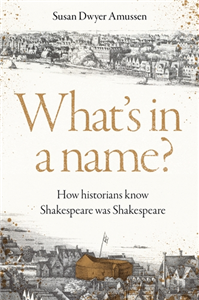 Literature & Literary StudiesMarch 2026
What's in a name?
How historians know Shakespeare was Shakespeare
by Susan Dwyer Amussen
A compelling tour of Shakespeare's England that makes a powerful contribution to the 'authorship question'. How do we know Shakespeare was Shakespeare? Could a glover's son who left school at fifteen really be the author behind such masterpieces as Hamlet, King Lear and The Tempest? Yes! says historian Susan Amussen. She transports readers back to early modern England, to travel the path that carried William Shakespeare from humble origins in Stratford to literary greatness on the London stage. This was a society undergoing rapid change. Grammar schools made education in Latin and Greek available to commoners, while touring players brought the latest dramatic productions to the masses. And in London, a metropolis filled with European visitors, ordinary people had the opportunity to see courtly life up close. No serious historian doubts that Shakespeare was the author of the plays that bear his name. Susan Amussen shares what they know: that Shakespeare's England was a complex and cosmopolitan place, with everything a talented young playwright needed to develop his craft and furnish his imagination.
-
Trusted Partner
 The ArtsApril 2011
Anthony Asquith
by Tom Ryall, Brian McFarlane, Neil Sinyard
This is the first comprehensive critical study of Anthony Asquith. Ryall sets the director's work in the context of British cinema from the silent period to the 1960s, examining the artistic and cultural influences which shaped his films. Asquith's silent films were compared favourably to those of his eminent contemporary Alfred Hitchcock, but his career faltered during the 1930s. However, the success of Pygmalion (1938) and French Without Tears (1939), based on plays by George Bernard Shaw and Terence Rattigan, together with his significant contributions to wartime British cinema, re-established him as a leading British film maker. Asquith's post-war career includes several pictures in collaboration with Terence Rattigan, and the definitive adaptation of Oscar Wilde's The Importance of Being Earnest (1951), but his versatility is demonstrated in a number of modest genre films including The Woman in Question (1950), The Young Lovers (1954) and Orders to Kill (1958). ;
-
Trusted Partner
 Literature & Literary StudiesJanuary 2026
Antony and Cleopatra
by Carol Chillington Rutter
This book writes a performance history of Antony and Cleopatra, Shakespeare's most ambiguous play, from 1606 to the present. It observes the choices that actors, directors, designers, musicians and adapters have made each time they have brought the play's thoughts on power, race, masculinity, regime change, exoticism, love, dotage and delinquency into alignment with a new present. Informed by close attention to theatre records - promptbooks, stage managers' reports, reviews - it offers in-depth analyses of fifteen international productions by (among others) the Royal Shakespeare Company, Citizens Theatre Glasgow, Northern Broadsides, Berliner Ensemble and Toneelgroep Amsterdam. It ends seeing Shakespeare's black Egyptian Queen Cleopatra - whited-out in performance for centuries - restored to the contemporary stage. Written in a lively and accessible style, this book will be of interest to students, academics, actors, directors and general readers alike.
-
Trusted Partner
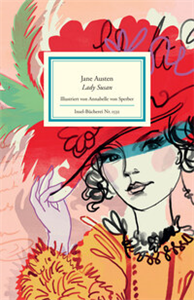 March 2024
Lady Susan
by Jane Austen, Annabelle von Sperber, Angelika Beck
Die attraktive Lady Susan sorgt für Aufregung in der Gesellschaft: Frisch verwitwet, weiß sie ihre Reize einzusetzen und kokettiert mit ihren Verehrern. Gerüchte über angebliche Affären machen die Runde. Um dem Gerede zu entgehen, zieht sie sich auf das Anwesen ihres Bruders zurück, um in Ruhe ihren Plan weiterzuverfolgen: einen neuen wohlhabenden Ehemann zu finden. Objekt ihrer Begierde ist der adrette Reginald DeCourcy. Es werden fleißig Intrigen gesponnen, um unliebsame Konkurrentinnen aus dem Feld zu schlagen. Doch als eines Tages ihre Tochter Frederica auftaucht, geraten Lady Susans Pläne in Gefahr … Amüsant und scharfzüngig erzählt die beliebte Autorin von amourösen und gesellschaftlichen Verwicklungen.
-
Trusted Partner
 Biography & True StoriesSeptember 2024
Bedsit land
The strange worlds of Soft Cell
by Patrick Clarke
A rich and revealing examination of the legendary pop duo Soft Cell. Soft Cell are not your average pop band. Marc Almond and Dave Ball may be best known for the string of hits they released in 1981, but the powerful first phase of their collaboration embraced a staggering array of sounds, influences and innovations that would change the face of music to come. In Bedsit land, Patrick Clarke plunges into the archives and interviews more than sixty contributors, including the band members themselves, to follow Soft Cell through the many strange and sprawling worlds that shaped their extraordinary career. They lead him from the faded camp glamour of the British seaside to the dizzying thrills of the New York club scene. From transgressive student performance art to the sleaze and squalor of pre-gentrified Soho. From the glitz of British showbiz to the drug-addled chaos of post-Franco Spain. He emerges on the other side with the most in-depth, innovative and entertaining account of the duo ever written.
-
Trusted Partner

 August 2012
Demokratie?
Eine Debatte
by Alain Badiou, Daniel Bensaïd, Giorgio Agamben, Jacques Rancière, Jean-Luc Nancy, Kristin Ross, Slavoj Zizek, Wendy Brown
Zu Beginn des dritten Jahrtausends ist die Situation der Demokratie paradox: Einerseits sind mehr Staaten denn jemals zuvor demokratisch verfaßt, andererseits nehmen die Krisensymptome in den Staaten, die einstmals so etwas wie eine demokratische Avantgarde bildeten, zu: Die Wahlbeteiligung sinkt, schillernde Persönlichkeiten wie Silvio Berlusconi oder Nicolas Sarkozy gewinnen an Bedeutung, Wahlkämpfe geraten zu schalen Marketingkampagnen. Colin Crouch hat all diese Trends in dem Band "Postdemokratie" präzise auf den Punkt gebracht. In diesem Band setzen sich nun acht herausragende politische Denkerinnen und Denker mit dem Zustand und den Perspektiven der am wenigsten schlechten aller Regierungsformen (Winston Churchill) auseinander, die tageszeitung sprach von einem 'Who's who der internationalen linken Theorie'. Der Diskussionsband enthält Beiträge von Giorgio Agamben, Alain Badiou, Daniel Bensaïd, Wendy Brown, Jean-Luc Nancy, Jacques Rancière, Kristin Ross und Slavoj iek.
-
Trusted Partner
 August 2012
Demokratie?
Eine Debatte
by Giorgio Agamben, Alain Badiou, Slavoj Žižek, Jacques Rancière, Jean-Luc Nancy, Wendy Brown, Daniel Bensaïd, Kristin Ross
Zu Beginn des dritten Jahrtausends ist die Situation der Demokratie paradox: Einerseits sind mehr Staaten denn jemals zuvor demokratisch verfaßt, andererseits nehmen die Krisensymptome in den Staaten, die einstmals so etwas wie eine demokratische Avantgarde bildeten, zu: Die Wahlbeteiligung sinkt, schillernde Persönlichkeiten wie Silvio Berlusconi oder Nicolas Sarkozy gewinnen an Bedeutung, Wahlkämpfe geraten zu schalen Marketingkampagnen. Colin Crouch hat all diese Trends in dem Band "Postdemokratie" präzise auf den Punkt gebracht. In diesem Band setzen sich nun acht herausragende politische Denkerinnen und Denker mit dem Zustand und den Perspektiven der am wenigsten schlechten aller Regierungsformen (Winston Churchill) auseinander, die tageszeitung sprach von einem »Who's who der internationalen linken Theorie«. Der Diskussionsband enthält Beiträge von Giorgio Agamben, Alain Badiou, Daniel Bensaïd, Wendy Brown, Jean-Luc Nancy, Jacques Rancière, Kristin Ross und Slavoj Žižek.
-
Trusted Partner