
Your Search Results


-
Promoted Content

 Humanities & Social SciencesSeptember 2026
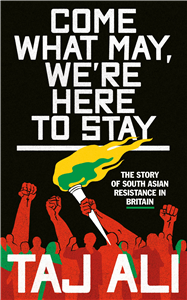
Come what may, we're here to stay
The story of South Asian resistance in Britain
by Taj Ali
As British South Asians reel from the riots of summer 2025, this book tells the inspirational story of how the community organised against racism in the past and how it continues to fight in the present. British South Asians have a long tradition of radical political activism. The 1970s and 1980s saw the community grappling with prejudice in the workplace and violence in the streets. But this history is deeper than you might think, from students agitating for independence at the heart of the British Empire to seafarers organising global strikes on the eve of the Second World War. In Come what may, we're here to stay, Taj Ali reveals how successive generations fought for rights, dignity and a sense of belonging while actively shaping the country they now call home. He shows that British South Asian political life has often been defined less by religious difference than by shared commitments to anti-imperialism and anti-racism. In pursuit of these goals, alliances have been forged with other movements, from Irish republicanism to Black Power. As racism rears its ugly head again, Come what may, we're here to stay asks: are we are doomed to repeat the past or will we learn from our mistakes and build a better world together?
-
Promoted Content
 MedicineNovember 2019
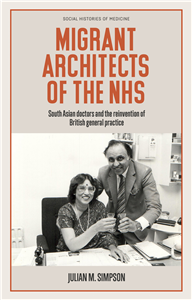
Migrant architects of the NHS
South Asian doctors and the reinvention of British general practice (1940s-1980s)
by Julian Simpson, Keir Waddington
Migrant architects of the NHS draws on forty-five oral history interviews and extensive archival research to offer a radical reappraisal of how the National Health Service was made. It tells the story of migrant South Asian doctors who became general practitioners in the NHS. Imperial legacies, professional discrimination and an exodus of UK-trained doctors combined to direct these doctors towards work as GPs in some of the most deprived parts of the UK. In some areas, they made up over half of the general practitioner workforce. The NHS was structurally dependent on them and they shaped British society and medicine through their agency. Aimed at students and academics with interests in the history of immigration, immigration studies, the history of medicine, South Asian studies and oral history. It will also be of interest to anyone who wants to know more about how Empire and migration have contributed to making Britain what it is today.
-
 Trusted Partner
 Humanities & Social SciencesApril 2020
The British political elite and Europe, 1959-1984
A higher loyalty
by Bob Nicholls
This book offers an original interpretation of Britain's relationship with Europe over a 25 year period: 1959-84 and advances the argument that the current problems over EU membership resulted from much earlier political machinations. This evidence based account of the seminal period analyses the applications for EEC membership, the 1975 referendum, and the role of the press. Was the British public misled over the true aims of the European project? How significant was the role of the press in changing public opinion from anti, to pro Common Market membership? Why, after over 40 years since Britain became a member of the European community, does the issue continue to deeply divide not only the political elite, but also the British public? These, and other pertinent questions are answered in this timely book on a subject that remains topical and highly controversial.
-
Trusted Partner
 Humanities & Social SciencesMarch 2017
British culture and the end of empire
by Stuart Ward
This book is the first major attempt to examine the cultural manifestations of the demise of imperialism as a social and political ideology in post-war Britain. Far from being a matter of indifference or resigned acceptance as is often suggested, the fall of the British Empire came as a profound shock to the British national imagination, and resonated widely in British popular culture. The sheer range of subjects discussed, from the satire boom of the 1960s to the worlds of sport and the arts, demonstrates how profoundly decolonisation was absorbed into the popular consciousness. Offers an extremely novel and provocative interpretation of post-war British cultural history, and opens up a whole new field of enquiry in the history of decolonisation.
-
Trusted Partner
 Humanities & Social SciencesDecember 2024
British culture after empire
Race, decolonisation and migration since 1945
by Josh Doble, Liam Liburd, Emma Parker
British culture after Empire is the first collection of its kind to explore the intertwined social, cultural and political aftermath of empire in Britain from 1945 up to and beyond the Brexit referendum of 2016, combining approaches from the fields of history, English and cultural studies. Against those who would deny, downplay or attempt to forget Britain's imperial legacy, the various contributions expose and explore how the British Empire and the consequences of its end continue to shape Britain at the local, national and international level. As an important and urgent intervention in a field of increasing relevance within and beyond the academy, the book offers fresh perspectives on the colonial hangovers in post-colonial Britain from up-and-coming as well as established scholars.
-
Trusted Partner
 Humanities & Social SciencesMarch 2017
The harem, slavery and British imperial culture
Anglo-Muslim relations in the late nineteenth century
by Diane Robinson-Dunn
This book focuses on British efforts to suppress the traffic in female slaves destined for Egyptian harems during the late-nineteenth century. It considers this campaign in relation to gender debates in England, and examines the ways in which the assumptions and dominant imperialist discourses of these abolitionists were challenged by the newly-established Muslim communities in England, as well as by English people who converted to or were sympathetic with Islam. While previous scholars have treated antislavery activity in Egypt first and foremost as an extension of earlier efforts to abolish plantation slavery in the New World, this book considers it in terms of encounters with Islam during a period which it argues marked a new departure in Anglo-Muslim relations. This approach illuminates the role of Islam in the creation of English national identities within the global cultural system of the British Empire. This book would appeal to those with an interest in British imperial history; Islam; gender, feminism, and women's studies; slavery and race; the formation of national identities; global processes; Orientalism; and Middle Eastern studies.
-
Trusted Partner
 Humanities & Social SciencesFebruary 2017
Wales and the British overseas empire
Interactions and influences, 1650–1830
by H.V. Bowen
This unique collection of essays is the first book to explore the many relationships that developed between Wales and the British overseas empire between 1650 and 1830. Written by leading specialists in the field, the essays explore economic, social, cultural, political, and religious interactions between Wales and the empire. The geographical coverage is very broad, with examinations of the contributions made by Wales to expansion in the Atlantic world, Caribbean, and South Asia. The book explores Welsh influences on the emergence of 'British' imperialism, as well as the impact that the empire had upon the development of Wales itself. The book will be of interest to academic historians, postgraduate students, and undergraduates. It will be indispensable to those interested in the history of Wales, Britain, and the empire, as well as those who wish to compare Welsh imperial experiences with those of the English, Irish, and Scots.
-
Trusted Partner
 The ArtsJanuary 2019
The British working class in postwar film
by Philip Gillett
An incidental pleasure of watching a film is what it tells us about the society in which it is made. Using a sociological model, The British working class in postwar film looks at how working-class people were portrayed in British feature films in the decade after the Second World War. Though some of the films examined are well known, others have been forgotten and deserve reassessment. Original statistical data is used to assess the popularity of the films with audiences. With its interdisciplinary approach and the avoidance of jargon, this book seeks to broaden the approach to film studies. Students of media and cultural studies are introduced to the skills of other disciplines, while sociologists and historians are encouraged to consider the value of film evidence in their own fields. This work should appeal to all readers interested in social history and in how cinema and society works.
-
Trusted Partner
 Humanities & Social SciencesFebruary 2017
Country houses and the British Empire, 1700–1930
by Stephanie Barczewski
Country houses and the British empire, 1700-1930 assesses the economic and cultural links between country houses and the Empire between the eighteenth and twentieth centuries. Using sources from over fifty British and Irish archives, it enables readers to better understand the impact of the empire upon the British metropolis by showing both the geographical variations and its different cultural manifestations. Barczewski offers a rare scholarly analysis of the history of country houses that goes beyond an architectural or biographical study, and recognises their importance as the physical embodiments of imperial wealth and reflectors of imperial cultural influences. In so doing, she restores them to their true place of centrality in British culture over the last three centuries, and provides fresh insights into the role of the Empire in the British metropolis.
-
Trusted Partner
 March 2026
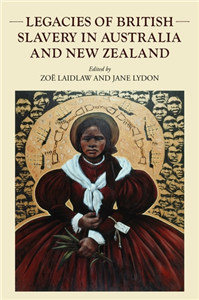
Legacies of British slavery in Australia and New Zealand
by Zoë Laidlaw, Jane Lydon
This book investigates the legacies of British slavery beyond Britain, focusing upon the colonisation of Australia and New Zealand, and explores why this history has been overlooked. After August 1833, when the British Parliament abolished slavery in the British Caribbean, Mauritius and the Cape, the former slave-owners were paid compensation for the loss of their 'property'. New research has begun to show that many beneficiaries had ties to other parts of the British Empire, including the settler colonies of Australia, New Zealand, Canada and South Africa. Through a range of case studies, contributors to this collection trace the movement of people, goods, capital, and practices from the Caribbean to the new Australasian settler colonies. Chapters consider a range of places, people and themes to reveal the varied ways that slavery continued to shape imperial relationships, economic networks, and racial labour regimes after 1833.
-
Trusted Partner
 Humanities & Social SciencesMarch 2017
'The better class' of Indians
Social rank, Imperial identity, and South Asians in Britain 1858–1914
by A. Wainwright
This is the first book-length study to focus primarily on the role of class in the encounter between South Asians and British institutions in the United Kingdom at the height of British imperialism. In a departure from previous scholarship on the South Asian presence in Britain, 'The better class' of Indians emphasizes the importance of class as the register through which British polite society interpreted other social distinctions such as race, gender, and religion. Drawing mainly on unpublished material from the India Office Records, the National Archives, and private collections of charitable organizations, this book examines not only the attitudes of British officials towards South Asians in their midst, but also the actual application of these attitudes in decisions pertaining to them. This fascinating book will be of particular interest to scholars and general readers of imperialism, immigration as well as British and Indian social history.
-
Trusted Partner
 Humanities & Social SciencesMarch 2017
Payment and philanthropy in British healthcare, 1918–48
by George Campbell Gosling, Keir Waddington
This book is available as an open access ebook under a CC-BY-NC-ND licence. At a time when payment is claiming a greater place than ever before within the NHS, this book provides the first in-depth investigation of the workings, scale and meaning of payment in British hospitals before the NHS. There were only three decades in British history when it was the norm for patients to pay the hospital; those between the end of the First World War and the establishment of the National Health Service in 1948. Payment played an important part in redefining rather than abandoning medical philanthropy, based on class divisions and the notion of financial contribution as a civic duty. With new insights on the scope of private medicine and the workings of the means test in the hospital, as well as the civic, consumer and charitable meanings associated with paying the hospital, Gosling offers a fresh perspective on healthcare before the NHS and welfare before the welfare state.
-
Trusted Partner
 Humanities & Social SciencesApril 2025
Islamophobia, anti-racism and the British left
by Scarlet Harris
Islamophobia is one of the most misunderstood and pernicious forms of racism in Britain. But how do those committed to challenging Islamophobia understand it? And what does this mean for their practices 'on the ground'? Islamophobia, anti-racism and the British left combines first-hand accounts from activists and community workers across two British cities with sociological theory, critically interrogating Islamophobia's relationship to 'race', racial capitalism and other modalities of racism. Setting this discussion against some of the most pertinent political shifts in Britain in recent years - from the resurgence of left nationalism to Black Lives Matter - the book assesses the limits of recent attempts to think about and tackle Islamophobia, and considers the possibilities of an alternative approach from and for the anti-racist left.
-
Trusted Partner
 Humanities & Social SciencesFebruary 2017
Welsh missionaries and British imperialism
The Empire of Clouds in north-east India
by Andrew May
In 1841, the Welsh sent their first missionary, Thomas Jones, to evangelise the tribal peoples of the Khasi Hills of north-east India. This book follows Jones from rural Wales to Cherrapunji, the wettest place on earth and now one of the most Christianised parts of India. As colonised colonisers, the Welsh were to have a profound impact on the culture and beliefs of the Khasis. The book also foregrounds broader political, scientific, racial and military ideologies that mobilised the Khasi Hills into an interconnected network of imperial control. Its themes are universal: crises of authority, the loneliness of geographical isolation, sexual scandal, greed and exploitation, personal and institutional dogma, individual and group morality. Written by a direct descendant of Thomas Jones, it makes a significant contribution in orienting the scholarship of imperialism to a much-neglected corner of India, and will appeal to students of the British imperial experience more broadly.
-
Trusted Partner
 Humanities & Social SciencesFebruary 2017
Cultures and caricatures of British imperial aviation
Passengers, pilots, publicity
by Gordon Pirie, Andrew Thompson, John M. MacKenzie
The new activity of trans-continental civil flying in the 1930s is a useful vantage point for viewing the extension of British imperial attitudes and practices. Cultures and caricatures of British imperial aviation examines the experiences of those (mostly men) who flew solo or with a companion (racing or for leisure), who were airline passengers (doing colonial administration, business or research), or who flew as civilian air and ground crews. For airborne elites, flying was a modern and often enviable way of managing, using and experiencing empire. On the ground, aviation was a device for asserting old empire: adventure and modernity were accompanied by supremacism. At the time, however, British civil imperial flying was presented romantically in books, magazines and exhibitions. Eighty years on, imperial flying is still remembered, reproduced and re-enacted in caricature.
-
Trusted Partner
 The ArtsJanuary 2019
Tears of laughter
Comedy-drama in 1990s British cinema
by Nigel Mather
Tears of laughter' examines the interactions of comedy and drama in three vital thematic strands of British cinema during the 1990s: comedies exploring issues of class, culture and community in British society, 'ethnic' comedy-dramas engaging with complex issues of identity and allegiance in modern Britain, and romantic comedies featuring characters searching (somewhat desperately or frantically) for a suitable and desirable long-term or short-term partner. Films to be discussed in detail include 'Brassed Off' (1996), 'The Full Monty' (1997), 'East is East' (1999), 'Four Weddings and a Funeral' (1994), 'Notting Hill' (1999) and a post-1990s romantic comedy, 'Love Actually' (2003). The study discusses these specific films and a range of other 1990s British comedy-drama films within the context of community-orientated Ealing comedy classics, contentious situation comedies treating race relations as both a laughing matter and a site of conflict ('Till Death Us Do Part' and 'Love Thy Neighbour'), and romantic comedies set and produced in Britain. It is aimed at film studies academics, students and film enthusiasts.
-
Trusted Partner
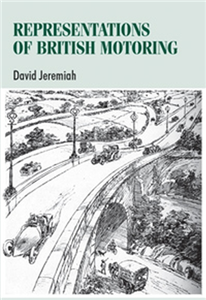 Humanities & Social SciencesApril 2007
Representations of British motoring
by David Jeremiah, Christopher Breward, Bill Sherman, Alan Rutter
Representations of British motoring provides important new insights into the established discourses of British motoring. Based on the patterns of representation that have mediated between the trade, owners and society, particularly the myths and realities generated by the advertising campaigns and motoring journals, it identifies the landmarks of change and innovation. It is not about great images as such, although some are, but particular attention has been directed towards the creative intervention of the artist-illustrators. Part One emphasises the critical significance of the emerging concerns and aspirations of the first decade of motoring, while the two subsequent parts provide a clear understanding of how the continuity of the public debate has shaped the concepts of modern and popular motoring. The new models, motorists and motoring landscape are the central themes through which it has been possible to track the preoccupation with questions regarding speed and safety, the idea of being British, the aesthetics of the car and motoring, and the family, women and the car. As such it is a design history that redefines and extends the parameters of the history of motoring, providing an overview of the place of the motor-car and motoring in British society that is relevant to undergraduate and postgraduate studies and the motoring enthusiast. ;
-
Trusted Partner
 Humanities & Social SciencesAugust 2010
Dictionary of British Politics
Second edition
by Bill Jones, Bill Jones
From Diane Abbott to Hugo Young via Keynesianism and Thatcherism, from Major to Millbank and from New Labour to Norman Tebbitt, this book is the ultimate student reference guide to British politics. The 2nd edition has been fully updated to take account of all the changes that have taken place in British politics since 2004. With over one thousand entries, the book covers the personalities, policies and institutions that have shaped British politics, with special emphasis on developments since the beginning of the twentieth century. This is the ideal instant reference book on British politics. It provides the reader with short, authoritative explanations and definitions of key terms, institutions, offices of state, political events, processes and policies as well as biographies of well known politicians, political thinkers, movements and theorists. Any student unsure of a term, an event, the details of the life of a prominent politician, or the inner workings of an institution can turn to this book for immediate assistance. ;
-
Trusted Partner
 Humanities & Social SciencesMarch 2017
New frontiers
Imperialism's new communities in East Asia, 1842–1953
by Robert Bickers, Christian Henriot
In the new world order mapped out by Japanese and Western imperialism in East Asia after the mid-nineteenth century opium wars, communities of merchants and settlers took root in China and Korea. New identities were constructed, new modes of collaboration formed and new boundaries between the indigenous and foreign communities were literally and figuratively established. Newly available in paperback, this pioneering and comparative study of Western and Japanese imperialism examines European, American and Japanese communities in China and Korea, and challenges received notions of agency and collaboration by also looking at the roles in China of British and Japanese colonial subjects from Korea, Taiwan and India, and at Chinese Christians and White Russian refugees. This volume will be of interest to students and scholars of the history and anthropology of imperialism, colonialism's culture and East Asian history, as well as contemporary Asian affairs.
-
Trusted Partner
 Humanities & Social SciencesDecember 2003
British politics today
7th edition
by Bill Jones, Bill Jones, Dennis Kavanagh, Caroline Wilding
A short but comprehensive textbook for students of British politics which interprets changes over the last thirty years and analyses institutions within the context of British society and economics. ;

