Your Search Results

      • Mercis Publishing bv Dick Bruna inc.

        Mercis Publishing bv is the publisher and world-wide rights holder for Dick Bruna’s books, including Miffy. Mercis Publishing has published the Dutch version of the Dick Bruna books since 1995 and coordinates the publication of all Dick Bruna books in other countries. Dick Bruna’s books have been translated into more than 50 languages. The list includes picture books, board books, bath books, novelty books and colouring & activity titles.

        View Rights Portal
      • Bruno Dorn Verlag

        The Bruno Dorn Verlag is publishing extraordinary and high quality art books and catalogues since 1996. In collaboration with artists*, museums or other art institutions, BDV is creating very special books that open up whole new creative worlds. Since 2007, the BDV is publishing the art magazine seen, a completely new and compact format to present new, emerging and interesting artists.    Der Bruno Dorn Verlag zeichnet sich seit 1996 durch Künstlerbücher und Kataloge von höchster Qualität und Kreativität aus. In Zusammenarbeit mit Künstler*innen und oft in Kooperation mit Museen oder anderen Kunstinstitutionen entstehen im BDV Bücher, die den Zeitgeist einfangen und zum Verweilen einladen. Seit 2007 gibt es mit dem Kunstmagazin seen ein neues Format, zu dem der Verlag in unregelmäßigen Abständen Künstlerinnen und Künstler einlädt.

        View Rights Portal
      • Trusted Partner
        March 1964

        In der Sache J. Robert Oppenheimer

        Ein szenischer Bericht

        by Heinar Kipphardt

        Eine historische Begebenheit liegt diesem szenischen Bericht zu Grunde: der Fall Oppenheimer. Am 12. April 1954 begann in Washington die Untersuchung gegen den Physiker und langjährigen Leiter der amerikanischen Atomforschung J. Robert Oppenheimer. Der Untersuchungsausschuß, von der Atomenergiekommission der USA eingesetzt, sollte prüfen, ob sich der Wissenschaftler der Regierung seines Landes gegenüber loyal verhalten habe. Das drei Wochen währende Verhör, Beispiel und Ausdruck des Konflikts zwischen Individuum und Gesellschaft, Wissenschaft und Staat, zählt zu den denkwürdigen Ereignissen der Zeitgeschichte.

      • Trusted Partner
        March 2010

        Onkel J.

        Heimatkunde

        by Andreas Maier

        Seit seinem Debüterfolg mit dem Roman Wäldchestag im Jahr 2000 ist Andreas Maier häufig unterwegs, um aus seinen Romanen zu lesen. Nur daß er in den letzten ein, zwei Jahren meist, wenn er eingeladen war, auch immer wieder schon aus dem kommenden Onkel J. las. Jedesmal hatte er damit das Publikum im Handumdrehen auf seiner Seite. Umstandslos fand man sich angeschlossen an Maiers Welt aus Wetterau, Familie, Fußball, Apfelwein, aus Thomas Bernhard und dem Evangelium nach Matthäus, aus Ängsten, Kneipenfreuden und -nöten, eingepackt in absurde Vorkommnisse und komische Erlebnisse. Jede Kolumne beginnt mit einem »Neulich«-Satz, die erste so: »Neulich war ich in Berlin. Das wird jetzt niemand weiter ungewöhnlich finden, aber ich bin Hesse, und mir ging in Berlin ein Wunsch in Erfüllung.« Dennoch handelt es sich um alles andere als ein Kolumnenbuch. Vielmehr nimmt Onkel J. – im Übergang von den ersten vier Romanen zu Maiers Projekt »Ortsumgehung« – eine zentrale Stelle ein. »Alles gehört zusammen, und für alles ist das Kolumnenbuch der Kern.«

      • Trusted Partner
      • Trusted Partner
      • Trusted Partner
      • Trusted Partner
      • Trusted Partner
        Literature & Literary Studies
        April 2026

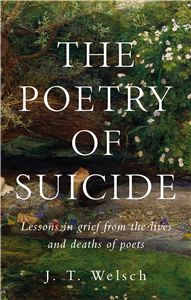
        The poetry of suicide

        Lessons in grief from the lives and deaths of poets

        by J. T. Welsch

        A profound exploration of the connection between poetry and suicide. 'Suicides have a special language,' Anne Sexton wrote in her 1964 poem 'Wanting to Die'. But is it a language we can learn to read? In The poetry of suicide, J. T. Welsch interweaves stories of poets who took their own lives with the long history of suicide in his own family, searching for a new way of understanding these difficult deaths. Beginning with Hamlet's 'To be or not to be?', he delves into the work of Dante, Sylvia Plath, Vladimir Mayakovsky and others, asking what it can teach us about suicide's messy reality. Suicide is more like poetry than we realise, Welsch argues. Both are filled with ambiguities, contradictions and unknowable intentions. Both demand and resist interpretation. Recovering the personal dimension often lost in our medicalised public discourse, Welsch finds practical ways of confronting suicide's poem-like difficulties.

      • Trusted Partner
      • Trusted Partner
      • Trusted Partner

        Kaspar Hauser’s Brothers and Sisters. In search of the wild man

        by P. J. Blumenthal

        What makes human beings human? Is it a life in society that makes us what we are? We often hear stories of persons who have survived in the wild without social contact or who were supposedly raised by wild animals. Kaspar Hauser is probably the most well-known example, but certainly not the only one. P. J. Blumenthal has taken up the hunt for the “wild man” Homo ferus on the boundary between man and animal.

      • Trusted Partner
      • Trusted Partner
      • Trusted Partner
      • Trusted Partner
      • Trusted Partner
        January 1986

        Einander lieben

        Die Kunst, wahre zwischenmenschliche Beziehungen zu entwickeln und zu vertiefen

        by Buscaglia, Leo F / Übersetzt von Koskull, Hans J von

      • Trusted Partner
        The Arts
        December 2007

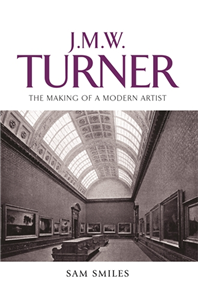
        J. M. W. Turner

        The making of a modern artist

        by Sam Smiles, Alan Rutter

        Alone of his contemporaries, J.M.W. Turner is commonly held to have prefigured modern painting, as signalled in the existence of The Turner Prize for contemporary art. Our celebration of his achievement is very different to what Victorian critics made of his art. This book shows how Turner was reinvented to become the artist we recognise today. On Turner's death in 1851 he was already known as an adventurous, even baffling, painter. But when the Court of Chancery decreed that the contents of his studio should be given to the nation, another side of his art was revealed that effected a wholescale change in his reputation. This book acts as a guide to the reactions of art writers and curators from the 1850s to the 1960s as they attempted to come to terms with his work. It documents how Turner was interpreted and how his work was displayed in Britain, in Europe and in North America, concentrating on the ways in which his artistic identity was manipulated by art writers, by curators at the Tate and by designers of exhibitions for the British Council and other bodies. ;

      • Trusted Partner
      • Trusted Partner

      Subscribe to our

      newsletter