
La Pollera Ediciones
La Pollera's catalog includes narrative, essay, and chronicle of contemporary and classic authors.
View Rights Portal
La Pollera's catalog includes narrative, essay, and chronicle of contemporary and classic authors.
View Rights Portal
Established in 1944,the University of South Carolina Press is one of the oldest and most distinguished publishing houses in the South. With well over 1,000 books available in print and digital formats, and publishing approximately fifty new books annually, the Press enhances and expands the scholarly reputation and worldwide visibility of the University of South Carolina.In helping the University fulfill its mission of research and teaching and outreach, the Press publishes a wide range of critically acclaimed works in the following subjects: Southern History, African American Studies, Civil Rights, and South Carolina. In addition, the Press publishes long-running scholarly series in Literary Studies and Rhetoric/Communication. Our editorial profile aligns with several of the institutional strengths of the University and underscores the Press’s mission to serve teachers and learners and readers in the academy and the broader culture, both in North America and around the globe.
View Rights Portal

 Trusted Partner
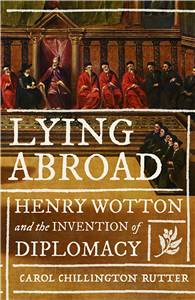
Student, traveller, secretary, scoundrel, spy: introducing the maverick whose diplomacy saved Europe from war. Henry Wotton had already exhausted several lives when he arrived in Venice as England's ambassador in 1604. Yet the most remarkable phase of his career was yet to come. In Lying abroad, Carol Chillington Rutter tells Wotton's extraordinary story. She reveals how this one-time exile, who fled England after his employer was convicted of treason, gained the favour of King James, securing a knighthood and a diplomatic posting. Charged with restoring relations with Venice after a fifty-year hiatus, he drew criticism for his breaches of protocol. But when a dispute brought Europe to the brink of war, Wotton took a risk - one that changed European history. This engrossing biography recounts a life that was tumultuous, tarnished and endlessly theatrical. The man King James called his 'honest dissembler' was a maverick who fashioned diplomacy in ways that still inform international relations today.
Trusted Partner

Carol Reed is one of the truly outstanding directors of British cinema, and one whose work is long overdue for reconsideration. This major study ranges over Reed's entire career, combining observation of general trends and patterns with detailed analysis of twenty films, both acknowledged masterpieces and lesser-known works. Evans avoids a simplistic auteurist approach, placing the films in their autobiographical, socio-political and cultural contexts and relating these to the analysis of Reed's art. The critical approach combines psychoanalysis, gender theory, and the analysis of form. Archival research is also relied on to clarify Reed's relations with his creative team, financial backers and others. Films examined include Bank Holiday, A Girl Must Live, Odd Man Out, The Fallen Idol, The Third Man, Night Train to Munich, The Way Ahead, Outcast of the Islands, Trapeze and Oliver!.
Trusted Partner
 Trusted Partner

This illuminating study of The Winter's Tale in performance in the twentieth and early twenty-first centuries contributes to understanding the growth during that time of high critical esteem forwhat is now one of Shakespeare's frequently performed plays. Writing about performance as a richly collaborative living art, the author learns from and gives voice to the work of actors, directors, designers and other theatre professionals whose labor and interpretive discoveries have made it possible for audiences to experience the play's multiple potentialities in the theatre. She does this in part by citing from her interviews with directors like Trevor Nunn and Peter Hall and with actors engaged in some of the most significant twentieth-century productions of The Winter's Tale. Dunbar connects her scholarly research, including fresh use of materials in theatrical archives, to her direct experience of those productions she has able to see in performance and, at times, to see develop in rehearsal. Her in-depth analysis of selected significant twentieth-century productions, including cross-cultural productions of The Winter's Tale by the Royal Dramatic Theatre of Sweden (directed by Ingmar Bergman), and the Maly Drama Theatre of Europe, in St. Petersburg (directed by Declan Donnellan), explores how theatre artists have approached the play's most crucial theatrical and interpretive challenges. The book's last chapter, by distinguishedtheatre scholar and performance critic Carol Chillington Rutter, contributes a richly layered and highly engaging comparative analysis of eight of the most important recent British productions of the play. Dunbar makes a significant contribution to understanding The Winter's Tale which will be of great interest to scholars, teachers, and students of Shakespeare, to theatre lovers, and to all involved in productions of the play. ;
Trusted Partner
Trusted Partner
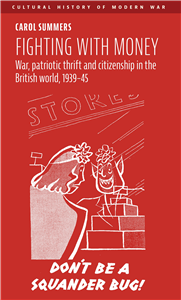
During the second world war, war savings campaigns reframed money as a means to to defend children, secure freedom, and enact citizenship across the British world. Patriotic thrift propaganda urged people to reject consumer goods and instead invest deliberately in stamps, certificates and bonds, presenting saving as a patriotic act that transformed subjects into accountable citizens. Officials and volunteers built a state-directed mobilisation that documented participation and linked household decisions to national victory. In Britain, these initiatives brought workers together and validated housewives' expertise, while Canada and Australia developed parallel schemes. Even colonies such as Uganda invested actively in British defence. Fighting with money examines how activists constructed these campaigns, the identities they imagined and their limits in a shifting wartime and postwar landscape.
Trusted Partner
 Trusted Partner
Trusted Partner
Trusted Partner
Trusted Partner
Trusted Partner
Trusted Partner
Trusted Partner
Trusted Partner
Trusted Partner
Trusted Partner
Trusted Partner
Trusted Partner
Trusted Partner
Trusted Partner
Trusted Partner
Trusted Partner
Trusted Partner
Trusted Partner
Trusted Partner
Trusted Partner
Trusted Partner






