
Goodreads Lanka
Goodreads Lanka buys and sells rights to publishers throughout the world. We ensure that Sri Lankan readers have access to the best literature in their own language.
View Rights Portal
Goodreads Lanka buys and sells rights to publishers throughout the world. We ensure that Sri Lankan readers have access to the best literature in their own language.
View Rights Portal
GRMC works with like-minded publishers to promote timeless resources for theological inspiration and elevation in the global Christian market.
View Rights Portal
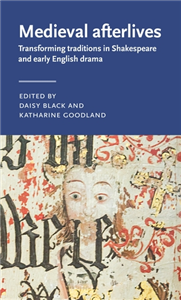
A collection of essays which show how early drama traditions were transformed, recycled, re-used and reformed across time to form new relationships with their audiences. Medieval afterlives brings new insight to the ways in which peoples in the sixteenth century understood, manipulated and responded to the history of their performance spaces, stage technologies, characterisation and popular dramatic tropes. In doing so, this volume advocates for a new understanding of sixteenth-seventeenth century theatre makers as highly aware of the medieval traditions that formed their performance practices, and audiences who recognised and appreciated the recycling of these practices between plays.

 Trusted Partner
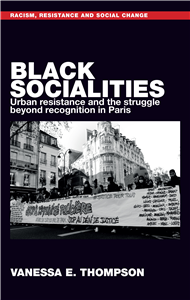
From author: This is a cutting-edge exploration of black urban politics in Parisian racialized working class and working poor districts, the formation of abolition geography, and the possibilities of new forms of political blackness. In Black Socialities. Urban resistance and the struggle beyond recognition in Paris, Vanessa E. Thompson argues that black urban politics in the French banlieues are multi-racial and spatially grounded towards abolition. Based on a close engagement with urban black activist practices against racial imagery in the city, policing and state racism, and housing insecurity, she shows how radical anti-racism goes beyond struggles for recognition and unfolds alongside new formations of political blackness that is based on urban conviviality. This form of black politics has much to teach us in this current conjuncture of liberal anti-racism and state recognition politics.
Trusted Partner

Revolutionary lives of the Red and Black Atlantic brings to light the life histories of a wide range of radical figures whose political activity in relation to the black liberation struggle was profoundly shaped by the global impact and legacy of the Russian Revolution of October 1917. The volume introduces new perspectives on the intellectual trajectories of well-known figures and critical activists including C. L. R. James, Paul Robeson, Walter Rodney and Grace P. Campbell. This biographical approach brings a vivid and distinctive lens to bear on how racialised social and political worlds were negotiated and experienced by these revolutionary figures, and on historic black radical engagements with left political movements, in the wake of the Russian Revolution.
Trusted Partner

The Russian Revolution of 1917 was not just a world-historical event in its own right, but also struck powerful blows against racism and imperialism, and so inspired many black radicals internationally. This edited collection explores the implications of the creation of the Soviet Union and the Communist International for black and colonial liberation struggles across the African diaspora. It examines the critical intellectual influence of Marxism and Bolshevism on the current of revolutionary 'black internationalism' and analyses how 'Red October' was viewed within the contested articulations of different struggles against racism and colonialism. Challenging European-centred understandings of the Russian Revolution and the global left, The Red and the Black offers new insights on the relations between Communism, various lefts and anti-colonialisms across the Black Atlantic - including Garveyism and various other strands of Pan-Africanism. The volume makes a major and original intellectual contribution by making the relations between the Russian Revolution and the Black Atlantic central to debates on questions relating to racism, resistance and social change.
Trusted Partner

This series provides texts central to medieval studies courses and focuses upon the diverse cultural, social and political conditions that affected the functioning of all levels of medieval society. Translations are accompanied by introductory and explanatory material and each volume includes a comprehensive guide to the sources' interpretation, including discussion of critical linguistic problems and an assessment of recent research on the topics covered. From 1348 to 1350 Europe was devastated by an epidemic that left between a third and one half of the population dead. This source book traces, through contemporary writings, the calamitous impact of the Black Death in Europe, with a particular emphasis on its spread across England from 1348 to 1349. Rosemary Horrox surveys contemporary attempts to explain the plague, which was universally regarded as an expression of divine vengeance for the sins of humankind. Moralists all had their particular targets for criticism. However, this emphasis on divine chastisement did not preclude attempts to explain the plague in medical or scientific terms. Also, there was a widespread belief that human agencies had been involved, and such scapegoats as foreigners, the poor and Jews were all accused of poisoning wells. The final section of the book charts the social and psychological impact of the plague, and its effect on the late-medieval economy.
Trusted Partner

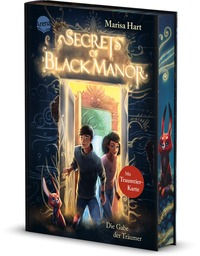
Das große Fantasy-Abenteuer von Bestseller-Autorin und Influencerin Marisa Hart: Fantasie zum Staunen, abenteuerliche Spannung und fesselnde Figuren. Am Rand der Kleinstadt, in der Luca lebt, steht das geheimnisvolle Black Manor: ein altes Herrenhaus, bewohnt von dem sonderbaren William Gray, der etwas zu verbergen scheint. Trotzdem zieht sich Luca oft allein mit seinem Zeichenbuch in den Wald zurück, der das Black Manor umgibt. Es ist sein Zufluchtsort, wenn ihm die Hänseleien seiner Mitschüler oder der Streit mit seiner Mutter und seinem Zwillingsbruder zu viel werden. Als am Morgen seines 13. Geburtstags ein schwarzes Symbol auf Lucas Handgelenk erscheint und ein unbekanntes Tier in seinem Zimmer sitzt, erhält er plötzlich eine Nachricht von William Gray. Denn Luca und William verfügen über eine seltene Gabe: Die magischen Wesen, von denen sie nachts träumen, werden real! Und der Ort, von dem diese Wesen stammen, ist näher, als Luca ahnt. Doch das Reich der Träume beherbergt nicht nur Magie und Wunder, sondern auch albtraumhafte Gefahren. Nun ist es an Luca und Will, die Welt vor einem Feind zu beschützen, der sich zum Herrscher über Traum und Wirklichkeit aufschwingen will. Magie und Traumwesen, eine geheime Gabe und ein epischer Kampf: Secrets of Black Manor ist ein Muss für alle Tagträumer, Fantasy-Süchtige und Weltenwanderer ab 10 Jahren!Mit farbigem Buchschnitt in der ersten Auflage.
Trusted Partner

Ungleiche Gefährten auf einer Reise zu den geheimsten Orten der Traumwelten: Die große Fantasy-Saga von Bestseller-Autorin Marisa Hart geht weiter Luca ist bereit, sein Erbe als Hüter des Black Manor – der Schwelle zum Reich der Träume – anzutreten. Aber sein Mentor William hält ihn für zu jung, um alle Geheimnisse des Herrenhauses zu erfahren. Nach einem Streit mit William öffnet Luca eine verbotene Tür. Dabei entfesselt er das bösartige Spirivencus-Wesen und verhilft ihrem schlimmsten Feind Blake zu neuer Stärke. Das Einzige, was Blake nun noch fehlt, um die Macht über alle Träumer und Nicht-Träumer zu ergreifen, ist eine sagenumwobene Mondfeder. Um zu verhindern, dass Blake die Mondfeder findet, müssen Luca und William das Black Manor schutzlos zurücklassen. Mit ihren magischen Tiergefährten Shadow und Murphy begeben sie sich auf einen Wettlauf durch die unberechenbaren Traumwelten. Auch Lucas beste Freundin Taya und sein Zwillingsbruder Jannis schließen sich ihnen an. Doch wenn sie Blake stoppen wollen, müssen sie lernen, einander zu vertrauen, und fester zusammenhalten als je zuvor. Sind Luca und William stark genug für die Zerreißproben, die im Reich der Träume auf sie warten? Grenzenlose Fantasie, tiefgründige Figuren und fesselnde Wendungen machen die Fantasy-Reihe von Bestseller-Autorin Marisa Hart zum ganz besonderen Leseerlebnis für alle Buchliebhaber:innen ab 10 Jahren. Eindrucksvoll illustriert von Alexander Dietrich. Mit farbigem Buchschnitt und Traumtierkarte in der ersten Auflage.
Trusted Partner
Trusted Partner
 Trusted Partner
 Trusted Partner
Trusted Partner
Trusted Partner
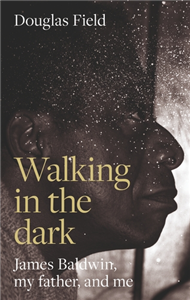
A moving exploration of the life and work of the celebrated American writer, blending biography and memoir with literary criticism. Since James Baldwin's death in 1987, his writing - including The Fire Next Time, one of the manifestoes of the Civil Rights Movement, and Giovanni's Room, a pioneering work of gay fiction - has only grown in relevance. Douglas Field was introduced to Baldwin's essays and novels by his father, who witnessed the writer's debate with William F. Buckley at Cambridge University in 1965. In Walking in the dark, he embarks on a journey to unravel his life-long fascination and to understand why Baldwin continues to enthral us decades after his death. Tracing Baldwin's footsteps in France, the US and Switzerland, and digging into archives, Field paints an intimate portrait of the writer's life and influence. At the same time, he offers a poignant account of coming to terms with his father's Alzheimer's disease. Interweaving Baldwin's writings on family, illness, memory and place, Walking in the dark is an eloquent testament to the enduring power of great literature to illuminate our paths.
Trusted Partner
Trusted Partner
 Trusted Partner

Gothic television is the first full length study of the Gothic released on British and US television. An historical account, the book combines detailed archival research with analyses of key programmes, from Mystery and Imagination and Dark Shadows, to The Woman in White and Twin Peaks, and uncovers an aspect of television drama history which has, until now, remained critically unexplored. While some have seen television as too literal or homely a medium to successfully present Gothic fictions, Gothic television argues that the genre, in its many guises, is, and has always been, well-suited to television as a domestic medium, given the genre's obsessions with haunted houses and troubled families. This book will be of interest to lecturers and students across a number of disciplines including television studies, Gothic studies, and adaptation studies, as well as to the general reader with an interest in the Gothic, and in the history of television drama.
Trusted Partner

Nordic Gothic traces Gothic fiction in the Nordic region from its beginnings in the nineteenth century, with a main focus on the development of Gothic from the 1990s onwards in literature, film, TV and new media. The volume gives an overview of Nordic Gothic fiction in relation to transnational developments and provides a number of case studies and in-depth analyses of individual narratives. It creates an understanding of this under-researched cultural phenomenon by showing how the narratives make visible cultural anxieties haunting the Nordic countries, their welfare systems, identities and ideologies. Nordic Gothic examines how figures from Nordic folklore function as metaphorical expressions of Gothic themes and Nordic settings are explored from perspectives such as ecocriticism and postcolonialism. The book will be of interest to researchers and post- and- undergraduate students in various fields within the Humanities.
Trusted Partner

Advent calendar book with detachable pages. Plonkety plonk! Daisy Dormouse is rudely awakened from her winter sleep. Outside her den is a present. It says on the wrapping: “To Sunny Bunny for Christmas”. What on earth is Christmas? And who is Sunny Bunny? Daisy quickly packs a few things and sets off to deliver the present. During her journey she makes many new friends and learns all about Advent garlands, Christmas carols, biscuits, sledging, and of course Christmas itself. By the end of her journey, Daisy is sure of one thing: she must never again miss this wonderful time, with all these beautiful customs and traditions! A story in 24 chapters.
Trusted Partner

Suicide and the Gothic is the first protracted study of how the act of self-destruction recurs and functions within one of the most enduring and popular forms of fiction. Comprising eleven original essays and an authoritative introduction, this collection explores how the act of suicide has been portrayed, interrogated and pathologised from the eighteenth century to the present. The featured fictions embrace both canonical and the less-studied texts and examine the crisis of suicide - a crisis that has personal, familial, religious, legal and medical implications - in European, American and Asian contexts. Featuring detailed interventions into the understanding of texts as temporally distant as Thomas Percy's Reliques and Patricia Highsmith's crime fictions, and movements as diverse as Wertherism, Romanticism and fin-de-siècle decadence, Suicide and the Gothic provides a comprehensive and compelling overview of this recurrent crisis in fiction and culture.
Trusted Partner
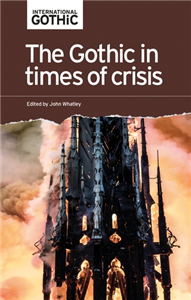
The Gothic in times of crisis reflects contemporary society, showing how the Gothic modes continually resets its own forms to encompass each new reality, each new apocalypse, each new plague or crisis. This collection expands oncurrent scholarship to show how the Gothic challenges our understanding of both older and recent crises and, in turn, disturbs all genre complacencies to expose and confront the problems and contradictions in what our world has been, has become, or is in danger of becoming. This collection explores Gothic's current relevance to the contestations of ideas and the underlying and visible conflicts it dramatizes across a wide range of media. In various ways, it reveals what happens to Gothic modes now they confront the increasingly Gothic realities of our times, sometimesby recalling earlier crises and ideological contestations leading up to them.


