
Dressler
Dressler rights portal
View Rights Portal Trusted Partner


At Dreamspace Publishing we specialize in children's and YA fiction and non-fiction in the Body-Mind-Spirit section to support young readers in maintaining and developing a strong connection to their inner power and source of natural vitality. We provide resources that help young ones, as well as adults who accompany them on their life's journey, to navigate through life in a balanced and grounded way. We draw from a strong link to indigenous worldviews and values. Especially in Western societies where the focus lies on physical and mental development, our publications bring balance and guidance by also including emotional and spiritual aspects and rising awareness of the interconnectedness of all life forms.
View Rights Portal



Mit diesem Band wird die Physiognomie einer Philosophin des 20. Jahrhunderts vorgestellt. Margarete Susman (1872-1966) war Malerin, Lyrikerin, Philosophin, Privatgelehrte und wählte für ihre Arbeiten den Essay als offene »Versuchsanordnung«, um eine Antwort auf die Fragen ihrer Zeit als Jüdin aus Deutschland, als Frau, als Gesprächspartnerin und häufiger Widerpart bedeutender Philosophen dieses Jahrhunderts zu finden. Die Auswahl zeigt die Kontinuität dieser Fragen, die Vielfalt, den inneren Reichtum von Margarete Susmans Antworten in ihren Essays über Ernst Bloch, Georg Lukács und Georg Simmel, mit denen Margarete Susman eine Korrespondenz führte, die hier zum ersten Mal veröffentlicht wird. In ihren Aufsätzen über »Kriegsbriefe deutscher Studenten«, »Die Revolution und die Frau« oder über »Das Frauenproblem in der gegenwärtigen Welt« geht Margarete Susman von konkreten, einzelnen Erfahrungen aus. Sie analysiert Phänomene ihrer Gegenwart, deutet Werke von Zeitgenossen und von historischen Vorläufern, Vorläuferinnen, denen sie sich nahe fühlt.
Trusted Partner
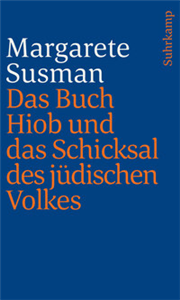
1945, nach dem Ende des Zweiten Weltkriegs, schrieb in Zürich die Philosophin und Schriftstellerin Margarete Susman Das Buch Hiob und das Schicksal des jüdischen Volkes. Es ist der Versuch angesichts der Shoah, »in diesem Augenblick einer Weltkatastrophe«, die Geschichte des jüdischen Volkes aus dem Buch Hiob zu erklären, seinem Hadern mit Gott, seinem Fragen nach Gerechtigkeit. ln einzelnen Abschnitten über den Ursprung, die Schuld, die Verfolgung, den Zionismus, die Hoffnung deutet sie das Buch Hiob neu. Die überlieferte biblische Geschichte erweist sich als unvermindert gegenwärtig. »Jude sein heißt, sich entscheiden«, heißt es am Beginn lakonisch, und im Fortgang entfaltet Margarete Susman Grenzen und Möglichkeiten einer solchen Entscheidung. Margarete Susmans Das Buch Hiob und das Schicksal des jüdischen Volkes ist heute weithin vergessen. Ihr Beharren auf einer religiösen Substanz in Formen des alltäglichen Zusammenlebens, in der Dichtung wie Philosophie mutet fremd an. Doch es ist eine Fremdheit, mit der vertraut zu machen sich lohnt. Ihre Hiobdeutung, die sie zuerst 1929 in einem Aufsatz über Franz Kafka vorbrachte, hat Martin Buber, Walter Benjamin, Gershom Scholem und Paul Celan beeinflußt. »Es gibt«, schreibt Margarete Susman, »keine große Leistung des Judentums im Exil bis in die späte Dichtung Kafkas hinein, die den Prozeßpartner nicht mehr mit Namen nennt, die nicht im Kern eine Theodizee, der Versuch einer Rechtfertigung Gottes vor seinem Volk oder eine Rechtfertigung des Volkes vor Gott wäre. Die ganze große nachbiblische Überlieferung kreist letztlich um diese Frage.«
Trusted Partner

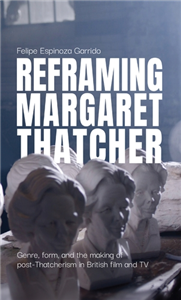
Against the backdrop of Britain's historically anti-Thatcherite films of the 1980s and 1990s, Reframing Margaret Thatcher outlines a decisive shift in the collective imagination of Thatcher. Drawing on genre, trauma, and queer studies, it demonstrates how post-Thatcherite films reflect upon their own entanglement in the polarization of the Thatcher years but also rewrite the clichéd Iron Lady. Chapters on The Iron Lady, This is England, Doomsday, 9 Dead Gay Guys, and the Sherlock TV series investigate various Thatcher imaginations, ranging from Thatcher as a lesbian mob boss, as prime minister in apocalyptic England, to Thatcher as an empty bust. This innovative study shows how the apparent depoliticization of British film makes visible new relations between genre, cinematic form, and imaginations of the past and offers fresh perspectives that both critique and reinterpret Thatcher's enduring impact.
Trusted Partner

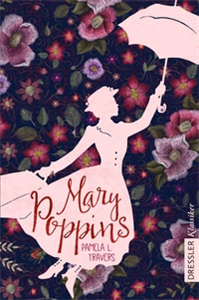
Hat etwa der Wind sie hergeweht, oder wie sonst soll sie so plötzlich vor der Haustür aufgetaucht sein? Jane und Michael wissen ganz genau, da geht irgendetwas nicht mit rechten Dingen zu, als das neue Kindermädchen Mary Poppins bei ihnen anklopft. Eitel ist sie und sehr energisch, aber dafür hat sie viel beachtlichere Vorzüge: Sie kann das Treppengeländer hinauf rutschen, mit Tieren sprechen, in Bildern verschwinden und noch vieles mehr. Im Kirschbaumweg 17 bricht eine Zeit unglaublicher Abenteuer an. Dekorative Sammlerausgabe des fantastischen, zeitlosen Kinderbuch-Klassikers über das zauberhafte Kindermädchen Mary Poppins.
Trusted Partner
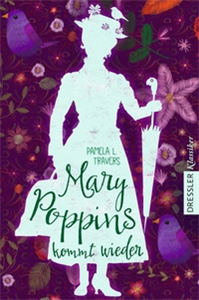
In "Mary Poppins kommt wieder" kehrt das zauberhafte Kindermädchen Mary Poppins zurück in den Kirschbaumweg 17, zur großen Freude von Jane und Michael. Nachdem das Leben der Familie Banks seit ihrem Weggang durch den Wind ein einziges Durcheinander war, bringt Mary Poppins erneut Stabilität und zauberhafte Abenteuer ins Leben der Kinder. Die Geschwister tauchen mit ihr in eine Welt voller magischer Momente und erleben außergewöhnliche Begebenheiten, die das Alltägliche in ein Spektakel verwandeln. Der Roman, ein unvergesslicher Klassiker von P.L. Travers, bezaubert erneut mit seiner Mischung aus Alltag und Magie und ist eine Hommage an die Fantasie und die kindliche Freude an der Entdeckung des Wunderbaren im Alltäglichen. Bezaubernde Fortsetzung: Die Rückkehr von Mary Poppins verspricht erneut eine Reise voller Magie und Abenteuer. Klassiker neu erleben: Ein zeitloser Klassiker, der Kinder und Erwachsene gleichermaßen fasziniert. Fördert die Fantasie: Die abenteuerlichen Geschichten fördern Kreativität und Vorstellungskraft junger Leser. Liebevolle Aufmachung: Teil einer schön gestalteten Reihe, die Klassiker in neuem Glanz präsentiert und sammelwürdig ist. Erziehungswerte: Vermittelt subtil Werte wie Respekt, Verantwortung und die Bedeutung von Familie.
Trusted Partner

 Trusted Partner
 Trusted Partner
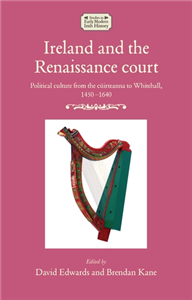
Ireland and the Renaissance court is an interdisciplinary collection of essays exploring Irish and English courts, courtiers and politics in the early modern period, c. 1450-1650. Chapters are contributed by both established and emergent scholars working in the fields of history, literary studies, and philology. They focus on Gaelic cúirteanna, the indigenous centres of aristocratic life throughout the medieval period; on the regnal court of the emergent British empire based in London at Whitehall; and on Irish participation in the wider world of European elite life and letters. Collectively, they expand the chronological limits of 'early modern' Ireland to include the fifteenth century and recreate its multi-lingual character through exploration of its English, Irish and Latin archives. This volume is an innovative effort at moving beyond binary approaches to English-Irish history by demonstrating points of contact as well as contention.
Trusted Partner

This volume is the first ever attempt to unite and translate some of the key texts which informed Johan Huizinga's famous study of the Burgundian court, The Waning of the Middle Ages, a work which has never gone out of print. It combines these texts with sources that Huizinga did not consider, those that illuminate the wider civic world that the Burgundian court inhabited and the dynamic interaction between court and city. Through these sources, and an introduction offering new perspectives on recent historiography, the book tests whether Huizinga's controversial vision of the period still stands. Covering subjects including ceremonial events, such as the spectacles and gargantuan banquets that made the Burgundian dukes the talk of Europe, the workings of the court, and jousting, archery and rhetoric competitions, the book will appeal to students of late medieval and early modern Europe and to those with wider interests in court culture, ritual and ceremony.
Trusted Partner
Trusted Partner
Trusted Partner


Zwei Paare auf einem Kreuzfahrtschiff im Pazifik: Die junge Psychologin Sylva wird von ihrem Schwiegervater Martin Burian begleitet; die verwitwete Fabrikantin Margarete Kämmerer hat ihren Neffen Siegfried zu dieser Fahrt eingeladen. Die zufällige Begegnung der beiden Paare hat ungeahnte Folgen. Während sich Sylva und Siegfried ineinander verlieben, werden ihre Begleiter von der Vergangenheit eingeholt: Margarete und Burian lebten einst Tür an Tür im Sudentenland, waren Freunde, bis sie durch die politischen Ereignisse im Zweiten Weltkrieg zu Todfeinden wurden …
Trusted Partner

Übersetzt von Längsfeld, Sabine; Übersetzt von Längsfeld, Margarete; Übersetzt von Liebl, Elisabeth
Trusted Partner
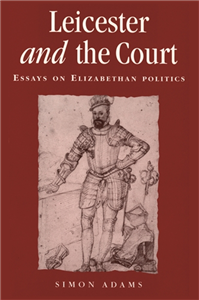
Now back in print, this comprehensive collection of essays by Simon Adams brings to life the most enigmatic of Elizabethans--Robert Dudley, Earl of Leicester. Adams, famous for the unique depth and breadth of his research, has gathered here his most important essays looking at the Elizabethan Court, and the adventures and legacy of the Earl. Together with his edition of Leicester's accounts and his reconstruction of Leicester's papers, Adams has published much upon on Leicester's influence and activities. His work has reshaped our knowledge of Elizabeth and her Court, Parliament, and such subjects of recent debate as the power of the nobility and the noble affinity, the politics of faction and the role of patronage. Sixteen essays are found in this collection, organized into three groups: the Court, Leicester and his affinity, and Leicester and the regions. This volume will be essential reading for academics and students interested in the Elizabethan Court and in early modern British politics more generally. ;
Trusted Partner

For the uninitiated, the Irish District Court is a place of incomprehensible, organised chaos. This comprehensive account of the court's criminal proceedings, based on an original study which involved observing hundreds of cases, aims to demystify the mayhem and provide the reader with descriptions of language, participant discourse and procedure in the typical criminal case. In addition, the book captures a recent and important change in the District Court: the advent of the immigrant or the Limited-English-proficient (LEP) defendant. It traces the rise of these defendants and explores the issues involved in ensuring access to justice across languages. It also provides an original description of LEP defendants and interpreters in District Court proceedings, ultimately considering how they have altered the institution and how the characteristics of the District Court affect how limited English proficient defendants access justice at this level of the Irish courts system.
Trusted Partner
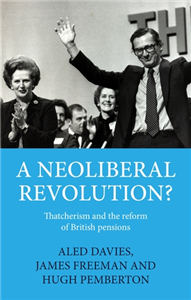
This book examines the Thatcher government's attempt to revolutionise Britain's pensions system in the 1980s and create a nation of risk-taking savers with an individual stake in capitalism. Drawing upon recently-released archival records, it shows how the ideas motivating these reforms journeyed from the writings of neoliberal intellectuals into government and became the centrepiece of a plan to abolish significant parts of the UK's welfare state and replace these with privatised personal pensions. Revealing a government that veered between political caution and radicalism, the book explains why this revolution failed and charts the malign legacy left by the evolutionary changes that ministers salvaged from the wreckage of their reforms. The book contributes to understanding of policy change, Thatcherism, and international neoliberalism by showing how major reforms to social security could reflect neoliberal thought and yet profoundly disappoint their architects.
Trusted Partner
This book examines the Thatcher government's attempt to revolutionise Britain's pensions system in the 1980s and create a nation of risk-taking savers with an individual stake in capitalism. Drawing upon recently-released archival records, it shows how the ideas motivating these reforms journeyed from the writings of neoliberal intellectuals into government and became the centrepiece of a plan to abolish significant parts of the UK's welfare state and replace these with privatised personal pensions. Revealing a government that veered between political caution and radicalism, the book explains why this revolution failed and charts the malign legacy left by the evolutionary changes that ministers salvaged from the wreckage of their reforms. The book contributes to understanding of policy change, Thatcherism, and international neoliberalism by showing how major reforms to social security could reflect neoliberal thought and yet profoundly disappoint their architects.
Trusted Partner
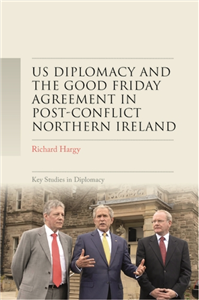
Richard Haass and Mitchell Reiss, as autonomous diplomats in the George W. Bush State Department, were able to alter US intervention in Northern Ireland and play critical roles in the post-1998 peace process. Their contributions have not been fully appreciated or understood. The restoration of Northern Ireland's power-sharing government in 2007 was made possible by State Department-led intervention in the peace process. There are few references to Northern Ireland in work examining the foreign policy legacy of the George W. Bush presidency. Moreover, the ability to control US foreign policy towards the region brought one of George W. Bush's Northern Ireland special envoys into direct diplomatic conflict with the most senior actors inside the British government. This book will uncover the extent of this fall-out and provide original accounts on how diplomatic relations between these old allies became so fraught.
Trusted Partner

Margaret Cavendish was one of the most prolific, complex and misunderstood writers of the seventeenth century. A contemporary of Descartes and Hobbes, she was fascinated by philosophical, scientific and imaginative advances, and struggled to overcome the political and cultural obstacles which threatened to stop her engagement with such discourses. Emma Rees examines how Cavendish engaged with the work of thinkers such as Lucretius, Plato, Homer and Harvey in an attempt to write her way out of the exile which threatened not only her intellectual pursuits but her very existence. What emerges is the image of an intelligent, audacious and intrepid early modern woman whose tale will appeal to specialists and general readers alike. ;



