
Water Environment Federation
Water Environment Federation (WEF)publishes a variety of technical publications, including newsletters,manuals of practice and other books, magazines, and journals.
View Rights Portal
Water Environment Federation (WEF)publishes a variety of technical publications, including newsletters,manuals of practice and other books, magazines, and journals.
View Rights Portal
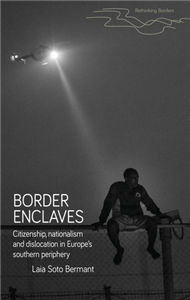
Border enclaves examines the Spanish enclave of Melilla as a prism for understanding Europe's contemporary dislocations. Based on over a decade of ethnographic research, it explores how borders are enforced, contested and inhabited in a city suspended between Africa and Europe, colonial legacies and modern regimes. Through a polyphonic narrative following smugglers, migrants, teachers and politicians, it reveals how everyday practices and symbolic performances shape life in the enclave. Selective visibility-who is seen or erased-structures authority and exclusion. Situating Melilla within broader processes like Spain's colonial history and Europe's border restructuring, the book argues that its fragmented sovereignties and external dependencies make it a paradigmatic site for grasping Europe's precarious margins. It calls for an ethnographic lens attuned to dislocation as both lived experience and analytic tool.

This interdisciplinary volume explores the role of images and narratives in different borderscapes. Written by experienced scholars in the field, Border images, border narratives provides fresh insight into how borders, borderscapes, and migration are imagined and narrated in public and private spheres. Offering new ways to approach the political aesthetics of the border and its ambiguities, this volume makes a valuable contribution to the methodological renewal of border studies and presents ways of discussing cultural representations of borders and related processes. Influenced by the thinking of philosopher Jacques Rancière, this timely volume argues that narrated and mediated images of borders and borderscapes are central to the political process, as they contribute to the public negotiation of borders and address issues such as the in/visiblity of migrants and the formation of alternative borderscapes. The contributions analyse narratives and images in literary texts, political and popular imagery, surveillance data, border art, and documentaries, as well as problems related to borderland identities, migration, and trauma. The case studies provide a highly comparative range of geographical contexts ranging from Northern Europe and Britain, via Mediterranean and Mexican-USA borderlands, to Chinese borderlands from the perspectives of critical theory, literary studies, social anthropology, media studies, and political geography.
 Trusted Partner
Amid the global migration crisis, the UK has created and increasingly hostile policy environment for asylum seekers that has pushed many into unnecessary hardship and homelessness. This volume is an ethnographic study alongside refused asylum seekers and refugees living destitute in Manchester, UK. Based on over three years of research in emergency night shelters and on the streets of the city, it draws on the stories and experiences of those who have been driven into destitution by an antagonistic immigration system. The book not only explores how legal and temporal uncertainty shapes the daily lives of those who have had their asylum claims refused, but also attends to the experiences of volunteers and activists working on the frontline of the crisis. While the work is rich in detail, it also extends outwards and offers new insights into our understanding of borders and the need to rethink the grand notions of justice and hospitality.
Trusted Partner

Environments of power provides unique case studies of environmental inclusion and exclusion across the Americas, Africa, Japan, India, and the South-Pacific. Using more-than-human and Indigenist approaches, chapters focus on Indigenous environmental resistance, marginalisation across social and physical environments, ecology as art, and how local communities are caught up in and resist development and infrastructure projects. The book demonstrates how environments influence which bodies and other matter belong (or not) in certain places.
Trusted Partner
 Trusted Partner
 Trusted Partner
Trusted Partner
Trusted Partner

“There is no Planet B!” More and more young people are worried about the future of Planet Earth. Climate change is heating not only the planet but also people’s emotions. But what exactly is climate? And why are the changes threatening the lives of both polar bears and us humans. In simple language but with solid science, the authors explain the most important aspects of climate, from the greenhouse effect to the Gulf Stream. Current developments are described as well, and the scientific background is supplemented by gripping reports. The book also offers a glimpse of the future: what will happen if we go on in the same way as now? How can climate change be halted? This makes for riveting reading – and not just for young activists.
Trusted Partner
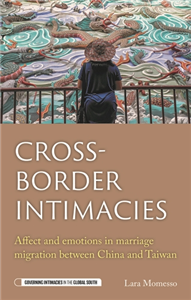
Since the early 1990s, economic exchanges between China and Taiwan have paved the way to migration across a previously closed border and to social and cultural interactions between the two populations. Despite these broader changes, the unresolved issue of Taiwan sovereignty has tainted not only the relations between the two governments but also the everyday life of those who move across the Taiwan Strait. In this politicised environment, intimate and affective practices linked to cross-border marriage and family formation are never just private. Instead, they are deeply entangled with the emotional and affective processes generated at the macro and meso level of political and social life and revolving around national interests. Tracing the intimate, emotional and affective practices linked to family creation, identity formation and integration with the local and national communities, this ethnographic study offers a subjective, dynamic, and complex picture of what it means to be a mainland spouse in Taiwan.
Trusted Partner

This book explores how fishers make the sea productive through their labour, using technologies ranging from wooden boats to digital GPS plotters to create familiar places in a seemingly hostile environment. It shows how their lives are affected by capitalist forces in the markets they sell to, forces that shape even the relations between fishers on the same boat. Fishers frequently have to make impossible choices between safe seamanship and staying afloat economically, and the book describes the human impact of the high rate of deaths in the fishing industry. The book makes a unique contribution to understanding human-environment relations, examining the places fishers create and name at sea, as well as technologies and navigation practices. It combines phenomenology and political economy to offer new approaches for analyses of human-environment relations and technologies. It contributes to the social studies of fisheries through an analysis of how deeply fishing practices and social relations are shaped by political economy. It will be read in universities by social scientists and anthropologists and also by those with an interest in maritime Scotland.
Trusted Partner
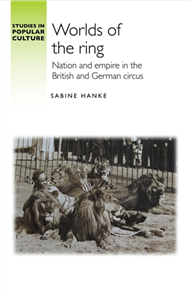
Worlds of the Ring is a groundbreaking exploration of the interwar European circus scene, focusing on the German Sarrasani and British Bertram W. Mills' circuses. This study illuminates the correlation between the circus's evolution and imperialism/nationalism, revealing how these enterprises shaped national identities for popular audiences. Examining the years 1918-45, the book takes a transnational perspective, uncovering the interplay of international and national forces that influenced the modern circus. Through case studies, it delves into the lives of individuals in the industry, using diverse sources like newspapers, legal documents, and performer archives. The book introduces the concept of Orientalism to analyse how circuses depicted foreign worlds, and provides a fresh perspective on interwar popular culture, globalising forces, and the circus's ties to European imperialism in the early 20th century.
Trusted Partner


What happened with forest dieback? The predictions of the 1980s that forests would be in decline across Europe have not come true. Currently, attention again focuses on the doom scenarios of the loss of entire forests and cultural landscapes in an emotional and sometimes hysterical debate. Biogeographer Hans Jürgen Böhmer refers to updated case studies and his 30 years of research experience on global ecosystems to demonstrate extremely complex interrelations of the natural world that various actors monitor in contrasting ways and characterized by different times and ideologies. Böhmer advocates to embed the sustainability debate more strongly in the living environment, rather than relying exclusively on model calculations.
Trusted Partner
Trusted Partner
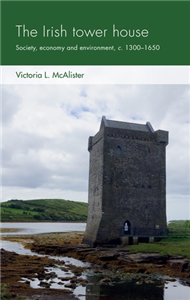
The Irish tower house examines the social role of castles in late-medieval and early modern Ireland. It uses a multidisciplinary methodology to uncover the lived experience of this historic culture, demonstrating the interconnectedness of society, economics and the environment. Of particular interest is the revelation of how concerned pre-modern people were with participation in the economy and the exploitation of the natural environment for economic gain. Material culture can shed light on how individuals shaped spaces around themselves, and tower houses, thanks to their pervasiveness in medieval and modern landscapes, represent a unique resource. Castles are the definitive building of the European Middle Ages, meaning that this book will be of great interest to scholars of both history and archaeology.
Trusted Partner
Air policing was used in many colonial possessions, but its most effective incidence occurred in the crescent of territory from north-eastern Africa, through South-West Arabia, to North West Frontier of India. This book talks about air policing and its role in offering a cheaper means of 'pacification' in the inter-war years. It illuminates the potentialities and limitations of the new aerial technology, and makes important contributions to the history of colonial resistance and its suppression. Air policing was employed in the campaign against Mohammed bin Abdulla Hassan and his Dervish following in Somaliland in early 1920. The book discusses the relationships between air control and the survival of Royal Air Force in Iraq and between air power and indirect imperialism in the Hashemite kingdoms. It discusses Hugh Trenchard's plans to substitute air for naval or coastal forces, and assesses the extent to which barriers of climate and geography continued to limit the exercise of air power. Indigenous responses include being terrified at the mere sight of aircraft to the successful adaptation to air power, which was hardly foreseen by either the opponents or the supporters of air policing. The book examines the ethical debates which were a continuous undercurrent to the stream of argument about repressive air power methods from a political and operational perspective. It compares air policing as practised by other European powers by highlighting the Rif war in Morocco, the Druze revolt in Syria, and Italy's war of reconquest in Libya.
Trusted Partner
 Trusted Partner
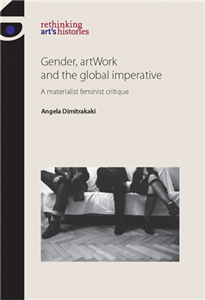
Is gender implicated in how art does its work in the world created by global capital? Is a global imperative exclusive to capital's planetary expansion or also witnessed in oppositional practices in art and curating? And what is new in the gendered paradigms of art after the fall of the Berlin Wall? Angela Dimitrakaki addresses these questions in an insightful and highly original analysis of travel as artistic labour, the sexualisation of migration as a relationship between Eastern and Western Europe, the rise of female collectives, masculinity and globalisation's 'bad boys', the emergence of a gendered economic subject that has dethroned postmodernism, and the need for a renewed materialist feminism. This is a theoretically astute overview of developments in art and its contexts since the 1990s and the first study to attempt a critical refocusing of feminist politics in art history in the wake of globalisation. It will be essential reading in art history, gender, feminist and globalisation studies, curatorial theory, cultural studies and beyond. ;
Trusted Partner
Unruly Subjects takes readers to the epicentre of Europe's intensifying border struggles-the Aegean islands in Greece, where thousands of 'undesirable' migrants have been warehoused and violently abandoned in EU-funded refugee camps. Drawing on nearly a decade of research, Ludek Stavinoha reveals the subterranean corners in which resistance brews and solidarity takes hold, tracing migrants' everyday struggles for dignity and their rights, alongside grassroots volunteers who have built vital infrastructures of support. At the heart of the book are the creative, if precarious and ambivalent, solidarities forged between volunteers and refugees, citizens and non-citizens, as they unsettle racialised boundaries and logics of control, in defiance of state-sanctioned violence, criminalisation, and neglect. Urgent and compelling, Unruly Subjects illuminates how people navigate and subvert Europe's increasingly hostile border regime, and the alternative imaginaries of more just futures their struggles embody.
Trusted Partner

 Trusted Partner

The research of pandemics, epidemics, and pathogens like COVID-19 reaches far beyond the scope of biomedicine. It is not only an objective for the health, political and social sciences, but epidemics and pandemics are a matter of geography: foci and vectors of communicable diseases continue to test the efficacy of medical control at state borders. This volume illuminates these issues from various disciplinary viewpoints. It starts by exploring historical models of quarantine, spatial isolation and detention as precautionary means against the dissemination of disease and contagion by border crossers, migrants and refugees. Besides the patterns of prejudice with which these groups are confronted, the book also deals with various kinds of fear of contamination from outside of the nation state. The contributors address the implementation of medical techniques at state borders in the twentieth and early twenty-first centuries, as well as the presently practiced measures of medical and biometric screening of migrants and refugees. Uniquely, this volume shows that the current border security regimes of Western states exhibit a high share of medicalised techniques of power, which originate both in European modernity and in the medical and biological disciplines developed during the last quarter of the millennium. Drawing on the collective expertise of a network of international researchers, this interdisciplinary volume is essential reading for those wishing to understand the medicalisation of borders across the globe, from the early eighteenth century up to the present day.



