Gyeonggi Content Agency
GCA supports the planning, production, distribution, overseas expansion of contents including videos and films, music, publishing, webtoons and animations, games, etc
View Rights Portal
GCA supports the planning, production, distribution, overseas expansion of contents including videos and films, music, publishing, webtoons and animations, games, etc
View Rights Portal


»Die Dialektik des ›Caesar‹-Romans äußert sich darin«, schreibt Hans Mayer, »daß die verklärende Geschichtsschreibung des nachgeborenen Historikers bei der Quellensuche immer unangenehmer beeinträchtigt wird durch die Beichte von Caesars Bankier und die Aufzeichnungen des Hausverwalters Rarus. Die Apologetik wird mit Ökonomik kontrastiert. Das Abenteuer Caesar spiegelt sich im Kalkül des mächtigen Bankiers ebenso wie in den häuslichen Miseren und Transaktionen des Generals, Politikers, Schriftstellers.«
 Trusted Partner


Julius Caesar presents a performance history of a controversial play, moving from its 1599 opening all the way into the new millennium with particular emphasis on its twentieth- and twenty-first-century incarnations on stage and screen. The book tracks the play's evolution from being a play about the oratorical skill of noble Romans to its recent manifestations as a dark political thriller. Chapters in this theoretically savvy and global study consider productions such as Orson Welles's groundbreaking examination of European Fascism, Joseph Mankeiwicz's Oscar winning 1953 film, politically complex productions at the Royal Shakespeare Company, and shows from around the world which interrogate their own cultural and educational context as well as pressing contemporary concerns such as the reach of mass media.
Trusted Partner


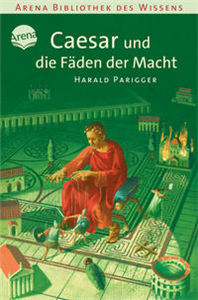
Im Hades ist die Hölle los. Die alten Römer sind empört von den langweiligen, halbwahren Geschichten über ihre glorreiche Zeit. Also erzählen Romulus, Caesar und Nero, ihre vielen Freunde und Feinde nun selbst. So erfahren wir, warum zwei Freunde sich in einem Gladiatorenkampf gegenüberstehen, Kleopatra sich freiwillig in einen Teppich wickeln lässt und man Gänse lieber nicht essen sollte.
Trusted Partner
Trusted Partner
Jacques Derridas Auseinandersetzung mit der Theorie von Marx und ihrem Erbe gehört zu den meistdiskutierten philosophischen Texten der Gegenwart. Hier geht es um nichts Geringeres als um das Erbe des Marxismus, um Marx' Testament, um seine Vergangenheit und seine Gegenwart. Marx' Gespenster eröffnet eine neue Perspektive auf die Philosophie von Marx. »Ein Gespenst geht um in Europa«, so könnte man beginnen und zugleich seine gespenstische Gegenwart konstatieren. »Es gilt, auf magische Weise ein Gespenst auszutreiben, die mögliche Rückkehr einer Macht zu bannen, die für böse an sich gehalten wird und deren dämonische Drohung fortfährt, das Jahrhundert heimzusuchen.«
Trusted Partner

Egypt and the rise of fluid authoritarianism focuses on the struggle of the post-2013 political authorities for internal political legitimacy after the crisis following the 2013 coup d'état. It explores the microstructural and macro-systemic dynamics of leadership, power, protests and the authority-making process in political systems. These cannot simply be defined as structural, political, social and economic projections of the authoritarianism of the past, but rather as a rupture with that past. The book offers a complex, ground-breaking socio-political and economic analysis into how the forging of an internal political legitimacy claim has eventually modified the regime in Egypt along the authoritarian spectrum, turning into a fluid autocracy closer to a non-exclusivist personalist regime. This shift had implications that resonated both politically and economically.
Trusted Partner

Louis Althusser Gesammelte Schriften Band 3 Herausgegeben von Frieder Otto Wolf in den Verlagen Westfälisches Dampfboot, VSA und Suhrkamp Louis Althussers 1965 in Frankreich erschienener Band Pour Marx (dt. Für Marx, 1968 im Suhrkamp Verlag) revolutionierte die linke Theorie. Althusser brach mit dem ökonomischen Determinismus seiner Zeit und analysierte kapitalistische Herrschaft als ein Verhältnis, in das auch die Unterdrückten verstrickt sind. Seine Gedanken zur Überdeterminierung, sowie spätere zur »Anrufung« des Subjekts, zu den »Ideologischen Staatsapparaten« und zur Philosophie als »Klassenkampf in der Theorie« sind unter anderem von Judith Butler, Michel Foucault, Chantal Mouffe und Antonio Negri aufgegriffen und fortgeführt worden. Sämtliche Beiträge der französischen Ausgabe sind hier erstmals gesammelt auf deutsch, in durchgesehenen und teilweise neuen Übersetzungen verfügbar, versehen mit einem ausführlichen Nachwort. Louis Althusser (1918-1990) war einer der einflussreichsten marxistischen Theoretiker des 20. Jahrhunderts. Er war Lehrer von Michel Foucault, Jacques Derrida, Nicos Poulantzas, Bernard-Henri Lévy, Jacques Rancière und Étienne Balibar.
Trusted Partner
Tainted Tools makes a provocative intervention into the fraught intersection between new materialist and decolonial approaches. Despite a common project of challenging European philosophical and social categories and hierarchies, the discourses are considered incompatible. Most prominently, new materialisms have been accused of harbouring a White vision of the human while disregarding the racist resonances of the 'nonhuman'. The book traces this conflict to an earlier meeting point of new materialist and decolonial projects, which came about through the experimental combination of Marx and Nietzsche. Used to fight fascism, Stalinism and colonialism, this politically contentious fusion gradually became depoliticised, leading to unaddressed tensions today. While the book does not argue for a revival of these early 'new materialisms', it brings their strategies into dialogue with today's new materialisms and decolonial approaches to develop greater theoretical solidarity in times of crisis.
Trusted Partner
 Trusted Partner


"Familie Fuchs sucht ihre Sachen, denn sie will heute Picknick machen" von Lena Walde ist ein liebevoll illustriertes Kinderbuch, das die Geschichte einer Fuchsfamilie erzählt, die sich auf ein Picknick vorbereiten möchte. Doch bevor der Spaß beginnen kann, merken sie, dass wichtige Gegenstände fehlen: die Picknickdecke, ein Märchenbuch, der Lieblingspullover und der Schnuller für das Fuchsbaby. In einem wimmeligen Abenteuer voller Suche und Entdeckung begibt sich die Familie auf die Suche nach ihren Sachen. Die Geschichte wird durch gereimte Verse erzählt, die das Lesen und Vorlesen zu einem Vergnügen machen und zugleich die Sprachentwicklung junger Kinder fördern. Die detailreichen und bunten Illustrationen laden zum Entdecken und Verweilen ein, während die Kinder zusammen mit der Familie Fuchs nach den vermissten Gegenständen suchen. Dieses Buch ist nicht nur eine Geschichte über das Suchen und Finden, sondern auch ein Spiegelbild des alltäglichen Familienchaos, das viele Leserinnen und Leser aus eigenem Erleben kennen dürften. Die humorvollen und warmherzigen Momente machen "Familie Fuchs sucht ihre Sachen" zu einem idealen Buch für Familienlesestunden. Die Kombination aus Suchspiel und Erzählung macht das Buch zu einem interaktiven Erlebnis, bei dem Kinder aktiv teilnehmen und gleichzeitig ihre Beobachtungsgabe sowie ihre Fähigkeit zur Konzentration schulen können. Die Empfehlung von Stiftung Lesen unterstreicht den pädagogischen Wert dieses Buches, das mit seinen wimmeligen Bildern und runden Reimen nicht nur unterhält, sondern auch lehrt. Interaktives Leseerlebnis: Kinder werden aktiv in die Geschichte einbezogen, indem sie dabei helfen, die vermissten Gegenstände zu finden. Förderung der Sprachentwicklung: Die gereimte Erzählweise unterstützt das Sprachgefühl und den Wortschatz junger Leserinnen und Leser. Detailreiche und bunte Illustrationen: Die wimmeligen Bilder laden zum Entdecken ein und halten die Aufmerksamkeit der Kinder aufrecht. Wiedererkennungswert: Die alltägliche Situation des Zusammenpackens für einen Ausflug ist vielen Familien bekannt und sorgt für Identifikation und Schmunzeln. Empfohlen von Stiftung Lesen: Ein Qualitätssiegel, das Eltern und Erziehenden die pädagogische Wertigkeit des Buches versichert. Langlebigkeit: Dank seiner robusten Ausführung und zeitlosen Thematik wird das Buch über viele Jahre hinweg Freude bereiten. Perfektes Geschenk: Ideal als Geschenk für junge Familien, zum Geburtstag oder zu anderen Anlässen.
Trusted Partner

This book is our principal source for the history of the Kingdom of Sicily in the troubled years between the death of its founder, King Roger, in February 1154 and the spring of 1169. It covers the reign of Roger's son, King William I, known to later centuries as 'the Bad', and the minority of the latter's son, William II 'the Good'. The book illustrates the revival of classical learning during the twelfth-century renaissance. It presents a vivid and compelling picture of royal tyranny, rebellion and factional dispute at court. Sicily had historically been ruled by tyrants, and that the rule of the new Norman kings could be seen, for a variety of reasons, as a revival of that classical tyranny. A more balanced view of Sicilian history of the period 1153-1169 has been provided as an appendix to the translation in the section of the contemporary world chronicle ascribed to Archbishop Romuald II of Salerno, who died in April 1181. In particular the chronicle of Romuald enables us to see how the papal schism of 1159 and the simultaneous dispute between the German Emperor Frederick Barbarossa and the north Italian cities affected the destiny of the kingdom of Sicily. In contrast to the shadowy figure of Hugo Falcandus, the putative author of the principal narrative of mid-twelfth-century Sicilian history, Romuald II, Archbishop of Salerno 1153-1181, is well-documented.
Trusted Partner
Trusted Partner
Trusted Partner
Trusted Partner
Trusted Partner
Trusted Partner
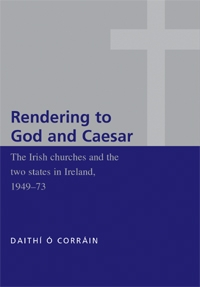
This book discusses the history of the Church of Ireland and the Catholic Church and their Episcopal leaders in the period from 1949 to 1973. It considers the opening years of the Troubles in Northern Ireland and their impact on the main churches, and also the relationships between these churches and the two states in Ireland. It also looks at the development of inter-church relations and ecumenism, and offers a new perspective on North-South relations and the causes of religious division. Based on highly original and very comprehensive research, the book offers fascinating insights into the recent past of these key Irish institutions. It will be welcomed by students and teachers of twentieth century and contemporary Irish history, as well as those interested in the political landscape of Ireland today. ;
Trusted Partner
Trusted Partner