Your Search Results

      • Egyptian Office for Publishing & Distribution

        Founded Egyptian Office For Publishing & Distribution in 1992 and until now . our goal is to provide culture for all segments of society and raise the level of public awareness and knowledge and the development of intellectual and creative possibilities for each . Over the past years we have published more than 1,000 cultural educational titles for the whole family through enlist the best authors in Egypt and the Arab world.

        View Rights Portal
      • Peasoup ApS

        Read the book and solve puzzles with your smart device to chose your own way through the Smart Books. Amazing new technology mixed with storytelling for the 8-13 year old kids.

        View Rights Portal
      • Trusted Partner
        Humanities & Social Sciences
        March 2017

        Ordering Africa

        Anthropology, European imperialism and the politics of knowledge

        by Helen Tilley, Robert Gordon

        African research played a major role in transforming the discipline of anthropology in the twentieth century. Ethnographic studies, in turn, had significant effects on the way imperial powers in Africa approached subject peoples. Ordering Africa provides the first comparative history of these processes. With essays exploring metropolitan research institutes, Africans as ethnographers, the transnational features of knowledge production, and the relationship between anthropology and colonial administration, this volume both consolidates and extends a range of new research questions focusing on the politics of imperial knowledge. Specific chapters examine French West Africa, the Belgian and French Congo, the Anglo-Egyptian Sudan, Italian Northeast Africa, Kenya, and Equatorial Africa (Gabon) as well as developments in Britain, France, Germany, Italy, and Switzerland. A major collection of essays that will be welcomed by scholars interested in imperial history and the history of Africa.

      • Trusted Partner
        Humanities & Social Sciences
        February 2026

        Future perfect

        An imaginative ethnography of Mediterranean illegalised migration

        by Alexandra D'Onofrio

        The present volume emerges from a practice-based research that focuses on experiences of migration and border crossing during what are perceived as existential 'turning points' by the protagonists themselves. It recognizes the fundamental role that imagination plays in people's perceptions of reality, in their decisions and actions, and finally in the way they narrate their experiences. As a consequence, it makes a stance for ethnographic practice to include more creative and collaborative methodologies in order to explore such intangible and unstructured realms of existence. In particular, this ethnography developed theoretically and methodologically in close collaboration with a group of Egyptian men who crossed the Mediterranean Sea in search of better living opportunities in Italy, by engaging them through a range of the co-creative processes such as theatre improvisations, storytelling practices, collaborative filmmaking and participatory animation.

      • Trusted Partner
        Humanities & Social Sciences
        June 2024

        Cairo collages

        by Mona Abaza

      • Trusted Partner
        Teaching, Language & Reference
        November 2010

        El Camino by Miguel Delibes

        by Catherine Davies, Jeremy Squires

        Upon entering the Royal Spanish Academy in 1975, Miguel Delibes delivered an address which reclaimed El camino (1950) for the emerging Green movement. With a blend of hilarity, satire, pathos and tragedy, Delibes artfully explores the process of crossing boundaries in pursuit of maturity and social advancement, whilst also implying that real education is the unfolding of the human heart among friends and sweethearts within a shared social and natural space. This new annotated version of the text comprises an introductory essay discussing green issues, attitudes towards the Spanish peasantry under Franco, and the function of the novel's subtly orchestrated comedy. It also contains explanatory notes on the text, discussion topics and an extensive Spanish-English glossary. This edition is intended primarily for English-speaking students of Spanish literature and culture at school and university. ;

      • Trusted Partner
        History of art & design styles: c 1800 to c 1900
        June 2011

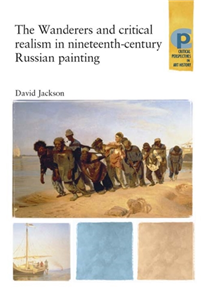
        The Wanderers and Critical Realism in Nineteenth Century Russian Painting

        Critical realism in nineteenth-century Russia

        by David Jackson

        The rise of critical realism in nineteenth-century Russia culminated in 1870 with the formation of the Wanderers, Russia's first independent artistic society. Through depictions of the harsh lives of the peasantry, the fate of political activists, Russian history, landscapes, and portraits of the nation's cultural elite, such as Tolstoy and Dostoevsky, the society became synonymous with dissident sentiments. Yet its members were far from being purveyors of anti-Tsarist propaganda and their canvases reflect also a warm humanity and a fierce pride for such nationalistic themes as Russian myth and legend. Through close readings of single canvases, investigations of major themes and a multi-disciplinary integration of the Wanderers within Russian society, this book gives the first comprehensive analysis of the crucial cultural role played by one of the most successful and genuinely popular schools of art, the legacy of which comprises a fascinating panorama of life and thought in pre-revolutionary Russia.

      • Trusted Partner
        Humanities & Social Sciences
        January 2025

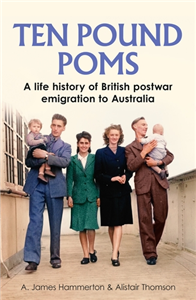
        ‘Ten Pound Poms’

        A life history of British postwar emigration to Australia

        by A. James Hammerton, Alistair Thomson, Becca Parkinson

        A riveting history of the 'Ten Pound Poms', a wave of British citizens who migrated to Australia and New Zealand after the Second World War. Between the 1940s and 1970s, more than a million Britons migrated to Australia. They were the famous 'Ten Pound Poms' and this is their story. The authors draw on a vast trove of letters, diaries and personal photographs, as well as hundreds of interviews with former migrants, to offer original insights into key historical themes. They explore people's motivations for emigrating, gender relations and family dynamics, the clashing experience of the 'very familiar and awfully strange', homesickness and the personal and national identities of both settlers and returnees. Filled with fascinating testimonies that shed light on migrant life histories, 'Ten Pound Poms' will engage readers interested in British and Australian migration history and intrigued about the power of migrant memories for individuals, families and nations.

      • Trusted Partner
        Humanities & Social Sciences
        June 2010

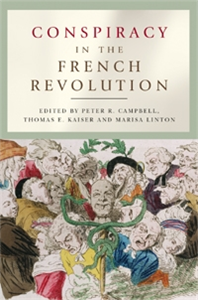
        Conspiracy in the French Revolution

        by Peter R. Campbell, Thomas Kaiser, Marisa Linton

        Conspiratorial views of events abound even in our modern, rational world. Often such theories serve to explain the inexplicable. Sometimes they are developed for motives of political expediency: it is simpler to see political opponents as conspirators and terrorists, putting them into one convenient basket, than to seek to understand and disentangle the complex motivations of opponents. So it is not surprising to see that just when the French Revolution was creating the modern political world, a constant obsession with conspiracies lay at the heart of the revolutionary conception of politics. The book considers the nature and development of the conspiracy obsession from the end of the old regime to the Directory. Chapters focus on conspiracy and fears of conspiracy in the old regime; in the Constituent Assembly; by the king and Marie Antoinette; amongst the people of Paris; on attitudes towards the peasantry and conspiracy; on Jacobin politics of the Year II and the 'foreign plot'; on counter-revolutionary plots and imaginary plots; on Babeuf and the 'conspiracy of equals'; and finally on fear of conspiracy as an intellectual impasse in the revolutionary mentality. Inspired by recent debates, this book is a comprehensive survey of the nature of conspiracy in the French Revolution, with each chapter written by a leading historian on the question. Each chapter is an original contribution to the topic, written however to include the wider issues for the area concerned. There is an emphasis throughout on clarity and accessibility, making the volume suitable for a wide readership as well as undergraduates and advanced researchers ;

      • Trusted Partner
        Humanities & Social Sciences
        July 2020

        Victorian literary culture and ancient Egypt

        by Eleanor Dobson

      • Trusted Partner
        Humanities & Social Sciences
        March 2021

        Egypt of the Saite pharaohs, 664–525 BC

        by Roger Forshaw

      • Trusted Partner
        Humanities & Social Sciences
        October 2024

        Egypt and the rise of fluid authoritarianism

        Political ecology, power and the crisis of legitimacy

        by Maria Gloria Polimeno

        Egypt and the rise of fluid authoritarianism focuses on the struggle of the post-2013 political authorities for internal political legitimacy after the crisis following the 2013 coup d'état. It explores the microstructural and macro-systemic dynamics of leadership, power, protests and the authority-making process in political systems. These cannot simply be defined as structural, political, social and economic projections of the authoritarianism of the past, but rather as a rupture with that past. The book offers a complex, ground-breaking socio-political and economic analysis into how the forging of an internal political legitimacy claim has eventually modified the regime in Egypt along the authoritarian spectrum, turning into a fluid autocracy closer to a non-exclusivist personalist regime. This shift had implications that resonated both politically and economically.

      • Trusted Partner
        General & world history
        May 2005

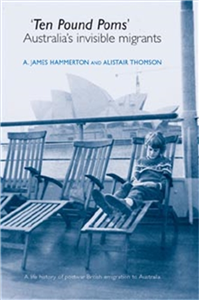
        ‘Ten Pound Poms’

        A life history of British postwar emigration to Australia

        by A. James Hammerton, Alistair Thomson

        More than a million Britons emigrated to Australia between the 1940s and 1970s. They were the famous 'ten pound Poms' and this is their story. Illuminated by the fascinating testimony of migrant life histories, this is the first substantial history of their experience and fills a gaping hole in the literature of emigration. The authors, both leading figures in the fields of oral history and migration studies, draw upon a rich life history archive of letters, diaries, personal photographs and hundreds of oral history interviews with former migrants, including those who settled in Australia and those who returned to Britain. They offer original interpretations of key historical themes, including: motivations for emigration; gender relations and the family dynamics of migration; the 'very familiar and awfully strange' confrontation with the new world; the anguish of homesickness and return; and the personal and national identities of both settlers and returnees, fifty years on. Accessible and appealing, this book will engage readers interested in British and Australian migration history and intrigued about the significance of migrant memories for individuals, families and nations.

      • Trusted Partner
        Humanities & Social Sciences
        June 2014

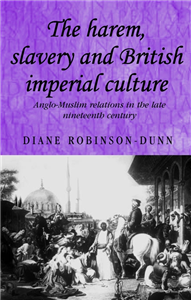
        The harem, slavery and British imperial culture

        Anglo-Muslim relations in the late nineteenth century

        by Diane Robinson-Dunn, Andrew Thompson, John Mackenzie, Kim Latham

        This book focuses on British efforts to suppress the traffic in female slaves destined for Egyptian harems during the late nineteenth century. It considers this campaign in relation to gender debates in England, and examines the ways in which the assumptions and dominant imperialist discourses of these abolitionists were challenged by the newly established Muslim communities in England, as well as by English people who converted to or were sympathetic with Islam. While previous scholars treated antislavery activity in Egypt first and foremost as an extension of earlier efforts to abolish plantation slavery in the New World, this book considers it in terms of encounters with Islam during a period which it argues marked a new departure in Anglo-Muslim relations. This approach illuminates the role of Islam in the creation of English national identities within the global cultural system of the British Empire. This book will appeal to those with an interest in British imperial history; Islam; gender, feminism and women's studies; slavery and race; the formation of national identities; global processes; Orientalism; and Middle Eastern studies. ;

      • Trusted Partner
        Humanities & Social Sciences
        March 2017

        The harem, slavery and British imperial culture

        Anglo-Muslim relations in the late nineteenth century

        by Diane Robinson-Dunn

        This book focuses on British efforts to suppress the traffic in female slaves destined for Egyptian harems during the late-nineteenth century. It considers this campaign in relation to gender debates in England, and examines the ways in which the assumptions and dominant imperialist discourses of these abolitionists were challenged by the newly-established Muslim communities in England, as well as by English people who converted to or were sympathetic with Islam. While previous scholars have treated antislavery activity in Egypt first and foremost as an extension of earlier efforts to abolish plantation slavery in the New World, this book considers it in terms of encounters with Islam during a period which it argues marked a new departure in Anglo-Muslim relations. This approach illuminates the role of Islam in the creation of English national identities within the global cultural system of the British Empire. This book would appeal to those with an interest in British imperial history; Islam; gender, feminism, and women's studies; slavery and race; the formation of national identities; global processes; Orientalism; and Middle Eastern studies.

      • Trusted Partner
        The Arts
        September 2019

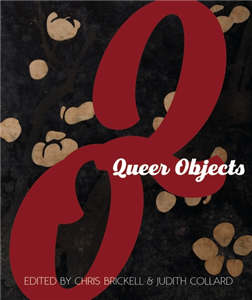
        Queer Objects

        by Chris Brickell, Judith Collard

        Queer lives give rise to a vast array of objects: the things we fill our houses with, the gifts we share with our friends, the commodities we consume at work and at play, the clothes and accessories we wear, and the analogue and digital technologies we use to communicate with one another. But what makes an object queer? The sixty-three chapters in Queer Objects consider this question in relation to lesbian, gay and transgender communities across time, cultures and space. In this unique international collaboration, well-known and newer writers traverse world history to write about items ranging from ancient Egyptian tomb paintings and Roman artefacts to political placards, snapshots, sex toys and the smartphone. Fabulous, captivating, transgressive.

      • Trusted Partner
        Teaching, Language & Reference
        June 2025

        Mummified

        by Angela Stienne

      • Trusted Partner
        Literature & Literary Studies
        January 2026

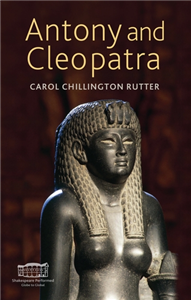
        Antony and Cleopatra

        by Carol Chillington Rutter

        This book writes a performance history of Antony and Cleopatra, Shakespeare's most ambiguous play, from 1606 to the present. It observes the choices that actors, directors, designers, musicians and adapters have made each time they have brought the play's thoughts on power, race, masculinity, regime change, exoticism, love, dotage and delinquency into alignment with a new present. Informed by close attention to theatre records - promptbooks, stage managers' reports, reviews - it offers in-depth analyses of fifteen international productions by (among others) the Royal Shakespeare Company, Citizens Theatre Glasgow, Northern Broadsides, Berliner Ensemble and Toneelgroep Amsterdam. It ends seeing Shakespeare's black Egyptian Queen Cleopatra - whited-out in performance for centuries - restored to the contemporary stage. Written in a lively and accessible style, this book will be of interest to students, academics, actors, directors and general readers alike.

      • Trusted Partner
        Business, Economics & Law
        July 2025

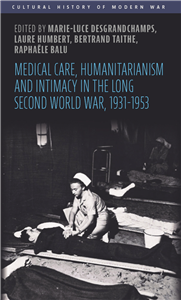
        Medical care, humanitarianism and intimacy in the long Second World War, 1931-1953

        by Marie-Luce Desgrandchamps, Laure Humbert, Bertrand Taithe, Raphaële Balu

        This book offers a micro-global history of humanitarianism and medical care during the 'long' Second World War, which challenges the traditional and Eurocentric chronological boundaries of 1939/1945. It takes as its starting point the Japanese invasion of Manchuria in 1931, which led to the progressive dislocation of the League of Nations, with the Japanese, German and Soviet departures in the 1930s. It ends with the termination of the Korean War in 1953, and the subsequent dismantlement of the first United Coalition and UN Peace enforcement operation. It considers the slow, messy and ambivalent transformation of humanitarian actors' relations to the suffering of distant others through a study of humanitarian encounters, practices, spaces and affects. Paying close attention to a variety of actors, such as French colonial doctors, Swiss ICRC delegates, Egyptian relief workers, Chinese-style physicians, Peruvian and Ecuadorian nurses or American member of the Unitarian Service Committee, the book provides a more holistic story of humanitarianism.

      • Trusted Partner
        Biography & True Stories
        February 2025

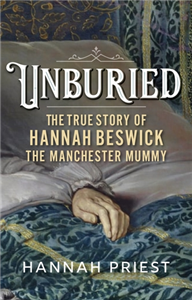
        Unburied

        The true story of Hannah Beswick, the Manchester Mummy

        by Hannah Priest

        The macabre tale of an eighteenth-century woman immortalised in folklore as the 'Manchester Mummy'. In 1835, the Manchester Natural History Society opened the doors of its museum. Taking pride of place in its collection were three mummies: one was Egyptian, one was Peruvian and one was a woman from Cheetham Hill. This is the first time the true story of Hannah Beswick, the so-called 'Manchester Mummy', has been told. Over the years, explanations for the Manchester Mummy have ranged from the chilling - Hannah's fear of being buried alive - to the downright bizarre - the legend of her buried gold - but the truth is more complex. Exploring this fascinating episode from museum history, Unburied sheds light on the Victorian turn to the macabre and changing attitudes to the display of human remains. It debunks the legends and asks what Hannah Beswick can tell us about death and dying, mummies and museums.

      Subscribe to our

      newsletter