Your Search Results

      • El Emporio

        Como grupo editorial, estamos orgullosos de decir que somos creadores de best-sellers, que pasan de ser éxitos locales a éxitos nacionales. Apostamos tanto por autores reconocidos como por autores noveles y nos interesamos en ampliar y renovar nuestro catálogo de manera constante. Como actores activos de la cultura, nuestro horizonte es ofrecer libros que participen de la construcción colectiva de contenidos de calidad.

        View Rights Portal
      • ArtThema

        We would like a translation for our books.

        View Rights Portal
      • Trusted Partner
        The Arts
        March 2026

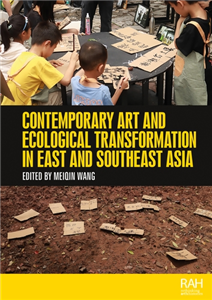
        Contemporary art and ecological transformation in East and Southeast Asia

        by Meiqin Wang

        This anthology, presenting new research from fourteen scholars, delves into the interplay between contemporary art and ecological concerns in East and Southeast Asia. Focused on the concept of artistic remediation, the book unravels the diverse capacities of art to combat systemic anthropogenic destruction to the environment and ecology. At its core, the book articulates the ongoing ecological transformation in art and art history that embraces a paradigm shift in human-nature relationships, emphasizing interconnectedness of all life forms of the Earth. Bridging art studies, activism, and environmental studies, the book examines how artistic practices in the region have engaged with ecocritical reflection, biodiversity advocacy, sustainable practices, and environmental justice, among others. Providing a platform for critical and timely analysis of artistic interventions in the face of existential crises, the book acknowledges diverse voices of scholars who have situated their scholarship in the cultural and artistic specificities of various societies, locales, and communities in the region.

      • The Arts
        March 1905

        Concerning the Spiritual in Art

        by Wassily Kandinsky

        A pioneering work in the movement to free art from its traditional bonds to material reality, this book is one of the most important documents in the history of modern art. Written by the famous nonobjective painter Wassily Kandinsky (1866–1944), it explains Kandinsky's own theory of painting and crystallizes the ideas that were influencing many other modern artists of the period. Along with his own groundbreaking paintings, this book had a tremendous impact on the development of modern art. Kandinsky's ideas are presented in two parts. The first part, called "About General Aesthetic," issues a call for a spiritual revolution in painting that will let artists express their own inner lives in abstract, non-material terms. Just as musicians do not depend upon the material world for their music, so artists should not have to depend upon the material world for their art. In the second part, "About Painting," Kandinsky discusses the psychology of colors, the language of form and color, and the responsibilities of the artist. An Introduction by the translator, Michael T. H. Sadler, offers additional explanation of Kandinsky's art and theories, while a new Preface by Richard Stratton discusses Kandinsky's career as a whole and the impact of the book. Making the book even more valuable are nine woodcuts by Kandinsky himself that appear at the chapter headings. This English translation of Über das Geistige in der Kunst was a significant contribution to the understanding of nonobjectivism in art. It continues to be a stimulating and necessary reading experience for every artist, art student, and art patron concerned with the direction of 20th-century painting.

      • Trusted Partner
        The Arts
        November 2017

        Empire and Art

        by Renate Dohmen

      • Trusted Partner
        The Arts
        January 2018

        Art after empire

        by Warren Carter

      • Trusted Partner
        Literature & Literary Studies
        October 2012

        Art and Literature of the Second Empire

        by David Baguley

        This volume explores the characteristics of the art and literature of the Second Empire in France; it examines the attitudes and positioning of artists and writers of the period in relation to a regime of dubious legitimacy, and the ways in which that regime exploited to its advantage the artistic capital available to it. ;

      • Trusted Partner
      • Trusted Partner
      • Trusted Partner
      • Trusted Partner
        The Arts
        February 2022

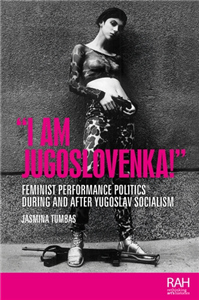
        "I am Jugoslovenka!"

        Feminist performance politics during and after Yugoslav Socialism

        by Jasmina Tumbas, Amelia Jones, Marsha Meskimmon

        "I am Jugoslovenka" argues that queer-feminist artistic and political resistance were paradoxically enabled by socialist Yugoslavia's unique history of patriarchy and women's emancipation. Spanning performance and conceptual art, video works, film and pop music, lesbian activism and press photos of female snipers in the Yugoslav wars, the book analyses feminist resistance in a range of performative actions that manifest the radical embodiment of Yugoslavia's anti-fascist, transnational and feminist legacies. It covers celebrated and lesser-known artists from the 1970s to today, including Marina Abramovic, Sanja Ivekovic, Vlasta Delimar, Tanja Ostojic, Selma Selman and Helena Janecic, along with music legends Lepa Brena and Esma Redzepova. "I am Jugoslovenka" tells a unique story of women's resistance through the intersection of feminism, socialism and nationalism in East European visual culture.

      • Trusted Partner
        The Arts
        December 2024

        Horizontal together

        Art, dance, and queer embodiment in 1960s New York

        by Paisid Aramphongphan

        Horizontal together tells the story of 1960s art and queer culture in New York through the overlapping circles of Andy Warhol, underground filmmaker Jack Smith and experimental dance star Fred Herko. Taking a pioneering approach to this intersecting cultural milieu, the book uses a unique methodology that draws on queer theory, dance studies and the analysis of movement, deportment and gesture to look anew at familiar artists and artworks, but also to bring to light queer artistic figures' key cultural contributions to the 1960s New York art world. Illustrated with rarely published images and written in clear and fluid prose, Horizontal together will appeal to specialists and general readers interested in the study of modern and contemporary art, dance and queer history.

      • Trusted Partner
      • Trusted Partner
      • Trusted Partner
        The Arts
        February 2026

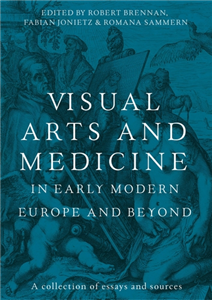
        Visual arts and medicine in early modern Europe and beyond

        A collection of essays and sources

        by Robert Brennan, Fabian Jonietz, Romana Sammern

        This book opens up new perspectives on the relationship between art, medicine, and science in late-medieval and early modern Europe. Looking beyond the traditional nexus of art, anatomy, and optics, the volume sheds light on a broader array of connections between artists and physicians: collaborations between painters and doctors on colour charts, handwork skills common to sculptors and surgeons, the transmission of art theory through medical texts long before the emergence of art writing itself as an independent genre, and the kinship of medical diagnosis with early modes of connoisseurship. Reconfiguring the histories of art, medicine, and science, the book also traverses conventional boundaries between physical and mental health, religious and medical modes of healing, menial and exalted forms of knowledge and labour, as well as vernacular and scientific understandings of human difference, including gender, race, and neurodiversity.

      • Trusted Partner
      • Trusted Partner
      • Trusted Partner
        History of art & design styles: c 1400 to c 1600
        November 2014

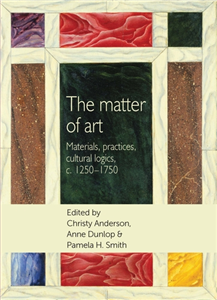
        The matter of art

        Materials, practices, cultural logics, c.1250–1750

        by Edited by Christy Anderson, Anne Dunlop and Pamela H. Smith

        Materials carried the meaning of early modern art. Transformed and crafted from the matter of nature, art objects were the physical embodiment of both the inherent qualities of materials and the forces of culture that used, refined and produced them. The study of materials offers a new approach to this important period in the history of art, science and culture, linking the close study of painting, sculpture and architecture to much wider categories of the everyday and the exotic. Drawing on new research and models from anthropology, material culture and the history of art, scholars in The matter of art explore topics as diverse as Inka stonework, gold in panel painting, cork platforms for shoes, and the Christian Eucharist.

      • Trusted Partner
        The Arts
        April 2026

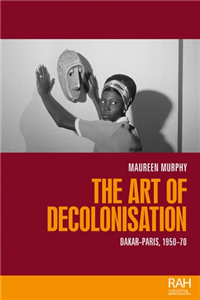
        The art of decolonisation

        Dakar-Paris, 1950-70

        by Maureen Murphy

        The art of decolonisation examines how artists challenged colonial legacies and reconfigured power through transnational networks of art and diplomacy. Adopting a global and transhistorical perspective, it explores artistic, political, and institutional relations between France and Senegal during decolonisation and the Cold War. From the emergence of a national modern art in Senegal to contested cultural policies and high-profile exhibitions-such as those featuring Picasso and Soulages in Dakar, or contemporary Senegalese art in Paris-this book traces the circulation of artworks, ideas, and influence across borders. It reveals how visual artists and filmmakers shaped a new artistic geopolitics between 1950 and 1970. Reconsidering the accepted chronology of the 'global turn', The art of decolonisation shows that the roots of global art discourse run deeper than the 1990s, and were already forming during the era of independence struggles.

      • Trusted Partner
        Humanities & Social Sciences
        March 2017

        Exhibiting the Empire

        Cultures of display and the British Empire

        by John McAleer, John M. MacKenzie

        Exhibiting the empire considers how a whole range of cultural products - from paintings, prints, photographs, panoramas and 'popular' texts to ephemera, newspapers and the press, theatre and music, exhibitions, institutions and architecture - were used to record, celebrate and question the development of the British Empire. It represents a significant and original contribution to our understanding of the relationship between culture and empire. Written by leading scholars from a range of disciplinary backgrounds, individual chapters bring fresh perspectives to the interpretation of media, material culture and display, and their interaction with history. Taken together, this collection suggests that the history of empire needs to be, in part at least, a history of display and of reception. This book will be essential reading for scholars and students interested in British history, the history of empire, art history and the history of museums and collecting.

      Subscribe to our

      newsletter