De Vecchi/DVE - Confidential Concepts International Ltd.
We are from De Vecchi Ediciones / DVE, a publishing house with about 4000 titles in Spanish.
View Rights Portal
We are from De Vecchi Ediciones / DVE, a publishing house with about 4000 titles in Spanish.
View Rights Portal
Der Concadora Verlag steht für inspirierende Medien und Veranstaltungen zu den Themen Mindful Leadership, Organisationsbezogenes Transformationsmanagement, Kommunikation und Mediation für Führungskräfte, BeraterInnen und MediatorInnen. Ein Schwerpunkt unserer Veröffentlichungen sind Medien zum Konfliktmanagement und zur systemischen Mediation.
View Rights Portal

This book is the first full-length study of contemporary American fiction of passing. Its takes as its point of departure the return of racial and gender passing in the 1990s in order to make claims about wider trends in contemporary American fiction. The book accounts for the return of tropes of passing in fiction by Phillip Roth, Percival Everett, Louise Erdrich, Danzy Senna, Jeffrey Eugenides and Paul Beatty, by arguing meta-critical and meta-fictional tool. These writers are attracted to the trope of passing because passing narratives have always foregrounded the notion of textuality in relation to the (il)legibility of "black" subjects passing as white. The central argument of this book, then, is that contemporary narratives of passing are concerned with articulating and unpacking an analogy between passing and authorship. The title promises to inaugurate dialogue on the relationships between passing, postmodernism and authorship in contemporary American fiction.

This collection brings together scholars from disciplines including Children's Literature, Classics, and History to develop fresh approaches to children's culture and the uses of the past. It charts the significance of historical episodes and characters during the long nineteenth-century (1750-1914), a critical period in children's culture. Boys and girls across social classes often experienced different pasts simultaneously, for purposes of amusement and instruction. The book highlights an active and shifting market in history for children, and reveals how children were actively involved in consuming and repackaging the past: from playing with historically themed toys and games to performing in plays and pageants. Each chapter reconstructs encounters across different media, uncovering the cultural work done by particular pasts and exposing the key role of playfulness in the British historical imagination.
 Trusted Partner

Critical Games is about the games we play (whether we know it or not), the ways we play them (for fun, but also to win, and to gain approval from others), and what happens when they get out of hand. The book interrogates the theory of play and gaming, with a particular focus on the games played by literary authors and literary critics. Drawing on (often self-critical) autobiography, as well as readings in texts across a range of languages, Tim Beasley-Murray plays with academic conventions to highlight what is at stake in them, turning to the Game of Literature, from Kafka to Carrère, to seek models and warnings of the outcomes of taking games too seriously, or not taking them seriously enough.
Trusted Partner
 Trusted Partner
This anthology examines the fortunes of cricket in various colonies as the sport spread across the British Empire. It helps to explain why cricket was so successful, even in places like India, Pakistan and the West Indies where the Anglo-Saxon element remained in a small minority. It demonstrates, perhaps better than any other single work, how awesome was the power of cultural imperialism. Even when former subjects threw off the political yoke of the Europeans, they still adhered tenaciously to the sporting and recreational models that the imperialists had introduced. 'The Imperial Game' provides an invaluable insight into how cricket developed powerful social, cultural and even political connotations in a colonial environment. This is a fascinating study of cricket as a cultural phenomenon, and traces its changing meaning in all the continents in which Britain once exercised power. The book is a collection of essays by six of the world's leading scholars in the field of sports history, and will be of value not onle to students examining the historical sociology of sport, but also to those with a general interest in social history. This study will also appeal to cricket enthusiasts the world over.
Trusted Partner
In the late eighteenth-century, elite British women had an unprecedented opportunity to travel. Taking travel home uncovers the souvenir culture these women developed around the texts and objects they brought back with them to realise their ambitions in the arenas of connoisseurship, friendship and science. Key characters include forty-three-year-old Hester Piozzi (Thrale), who honeymooned in Italy; thirty-one-year-old Anna Miller, who accompanied her husband on a Grand Tour; Dorothy Richardson, who undertook various tours of England from the ages of twelve to fifty-two; and the sisters Katherine and Martha Wilmot, who travelled to Russia in their late twenties. The supreme tourist of the book, the political salon hostess Lady Elizabeth Holland, travelled to many countries with her husband, including Paris, where she met Napoleon, and Spain during the Peninsular War. Using a methodology informed by literary and design theory, art history, material culture studies and tourism studies, the book examines a wide range of objects, from painted fans "of the ruins of Rome for a sequin apiece" and the Pope's "bless'd beads", to lava from Vesuvius and pieces of Stonehenge. It argues that the rise of the souvenir is representative of female agency, as women used their souvenirs to form spaces in which they could create and control their own travel narratives.
Trusted Partner

This is the most thoroughly investigated edition of Volpone to date, based on a wider collation of the 1607 quarto and 1616 folio versions than was previously possible. It calls into question several accepted textual conclusions. The introduction sets Volpone in the context of Jonson's career at the time of writing and introduces new material on its relation to the Reynard beast epic and the commedia dell' arte. Ambiguities in the play are discussed with reference to two Renaissance perversions of the myth of the Golden Age. Particular attention is paid to the rhythmic effects of the play in performance, especially interweavings of the main plot and subplot. Fresh suggestions are made about the play's opening and its controversial conclusion in the light of experiments that have been made in performance since Volpone 's stage revival in 1921. The modernized text is accompanied by full commentary, notes and illustrations. The appendices include a discussion by John Cutts of the original music, passages translated from the original sources and analogues, and a full record of the play's modern stage history, its many adaptations, and its transformations into opera, musical comedy, film and television. ;
Trusted Partner

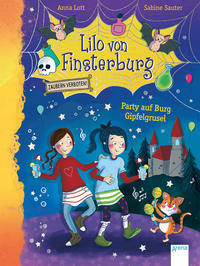
The Dark Castle family receives an invitation to a party at Highhorror Castle. Lilo and Miss Rüdiger are immediately eager to go. And of course Luisa should go with them. But humans are strictly forbidden to set foot in Castle Highhorror. “Who cares?”, say Lilo and Luisa, and at first everything seems fine: Luisa gets in as a perfect witch. But then the girls learn about a protective magic spell which covers the whole of the castle: unauthorized beings will be turned for ever into stone… Only a secret book of magic spells can save Luisa now!
Trusted Partner
The double game of music imagines music education as a series of games - each with its own rules, play currency and players - to challenge readers to rethink the significance of music and musical upbringing in shaping social structures. Drawing on their own empirical research and a wide range of international contributions, the authors unravel the intertwining of social positioning and power hierarchies with players beliefs in the pure values and virtues of their games, whether these relate to parenting, children's play, schooling, academic pursuits, musical leisure activities or the television and music industries. In a world where music is often celebrated as an important tool for inclusion and democratisation, this groundbreaking book offers a timely critique, revealing complexities and contradictions that tend to be overlooked by teachers, researchers, politicians and others interested in the powers of music education.
Trusted Partner
The moral problem of authority is the challenge of reconciling legitimate authority (the right to rule) with the demands of freedom and rationality. In this book, I argue that authority can have legitimacy, but when it does it generates a moral dilemma, where the obligation to obey comes at some cost to freedom and reason. Hence, not only do I depart from the views of those who insist that authority can never have legitimacy, but also those who maintain that insofar as authority is legitimate it simply satisfies the demands of freedom or rationality. My focus here will be on both what it is that justifies authority (in particular focusing on membership, and the goods of membership) as well what type of reason an authoritative directive is, how it can come into conflict with others reasons, and how those conflicts are resolved.
Trusted Partner

Head in the game brings together international scholars from multiple humanities, social science, and scientific disciplines to critically examine one of the most vexing issues in global sport: concussion. It argues that science and medicine alone cannot solve the concussion crisis: sociocultural factors must also be considered. This edited collection draws attention to the ways that social, cultural, historical, political, literary, philosophical, and legal factors have shaped the concussion crisis in sport. Head in the game is essential reading for those who want to understand how the concussion crisis came to be, and provides guidance for developing ethical and evidence-based solutions in the future.
Trusted Partner
Trusted Partner
Trusted Partner
Trusted Partner
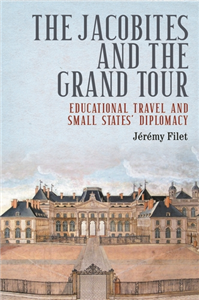
In the first monograph to fully examine the intersecting networks of Jacobites and travellers to the continent, Filet considers how small states used official diplomacy and deployed soft power - embodied by educational academies - to achieve foreign policy goals. This work uses little-known archival materials to explain how and why certain small states secretly supported the Jacobite cause during the crucial years surrounding the 1715 rising, while others stayed out of Jacobite affairs.At the same time, the book demonstrates how early modern small states sought to cultivate good relations with Britain by attracting travellers as part of a wider trend of ensuring connections with future diplomats or politicians in case a Stuart restoration never came.This publication therefore brings together a study of Britain, small states, Jacobitism, and educational travel, in its nexus at continental academies.
Trusted Partner
Trusted Partner
Trusted Partner
Trusted Partner
The Arctic region has been the subject of much popular writing. This book considers nineteenth-century representations of the Arctic, and draws upon an extensive range of evidence that will allow the 'widest connections' to emerge from a 'cross-disciplinary analysis' using different methodologies and subject matter. It positions the Arctic alongside more thoroughly investigated theatres of Victorian enterprise. In the nineteenth century, most images were in the form of paintings, travel narratives, lectures given by the explorers themselves and photographs. The book explores key themes in Arctic images which impacted on subsequent representations through text, painting and photography. For much of the nineteenth century, national and regional geographical societies promoted exploration, and rewarded heroic endeavor. The book discusses images of the Arctic which originated in the activities of the geographical societies. The Times provided very low-key reporting of Arctic expeditions, as evidenced by its coverage of the missions of Sir John Franklin and James Clark Ross. However, the illustrated weekly became one of the main sources of popular representations of the Arctic. The book looks at the exhibitions of Arctic peoples, Arctic exploration and Arctic fauna in Britain. Late nineteenth-century exhibitions which featured the Arctic were essentially nostalgic in tone. The Golliwogg's Polar Adventures, published in 1900, drew on adult representations of the Arctic and will have confirmed and reinforced children's perceptions of the region. Text books, board games and novels helped to keep the subject alive among the young.
Trusted Partner


Playful learning is an excellent way to help children acquire skills from an early age. This book illustrates ways to promote the development of preschool- age children through play in everyday family and kindergarten life – entirely without expensive resources! Promotion of (written) language development and mathematical development forms a focus of this book, while preparing your child optimally for the two school subjects English and Mathematics. For:• parents and guardians• interested laypeople• educational specialists (such asteachers, childcare workers, socialworkers)