
Rabea Blue - Fantasyautorin
Rabea Blue is an author, writing fantasy, science-fiction and romance. She alreasy published short stories & novels.
View Rights Portal
Rabea Blue is an author, writing fantasy, science-fiction and romance. She alreasy published short stories & novels.
View Rights Portal

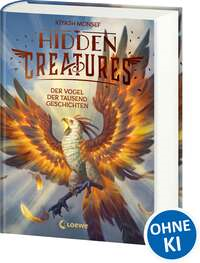
Es war einmal und war auch nicht...So begannen die Geschichten, die Marjans Vater ihr als kleines Mädchen erzählte - Fabeln über Greifen, Einhörner und Drachen. Aber Marjan ist kein kleines Mädchen mehr. Und fantastische Kreaturen gibt es nicht. Oder etwa doch?Marjan führt ein Doppelleben: Wenn sie nicht in der Schule ist, reist sie um die Welt und kümmert sich um mystische Fabelwesen. Und das alles im Auftrag einer zwielichtigen Organisation. Dieser traut Marjan zwar nicht über den Weg, aber um kranken Kreaturen zu helfen, ist sie auf deren Netzwerk angewiesen. Doch als sie auf die Spur eines mächtigen Wesens stößt, muss Marjan eine Entscheidung treffen: Denn sollte das Geschöpf in falsche Hände geraten, könnte sich alles verändern …Band 2 der atmosphärischen Fantasy mit Elementen aus der persischen MythologieHidden Creatures ist ein atmosphärisches Fantasy-Abenteuer ab 12 Jahren, das von der ersten Seite in die verborgene Welt der Fabelwesen entführt. Der Autor Kiyash Monsef lässt Elemente der persischen Mythologie lebendig werden. Protagonistin Marjan ist eine Identifikationsfigur für alle, die Mut aufbringen müssen, sich selbst zu finden. Durchgehend spannend erzählt und voller unvorhersehbarer Wendungen. Ein Highlight für Fantasy-Leser*innen und Fans von alten Märchen und Sagen! Fantastische Fabelwesen: Mythologie und Folklore, die verzaubert. Spannend und emotional: Eine Geschichte voller Spannung, die bis zur letzten Seite fesselt, und gleichzeitig berührend erzählt wird. Atemberaubende Orte: Begleite Marjan auf eine Reise, die an faszinierende Orte entführt.


A grand strategy of peace is the first detailed account of Britain's role in the creation of the United Nations Organization during the Second World War. As a work of traditional diplomatic history that brings in elements of intellectual history, the book describes how British officials, diplomats, politicians, and writers - previously seen to be secondary actors to the United States in this period - thought about, planned for, and helped to establish a future international order. While in the present day, many scholars and analysts have returned to the origins of the post- 1945 international system, this book offers an exhaustive account of how the statesmen and more importantly, the officials working below the statesmen, actually conceived of and worked to establish a post-war world order.
 Trusted Partner

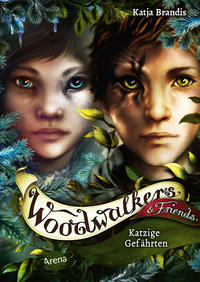
You have never seen the Woodwalkers like this before: find out about the lives of the puma boy Carag and his shapeshifting friends outside the school walls. The young puma shapeshifter Carag is really looking forward to the school holidays. He’s going to visit the family of his girlfriend Tikaani for the first time, so that they can celebrate her birthday together. But before they can head for the far north, they are overtaken by events. First, two self-willed companions join them, and then Carag receives a call for help from his own puma family. A hostile wolf pack has taken over their old den close to Clearwater High. There is something not quite right about these wolves. As the situation becomes increasingly fiery, Carag and Tikaani know they can rely on help from Holly the chipmunk. But will the three of them be able to save the day?
Trusted Partner


Zwei junge Männer schreiten die Freitreppe des Londoner St. James's Theaters hinab. Applaus brandet auf: Er gilt Oscar Wilde, der auf dem Weg ist, der erfolgreichste Autor Großbritanniens zu werden – seine Theaterstücke werden gefeiert; sein Roman Das Bildnis des Dorian Gray ist ein verruchter Bestseller. Er wird verehrt, doch auch kritisch beäugt. Denn den klatschsüchtigen Londonern entgeht nicht, dass der verheiratete Familienvater enge Beziehungen zu jungen Männern pflegt. An diesem Abend begleitet ihn ›Bosie‹, Lord Alfred Douglas, der Sohn des Marquess of Queensberry. Ihr Glück wird bald ein Ende finden: Homosexuelle Liebesbeziehungen sind im viktorianischen England verboten, und als Bosies Vater Oscar Wilde öffentlich der Sodomie bezichtigt, ist die Katastrophe nicht mehr aufzuhalten …
Trusted Partner
Trusted Partner
 Trusted Partner
Trusted Partner
Trusted Partner

In the first monograph to fully examine the intersecting networks of Jacobites and travellers to the continent, Filet considers how small states used official diplomacy and deployed soft power - embodied by educational academies - to achieve foreign policy goals. This work uses little-known archival materials to explain how and why certain small states secretly supported the Jacobite cause during the crucial years surrounding the 1715 rising, while others stayed out of Jacobite affairs.At the same time, the book demonstrates how early modern small states sought to cultivate good relations with Britain by attracting travellers as part of a wider trend of ensuring connections with future diplomats or politicians in case a Stuart restoration never came.This publication therefore brings together a study of Britain, small states, Jacobitism, and educational travel, in its nexus at continental academies.
Trusted Partner
 Trusted Partner


Aus dem amerikanischen Englisch von Nadine Lipp und Nadine Mutz
Trusted Partner
 Trusted Partner
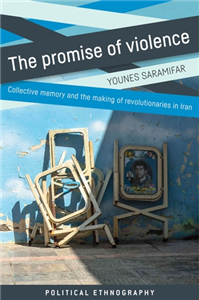
Revolutionaries in Iran choose to identify memories of the Iran-Iraq War as their 'collective' memory to mark the war era as the temporal reference in history - the time of times, or sometimes even a time beyond time. Can a sole event and its violence truly become - for some - the all-encompassing, constituting element of history and memory? This book pursues this question and follows revolutionaries in the maze of 'collective' memory to offer a temporal account of the breakdown of happenings - as well as the mending of happenings through the force of remembrance.
Trusted Partner

»Bosheit ist ein Mythos, den gute Menschen erfunden haben, um die seltsame Anziehungskraft der anderen zu erklären.« Oscar Wilde
Trusted Partner
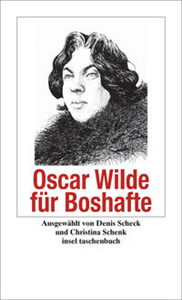
»Bosheit ist ein Mythos, den gute Menschen erfunden haben, um die seltsame Anziehungskraft der anderen zu erklären.« Oscar Wilde
Trusted Partner

This book provides a comprehensive examination of conservative and right-wing responses to the Edwardian crisis in Britain (1901-1914). It stresses how the upsurge of right-wing extremism within and outside the Conservative party was accompanied by the crystallization of a culture of violence. The preparation, instigation or threatening of violent acts against all those who appeared to threaten the organic nature and vigour of the national community found expression in a myriad of ultra-nationalist organisations, citizen policing groups, private military associations, and paramilitary formations. The book innovatively reconstructs the belief system and the practices of those right-wing actors, which pursued the goals of military preparedness, "racial regeneration" and imperial unity, while defending the amorphous goals of authority, order and 'national efficiency' against the forces of radicalism and socialism. The book helps to cast light on the bellicose and authoritarian reflexes that traversed British conservatism in the turbulent prewar years.
Trusted Partner

Speculative endeavours contributes to an emerging field of scholarship that focuses on alternative forms of knowledge production and speculation in nineteenth century US-American society. It sheds light on unofficial knowledges such as insider information, rumour, gossip, slander, emphasising how knowledges excluded by institutional discourses and authorities form a core part of the developing market economy. Ranging from the Early Republic to the Gilded Age, contributions analyse entanglements of financial, cultural, and social capital. They focus on social actors who differ from the newly minted ideal of the (free, white, male) entrepreneurial individual. The speculative endeavours discussed include illicit communications located in slave quarters and domestic spaces, communal interventions into a commercialised print market, debates on immigrant fiduciary and legal competency, and disciplinary techniques of pecuniary pedagogy. Taken together they offer unprecedented interdisciplinary insights into an emerging age of capital.
Trusted Partner


Consumers stand perplexed at the fish counter. Cod or salmon; mackerel or sea bass? Or perhaps rather carp and trout? How about flounder and dab? Dab what? A terrific flatfish, but sadly hardly anyone has heard of it. And what was it again about organic, aquaculture, wild-caught, and that little blue sustainability certificate? Is catching your own a way out? Before you start thinking it’s time to opt for a chop and fried potatoes instead, read this book. It provides readers with deep blue facts from the world’s waters and analyses the global and local habitat of the finned creature.
Trusted Partner

The book offers a novel lens to situate Europeanisation as violence - through institutions and technologies of development, cultural heritage, and borders, among others - by bringing South and East within a relational frame. Through four inter-related sections, it foregrounds Europeanisation as infrastructural violence and colonial asymmetries, slow violence and the construction of stratified subalternities, epistemic dispossession, and border epistemologies.
Trusted Partner

»Bosheit ist ein Mythos, den gute Menschen erfunden haben, um die seltsame Anziehungskraft der anderen zu erklären.« Bis heute, 125 Jahre nach seinem Tod, gehört Oscar Wilde zu den beliebtesten und meist zitierten Autoren – nicht zuletzt wegen seiner Spitzzüngigkeit und dem Scharfsinn seiner Beobachtungen. Ob sich seine Polemik gegen überflüssige Zeitungen oder schlechte Literatur richtet, gegen geistlose Frauen oder langweilige Männer, gegen scheinheilige Moralvorstellungen oder die Ignoranz der Unkultivierten – immer ist sie treffsicher, brillant formuliert und äußerst unterhaltsam. Mehr als pure Gehässigkeit, ist sie Ausdruck des künstlerischen Selbstverständnisses Wildes, seine Extravaganz gegen die Meinung der anderen zu leben und seine Kunst, die elegante Schönheit und kritischen Geist verbindet, über die gesellschaftlichen Konventionen stellen zu dürfen.
Trusted Partner
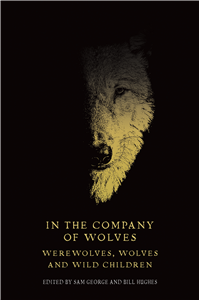
In the company of wolves presents further research from the Open Graves, Open Minds Project. It connects together innovative research from a variety of perspectives on the cultural significance of wolves, wild children and werewolves as portrayed in different media and genres. We begin with the wolf itself as it has been interpreted as a cultural symbol and how it figures in contemporary debates about wilderness and nature. Alongside this, we consider eighteenth-century debates about wild children - often thought to have been raised by wolves and other animals - and their role in key questions about the origins of language and society. The collection continues with essays on werewolves and other shapeshifters as depicted in folk tales, literature, film and TV, concluding with the transition from animal to human in contemporary art, poetry and fashion.


