
Your Search Results
-

-

Dar Al Farabi
Dar Al Farabi Publishing and Distribution Company was founded in 1956. We publish books in a variety of subjects including sciences, humanities and literature whether written in Arabic or translated. Ever since its inception Dar ALFARABI has been committed to the defense of democratic freedoms liberation and progress. We participate in all Arabic book events. We also provide various printing services for those looking to publish a book or author at his own expense, according to an equivalent format between the two parties, in the event that there is no opportunity to publish at the expense of the house.
View Rights Portal
-
Promoted Content

 Humanities & Social SciencesDecember 2022
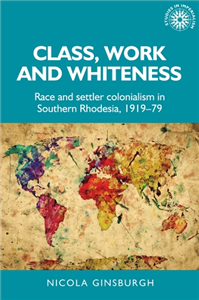
Class, work and whiteness
Race and settler colonialism in Southern Rhodesia, 1919–79
by Nicola Ginsburgh
This book offers the first comprehensive history of white workers from the end of the First World War to Zimbabwean independence in 1980. It reveals how white worker identity was constituted, examines the white labouring class as an ethnically and nationally heterogeneous formation comprised of both men and women, and emphasises the active participation of white workers in the ongoing and contested production of race. White wage labourers' experiences, both as exploited workers and as part of the privileged white minority, offer insight into how race and class co-produced one another and how boundaries fundamental to settler colonialism were regulated and policed. Based on original research conducted in Zimbabwe, South Africa and the UK, this book offers a unique theoretical synthesis of work on gender, whiteness studies, labour histories, settler colonialism, Marxism, emotions and the New African Economic History.
-
Promoted Content
-
 Trusted Partner
 Humanities & Social SciencesSeptember 2020
Class, work and whiteness
by Nicola Ginsburgh, Alan Lester
-
Trusted Partner
 MedicineDecember 2020
African nurses and everyday work in twentieth-century Zimbabwe
by Clement Masakure, Jane Schultz
-
Trusted Partner
-
Trusted Partner

 November 2010
Die Pariser Weltausstellung 1889
Bilder von der Globalisierung
by Beat Wyss
Die gelungenste Weltausstellung aller Zeiten war die Exposition Universelle de Paris von 1889. Weit über 32 Millionen Menschen besuchten das gigantische Spektakel mit knapp 62.000 Ausstellern aus 54 Nationen und 17 französischen Kolonien. Das Wahrzeichen der Schau, der Eiffelturm, blieb Paris bis heute erhalten. Einen legendären Ruf erwarb sich auch das offizielle, wöchentlich erscheinende Journal der Weltausstellung. Auf großformatigen, mit Stahlstichen üppig illustrierten Seiten berichtete es von den Sensationen vor Ort, von dreirädrigen selbstfahrenden Karren und ethnologischen Dörfern, in denen es Kamelreiten für die Kinder und Bauchtänze für die Herren gab. Der Schweizer Kunsthistoriker Beat Wyss hat die hundert originellsten Abbildungen ausgewählt. Sie illustrieren, wie die Expo den Erdball auf ein »Weltdorf« zwischen Trocadéro und Champ de Mars schrumpfen lässt, wie räumliche Distanzen abgebaut und dabei kulturelle Differenzen freigelegt werden. Das späte 20. Jahrhundert wird dafür den Begriff der Globalisierung prägen. Beat Wyss zeigt, wie die Gesellschaften seit dem 19. Jahrhundert mit diesem Prozeß umgehen und mit der Verwestlichung der Welt eine Orientalisierung des Westens einhergeht. Dem Leser als Flaneur über die Bühne der Weltausstellung wird klar: Die Expo 1889 belegt nicht nur den aktuellen Zustand einer Zeit, sondern bietet über die spektakuläre Anordnung ihrer Exponate den Vorschein einer gesellschaftlichen Utopie.
-
Trusted Partner
 Humanities & Social SciencesNovember 2024
Culture is bad for you
by Orian Brook, Dave O'Brien, Mark Taylor
-
Trusted Partner
 November 2025
Farm der Tiere
Ein Märchen | Sie wollten Freiheit. Sie bekommen Unterdrückung | Der Klassiker über Macht, Manipulation und Moral neu übersetzt von Eike Schönfeld
by George Orwell, Eike Schönfeld
Eine Farm. Eine Revolution. Ein Traum von Freiheit, der in Diktatur umschlägt. Die Tiere auf der Farm des Säufers Mr Jones werden vernachlässigt, ausgebeutet und misshandelt – bis sie eines Tages beschließen zu rebellieren. Die Intelligentesten unter ihnen, die Schweine, führen den Aufstand an, vertreiben den menschlichen Peiniger und stellen neue Regeln für das Zusammenleben auf: Alle Tiere sind gleich! Ein glückliches Leben scheint bevorzustehen, doch allmählich bilden sich neue Machtstrukturen heraus … und aus ehemals Unterdrückten werden neue Gewaltherrscher. George Orwells dystopischer Roman von 1954 ist erschreckend aktuell – und dabei in zeitgemäßer Neuübersetzung so zugänglich wie nie. In einer Welt voller Fake News, Filterblasen und Führungsversagen hält Orwell uns den Spiegel vor. Ein Kompass für kritisches Denken mit Witz, Biss und bedrückender Klarheit.
-
Trusted Partner

 August 1985
Die Besiegten
Aus dem Schwedischen von Beat Mazenauer. Mit einem Nachwort von Gunilla Palmstierna-Weiss
by Peter Weiss, Beat Mazenauer, Gunilla Palmstierna-Weiss
Peter Weiss wurde am 8. November 1916 in Nowawes bei Berlin geboren und starb am 10. Mai 1982 in Stockholm. Zwischen 1918 und 1929 lebte er in Bremen, wo er das Gymnasium besuchte. 1929 kehrte die Familie Weiss nach Berlin zurück, musste jedoch 1934 emigrieren. Die erste Station bildete London, darauf folgte 1936 die SR. In diesen Jahren widmete sich Peter Weiss vorwiegend der Malerei – 1937/1938 studierte er Malerei an der Kunstakademie in Prag. In dieser Zeit besuchte er Hermann Hesse während zweier längerer Aufenthalte in der Schweiz. Die dritte und letzte Emigrationsstation bildete 1939 Schweden, wo Peter Weiss zunächst in Alingsås, ab 1940 in Stockholm wohnte. Hier setzte er seine Tätigkeit als Maler fort. 1947 hielt er sich als Korrespondent einer schwedischen Tagesszeitung in Berlin auf. Seine Artikel versammelte er 1948 zu seiner ersten Buchpublikation. Der Band erschien posthum 1985 unter dem Titel Die Besiegten. Ab diesem Zeitraum entstanden, in schwedischer Sprache, die ersten Prosaarbeiten, Gedichte, und Dramen. Zu den wichtigsten Erzählungen aus dieser Schaffensperiode zählen Die Situation aus dem Jahre 1956 sowie das 1980 unter dem Autorenpseudonym Sinclair veröffentlichte Buch Der Fremde. Keines seiner Manuskripte wurde jedoch von einem schwedischen Verlag zur Publikation angenommen. Mitte der fünfziger Jahre begann Peter Weiss in deutscher Sprache zu schreiben. 1960 erschien sein erstes Prosabuch Der Schatten des Körpers des Kutschers. Zu Beginn der siebziger Jahre wand sich Peter Weiss wieder der Prosa zu. Zwischen 1975 und 1981 erschien der dreibändige Roman Die Ästhetik des Widerstands, deren letzter Band begleitet wird von Notizbücher 1971 – 1980. Ihm wurde posthum der Georg-Büchner-Preis für das Jahr 1982 zuerkannt. Beat Mazenauer, geboren 1958, Germanist und Historiker, lebt als Literaturkritiker und freier Autor in Luzern.
-
Trusted Partner
 Literature & Literary StudiesJune 2026
Tainted tools
New materialisms as a decolonial project
by Angela Last
Tainted Tools makes a provocative intervention into the fraught intersection between new materialist and decolonial approaches. Despite a common project of challenging European philosophical and social categories and hierarchies, the discourses are considered incompatible. Most prominently, new materialisms have been accused of harbouring a White vision of the human while disregarding the racist resonances of the 'nonhuman'. The book traces this conflict to an earlier meeting point of new materialist and decolonial projects, which came about through the experimental combination of Marx and Nietzsche. Used to fight fascism, Stalinism and colonialism, this politically contentious fusion gradually became depoliticised, leading to unaddressed tensions today. While the book does not argue for a revival of these early 'new materialisms', it brings their strategies into dialogue with today's new materialisms and decolonial approaches to develop greater theoretical solidarity in times of crisis.
-
Trusted Partner
 November 2025
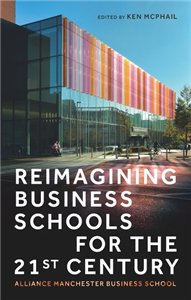
Reimagining business schools for the 21st century
Alliance Manchester Business School
by Kenneth McPhail, James Pendrill
Whether it's dealing with regional economic disparities, global geopolitical upheaval, climate change, or the impact of new technologies such as artificial intelligence, we are living in pivotal times. To mark its 60th anniversary in 2025, this accessible book from Alliance Manchester Business School outlines in detail how business schools can play a significant role in confronting these huge challenges, and equip the next generation of business leaders with the skills they need to embrace them. Informing public and political debate on the role of business in both the causes and solutions to our biggest challenges the book offers a rethinking of the role of business in society. It will also discuss specific examples of how collaborations with business are leading to impact and change in society. Featuring a range of thought-provoking essays co-authored by eminent academics and business leaders, this collection will challenge the status quo and outline how business and management research is helping address grand challenges, generate economic growth, inform policy development, and define business thinking over the next generation.
-
Trusted Partner
-
Trusted Partner
 Humanities & Social SciencesFebruary 2026
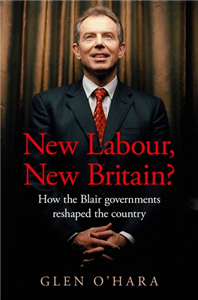
New Labour, new Britain
How the Blair governments reshaped the country
by Glen O’Hara
A bold and balanced re-appraisal of New Labour in power. Rewriting the story of New Labour, Glen O'Hara challenges the prevailing narrative to present a more balanced and positive assessment. New Labour, new Britain is the first book to examine both the intentions behind New Labour's domestic policies and their real-world effects, moving beyond the entrenched left-right debates that have dominated the party's legacy. The period from 1997 to 2007 marked a pivotal moment in modern British history, as New Labour sought to reshape Britain into a more cohesive and forward-thinking society. It saw the rise of socially liberal attitudes and flourishing public services under a government committed to rebuilding and investing in them. Yet New Labour's track record was far from flawless and its legacy remains complicated and contested. Through interviews with key players and rigorous archival research, O'Hara offers a new perspective on Tony Blair's years in power. Painting a fuller picture of New Labour's successes and challenges, he highlights its lasting impact on Britain and offers a thoughtful reassessment of its place in history.
-
Trusted Partner
Literature & Literary StudiesMay 2023
Pasts at play
Childhood encounters with history in British culture, 1750–1914
by Rachel Bryant Davies, Barbara Gribling
This collection brings together scholars from disciplines including Children's Literature, Classics, and History to develop fresh approaches to children's culture and the uses of the past. It charts the significance of historical episodes and characters during the long nineteenth-century (1750-1914), a critical period in children's culture. Boys and girls across social classes often experienced different pasts simultaneously, for purposes of amusement and instruction. The book highlights an active and shifting market in history for children, and reveals how children were actively involved in consuming and repackaging the past: from playing with historically themed toys and games to performing in plays and pageants. Each chapter reconstructs encounters across different media, uncovering the cultural work done by particular pasts and exposing the key role of playfulness in the British historical imagination.
-
Trusted Partner
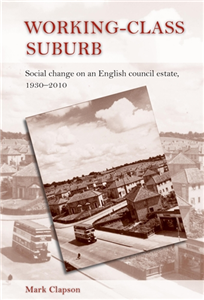 Humanities & Social SciencesFebruary 2012
Working–class suburb
Social change on an English council estate, 1930–2010
by Mark Clapson
Not all council estates are the same. A detailed historical account of the birth and social evolution of the Whitley council estate in Reading, Working-Class Suburb challenges many of the more depressing images and cultural stereotypes about council housing in twentieth and twenty-first century England. Key areas covered by the study are housing and politics; community campaigns; women and the corporate life of council estates; the uses of leisure; the relationships between tenants, residents and the local authority, and continuities in working-class life despite economic, demographic and political change. The book will be of interest to anyone studying urban history and social history, to professionals working in the fields of housing policy and housing studies, and to the growing number of academics interested in suburban studies. ;
-
Trusted Partner
 Humanities & Social SciencesOctober 2021
Women, workplace protest and political identity in England, 1968–85
by Jonathan Moss, Lynn Abrams
-
Trusted Partner


Der Briefladen, in dem die Zeit stillstand
by Seungyeon, Baek / Übersetzt von Bring, Sebastian
Ein Roman für alle, die schönes Briefpapier lieben und die nach Entschleunigung suchen. In dem Briefladen, in dem die Zeit stillstand, umgeben von schönsten Dingen, lernt Hyoyeong nach einem schweren Schicksalsschlag, das Leben wieder zu spüren. Sie hört die Geschichten von Menschen, die ihre Hoffnungen, Ängste und Träume zu Papier bringen, und lernt dabei nicht nur neue Freund*innen kennen, sondern auch, wie man zu sich selbst zurückfindet.
-
Trusted Partner


Does Movement Really Make Us Smart?
by Petra Jansen, Stefanie Richter
Media reports often praise movement as a cure-all. But apart from its undisputed positive effect on health, does movement really make us smarter? Consider a national football team, for example – are these excessively sports-driven players automatically the smartest people? Should we simply replace all school subjects with sports? The authors provide a detailed summary of the latest scientific findings on the influence of movement on cognitive ability. They describe the effects of movement, on old age, embodiment, emotion, school as well as other factors that influence cognition. Target Group: teachers, lecturers, psychologists, psychiatrists, neurologists, psychotherapists, movement therapists.
-
Trusted Partner
 Humanities & Social SciencesDecember 2023
Transitional justice in process
Plans and politics in Tunisia
by Mariam Salehi
After the fall of the Ben Ali regime in 2011, Tunisia swiftly began dealing with its authoritarian past and initiated a comprehensive transitional justice process, with the Truth and Dignity Commission as its central institution. However, instead of bringing about peace and justice, transitional justice soon became an arena of contention. Through a process lens, the book explores why and how the process evolved, and explains how it relates to the country's political transition. Based on extensive field research in Tunisia and the US, and interviews with a broad range of international stakeholders and decision-makers, this is the first book to comprehensively study the Tunisian transitional justice process. It provides an in-depth analysis of a crucial period, examining the role of justice professionals in different stages, as well as the alliances and frictions between different actor groups that cut across the often-assumed local-international divide.
-
Trusted Partner

 January 2013
Die Tribute von Panem 3. Flammender Zorn
by Suzanne Collins, Maria Koschny, Die Tribute von Panem
Der dritte Band der Bestseller-Trilogie Entgegen aller Erwartungen hat Katniss die Hungerspiele zum zweiten Mal überlebt. Schwer verletzt wurde sie von den Rebellen befreit und in Distrikt 13 gebracht. Aber noch immer ist sie nicht in Sicherheit. Das Kapitol will Rache, die Auseinandersetzungen werden immer blutiger. Als Katniss herausfindet, dass auch die Rebellen versuchen, sie für ihre Ziele zu missbrauchen, muss sie einsehen, dass sie alle nur Figuren in einem perfiden Spiel sind. Kann sie diesen Kampf überhaupt gewinnen? Das grandiose Finale der Panem-Trilogie – bombastisch, gefeiert und vielfach ausgezeichnet. Endkampf Hungerspiele – die Rebellen schlagen zurück - Die dystopische Erfolgsreihe geht weiter: Auf letzter Mission mit Katniss und Peeta gegen das Kapitol. Bestseller-Autorin Suzanne Collins nimmt uns mit auf eine finale Reise nach Panem. - Ein fesselnder Kampf über Mut, Zusammenhalt und die Frage: Was ist das Richtige? - International bekannt durch die gleichnamige Filmadaption mit Oscar Gewinnerin Jennifer Lawrence. - Das große Finale der Hunger Games Trilogie: Die Tribute von Panem: Flammender Zorn als gekürzte Lesung.



