
Firefly Books
Livres Canada Books
View Rights Portal

A captivating non-fiction series for children aged 3 to 6, that awakens their interest in wonders of the physical, natural and human world. Transparent overlay pages reveal hidden surprises and facilitate understanding.
View Rights Portal Trusted Partner
Trusted Partner
Trusted Partner


This volume is the first ever attempt to unite and translate some of the key texts which informed Johan Huizinga's famous study of the Burgundian court, The Waning of the Middle Ages, a work which has never gone out of print. It combines these texts with sources that Huizinga did not consider, those that illuminate the wider civic world that the Burgundian court inhabited and the dynamic interaction between court and city. Through these sources, and an introduction offering new perspectives on recent historiography, the book tests whether Huizinga's controversial vision of the period still stands. Covering subjects including ceremonial events, such as the spectacles and gargantuan banquets that made the Burgundian dukes the talk of Europe, the workings of the court, and jousting, archery and rhetoric competitions, the book will appeal to students of late medieval and early modern Europe and to those with wider interests in court culture, ritual and ceremony.
Trusted Partner
 Trusted Partner
Trusted Partner
Trusted Partner
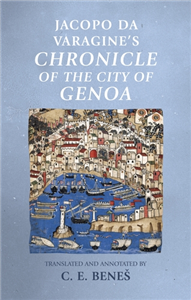
This book offers the first English translation of the Chronicle of the city of Genoa by the thirteenth-century Dominican Jacopo da Varagine, an author best known for his monumental book of saints' lives, the Golden legend. Jacopo's Chronicle presents a coherent vision of Genoa's place in history, the cosmos and Creation as written by the city's own archbishop - mixing eyewitness accounts with scholarly research about the city's origins and didactic reflections on the proper conduct of public and private life. Accompanied by an extensive introduction, this complete translation provides a unique perspective on a dynamic medieval city-state from one of its most important officials, broadening the available literature in English on medieval Italian urban life.
Trusted Partner

This book offers the first English translation of the Chronicle of the city of Genoa by the thirteenth-century Dominican Jacopo da Varagine, an author best known for his monumental book of saints' lives, the Golden legend. Jacopo's Chronicle presents a coherent vision of Genoa's place in history, the cosmos and Creation as written by the city's own archbishop - mixing eyewitness accounts with scholarly research about the city's origins and didactic reflections on the proper conduct of public and private life. Accompanied by an extensive introduction, this complete translation provides a unique perspective on a dynamic medieval city-state from one of its most important officials, broadening the available literature in English on medieval Italian urban life.
Trusted Partner
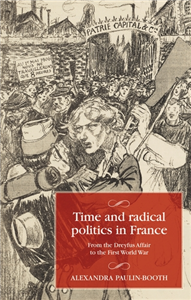
This book investigates how people have thought about and experienced time, and how their ideas about time have shaped their political views and actions. Using French thinkers and activists of the radical left and right between the Dreyfus Affair and the First World War as a case study, it argues that time provides an important means of exploring how concepts such as nationalism, revolution and social change were understood at the turn of the century. Attending to different experiences of time - the speed at which it was perceived to move, the extent to which the future was near and graspable, the ways in which the past was seen to impinge on the present - opens up exciting new possibilities for analysing politics, ideologies and worldviews.
Trusted Partner


With a pinch of humor, the authors tell the story of Julia, her husband Peter, and their little whirlwind Alexander, who is starting elementary school. How do the three of them deal with this new stage in Alexander’s life? What problems do they encounter and what do they find stressful? The book sets out to help parents, uncles, aunts, and grandparents understand how children of elementary school age develop. Professionals who work with children of this age may also find it of interest. Petra Jansen and Stefanie Richter are both parents and psychologists. Through the fictional Julia they share their subjective experience as mothers, while also providing background information based on scientific studies. They demonstrate in a clear and entertaining way that some of the problems experienced by children of this age are not unexpected and are no cause for despair. Target Group: Parents of children in their early years at school.
Trusted Partner
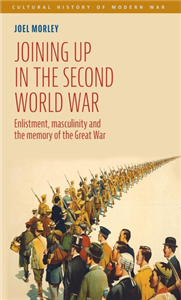
This book connects the First and Second World Wars. It uses oral histories and Mass Observation material to explore men's attitudes to Second World War enlistment and the relationship they perceived between military service and masculinity, and how these were influenced by understandings of the First World War. Locating the cultural legacy of First World War in the subjectivities of men who participated in the Second World War demonstrates the breadth of sources that informed men's understandings of the First World War in interwar Britain. Its cultural legacy was omnipresent and diverse, and informed young men's attitudes and service preferences, but it reinforced Edwardian conceptions of wartime masculinity as often as it undermined them. Two decades after the First World War ended, they remained resilient in the subjective understandings of men who grew up in the Great War's shadow.
Trusted Partner

Invasions is an ambitious, new and authoritative study of one of the defining cultural products of the Victorian and Edwardian eras. By the outbreak of war in 1914 invasion-scare fiction had profoundly changed British society, becoming not just a vibrant part of popular culture, but a reference point among military planners, advertisers, and politicians. This intersection between politics and culture, between entertainment and war planning, sets invasion-scare stories apart as one of the most versatile and interesting fictional products in modern British history. Building on recent work in both history and literature studies, Invasions is the first study of invasion-scare fiction to examine both the form (that is, fiction) and the function (the political argument) of the genre.
Trusted Partner

Franz Inauen was diagnosed with dementia in 2013. Since his diagnosis, he has worked through his fears, experiences, hopes, and anger by writing prose and poetry and by drawing. The result is a work consisting of 85 images and texts. They are accompanied by narratives explaining how the author produced them, an interview with Franz Inauen, and the views of his wife and employer. Target Group: People with dementia, their relatives, nurses, art therapists
Trusted Partner
 Trusted Partner

 Trusted Partner

 Trusted Partner
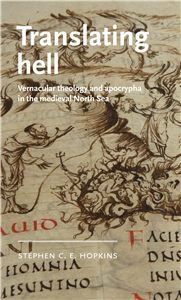
In the Middle Ages, hell was useful because it was vaguely defined. Canonical scriptures scarcely mention hell, leaving much to the imaginations of early Christians, who used it to sort out who belonged within the faith. This book explores how hell became a place for literary experiments with local challenges in theology and identity. Following the reception and transformations of two popular hell apocrypha, it argues that they served as this role because of their liminal textual authority. As noncanonical scriptures, apocrypha afforded medieval writers space to revise their hells (since they were not actually scripture), while also encouraging readers to revere those experiments as valid (since they seemed like scripture). The book brings together adaptations from early medieval England, Iceland, Ireland, and Wales, placing the early vernacular theologies of the North Sea in comparative conversation.
Trusted Partner
Trusted Partner
 Trusted Partner

Von allen deutschen Autoren, die nach 1945 zu schreiben begannen, ist Artmann ohne jeden Zweifel der vielseitigste, originellste und erfinderischste. So wie Artmann in fast allen Gattungen gearbeitet hat, auch den angeblich antiquierten, und ohne sich um die Tagesparolen der mal reine Dichtung betreibenden, mal engagierten, mal die Literatur totsagenden Kollegen zu kümmern, so hat er seine Quellen, seine Herkunft überall: in der Artusepik, in barocker Schäferpoesie, in den Wörterbüchern und Grammatiken von gut zwei Dutzend Sprachen, in Irland und im England des Sherlock Holmes, bei Villon und dem Wiener Vorstadtdialekt, Lorca, Gomez de la Serna, den Surrealisten und Dadaisten, in den Detektivheftchen der 20er Jahre und den Comic strips von damals bis heute. Unsere Auswahl versucht, nicht nur einen repräsentativen Querschnitt durch das Werk Artmanns zu geben, sondern gleichzeitig Verstreutes, an entlegensten Orten Publiziertes zu sammeln.





