
HighWater Press
Livres Canada Books
View Rights Portal


This book focuses on current policy discourse in Higher Education, with special reference to Europe. It discusses globalisation, Lifelong Learning, the EU's Higher Education discourse, this discourse's regional ramifications and alternative practices in Higher Education from both the minority and majority worlds with their different learning traditions and epistemologies. It argues that these alternative practices could well provide the germs for the shape of a public good oriented Higher Education for the future. It theoretically expounds on important elements to consider when engaging Higher Education and communities, discussing the nature of the term 'community' itself. Special reference is accorded to the difference that lies at the core of these ever-changing communities. It then provides an analysis of an 'on the ground project' in University community engagement, before suggesting signposts for further action at the level of policy and provision. This book is relevant to United Nations Sustainable Development Goal 4, Quality education

This book focuses on current policy discourse in Higher Education, with special reference to Europe. It discusses globalisation, Lifelong Learning, the EU's Higher Education discourse, this discourse's regional ramifications and alternative practices in Higher Education from both the minority and majority worlds with their different learning traditions and epistemologies. It argues that these alternative practices could well provide the germs for the shape of a public good oriented Higher Education for the future. It theoretically expounds on important elements to consider when engaging Higher Education and communities, discussing the nature of the term 'community' itself. Special reference is accorded to the difference that lies at the core of these ever-changing communities. It then provides an analysis of an 'on the ground project' in University community engagement, before suggesting signposts for further action at the level of policy and provision.
 Trusted Partner

Universities have a key role to play in contributing to environmental development and combating climate change. The chapters within this volume detail the challenges faced by higher education institutions in considering environmental sustainability, and provide both a broad view of university engagement and a detailed examination of various projects. As part of this series in association with the Place and Social Capital and Learning (PASCAL) International Observatory, the three key PASCAL themes of place management, lifelong learning and the development of social capital are considered throughout the book. While universities have historically generated knowledge outside of specific local contexts, this book argues that it is particularly important for them to engage with the local community and to consider diverse perspectives and assets when looking at issues within an ecological context. The chapters in this volume provide new perspectives and frames of reference for transforming universities by engaging in the development of resilient communities.
Trusted Partner
The debate about the Empire dealt in idealism and morality, and both sides employed the language of feeling, and frequently argued their case in dramatic terms. This book opposes two sides of the Empire, first, as it was presented to the public in Britain, and second, as it was experienced or imagined by its subjects abroad. British imperialism was nurtured by such upper middle-class institutions as the public schools, the wardrooms and officers' messes, and the conservative press. The attitudes of 1916 can best be recovered through a reconstruction of a poetics of popular imperialism. The case-study of Rhodesia demonstrates the almost instant application of myth and sign to a contemporary imperial crisis. Rudyard Kipling was acknowledged throughout the English-speaking world not only as a wonderful teller of stories but as the 'singer of Greater Britain', or, as 'the Laureate of Empire'. In the last two decades of the nineteenth century, the Empire gained a beachhead in the classroom, particularly in the coupling of geography and history. The Island Story underlined that stories of heroic soldiers and 'fights for the flag' were easier for teachers to present to children than lessons in morality, or abstractions about liberty and responsible government. The Education Act of 1870 had created a need for standard readers in schools; readers designed to teach boys and girls to be useful citizens. The Indian Mutiny was the supreme test of the imperial conscience, a measure of the morality of the 'master-nation'.
Trusted Partner
 Trusted Partner
 Trusted Partner

The great public schools are central to any discussion of English secondary education. Founded as public endowments, they are the basis of private education. Set apart from the other grammar schools by the Clarendon Commission of 1861, their influence on the state system has been enormous. Severed from the national provision of public education, they have put prestige and ancient endowments at the service of wealth and patronage. This book, available in paperback for the first time, shows how this came to pass. How the schools' attempts at reform, reliance on fees, the defence of the Classics, public criticism of Eton, European ideas and foreign economic competition led to the Carendon Commission. How Lord Clarendon himself, in conflict with Palmerston over foreign policy, came to lead the Commission and attempt curricular reform. How the Public Schools Acts created a separate school system for the benefit of Eton and how the Lords sought to establish that system for the upper classes. How the fee-paying, class-based principles of the Commission influenced the other grammar schools and all later English education. How the Public schools Acts reduced the influence of local parents and how new governors were appointed nationally. How Shrewsbury School, an example of an endowed grammar school with strong local connections, came to be part of the public school system. It is not the conflict between state education and private schools that makes so much discussion of English education bitter and controversial. It is the loss to state education of the public schools - the original political purpose of the Acts - and the impoverishment of national education by the class divisions of Victorian legislation. ;
Trusted Partner

This book is a study of the ambitions, activities and achievements of Methodist missionaries in northern Burma from 1887-1966 and the expulsion of the last missionaries by Ne Win. The story is told through painstaking original research in archives which contain thousands of hitherto unpublished documents and eyewitness accounts meticulously recorded by the Methodist missionaries. This accessible study constitutes a significant contribution to a very little-known area of missionary history. Leigh pulls together the themes of conflict, politics and proselytisation in to a fascinating study of great breadth. The historical nuances of the relationship between religion and governance in Burma are traced in an accessible style. This book will appeal to those teaching or studying colonial and postcolonial history, Burmese politics, and the history of missionary work.
Trusted Partner
Trusted Partner
 Trusted Partner
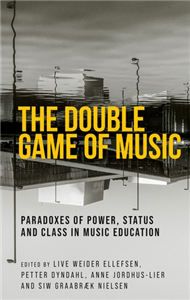
The double game of music imagines music education as a series of games - each with its own rules, play currency and players - to challenge readers to rethink the significance of music and musical upbringing in shaping social structures. Drawing on their own empirical research and a wide range of international contributions, the authors unravel the intertwining of social positioning and power hierarchies with players beliefs in the pure values and virtues of their games, whether these relate to parenting, children's play, schooling, academic pursuits, musical leisure activities or the television and music industries. In a world where music is often celebrated as an important tool for inclusion and democratisation, this groundbreaking book offers a timely critique, revealing complexities and contradictions that tend to be overlooked by teachers, researchers, politicians and others interested in the powers of music education.
Trusted Partner
In defence of councillors is an unashamed defence of local representative democracy and of those elected to serve as councillors from the often ill-informed, ill-judged and inaccurate criticism made by the media, government and public, of councillors' personal, political and professional roles. By using qualitative research from a number of related projects, the book examines the roles, functions and responsibilities of councillors and the expectations placed upon them by citizens, communities and government. It also examines the impact council membership has on other facets of the councillor's life. The book examines how councillors develop strategies to overcome the constraints and restrictions on their office so as to be able to govern their communities, balance their political and public life and democratise and hold to account a vast array of unelected bodies that spend public money and develop public policy without the electoral mandate and legitimacy held by our councillors.
Trusted Partner
Many missionary societies established mission schools in the nineteenth century in the British Empire as a means to convert non-Europeans to Christianity. Although the details, differed in various colonial contexts, the driving ideology behind mission schools was that Christian morality was highest form of civilisation needed for non-Europeans to be useful members of colonies under British rule. This comprehensive survey of multi-colonial sites over the long time span clearly describes the missionary paradox that to draw in pupils they needed to provide secular education, but that secular education was seen to lead both to a moral crisis and to anti-British sentiments.
Trusted Partner
On 25 January 1474, Charles the Bold, duke of Burgundy, appeared before his subjects in Dijon. Robed in silk, gold and precious jewels and wearing a headpiece that gave the illusion of a crown, he made a speech in which he cryptically expressed his desire to become a king. Three years later, Charles was killed at the battle of Nancy, an event that plunged the Great Principality of Burgundy into chaos. This book, innovative and essential, not only explores Burgundian history and historiography but offers a complete synthesis about the nature of politics in this region, considered both from the north and the south. Focusing on political ideologies, a number of important issues are raised relating to the medieval state, the signification of the nation under the 'Ancien Regime', the role of warfare in the creation of political power and the impact of political loyalties in the exercise of government. In doing so, the book challenges a number of existing ideas about the Burgundian state.
Trusted Partner

After the fall of the Ben Ali regime in 2011, Tunisia swiftly began dealing with its authoritarian past and initiated a comprehensive transitional justice process, with the Truth and Dignity Commission as its central institution. However, instead of bringing about peace and justice, transitional justice soon became an arena of contention. Through a process lens, the book explores why and how the process evolved, and explains how it relates to the country's political transition. Based on extensive field research in Tunisia and the US, and interviews with a broad range of international stakeholders and decision-makers, this is the first book to comprehensively study the Tunisian transitional justice process. It provides an in-depth analysis of a crucial period, examining the role of justice professionals in different stages, as well as the alliances and frictions between different actor groups that cut across the often-assumed local-international divide.
Trusted Partner
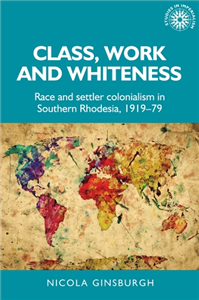
This book offers the first comprehensive history of white workers from the end of the First World War to Zimbabwean independence in 1980. It reveals how white worker identity was constituted, examines the white labouring class as an ethnically and nationally heterogeneous formation comprised of both men and women, and emphasises the active participation of white workers in the ongoing and contested production of race. White wage labourers' experiences, both as exploited workers and as part of the privileged white minority, offer insight into how race and class co-produced one another and how boundaries fundamental to settler colonialism were regulated and policed. Based on original research conducted in Zimbabwe, South Africa and the UK, this book offers a unique theoretical synthesis of work on gender, whiteness studies, labour histories, settler colonialism, Marxism, emotions and the New African Economic History.
Trusted Partner
This collection brings together scholars from disciplines including Children's Literature, Classics, and History to develop fresh approaches to children's culture and the uses of the past. It charts the significance of historical episodes and characters during the long nineteenth-century (1750-1914), a critical period in children's culture. Boys and girls across social classes often experienced different pasts simultaneously, for purposes of amusement and instruction. The book highlights an active and shifting market in history for children, and reveals how children were actively involved in consuming and repackaging the past: from playing with historically themed toys and games to performing in plays and pageants. Each chapter reconstructs encounters across different media, uncovering the cultural work done by particular pasts and exposing the key role of playfulness in the British historical imagination.
Trusted Partner
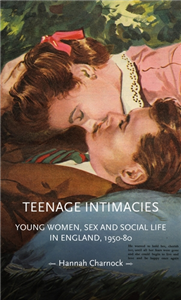
Teenage Intimacies offers a new account of 'sexual revolution' in mid-twentieth century England. Rather than focusing on 'Swinging London', the book reveals the transformations in social life that took place in school playgrounds, local cinemas, and suburban bedrooms. Based on over 300 personal testimonies, Teenage Intimacies traces the everyday experiences of teenage girls, illuminating how romance, sex and intimacy shaped their young lives. The book shows how sex became embedded in ideas about 'growing up' and explores how heterosexuality influenced young women's social lives and vice versa. It offers new explanations of why sexual mores shifted in this period, revealing the pivotal role that young women played in changing sexual values, cultures and practices in the 1950s, 1960s and 1970s.
Trusted Partner
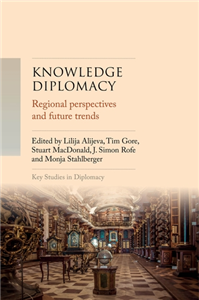
Knowledge Diplomacy examines particular and cultural antecedents to the development of the field; and its predominance in western thinking and critiques. Crucially, it does so not just from the perspective of scholars but also by consciously drawing on the perspectives of practitioners. The development of Knowledge Diplomacy allows for increased understanding of the role of research, innovation and higher education institutions as actors in international relations; shaping knowledge as they do. As such Knowledge Diplomacy presents a meaningful means of understanding how understanding knowledge impacts scholars, students and decisions makers as those who use knowledge in their practice.
Trusted Partner

Colonial governments, institutions and companies recognised that in many ways the effective operation of the Empire depended upon sexual arrangements. For example, nuclear families serving agricultural colonization, and prostitutes working for single men who powered armies and plantations, mines and bureaucracies. For this reason they devised elaborate systems of sexual governance, such as attending to marriage and the family. However, they also devoted disproportionate energy to marking and policing the sexual margins. In Sex, Politics and Empire, Richard Phillips investigates controversies surrounding prostitution, homosexuality and the age of consent in the British Empire, and revolutionises our notions about the importance of sex as a nexus of imperial power relations.


