
Your Search Results


-
Promoted Content
-
Promoted Content
-
 Trusted Partner
-
Trusted Partner

 January 1999
Superfit und einfach schön
So fühlst du dich rundum gut
by Busch, Sonja / Illustriert von Drinnenberg, Julia
-
Trusted Partner
-
Trusted Partner
-
Trusted Partner
-
Trusted Partner

 April 1999
Venezianische Epigramme
Eigenhändige Niederschriften, Transkription und Kommentar
by Johann Wolfgang Goethe, Rosalinde Gothe, Jochen Golz
-
Trusted Partner
-
Trusted Partner

 Literature & Literary StudiesJuly 2015
Monsters and the poetic imagination in The Faerie Queene
by Maik Goth
-
Trusted Partner

 June 2016
Der aufgehobene ausländische Schiedsspruch als »rechtliches nullum«?
Eine kritische Analyse auf der Grundlage des Verfassungs- und Völkerrechts.
by Boor, Felix
-
Trusted Partner
 Humanities & Social SciencesMarch 2021
Early medieval militarisation
by Ellora Bennett, Guido M. Berndt, Stefan Esders, Laury Sarti
-
Trusted Partner
 Literature & Literary StudiesMarch 2019
Monsters and the poetic imagination in The Faerie Queene
by Maik Goth, J. B. Lethbridge
-
Trusted Partner

 1989
1989Neu anfangen
Ratgeber für ein aktives Leben nach dem Beruf
by Massow, Martin; Lehr, Ursula; Boor, Ulrich
-
Trusted Partner
 Humanities & Social SciencesFebruary 2026
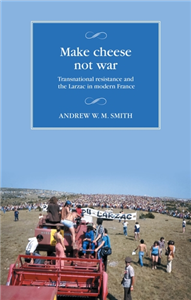
Make cheese not war
Transnational resistance and the Larzac in modern France
by Andrew W. M. Smith
In 1971, the French government announced a massive extension of its military base on the Larzac plateau in southern France. Land was to be expropriated from 107 farms around the small town of La Cavalerie. Limited resistance was expected, but what happened next exceeded all expectations. Local sheep farmers set up protest camps and occupied the land. They soon attracted an astonishing level of support, pioneering a form of regional radicalism with global implications. Drawing out the international dimensions of the protest, Make cheese not war explores a transnational resistance movement in the 1970s that challenged dominant visions of modernity and became a wellspring of radical alternatives. Exploring previously unconsulted archives in France and elsewhere, the book offers an in-depth analysis of the decade-long peasant movement and its aftermath. Repositioning the Larzac struggle within a wider network of French and international solidarities, from the US to the UK, Germany, Burkina Faso, New Caledonia and Japan, the book retraces political networks of pacifist activism, as well as environmental movements and anti-nuclear protest. It shows how this French peasant campaign became both a platform and a model for popular engagement.
-
Trusted Partner
-
Trusted Partner
 Humanities & Social SciencesMay 2026
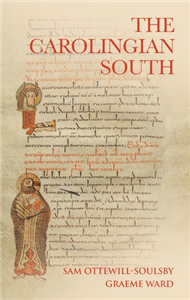
The Carolingian South
by Sam Ottewill-Soulsby, Graeme Ward
The Carolingian South turns the Frankish world upside down by taking as its subject the lands of the Carolingian empire south of the Loire and the Alps. It assembles an international group of scholars from different disciplines to examine how the Carolingians defined and were defined by this region. This book asks how Carolingian power was created and negotiated in the south. It views the Frankish empire from the perspective of the Christian and Muslim polities of the Mediterranean, while also following the movement of people and ideas through the endlessly fascinating world that they made.
-
Trusted Partner
-
Trusted Partner
 Humanities & Social SciencesNovember 2025
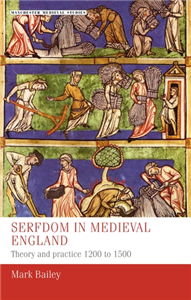
Serfdom in medieval England
Theory and practice 1200 to 1500
by Mark Bailey
Serfdom was a coercive relationship between a landowner and peasant, which was widespread across medieval and early modern Europe. Itfeatures prominently in major historical debates, such as the origins of capitalism and the divergent pathways of western and eastern Europe to modernity. Scholars have paid particular attention to English serfdom, which is usually portrayed as highly oppressive and a major cause of the Peasants' Revolt in 1381. This comprehensive survey draws on a vast scholarship and new research to show how, in reality, English serfdom was weak, casting new light on the nature of its society and economy when the Black Death struck in 1348-9. The pandemicnow assumesa central role in the rapid decline of serfdom, as illustrated in a case study of the estate of one of England's harshest landowners, St Albans abbey.
-
Trusted Partner
 Humanities & Social SciencesOctober 2011
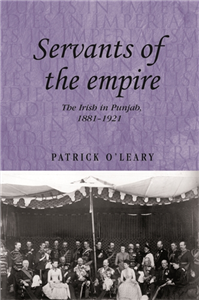
Servants of the empire
The Irish in Punjab 1881–1921
by Patrick O'Leary, Andrew Thompson, John Mackenzie
Punjab, 'the pride of British India', attracted the cream of the Indian Civil Service, many of the most influential of whom were Irish. Some of these men, along with Irish viceroys, were inspired by their Irish backgrounds to ensure security of tenure for the Punjabi peasant, besides developing vast irrigation schemes which resulted in the province becoming India's most affluent. But similar inspiration contributed to the severity of measures taken against Indian nationalist dissent, culminating in the Amritsar massacre which so catastrophically transformed politics on the sub-continent. Setting the experiences of Irish public servants in Punjab in the context of the Irish diaspora and of linked agrarian problems in Ireland and India, this book descrides the beneficial effects the Irish had on the prosperity of India's most volatile province. Alongside the baleful contribution of some towards a growing Indian antipathy towards British rule. Links are established between policies pursued by Irishmen of the Victorian era and current happenings on the Pakistan-Afghan border and in Punjab. ;



