Silke Heiss (Give Your Writing The Edge)
We are a one-woman charity, hoping to transform into a self-sustaining business, devoted to reminding readers of themselves.
View Rights Portal
We are a one-woman charity, hoping to transform into a self-sustaining business, devoted to reminding readers of themselves.
View Rights Portal
Writing power radically rethinks the place of the canon and canonicity as objects and concepts in contemporary academia and the everyday intellectual practices of academics. It is distinctive in its demonstration of how academics' engagements with canons shape their writing practices but also how scholars' writing practices, spaces, proclivities, and desires shape the canon and changing ideas of value in canonicity. The book thinks through frequently discussed problems of legitimacy and knowledge production from fresh perspectives of lived experience and the everyday to offer new insights into the politics of knowledge in contemporary social sciences.
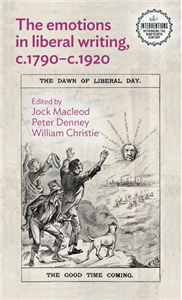
This volume of essays from a selection of distinguished international scholars is the first of its kind to explore in depth the emotional dimensions of liberal writing in Britain over the long nineteenth century. Addressing liberal writing in the public sphere rather than high political or parliamentary liberalism, it comprises a clear, context-setting introduction and eleven substantive chapters. The chapters analyse key texts and figures from the 1790s through to the 1920s and offer several different approaches to the central concern with the emotions and liberalism. These include examining the place of the emotions in the 'good life'; the social and political function of the emotions; emotional rhetoric in liberal writing; and liberal theories of the emotions. Both individually and as a collection, the essays provide an essential foundation for further scholarly work in this emerging field.
 Trusted Partner
Trusted Partner
Trusted Partner
 Trusted Partner

Writing for art is a concise introduction to the subject of ekphrasis, and the first study to offer a useful general survey of the larger philosophical and theoretical questions arising from the encounter of literary texts and artworks. Stephen Cheeke offers close readings of poems and prose from the nineteenth and twentieth centuries alongside a generous amount of illustrations, covering a broad range of writing and theory about the relation of literary texts to the visual arts, and extending the subject of ekphrasis to include literary works on photography, as well as celebrated prose descriptions of artworks. ;
Trusted Partner

Writing otherwise is a collection of essays by established feminist and cultural critics interested in experimenting with new styles of expression. Leading figures in their field, such as Marianne Hirsch, Lynne Pearce, Griselda Pollock, Carol Smart, Jackie Stacey and Janet Wolff, all risk new ways of writing about themselves and their subjects. Aimed at both general and academic readers interested in how scholarly writing might be more innovative and creative, this collection introduces the personal, the poetic and the experimental into the frame of cultural criticism. This collection of essays is highly interdisciplinary and contributes to debates in sociology, history, anthropology, art history, cultural and media studies and gender studies. ;
Trusted Partner

Writing otherwise is a collection of essays by established feminist and cultural critics interested in experimenting with new styles of expression. Leading figures in their field, such as Marianne Hirsch, Lynne Pearce, Griselda Pollock, Carol Smart, Jackie Stacey and Janet Wolff, all risk new ways of writing about themselves and their subjects. Aimed at both general and academic readers interested in how scholarly writing might be more innovative and creative, this collection introduces the personal, the poetic and the experimental into the frame of cultural criticism. This collection of essays is highly interdisciplinary and contributes to debates in sociology, history, anthropology, art history, cultural and media studies and gender studies.
Trusted Partner

A fully-rounded anthology of women's writing from World War One containing the known and unknown biographers and fiction writers of the period.. Explores the impact of the war on ideology, gender, genre and society and is a perfect complimentary text to Trudi Tate's Women Men and the Great War.. Aims to re-read the First World War as a female experience by drawing on the public and private sources of a wide range of different women.. Uses diaries, letters, articles and essays many of which have not been published.. Invaluable source document for scholars in many disciplines. ;
Trusted Partner

Our unwritten Constitution is past its sell-by date. If the Union is to be preserved we must recognise the UK as a federal country along the lines of Canada and Australia, and soon. Such is the argument made by Brice Dickson in this lucid and timely intervention to the debate on Britain's political future. A federal structure, he reasons, could maximise the benefits of cooperation between semi-autonomous regions while at the same time paying due respect to the nationalisms that exist within constituent parts of the country. The devolution of powers to the home nations, coupled with the trials and tribulations associated with Brexit and reform of the House of Lords, point to grave risks in the UK's current constitutional position. Dickson proposes a Constitutional Reform Act which would federalise the nation, provide a modern Bill of Rights, formalise allocation of public expenditure to devolved regions, and contain a clause setting out the 'purpose' of the UK. The UK has an enviable record in rising to a variety of challenges down the centuries, but the fallout from our recent history makes greater certainty and predictability imperative. This urgent analysis by one of our leading constitutional experts points to how that might best be achieved.
Trusted Partner
 Trusted Partner
Trusted Partner
Trusted Partner
This is the first study of the Anglo-Welsh border region in the period before the Norman arrival in England, from the fifth to the twelfth centuries. Its conclusions significantly alter our current picture of Anglo/Welsh relations before the Norman Conquest by overturning the longstanding critical belief that relations between these two peoples during this period were predominately contentious. Writing the Welsh borderlands in Anglo-Saxon England demonstrates that the region which would later become the March of Wales was not a military frontier in Anglo-Saxon England, but a distinctively mixed Anglo-Welsh cultural zone which was depicted as a singular place in contemporary Welsh and Anglo-Saxon texts. This study reveals that the region of the Welsh borderlands was much more culturally coherent, and the impact of the Norman Conquest on it much greater, than has been previously realised.
Trusted Partner
Trusted Partner
Trusted Partner

“Not another spelling test,” Joe groans as his stomachtightens. Reading and writing feel impossible – until helearns what’s behind his struggles. This encouraging storyhelps children with dyslexia feel understood and showsthat support is out there. Includes exercises and tips forfamilies and professionals. • Story-based support for children with dyslexia• Helps reduce school-related fear and stress• With guidance and activities for home and therapy
Trusted Partner
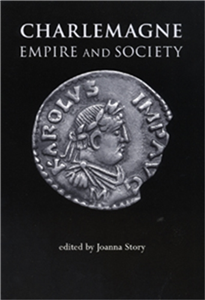
The age of Charlemagne was a crucible for change in the history of Europe, bridging the divide between the medieval and the classical worlds and setting the political and cultural tone for centuries to come. This book focuses directly on the reign of Charlemagne, bringing together a wide range of approaches and sources from the diverse voices of fifteen of the top scholars of early medieval Europe. The contributors have taken a number of original aproaches to the subject, from the fields of archaeology and numismatics to thoroughly-researched essays on key historical texts. The essays are embedded in the scholarship of recent decades but also offer insights into new areas and new approaches for research. A full bibliography of works in English as well as key reading in European languages is provided, making the volume essential reading for experienced scholars as well as students new to the history of the early middle ages. ;
Trusted Partner
 Trusted Partner

The first anthology of its kind, this timely collection brings together a diverse range of black British literatures, essays and documents from across the post-war period within a single volume.. Spanning half a century, this rich archive of representations includes South Asian, African and Caribbean cultural production by both leading and lesser-known artists, critics and commentators:. Sam Selvon Salman Rushdie George Lamming Hanif Kureishi Stuart Hall Linton Kwesi Johnson Caryl Phillips Paul Gilroy Meera Syal Kobena Mercer James Berry E. R. Braithwaite Wilson Harris Farrukh Dhondy V. S. Naipaul Ben Okri Wole Soyinka Hazel Carby Kamau Braithwaite Isaac Julien C. L. R. James Dick Hebdige A. Sivanandan Buchi Emecheta Louise Bennett Grace Nichols Jackie Kay. Directed at a truly interdisciplinary market, accommodating popular and 'high' cultural materials from across the disciplines of literature, film, photography, history, sociology, politics, Marxism, feminism, cultural and communications studies.. Situated and contextualised within accessible historical and cultural frameworks and incorporating lucid introductions, a detailed chronology and extensive bibliography.
Trusted Partner

When is the use of force for humanitarian purposes legitimate? The book examines this question through one of the most controversial examples of humanitarian intervention in the post Cold War period: the 1999 NATO intervention in Kosovo. Justifying Violence applies a critical theoretical approach to an interrogation of the communicative practices which underpin claims to legitimacy for the use of force by actors in international politics. Drawing on the theory of communicative ethics, the book develops an innovative conceptual framework which contributes a critical communicative dimension to the question of legitimacy that extends beyond the moral and legal approaches so often applied to the intervention in Kosovo. The empirical application of communicative ethics offers a provocative and nuanced account which contests conventional interpretations of the legitimacy of NATO's intervention. ;
Trusted Partner

In this bold and exhilarating mix of memoir and writing guide, Melissa Febos tackles the emotional, psychological, and physical work of writing intimately while offering an utterly fresh examination of the storyteller's life and the challenges it presents. How do we write about the relationships that have formed us? How do we describe our bodies, their desires and traumas? What does it mean to have your writing, or living, dismissed as "navel-gazing"-or else hailed as "so brave, so raw"? And to whom, in the end, do our most intimate stories belong? Drawing on her journey from aspiring writer to acclaimed author and writing professor-via addiction and recovery, sex work and academia-Melissa Febos has created a captivating guide to the writing life, and a brilliantly unusual exploration of subjectivity, privacy, and the power of divulgence. Candid and inspiring, Body Work will empower readers and writers alike, offering ideas-and occasional notes of caution-to anyone who has ever hoped to see their true self reflecting back from the open page.