The Nominate Group
Literary Management Firm
View Rights Portal

Atelier des Nomades was founded in 2010 by Corinne Fleury and Anthony Vallet. Their purpose is to enhance the cultural and natural heritage of Mauritius, improving cultural exchange and promoting a cross-fertilization of ideas.
View Rights Portal

Abdullah kommt aus Syrien. Er ist 16, als er aus seinem Heimatort Ar-Raqqa flieht. Sein älterer Bruder wurde verschleppt, sein Vater bei einem Bombenangriff getötet. Weil die Bedrohung immer größer wurde, stattete seine Familie ihn mit Geld aus. Abdullah schlug sich nach Deutschland durch. In einem Jugendheim findet er Sicherheit und ein neues Zuhause. Doch das Ankommen ist nicht leicht: Hautnah erlebt Abdullah, dass Flüchtlinge wie er als "Islamratten" beschimpft werden. Ständig spürt er misstrauische Blicke. Doch er bekommt auch immer wieder freundliche Hilfe, die ihm Hoffnung gibt. Hoffnung auf seine Zukunft in Deutschland, in einer Welt ohne Krieg.

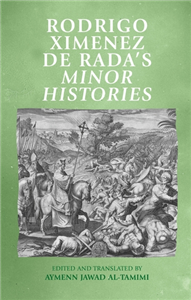
This work provides the first complete English translation of works by Toledan archbishop Rodrigo Ximénez de Rada (1170-1247 CE), whose 'Minor Histories' are sequels to his larger 'Gothic History' and thus round off his grand history of Spain project that he began at the request of King Ferdinand III. The 'Minor Histories' include Rodrigo's 'History of the Arabs' that can be considered the first surviving Western monograph focused on Arab and Islamic history and thus occupies a unique position in the medieval Latin corpus of writings. In addition to the translation, this book provides a thorough and accessible introduction to the life and works of Rodrigo, making sense of the context in which he wrote and his historical method. The translations are thoroughly annotated including cross-references to other Latin and Arabic sources for comparison.
 Trusted Partner


Mahmoud Al-Zein is the head of the Al-Zein clan, one ofthe most influential large families in GermanyStark, controversial, unsanitised: the brutal truth about violence,power and honour Arab clans rule Germany’s inner cities and are often in the headlines. One of the most influential of these large families is the Al-Zeins. Their family head, Mahmoud Al-Zein, is known as the notorious Godfather of Berlin. Now, he is the first to break his silence and to give a no-holds-barred account of the inner working of his family organisation: his journey to the top, conflicts with law, time in prison, feuds with rivals, the law of the family and the brutal fight for supremacy on the streets. An incomparable insight into Arab lansand a report on German day-to-day reality.
Trusted Partner


Was Isaak Babel für den der Oktoberrevolution von 1917 folgenden Bürgerkrieg, das leistete der Schriftsteller und Journalist Saadat Hassan Manto (geboren 1912, gestorben 1955 in Lahore/Pakistan, nahe der indischen Grenze) mit seinen Geschichten von der blutigen Teilung des indischen Subkontinents 1947: die bleibende Verdichtung des Gehörten, Gesehenen und Erlebten zu Szenen schmerzhaft gesteigerter Gegenwart, eines angesichts des Todes auf die Spitze getriebenen Lebens.
Trusted Partner

 Trusted Partner

 Trusted Partner
Trusted Partner
Trusted Partner

 Trusted Partner
Trusted Partner
Trusted Partner
Trusted Partner
Trusted Partner

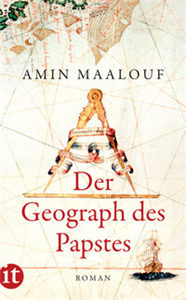
»Ich bin ein Sohn der Straße, meine Heimat ist die Karawane, und mein Leben ist eine Reise voller Überraschungen.« Hassan al-Wazzan, ein gebildeter junger Mann und gläubiger Muslim, bereist als Kaufmann den Maghreb und hat den großen Wunsch, nach Mekka zu pilgern. Doch es sind unruhige Zeiten in einer unruhigen Gegend, es herrschen Überfälle und Kriege. Wie aus dem Nichts taucht eines Tages eine Bande sizilianischer Piraten auf, die Hassan nach Rom verschleppen und versklaven. Er ist ein Glücksgriff für die Piraten, denn Hassans wacher Verstand und seine außergewöhnliche Klugheit machen ihn zu einem besonderen Geschenk für den mächtigsten Mann der christlichen Welt: Papst Leo X. Dieser ernennt ihn zu seinem Geographen – doch wird er dem Vatikan jemals wieder entkommen können, seine Freiheit zurückerlangen und in seine Heimat, den Maghreb, zurückkehren? »Der Geograph des Papstes« ist ein ungemein packender historischer Roman, der die ereignisreiche und hochspannende Epoche der Renaissance lebendig werden läßt.
Trusted Partner
 Trusted Partner
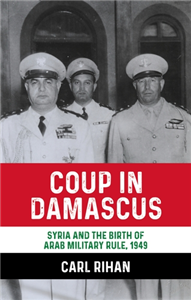
Coup in Damascus is a history of Syria's first military regime. It plots the the fall of Syria's democracy and the rise of its military rulers, particularly Husni al-Zaim, whose brief rule in 1949 represented a profoundly transformative moment for the Syrian nation. It is a history of the thoughts, intentions and motives of political actors underpinning the events that have marked Syria's history after the first Arab-Israeli war, and focuses mainly on the interaction between local, regional and international actors. Unlike most histories of the modern Middle East that tackle broad intervals and that focus on the sequences of events, this history seeks to reconstruct the thought processes behind the events, and anchor them within the epoch's existing political and socioeconomic conditions. It draws on several methodological influences, particularly R.G. Collingwood's 'history as re-enactment of the past'.
Trusted Partner

 Trusted Partner
Trusted Partner
Trusted Partner
Trusted Partner
Trusted Partner

 Trusted Partner
Trusted Partner
Trusted Partner
Trusted Partner
Trusted Partner