Polperro Heritage Press
Polperro Heritage Press is an independent British publisher, established in 1995. Recent titles from Polperro Press have included biographies, guides and a growing list of Cornish local history titles.
View Rights Portal
Polperro Heritage Press is an independent British publisher, established in 1995. Recent titles from Polperro Press have included biographies, guides and a growing list of Cornish local history titles.
View Rights Portal
A brazilian publishing house focused on selfhelp literature, esoterism and masonry and children's books. Our mission is to offer through words moments of unwinding and tranquility attached to a philosophical and esoteric learning experience. In this special edition of the Frankfurt Book Fair we will be displaying our new releases in the children's literature section, such as The Dreamy Dragon and The crystal Egg, by the brazillian actress and writer Norma Blum.
View Rights Portal

In 1994 the Arts Council of Great Britain brought together a number of theatre directors as part of the City of Drama celebrations. This is a collection of interviews and discussions with directors who have helped shape the development of theatre in the last 20 years. They include Peter Brook, Peter Stein, Augusto Boal, Jorge Lavelli, Lluis Pasqual, Lev Dodin, Maria Irene Fornes, Jonathan Miller, Jatinder Verma, Peter Sellars, Declan Donnellan, Ariane Mnouchkine, Ion Caramitru, Yukio Ninagawa and Robert Wilson. In addition to the art and craft of directing, there are discussions on multiculturalism; the "classical" repertoire; theatre companies and institutions; working in a foreign language; opera; Shakespeare; new technologies; the art of acting; design; international festivals; politics and aesthetics; the audience; and theatre and society. Finally, there is an epilogue by Peter Brook, Jonathan Miller and Oliver Sacks. ;
 Trusted Partner
 Trusted Partner

Performing Heritage is the first book to bring together the range of voices, debates and practices that constitute the fields of museum theatre and live interpretation. Inspiring and challenging in its scope and level of debate, Performing Heritage crosses the disciplines of performance and museum/heritage studies and offers remarkable and timely insights into the processes, outcomes and potential of this rich and rapidly developing practice - and in a variety of international contexts. The book productively brings together academic research and professional practice, and will be essential reading for all those interested in, and concerned with the future of, 'heritage' and its interpretation. ;
Trusted Partner

Written by an interdisciplinary team of scholars, this authoritative text presents an engaging narrative of the way politics features in heritage conservation and management. New international case studies illustrate how notions of identity, social class and nationhood may be woven into the provision of official heritage, and how heritage may be seen to be less about upholding truth or authenticity and more about delivering political objectives. Aimed primarily at students in heritage studies and professionals in heritage industries, this book is one of three in the Understanding Global Heritage series.
Trusted Partner

Written by an interdisciplinary team of scholars, this authoritative text explores how heritage is delivered and consumed in a global world, and the ever-increasing ways in which heritage is actively valued. New international case studies see heritage as social action, as performance, and as a vehicle for innovations in tourism, challenging the notion that only official heritage practices can successfully select and interpret our links with the past. Aimed primarily at students in heritage studies and professionals in heritage industries, this book is one of three in the Understanding Global Heritage series.
Trusted Partner
Trusted Partner

Written by an interdisciplinary team of scholars, this authoritative text explores the emotive issues surrounding the commemoration of war and atrocity, and the profound challenges for conservators posed by 'virtual', 'intangible' and 'multicultural' heritage. New international case studies demonstrate that while interest in the memorialisation of the great national upheavals of the last century has never been more acute, many of the problems of conserving the past in diverse and disparate societies remain to be resolved. Aimed primarily at students in heritage studies and professionals in heritage industries, this book is one of three in the Understanding Global Heritage series.
Trusted Partner

 Trusted Partner
 Trusted Partner
Trusted Partner
Trusted Partner
Trusted Partner
Trusted Partner
Trusted Partner
Trusted Partner
Trusted Partner
Trusted Partner
Trusted Partner
Trusted Partner
Trusted Partner
Trusted Partner
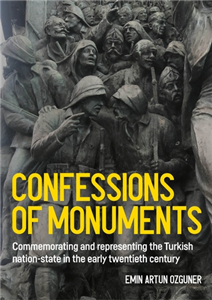
Following the dissolution of the Ottoman Empire in the early 1920s, an emerging nation state built a particular relationship with the Ottoman past. In its simultaneous disavowal and inheritance of it, this was the new Republic of Turkey, founded in 1923. Nation-states are areas of ideological contestation. However, they are equally visible and tangible. This is thanks to the making of a new world of artefacts in build or print that represent and commemorate them in many, often contradicting ways through design practices. This book offers a thorough account of this new Turkish material world through the trajectories of commemoration; from public monuments, print media, and festive illumination to temporary and permanent architecture from the onset of the 1908 Young Turk revolution to the demise of Turkey's founding single-party regime in the late 1950s. If objects are silent actors of history, their confessions await.
Trusted Partner
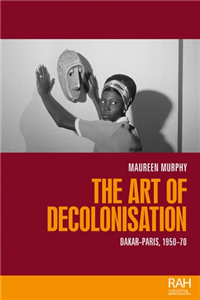
The art of decolonisation examines how artists challenged colonial legacies and reconfigured power through transnational networks of art and diplomacy. Adopting a global and transhistorical perspective, it explores artistic, political, and institutional relations between France and Senegal during decolonisation and the Cold War. From the emergence of a national modern art in Senegal to contested cultural policies and high-profile exhibitions-such as those featuring Picasso and Soulages in Dakar, or contemporary Senegalese art in Paris-this book traces the circulation of artworks, ideas, and influence across borders. It reveals how visual artists and filmmakers shaped a new artistic geopolitics between 1950 and 1970. Reconsidering the accepted chronology of the 'global turn', The art of decolonisation shows that the roots of global art discourse run deeper than the 1990s, and were already forming during the era of independence struggles.
Trusted Partner

Contemporary French cinema is an essential introduction to popular French film of the last 35 years. It charts recent developments in all genres of French cinema with analyses of over 120 movies, from Les Valseuses to Caché. Reflecting the diversity of French film production since the New Wave, this clear and perceptive study includes chapters on the heritage film, the thriller and the war movie, alongside the 'cinéma du look', representations of sexuality, comedies, the work of women film makers and le jeune cinéma. Each chapter introduces the public reception and critical debates surrounding a given genre, interwoven with detailed accounts of relevant films. Confirmed as a major contribution to both Film Studies and French Studies, this book is a fascinating volume for students and fans of French film alike.
Trusted Partner

Contemporary French cinema is an essential introduction to popular French film of the last 35 years. It charts recent developments in all genres of French cinema with analyses of over 120 movies, from Les Valseuses to Caché. Reflecting the diversity of French film production since the New Wave, this clear and perceptive study includes chapters on the heritage film, the thriller and the war movie, alongside the 'cinéma du look', representations of sexuality, comedies, the work of women film makers and le jeune cinéma. Each chapter introduces the public reception and critical debates surrounding a given genre, interwoven with detailed accounts of relevant films. Confirmed as a major contribution to both Film Studies and French Studies, this book is a fascinating volume for students and fans of French film alike.