
Your Search Results


-
Promoted Content

 Literature & Literary StudiesDecember 2000
Modernist Sexualities
by Hugh Stevens, Caroline Howlett, Susan Williams
Employing diverse theoretical approaches, the essays in this volume show how modernism intersects with historical developments such as the suffragette movement, technological change and its effects on women and labour, the growth of pseudo-scientific writings and the burgeoning lesbian and gay movement. They show how modernism questions the fundamentals of identity and upsets the fixities of gender and sexuality through a fascination with ambiguities, marginality and the crossing of borders. The book explores strategies of expressing same-sex desires in unexpected settings, modes of remaking sex and the body, relations between writing and reading, between public and private, between performer, performance and audience in a modernism broadly conceived to include political demonstrations, political essays and the visual arts alongside narrative and poetry. ;
-
Promoted Content
 Literature & Literary StudiesApril 2020
Interweaving myths in Shakespeare and his contemporaries
by Janice Valls-Russell, Agnès Lafont, Charlotte Coffin
This volume proposes new insights into the uses of classical mythology by Shakespeare and his contemporaries, focusing on interweaving processes in early modern appropriations of myth. Its 11 essays show how early modern writing intertwines diverse myths and plays with variant versions of individual myths that derive from multiple classical sources, as well as medieval, Tudor and early modern retellings and translations. Works discussed include poems and plays by William Shakespeare, Christopher Marlowe and others. Essays concentrate on specific plays including The Merchant of Venice and Dido Queen of Carthage, tracing interactions between myths, chronicles, the Bible and contemporary genres. Mythological figures are considered to demonstrate how the weaving together of sources deconstructs gendered representations. New meanings emerge from these readings, which open up methodological perspectives on multi-textuality, artistic appropriation and cultural hybridity.
-
 Trusted Partner
 The ArtsNovember 2025
Queen Henrietta's Men and the Cockpit Repertory
Drama on the Drury Lane Stage, 1626–36
by Eleanor Collins
This book offers the first extended study of Queen Henrietta's Men, one of Caroline London's most important professional playing companies. The drama that the company performed at the Cockpit between 1626 and 1636 includes many underexplored and neglected plays from the period alongside more celebrated works by dramatists including James Shirley and John Ford, and a number of Elizabethan and Jacobean revivals. Queen Henrietta's Men and the Cockpit Repertory explores the material and cultural conditions under which the company operated, and offers an account of the dynamics that held between new drama written for the company and the revivals staged alongside that fare. In doing so, this account illuminates the ways in which an appreciation of the work of Queen Henrietta's Men can offer new perspectives on theatre history and the categories of company and repertory that have shaped it.
-
Trusted Partner
 Biography & True StoriesMay 2026
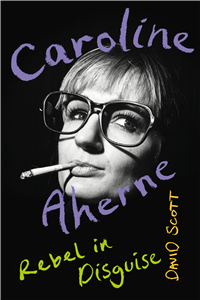
Caroline Aherne
Rebel in disguise
by David Scott
A thoughtful exploration of the work of this unique comedian and writer. Caroline Aherne was one of the most influential and beloved of British comedians. In this book David Scott explores Aherne's comedic artistry and creative legacy, focusing on her iconic characters and ground-breaking TV shows. Scott dives into Aherne's most beloved creations, from the sharp-tongued Mrs Merton to the quietly revolutionary The Royle Family. Drawing on the tales of collaborators and telling behind-the-scenes stories, he provides an intimate glimpse into the creative processes that brought these iconic works to life. At the same time, he examines the social and cultural influences that shaped Aherne's work, from the rich traditions of Northern working-class humour to the experiences of Irish migrants. Aherne's work is celebrated for its sharp wit, warmth and ability to find comedy in adversity. This book offers an exploration and celebration of one of comedy's most inventive minds, revealing how she reshaped the British comedy landscape.
-
Trusted Partner
 Business, Economics & LawNovember 2024
The Island Book of Records Volume II
1969-70
by Neil Storey
The second volume of this highly collectable series, covering the pivotal years of 1969-70. The Island Book of Records Volume II documents the years 1969-70, during which Island sought to build on its success with the Spencer Davis Group by seeking out new British rock talent. By the end of the period, Island was emerging as a major British label, one that could boast releases from Jethro Tull, Nick Drake, King Crimson, John and Beverley Martyn, Fairport Convention and Cat Stevens. Featuring material from recent interviews and from media interviews of the time, and including a comprehensive discography of 45s, The Island Book of Records Volume II is lavishly illustrated with gig adverts (very many at venues that no longer exist), concert tickets, flyers, international LP variants, labels, LP and 45 adverts and other ephemera collector's dream.
-
Trusted Partner
 Literature & Literary StudiesDecember 2005
Graham Swift
by Daniel Lea, Susan Williams
This book offers an accessible critical introduction to the work of Graham Swift, one of Britain's most significant contemporary authors. Through detailed readings of his novels and short stories from 'The Sweet Shop Owner' (1980) to 'The Light of Day' (2003), Daniel Lea lucidly addresses the key themes of history, loss, masculinity and ethical redemption, to present a fresh approach to Swift. This study proposes that one of the side-effects of modernity has been the destruction of traditional pathways of self and collective belief, leading to a loss of understanding between individuals about their duties to each other and to society. Swift's writing returns repeatedly to the question of what we can believe in when all the established markers of identity - family, community, gender, profession, history - have become destabilised. Lea suggests that Swift increasingly moves towards a notion of redemption through a lived ethical practice as the only means of finding solace in a world lacking a central symbolic authority. ;
-
Trusted Partner
Literature & Literary StudiesJanuary 2026
Shakespeare, memory, and modern Irish literature
by Nicholas Taylor-Collins
-
Trusted Partner
 Humanities & Social SciencesJanuary 2025
The four dimensions of power
Understanding domination, empowerment and democracy
by Mark Haugaard
In this accessible and sophisticated exploration of the nature and workings of social and political power, Haugaard examines the interrelation between domination and empowerment. Building upon the perspectives of Steven Lukes, Michel Foucault, Amy Allen, Hannah Arendt, Anthony Giddens, Pierre Bourdieu and others, he offers a clear theoretical framework, delineating power in four interrelated dimensions. The first and second dimensions of power entail two different types of social conflict. The third dimension concerns tacit knowledge, uses of truth and reification. Drawing upon genealogical theory and accounts of slavery as social death, the fourth dimension of power concerns the power to create social subjects. The book concludes with an original normative pragmatist power-based account of democracy. Offering lucid and entertaining illustrations of complex theoretical perspectives, this book is essential reading for scholars and activists.
-
Trusted Partner
 Literature & Literary StudiesSeptember 2025
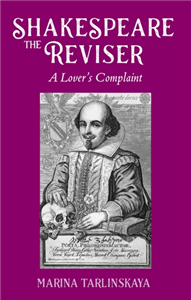
Shakespeare the Reviser
A Lover's Complaint
by Marina Tarlinskaya
The project researches the difference between a revision vs. a rewriting. The book explores the English poems and plays of the Early New English period, from the sixteenth to the beginning of seventeenth century, with over 50 entries examined. The main material is the poem A Lover's Complaint; the play Double Falsehood by Lewis Theobald; the revised and rewritten post-Restoration plays such as Richard II (revised by Lewis Theobald), and The Fatal Secret (rewritten Webster's The Duchess of Malfi) by Lewis Theobald. An example of authorial revision is Sonnets 2 and 138.
-
Trusted Partner

 March 2026
Racing Legends (Band 1) - Lewis Hamilton
101 Fakten über die Formel 1
by Maurice Hamilton, Cat Sims, Kanut Kirches
Komm mit in die Welt der schnellen Champions! Sieben Weltmeistertitel und über 100 Grand Prix‘ Siege – kein anderer Fahrer hat so viele Rekorde gebrochen wie er: Lewis Hamilton! Schon als Junge wollte er ganz nach vorn und mit Talent, Mut und harter Arbeit hat er es bis an die Spitze der Formel 1 geschafft.In dieser Reihe tauchen Kinder ab 8 Jahren in die aufregende Welt des Motorsports ein. Jeder Band erzählt den Werdegang einer berühmten Rennsportlegende – von den ersten Schritten im Kart bis zum großen Durchbruch in der Formel 1. Fundiert erzählt von Rennsportexperte Maurice Hamilton und damit ein Muss für alle kleinen Fans des Motorsports! Lewis Hamilton hautnah: Mehr als Rekorde und Siege – das Buch erzählt von den Träumen, Herausforderungen und der persönlichen Geschichte des Formel-1-Stars. Spannende Rennsport-Fakten: Zusätzlich wird spannendes Wissen über den Rennsport vermittelt: Technik, Boxenstopps, berühmte Strecken, die Arbeit der Teams und vieles mehr – ein perfekter Einstieg in die faszinierende Welt der Formel 1. Aktueller Trend: Formel 1 erlebt weltweit einen großen Boom – und Racing Legends richtet sich direkt an die jüngsten Motorsport-Fans. Coole Illustrationen: Die Geschichte wird durch viele Schwarz-Weiß-Illustrationen im Comic-Stil aufgelockert. Perfekt für Leseanfänger*innen: Kurze Kapitel, einfache Sätze und viele Illustrationen – ideal für den Lesestart! Experten-Wissen: Der Formel 1-Experte und Journalist Maurice Hamilton hat in seiner Karriere über 500 Grand-Prix-Rennen besucht – und gibt sein Wissen in Racing Legends weiter. Leseförderung mit Antolin: Der Titel ist bei Antolin gelistet und fördert spielerisch die Lesekompetenz.
-
Trusted Partner
 Literature & Literary StudiesFebruary 2022
Shakespeare and the supernatural
by Victoria Bladen, Yan Brailowsky, Gayle Allan, Jacquelyn Bessell, Victoria Bladen, Yan Brailowsky, William C. Carroll, Bernadette Cochrane, Alexa Huang, Laurie Johnson, Pierre Kapitaniak, Imke Lichterfeld, Florence March, Maddalena Pennacchia, Chelsea Philips, Yukari Yoshihara, Christopher Wortham
-
Trusted Partner
The ArtsApril 2024
Hyde Park
by James Shirley
by Eugene Giddens
Hyde Park (1632) is one of the best-loved comedies of James Shirley, considered to be one of the most important Caroline dramatists. The play showcases strong female characters who excel at rebuking the outlandish courtship of various suitors. Shirley's comic setting, London's Hyde Park, offers ample opportunity for witty dialogue. This is the first critical edition of the play, including a wide-ranging introduction and extensive commentary and textual notes. Paying special attention to the culture of Caroline London and its stage, the volume unpicks Shirley's politics of courtship and consent while also underlining the play's dynamics of class and power. A detailed performance history traces productions from 1632, across the Restoration to the present day, including that of the Royal Shakespeare Company in 1987. A textual history of the play's first quarto determines how it was printed and what relationship Hyde Park has to other texts by Shirley.
-
Trusted Partner
 Teaching, Language & ReferenceMay 2025
US diplomacy and the Good Friday Agreement in post-conflict Northern Ireland
by Richard Hargy
Richard Haass and Mitchell Reiss, as autonomous diplomats in the George W. Bush State Department, were able to alter US intervention in Northern Ireland and play critical roles in the post-1998 peace process. Their contributions have not been fully appreciated or understood. The restoration of Northern Ireland's power-sharing government in 2007 was made possible by State Department-led intervention in the peace process. There are few references to Northern Ireland in work examining the foreign policy legacy of the George W. Bush presidency. Moreover, the ability to control US foreign policy towards the region brought one of George W. Bush's Northern Ireland special envoys into direct diplomatic conflict with the most senior actors inside the British government. This book will uncover the extent of this fall-out and provide original accounts on how diplomatic relations between these old allies became so fraught.
-
Trusted Partner
 The ArtsMay 2022
Hyde Park
by James Shirley
by Helen Ostovich, Eugene Giddens
Hyde Park (1632) is one of the best-loved comedies of James Shirley, considered to be one of the most important Caroline dramatists. The play showcases strong female characters who excel at rebuking the outlandish courtship of various suitors. Shirley's comic setting, London's Hyde Park, offers ample opportunity for witty dialogue and sport - including foot and horse races - across three love plots. This is the first critical edition of the play, including a wide-ranging introduction and extensive commentary and textual notes. Paying special attention to the culture of Caroline London and its stage, the Revels Plays edition unpicks Shirley's politics of courtship and consent while also underlining the play's dynamics of class and power. A detailed performance history traces productions from 1632, across the Restoration to the present day, including that of the Royal Shakespeare Company in 1987. A textual history of the play's first quarto determines how it was printed and what relationship Hyde Park has to other texts by Shirley from the same publishers.
-
Trusted Partner
 Humanities & Social SciencesJuly 2021
Post-everything
An intellectual history of post-concepts
by Herman Paul, Adriaan van Veldhuizen
Postmodern, postcolonial and post-truth are broadly used terms. But where do they come from? When and why did the habit of interpreting the world in post-terms emerge? And who exactly were the 'post boys' responsible for this? Post-everything examines why post-Christian, post-industrial and post-bourgeois were terms that resonated, not only among academics, but also in the popular press. It delves into the historical roots of postmodern and poststructuralist, while also subjecting more recent post-constructions (posthumanist, postfeminist) to critical scrutiny. This study is the first to offer a comprehensive history of post-concepts. In tracing how these concepts found their way into a broad range of genres and disciplines, Post-everything contributes to a rapprochement between the history of the humanities and the history of the social sciences.
-
Trusted Partner
 Business, Economics & LawOctober 2026
The Island Book of Records Volume III
1971-72
by Neil Storey
The third in the acclaimed Island Book of Records series chronicles 1971-72, two years that saw the label secure a position at the forefront of contemporary music around the world. Major albums from Cat Stevens, Emerson, Lake & Palmer and Jethro Tull brought international success. Traffic released their era-defining The Low Spark of High Heeled Boys and Island returned to its roots with the soundtrack to the most important Jamaican film of all time, The Harder They Come. Nick Drake's masterpieces Bryter Layter and Pink Moon were yet to find their audience, but a new sensation emerged as Roxy Music released their first LP. Meanwhile, Bob Marley & The Wailers were beginning to record Catch A Fire - the album that will be the first to be detailed in IBoR IV. Featuring material from recent interviews and comment of the time, and including a comprehensive discography of 45s, The Island Book of Records Volume III is lavishly illustrated with album art, gig adverts, tickets, flyers, international LP variants, rare photos, LP and 45 adverts and exclusive ephemera.
-
Trusted Partner
 Literature & Literary StudiesOctober 2023
Reading David Foster Wallace between philosophy and literature
by Allard den Dulk, Pia Masiero, Adriano Ardovino
-
Trusted Partner
 Literature & Literary StudiesMarch 2026
What's in a name?
How historians know Shakespeare was Shakespeare
by Susan Dwyer Amussen
A compelling tour of Shakespeare's England that makes a powerful contribution to the 'authorship question'. How do we know Shakespeare was Shakespeare? Could a glover's son who left school at fifteen really be the author behind such masterpieces as Hamlet, King Lear and The Tempest? Yes! says historian Susan Amussen. She transports readers back to early modern England, to travel the path that carried William Shakespeare from humble origins in Stratford to literary greatness on the London stage. This was a society undergoing rapid change. Grammar schools made education in Latin and Greek available to commoners, while touring players brought the latest dramatic productions to the masses. And in London, a metropolis filled with European visitors, ordinary people had the opportunity to see courtly life up close. No serious historian doubts that Shakespeare was the author of the plays that bear his name. Susan Amussen shares what they know: that Shakespeare's England was a complex and cosmopolitan place, with everything a talented young playwright needed to develop his craft and furnish his imagination.
-
Trusted Partner
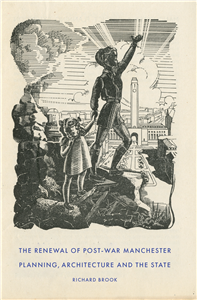 The ArtsSeptember 2024
The renewal of post-war Manchester
Planning, architecture and the state
by Richard Brook
A compelling account of the project to transform post-war Manchester, revealing the clash between utopian vision and compromised reality. Urban renewal in Britain was thrilling in its vision, yet partial and incomplete in its implementation. For the first time, this deep study of a renewal city reveals the complex networks of actors behind physical change and stagnation in post-war Britain. Using the nested scales of region, city and case-study sites, the book explores the relationships between Whitehall legislation, its interpretation by local government planning officers and the on-the-ground impact through urban architectural projects. Each chapter highlights the connections between policy goals, global narratives and the design and construction of cities. The Cold War, decolonialisation, rising consumerism and the oil crisis all feature in a richly illustrated account of architecture and planning in post-war Manchester.
-
Trusted Partner
 Literature & Literary StudiesApril 2023
Charles Dickens and Georgina Hogarth
A curious and enduring relationship
by Christine Skelton
Charles Dickens called his sister-in-law Georgina Hogarth his 'best and truest friend'. Georgina saw Dickens as much more than a friend. They lived together for twenty-eight years, during which time their relationship constantly changed. The sister of his wife Catherine, the sharp and witty Georgina moved into the Dickens home aged fifteen. What began as a father-daughter relationship blossomed into a genuine rapport, but their easy relations were fractured when Dickens had a mid-life crisis and determined to rid himself of Catherine. Georgina's refusal to leave Dickens and his desire for her to remain in his household led to rumours of an affair and even illegitimate children. He left her the equivalent of almost £1 million and all his personal papers in his will. Georgina's commitment to Dickens was unwavering but it is far from clear what he did to deserve such loyalty. There were several occasions when he misused her in order to protect his public reputation. Why did Georgina betray her once much-loved sister? Why did she fall out with her family and risk her reputation in order to stay with Dickens? And why did the Dickenses' daughter Katey say it was 'the greatest mistake ever' to invite a sister-in-law to live with a family?

