Your Search Results

      • Barbara E. Euler

        Hello, I am the author and publisher of a German police story situated in Bruges. Available in print and as e-book.   Look at the e-book here: https://www.neobooks.com/ebooks/barbara-e--euler-raphaels-rueckkehr-ebook-neobooks-AXGc1FyzA_UjA5yswzJR?toplistType=undefined   Look at the print and e-book here: https://www.amazon.de/Raphaels-R%C3%BCckkehr-Krimi-Barbara-Euler/dp/3752943653/ref=sr_1_1?__mk_de_DE=%C3%85M%C3%85%C5%BD%C3%95%C3%91&dchild=1&keywords=barbara+e.+euler&qid=1602840731&sr=8-1

        View Rights Portal
      • Trusted Partner
        Humanities & Social Sciences
        April 2026

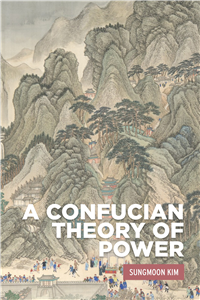
        A Confucian theory of power

        by Sungmoon Kim

        In the book's lead essay, Sungmoon Kim offers a comprehensive analysis of Confucian power. Through a blend of philosophical, political, and historical analysis, Kim challenges the dominant idea that Confucianism is primarily centred on virtue ethics. Instead, he argues that Confucianism perceives power through the prism of responsibility. Kim not only traces this perspective throughout history but also demonstrates its relevance to contemporary society. He contrasts this Confucian perspective with Western political theory's view of power as control. Political theorists and philosophers will offer essay responses to Sungmoon Kim's provocation, offering a dialogue approach to provide a comprehensive analysis of the Confucian conception of power.

      • Trusted Partner
        July 2021

        Patchwork Power!

        So wird die Sache mit der Bonusfamilie zum echten Bonus

        by Marita Strubelt

        "Patchwork Power!" von Marita Strubelt ist ein wegweisender Ratgeber für Eltern in Patchworkfamilien, der praktische Lösungen und Strategien für den Umgang mit den Herausforderungen des Patchwork-Lebens bietet. Strubelt, selbst eine erfahrene Patchwork-Familien-Expertin, teilt ihr umfassendes Wissen und persönliche Erfahrungen, um Leserinnen und Lesern zu helfen, die Dynamiken ihrer eigenen Patchworkfamilien besser zu verstehen und positiv zu gestalten. Das Buch legt einen starken Fokus auf die Selbstfürsorge, den Perspektivwechsel und die Wertschätzung aller Familienmitglieder. Es leitet dazu an, aus Problemen Kraft zu schöpfen und die einzigartige Struktur einer Patchworkfamilie als echten Bonus zu begreifen. Durch seine enge Anbindung an das Magazin "Leben & erziehen" und eine aktive Facebook-Gruppe bietet es eine kontinuierliche Unterstützung und Gemeinschaft für Leserinnen und Leser. "Patchwork Power!" richtet sich an Patchwork-Eltern, die nach einem modernen, empathischen und praxisnahen Ansatz suchen, um ihr Familienleben zu bereichern und zu harmonisieren. Modern und praxisnah: Bietet einen zeitgemäßen Ratgeber, der auf den neuesten Erkenntnissen und realen Erfahrungen basiert. Lösungsorientierte Ansätze: Stellt konkrete, umsetzbare Strategien zur Verfügung, die aus dem Alltag einer Patchwork-Coachin stammen. Fokus auf Selbstfürsorge und Empathie: Betont die Bedeutung von Selbstfürsorge und einem empathischen Umgang innerhalb der Familie. Unterstützung durch eine aktive Community: Zugang zu einer hilfreichen Facebook-Gruppe und der Expertise einer Patchwork-Familien-Expertin. Vielseitig einsetzbar: Bietet wertvolle Einsichten und Tipps, die über die Patchwork-Thematik hinaus in vielen Lebensbereichen anwendbar sind. Empathische und wertschätzende Sprache: Spricht Leserinnen und Leser auf eine persönliche und respektvolle Weise an. Bewältigung spezifischer Herausforderungen: Geht gezielt auf typische Fallstricke und Lösungswege in Patchworkfamilien ein. Für verschiedene Familienmodelle geeignet: Das Buch bietet einen soliden Grundstock an Rat und Unterstützung für viele Konstellationen innerhalb der Patchwork-Dynamik.

      • Trusted Partner
        Humanities & Social Sciences
        January 2025

        The four dimensions of power

        Understanding domination, empowerment and democracy

        by Mark Haugaard

        In this accessible and sophisticated exploration of the nature and workings of social and political power, Haugaard examines the interrelation between domination and empowerment. Building upon the perspectives of Steven Lukes, Michel Foucault, Amy Allen, Hannah Arendt, Anthony Giddens, Pierre Bourdieu and others, he offers a clear theoretical framework, delineating power in four interrelated dimensions. The first and second dimensions of power entail two different types of social conflict. The third dimension concerns tacit knowledge, uses of truth and reification. Drawing upon genealogical theory and accounts of slavery as social death, the fourth dimension of power concerns the power to create social subjects. The book concludes with an original normative pragmatist power-based account of democracy. Offering lucid and entertaining illustrations of complex theoretical perspectives, this book is essential reading for scholars and activists.

      • Trusted Partner
        Humanities & Social Sciences
        September 2025

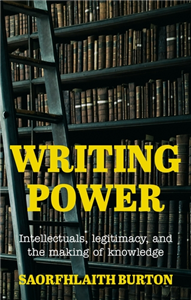
        Writing power

        Intellectuals, legitimacy, and the making of knowledge

        by Sarah Victoria Alexandra Burton

        Writing power radically rethinks the place of the canon and canonicity as objects and concepts in contemporary academia and the everyday intellectual practices of academics. It is distinctive in its demonstration of how academics' engagements with canons shape their writing practices but also how scholars' writing practices, spaces, proclivities, and desires shape the canon and changing ideas of value in canonicity. The book thinks through frequently discussed problems of legitimacy and knowledge production from fresh perspectives of lived experience and the everyday to offer new insights into the politics of knowledge in contemporary social sciences.

      • Trusted Partner
        Humanities & Social Sciences
        August 2022

        The power of citizens and professionals in welfare encounters

        The influence of bureaucracy, market and psychology

        by Nanna Mik-Meyer

        This book is about power in welfare encounters. Present-day citizens are no longer the passive clients of the bureaucracy and welfare workers are no longer automatically the powerful party of the encounter. Instead, citizens are expected to engage in active, responsible and coproducing relationships with welfare workers. However, other factors impact these interactions; factors which often pull in different directions. Welfare encounters are thus influenced by bureaucratic principles and market values as well. Consequently, this book engages with both Weberian (bureaucracy) and Foucauldian (market values/NPM) studies when investigating the powerful welfare encounter. The book is targeted Academics, post-graduates, and undergraduates within sociology, anthropology and political science.

      • Trusted Partner
        April 2013

        Big Data für IT-Entscheider

        Riesige Datenmengen und moderne Technologien gewinnbringend nutzen (Print-on-Demand)

        by Baron, Pavlo

      • Trusted Partner
        May 2001

        Der Baron Bagge

        Novelle

        by Alexander Lernet-Holenia, Rüdiger Görner

        Rüdiger Görner, geb. 1957, Studium der Germanistik, Geschichte, Anglistik und Philosophie an der Universität Tübingen und am University College, University of London; lebt als Literaturwissenschaftler, Schriftsteller und Kritiker seit 1981 in London. 1997-2004 Professur für German Literature an der Aston University in Birmingham sowie von 1999-2004 Director des Institute of Germanic Studies und Gründer des Ingeborg-Bachmann Centre for Austrian Literature, University of London. Seit 2004 Professor für neuere deutsche Literatur und Gründungsdirektor des Centre for Anglo-German Cultural Relations am Queen Mary College, University of London. Zahlreiche Publikationen zu Literatur und Musik, u.a. zu Thomas Mann, Rilke, Nietzsche und Mozart.

      • Trusted Partner
        November 2025

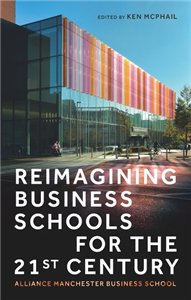
        Reimagining business schools for the 21st century

        Alliance Manchester Business School

        by Kenneth McPhail, James Pendrill

        Whether it's dealing with regional economic disparities, global geopolitical upheaval, climate change, or the impact of new technologies such as artificial intelligence, we are living in pivotal times. To mark its 60th anniversary in 2025, this accessible book from Alliance Manchester Business School outlines in detail how business schools can play a significant role in confronting these huge challenges, and equip the next generation of business leaders with the skills they need to embrace them. Informing public and political debate on the role of business in both the causes and solutions to our biggest challenges the book offers a rethinking of the role of business in society. It will also discuss specific examples of how collaborations with business are leading to impact and change in society. Featuring a range of thought-provoking essays co-authored by eminent academics and business leaders, this collection will challenge the status quo and outline how business and management research is helping address grand challenges, generate economic growth, inform policy development, and define business thinking over the next generation.

      • Trusted Partner
      • Trusted Partner
      • Trusted Partner
        Humanities & Social Sciences
        July 2020

        The four dimensions of power

        by Mark Haugaard, Mark Haugaard

      • Trusted Partner
      • Trusted Partner
        Business, Economics & Law
        June 2026

        Power plants

        Bioenergy, vegetal labour and the politics of productivity

        by James Palmer

        Power Plants offers an unflinching assessment of society's underappreciated but growing addiction to the industrial burning of crops and trees for energy. As vehicles increasingly run on fuels made from sugarcane and oil-palm, wood pellets replace coal, and scientists rush to engineer crops to produce renewable jet fuel, this book blows apart bioenergy's reputation as a simple, benign substitute for fossil fuels. Scrutinising modern bioenergy systems in the UK, Europe and United States, Power Plants shows how vegetal lifeforms are being enrolled to reinforce energy cultures centred around logics of efficiency, productivity and economic growth at all costs. Nonetheless, the book insists that a closer attention to plants could yet provoke a rethink of the social and economic purposes of all kinds of energy, with radical implications for ideas about growth, waste, prosperity and even pleasure.

      • Trusted Partner
      • Trusted Partner
      • Trusted Partner
      • Trusted Partner
      • Trusted Partner

      Subscribe to our

      newsletter