Kibondo Éditions
Kibondo Editions Ltd is an independent Publishing House operating in Rwanda since 2009. It is focused on a wide range children’s books, especially for ages between 2-6 years.
View Rights Portal
Kibondo Editions Ltd is an independent Publishing House operating in Rwanda since 2009. It is focused on a wide range children’s books, especially for ages between 2-6 years.
View Rights Portal
We are a young and flourishing independent publishing company based in Barnes, London. We create beautifully designed and illustrated books for the UK and international markets in the areas of popular culture, music, film, art, design and architecture, history and biography, and children's books.
View Rights Portal

With well over 6,300 articles, including over 500 new entries, this fourth edition of The Encyclopedia of British Film is a fully updated invaluable reference guide to the British film industry. It is the most authoritative volume yet, stretching from the inception of the industry to the present day, with detailed listings of the producers, directors, actors and studios behind a century or so of great British cinema. Brian McFarlane's meticulously researched guide is the definitive companion for anyone interested in the world of film. Previous editions have sold many thousands of copies and this fourth edition will be an essential work of reference for enthusiasts interested in the history of British cinema, and for universities and libraries.
 Trusted Partner
Trusted Partner
Trusted Partner

The Humorous Magistrate is a seventeenth-century satiric comedy extant in two highly distinctive manuscripts. This, the earliest and clearly working draft of the play is bound with three other plays (including The Emperor's Favourite, published by the Malone Society in 2010) in a volume in the library of the Newdigate family of Arbury Hall, Nuneaton, Warwickshire. The second version, showing yet another stage of revision not found in the Arbury manuscript and orientated towards performance, was purchased by the University of Calgary from the English antiquarian Edgar Osborne in 1972. The relationship between the manuscripts was discovered in 2005. The anonymous play has been attributed to John Newdigate III (1600-1642). Like The Emperor's Favourite, it takes aim at the court; its particular object of satire is governmental strategies under the Personal Rule of Charles I. The play appears in print for the first time in these separate editions. The volumes are illustrated with several plates, some provided for comparative purposes.
Trusted Partner

This book provides scholars and students alike with a set of texts that can deepen their understanding of the culture and society of the twelfth-century German kingdom. The sources translated here bring to life the activities of five noblemen and noblewomen from Rome to the Baltic coast and from the Rhine River to the Alpine valleys of Austria. To read these five sources together is to appreciate how interconnected political, military, economic, religious and spiritual interests could be for some of the leading members of medieval German society-and for the authors who wrote about them. Whether fighting for the emperor in Italy, bringing Christianity to pagans in what is today northern Poland, or founding, reforming and governing monastic communities in the heartland of the German kingdom, the subjects of these texts call attention to some of the many ways that noble life shaped the world of central medieval Europe.
Trusted Partner
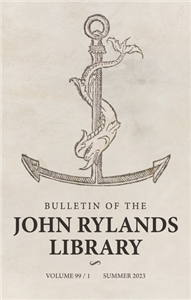
This special issue of the Bulletin of the John Rylands Library is devoted to the Aldine edition of the Ancient Greek epistolographers. Published in Venice in 1499 by Aldus Manutius, the Aldine edition was the first printed edition of most of the thirty-six Greek letter collections that it contains. As such, it embodies the intersection between the medieval epistolary anthologies that predated it and the printed editions of Greek epistolographic collections that followed, which were primarily based on its text. In recent decades, the Aldien edition has been the subject of important works, which have sought to analyse its contents and sources. This issue explores the Aldine edition from three perspectives: its relationship to the epistolary collections found in medieval manuscripts, its relationship to the printed editions that followed it and its legacy and value for the modern scholar studying Ancient Greek epistolography.
Trusted Partner


We all know that audio engineering is more than just acronyms. But what do they all mean? This practical textbook is designed to meet the special needs of events technicians. The textbook stands out from the crowd because it is designed specifically with the university curriculum and professional needs in mind, making it not only an excellent companion in the classroom, but a useful reference for on the job as well. The author, himself an instructor for special events technicians, covers the ground from physical fundamentals of acoustics and electronics to setting up mixing consoles and sound systems, providing a multitude of useful tips without confusing the reader with extraneous details. A chapter on video technology rounds off the book. Sample calculations put the material in a practical context, and sample problems at the end of each chapter (with solutions in the appendix) help review what has been learned and inspire further thought. Entertaining guest essays provide a broader perspective.
Trusted Partner


Sooner or later everything is thrown away. In the consumer society, however, usable and serviceable products that may be as good as new are also thrown away. Such behaviour is the result of a long-term process that has developed over a period of one-and-a-half centuries. The change was led by the USA, and the Federal Republic of Germany followed. It started at the turn of the last century with personal hygiene: articles such as toilet paper, sanitary towels, nappies and paper handkerchiefs. After the Second World War, a large number of other disposable articles were soon added, such as paper cups and plastic dishes, nylon stockings and pens, razor blades, beverage cans and much more besides. Wolfgang König shows how business and consumers have together made throwing things away perfectly normal – and discusses how the throwaway society may be overcome.
Trusted Partner

The first edition of this book demonstrated that British political parties now attempt to offer a complete product that will appeal to a majority of voters, rather than being influenced by a political ideology and firm belief system. This new edition provides an updated and more in-depth exploration of the political marketing approach, including analysis of the 2001 and 2005 elections. It re-presents the influential theory of market, sales and product-oriented parties, discussing the potential and the limits of consumerism, and the need to blend business concepts with a traditional understanding of politics. Lee-Marshment examines Blair's New Labour government in order to draw out lessons on delivery, maintaining market intelligence and the effect of changing to a leadership approach that goes against country and party. Analysis of the Conservatives in opposition shows how the best intentions of party leaders to implement a market-orientation can be thwarted by internal resistance and traditional party elites. Providing a more reflective and critical analysis, the second edition offers a more nuanced discussion on how political parties can not only win elections but govern successfully.
Trusted Partner
Trusted Partner

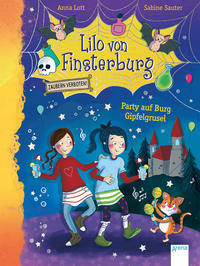
The Dark Castle family receives an invitation to a party at Highhorror Castle. Lilo and Miss Rüdiger are immediately eager to go. And of course Luisa should go with them. But humans are strictly forbidden to set foot in Castle Highhorror. “Who cares?”, say Lilo and Luisa, and at first everything seems fine: Luisa gets in as a perfect witch. But then the girls learn about a protective magic spell which covers the whole of the castle: unauthorized beings will be turned for ever into stone… Only a secret book of magic spells can save Luisa now!
Trusted Partner
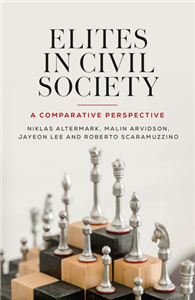
Where civil society is often seen as a driving force for equality, this book addresses a challenging topic: civil society elites. Drawing on a comprehensive study of Italy, Poland, Sweden, and the UK, this ground-breaking research investigates the often-overlooked power structures within civil society. By combining elite studies with civil society research, the book uncovers how a distinct civil society elite emerges and how it interacts with leaders in politics and business. The findings reveal a fascinating paradox. While this elite may be a powerful engine for social change, its integration into wider power circles risks reproducing the very inequalities it seeks to dismantle. By exploring how this elite can become disconnected from its grassroots, the book provides essential insights into the future of civil society and its democratic promise.
Trusted Partner
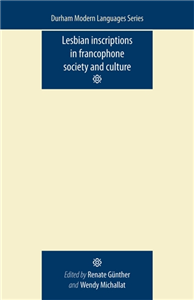
This book represents the first comprehensive collection of essays in English dedicated entirely to the study of lesbian inscriptions in francophone society and culture. Spanning the period from the early nineteenth to the twenty-first century, the volume offers a range of interdisciplinary perspectives on ways in which lesbianism has been represented and represented itself, with essays on poetry and the novel, contemporary film and television, photography and architecture. These essays will appeal to students and scholars of gender studies and French literature and culture. ;
Trusted Partner
Trusted Partner
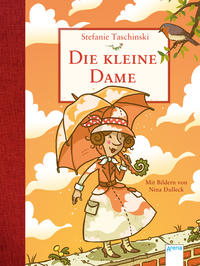
The Little Lady makes all hearts sing! When Lilly and her family move into the old house with the golden pretzel, she has no idea that a magic neighbour lives in the mysterious backyard. The Little Lady keeps a chameleon that is 1000 years old; she can make herself invisible and masters all kinds of magic tricks – but most of all she loves to play pranks on others! So a summer filled with wonderful adventures begins for Lilly. Poetic, full of imagination and humour, the Little Lady is delighted by her ever-growing community of fans and enjoys huge success with young and old alike. A fantastically beautiful story to read aloud or alone, exquisitely illustrated by Nina Dulleck.
Trusted Partner
Trusted Partner

The Conservative Party and the Constitution examines the profound influence on Britain's constitutional framework over nearly two centuries. Through rigorous analysis, it traces how Tory leaders navigated parliamentary reform, devolution, and Brexit, balancing tradition with pragmatic adaptation. Drawing on exclusive interviews, archival records, and historical sources, the book reveals the Party's statecraft and offers fresh insights into the Conservatives' role in shaping modern governance. Essential for historians, political scientists, and those engaged with British politics, this study illuminates the dynamic interplay of power, ideology, and constitutional change, making it a vital contribution to understanding Britain's constitutional history.
Trusted Partner
Trusted Partner
The John Rylands Library houses one of the finest collections of rare books, manuscripts and archives in the world. The collections span five millennia, have a global reach and cover a wide range of subjects, including art and archaeology; economic, social, political, religious and military history; literature, drama and music; science and medicine; theology and philosophy; travel and exploration. For over a century, the Bulletin of the John Rylands Library has published research that complements the Library's special collections. An electronic edition of this issue is freely available under a Creative Commons (CC BY-NC-ND) licence.
Trusted Partner