
Your Search Results
-

-

American Academy of Pediatrics
Leading global publisher in the field and practice of Pediatrics. AAP Publications are among the most respected and frequently referenced in the world, including journals, clinical and consumer books and eBooks, and continuing medical education. Top title include Red Book, NRP, Pediatrics, PREP Self-Assessment, Pediatric Clinical Practice Guidelines, Caring for Your Baby and Building Resilience in Children.
View Rights Portal
-
Promoted Content

 Humanities & Social SciencesJanuary 2026
Latin America–European Union relations in the twenty-first century
by Arantza Gomez Arana, María J. García
-
Promoted Content
Humanities & Social SciencesOctober 2023
Towards a just Europe
A theory of distributive justice for the European Union
by João Labareda
This highly original book constitutes one of the first attempts to examine the problem of distributive justice in the European Union in a systematic manner. João Labareda argues that the set of shared political institutions at EU level, including the European Parliament and the Court of Justice of the EU, generate democratic duties of redistribution among EU citizens. Furthermore, the economic structure of the EU, comprising a common market, a common currency and a free-movement area, triggers duties of reciprocity among member states. The responsibilities to fulfil these duties, Labareda argues, should be shared by the local, national and supranational levels of government. Not only should the EU act as a safety net to the national welfare systems, applying the principle of subsidiarity, but common market and Eurozone regulations should balance their efficiency targets with fair cooperation terms. The concrete policy proposals presented in this book include a threshold of basic goods for all EU citizens, an EU labour code, a minimum EU corporate tax rate and an EU fund for competitiveness. Labarada argues that his proposals match the political culture of the member states, are economically feasible, can be translated into functioning institutions and policies and are consistent with the limited degree of social solidarity in Europe. This book is a major contribution to the understanding of what a just Europe would look like and what it might take to get us there. This book is relevant to United Nations Sustainable Development Goal 10, Reduced inequalities
-
 Trusted Partner
 Humanities & Social SciencesNovember 2025
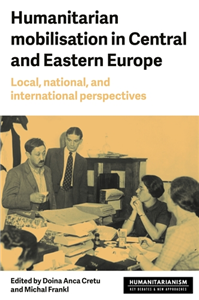
Humanitarian mobilisation in Central and Eastern Europe
Local, national, and international perspectives
by Doina Anca Cretu, Michal Frankl
By focusing on aid Central and Eastern Europe, the volume adds to the existent scholarly explorations of modern humanitarianism, its actors and practices. In the twentieth century, aid workers assisted victims of war and earthquakes, delivered food, supported health care, provided childcare, or sheltered refugees. The contributors not only reconstruct these diverse histories and their protagonists, but also bring international, national, and local actors together: from grassroots activists to private associations to state-driven "socialist humanitarians" to large Western aid organizations. In doing so, they challenge the often unidirectional, from West-to-East, and asymmetrical perspective on donor-recipient relationships in humanitarian processes.
-
Trusted Partner
 Literature & Literary StudiesJanuary 2013
Popular protest in late-medieval Europe
Italy, France and Flanders
by Samuel Kline Cohn
The documents in this stimulating volume span from 1245 to 1424 but focus on the 'contagion of rebellion' from 1355 to 1382 that followed in the wake of the plague. They comprise a diversity of sources and cover a variety of forms of popular protest in different social, political and economic settings. Their authors range across a wide political and intellectual horizon and include revolutionaries, the artistocracy, merchants and representatives from the church. They tell gripping and often gruesome stories of personal and collective violence, anguish, anger, terror, bravery, and foolishness. Of over 200 documents presented here, most have been translated into English for the first time, providing students and scholars with a new opportunity to compare social movements across Europe over two centuries, allowing a re-evaluation of pre-industrial revolts, the Black Death and its consequences for political culture and action. This book will be essential reading for those seeking to better understand popular attitudes and protest in medieval Europe.
-
Trusted Partner
 Humanities & Social SciencesApril 2026
Visions for Europe
Debating the future of the European Union with great political thinkers
by João Labareda
This book offers a fresh look at some of the most challenging dilemmas of European integration and proposes innovative solutions to them by building on perspectives and insights from twelve classical authors in the history of political thought. The book simultaneously offers an original introduction to critical debates in EU studies and makes key political thinkers more accessible to contemporary readers by presenting present-day policy applications of their doctrines. While each chapter discusses a specific challenge for the EU, five key themes appear recurrently throughout the book: (i) the prospects for peace in Europe; (ii) the conditions for an inclusive EU democracy; (iii) socioeconomic inequalities in the EU; (iv) strategies to promote political change in Europe; and (v) the requisites for a fully-fledged EU citizenship. The authors discussed are Plato, Aristotle, Augustine, Machiavelli, Hobbes, Rousseau, Kant, Wollstonecraft, Marx, Arendt, Rawls and hooks.
-
Trusted Partner
 Humanities & Social SciencesJanuary 2021
Towards a just Europe
by João Labareda, Paul Tobin, Dimitris Papadimitriou, Kathryn Simpson
-
Trusted Partner
 Business, Economics & LawFebruary 2025
The political economy of Turkey’s integration to Europe
Uneven development and hegemony
by Elif Uzgören
This book examines Turkey's integration with Europe within structural dynamics of globalisation from a critical political economy perspective. Critical approaches have been sidelined within European Studies. Turkish enlargement is not an exemption. The analyses are based on original data generated by 109 interviews conducted in 2010, 2017 and 2023 with five categories of actors: representatives of capital and labour, political parties, state officials, and struggles around ecology, patriarchy and migration. It argues that the pro-membership was hegemonic in the 2000s which was contested by two rival class strategies, Ha-vet and neo-mercantilism. In the 2010s, pro-membership is no longer hegemonic within rising critical tone of social forces supporting rival class strategies. Unevenness of Turkey's trajectory of integration to Europe is likely to be consolidated through market integration and management of migration through transactional approach.
-
Trusted Partner
 Literature & Literary StudiesJanuary 2014
Court and civic society in the Burgundian Low Countries c.1420–1530
by Andrew Brown, Graeme Small
This volume is the first ever attempt to unite and translate some of the key texts which informed Johan Huizinga's famous study of the Burgundian court, The Waning of the Middle Ages, a work which has never gone out of print. It combines these texts with sources that Huizinga did not consider, those that illuminate the wider civic world that the Burgundian court inhabited and the dynamic interaction between court and city. Through these sources, and an introduction offering new perspectives on recent historiography, the book tests whether Huizinga's controversial vision of the period still stands. Covering subjects including ceremonial events, such as the spectacles and gargantuan banquets that made the Burgundian dukes the talk of Europe, the workings of the court, and jousting, archery and rhetoric competitions, the book will appeal to students of late medieval and early modern Europe and to those with wider interests in court culture, ritual and ceremony.
-
Trusted Partner
-
Trusted Partner
-
Trusted Partner
 Humanities & Social SciencesJanuary 2013
The Jews in western Europe, 1400–1600
by John Edwards
As European politics, society, economy and religion underwent epoch-making changes between 1400 and 1600, the treatment of Europe's Jews by the non-Jewish majority was, then as in later periods, a symptom of social problems and tensions in the Continent as a whole. Through a broad-ranging collection of documents, John Edwards sets out to present a vivid picture of the Jewish presence in European life during this vital and turbulent period. Subjects covered include the Jews' own economic presence and culture, social relations between Jews and Christians, the policies and actions of Christian authorities in Church and State. He also draws upon original source material to convey ordinary people's prejudices about Jews, including myths about Jewish 'devilishness', money-grabbing, and 'ritual murder' of Christian children. Full introductory and explanatory material makes accessible the historical context of the subject and highlights the insights offered by the documents as well as the pitfalls to be avoided in this area of historical enquiry. This volume aims to provide a coherent working collection of texts for lecturers, teachers and students who wish to understand the experience of Jewish Europeans in this period.
-
Trusted Partner
 Humanities & Social SciencesApril 2020
The British political elite and Europe, 1959-1984
A higher loyalty
by Bob Nicholls
This book offers an original interpretation of Britain's relationship with Europe over a 25 year period: 1959-84 and advances the argument that the current problems over EU membership resulted from much earlier political machinations. This evidence based account of the seminal period analyses the applications for EEC membership, the 1975 referendum, and the role of the press. Was the British public misled over the true aims of the European project? How significant was the role of the press in changing public opinion from anti, to pro Common Market membership? Why, after over 40 years since Britain became a member of the European community, does the issue continue to deeply divide not only the political elite, but also the British public? These, and other pertinent questions are answered in this timely book on a subject that remains topical and highly controversial.
-
Trusted Partner
 MedicineMarch 2024
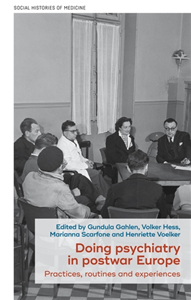
Doing psychiatry in postwar Europe
Practices, routines and experiences
by Gundula Gahlen, Henriette Voelker, Volker Hess, Marianna Scarfone
Doing psychiatry engages with the history of European psychiatry in the second half of the twentieth century through a close and fresh look at the practices that contributed to reshape the mental health field. Case studies from across Europe allow readers to appreciate how new 'ways of doing' contributed to transform the field, beyond the watchwords of deinstitutionalisation, the prescription of neuroleptics, centrality of patients and overcoming of asylum-era habits. Through a variety of sources and often adopting a small-scale perspective, the chapters take a close look at the way new practices emerged and at how they installed themselves, eventually facing resistance, injecting new purposes and contributing to enlarging psychiatry's fields of expertise, therefore blurring its once-more-defined boundaries.
-
Trusted Partner
 Humanities & Social SciencesOctober 2020
The European Union and its eastern neighbourhood
Europeanisation and its twenty-first-century contradictions
by Mike Mannin, Paul Flenley
This volume is timely in that it explores key issues which are currently at the forefront of the EU's relations with its eastern neighbours. It considers the impact of a more assertive Russia, the significance of Turkey, the limitations of the Eastern Partnership with Belarus and Moldova, the position of a Ukraine in crisis and pulled between Russia and the EU, security and democracy in the South Caucasus. It looks at the contested nature of European identity in areas such as the Balkans. In addition it looks at ways in which the EU's interests and values can be tested in sectors such as trade and migration. The interplay between values, identity and interests and their effect on the interpretation of europeanisation between the EU and its neighbours is a core theme of the volume.
-
Trusted Partner
 Humanities & Social SciencesOctober 2021
The EU and crisis response
by Roger Mac Ginty, Sandra Pogodda, Oliver P. Richmond
-
Trusted Partner
 Humanities & Social SciencesApril 2024
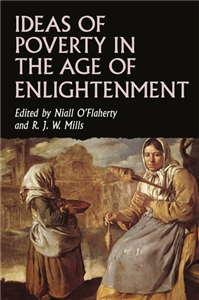
Ideas of poverty in the Age of Enlightenment
by Niall O’Flaherty, Robin Mills
This collection of essays examines the ways in which poverty was conceptualised in the social, political, and religious discourses of eighteenth-century Europe. It brings together experts with a wide range of expertise to offer pathbreaking discussions of how eighteenth-century thinkers thought about the poor. Because the theme of poverty played important roles in many critical issues in European history, it was central to some of the key debates in Enlightenment political thought throughout the period, including the controversies about sovereignty and representation, public and private charity, as well as questions relating to crime and punishment. The book examines some of the most important contributions to these debates, while also ranging beyond the canonical Enlightenment thinkers, to investigate how poverty was conceptualised in the wider intellectual culture, as politicians, administrators and pamphlet writers grappled with the issue.
-
Trusted Partner
Humanities & Social SciencesJune 2026
Women in exile in early modern Europe and the Americas
by Linda Levy Peck, Adrianna E. Bakos
-
Trusted Partner
 Humanities & Social SciencesJanuary 2020
The life–cycle in Western Europe, c.1300–c.1500
by S. H. Rigby, Deborah Youngs
This is the first study to examine the entire life cycle in the Middle Ages. Drawing on a wide range of secondary and primary material, the book explores the timing and experiences of infancy, childhood, adolescence and youth, adulthood, old age and, finally, death. It discusses attitudes towards ageing, rites of passage, age stereotypes in operation, and the means by which age was used as a form of social control, compelling individuals to work, govern, marry and pay taxes. The wide scope of the study allows contrasts and comparisons to be made across gender, social status and geographical location. It considers whether men and women experienced the ageing process in the same way, and examines the differences that can be discerned between northern and southern Europe. The fourteenth and fifteenth centuries suffered famine, warfare, plague and population collapse. This fascinating consideration of the life cycle adds a new dimension to the debate over continuity and change in a period of social and demographic upheaval.
-
Trusted Partner
 Humanities & Social SciencesSeptember 2008
Agricultural policy in Europe
by Alan Greer, Dimitris Papadimitriou, Simon Bulmer, Andrew Geddes, Peter Humphreys
'Agricultural policy in Europe', available for the first time in paperback, provides a unique comparative analysis of the UK, France, Poland, the Netherlands, Greece and Ireland, using up-to-date material on CAP reform, world trade liberalisation, animal disease, rural development and the environment. In its core argument that Europe has a Common Agricultural Policy in name only, the study offers a distinctive interpretation of contemporary policies for agriculture and rural development. Policy is considerably more diverse than usually recognised, and also varies across different policy stages such as agenda setting, formulation and implementation. This diversity is the result of a multilevel policy process in which global, regional and local actors play a key role alongside the institutions of the EU. Yet nation states are central. Despite the existence of the CAP, substantial policy variations reflect different national economies, cultures, priorities and interests, usually mediated through different types of policy networks. Far from greater policy integration, the pressures for diversity have increased in recent years, notably through world trade liberalisation, environmental concern and EU enlargement. With continuing controversy about the future direction and powers of the EU, this groundbreaking book sheds new light on the extent to which agricultural policy in Europe is common. It goes beyond formal legal structures and the rhetoric of popular debate to look at what actually happens in a complex policy process that is both multilevel and multi stage. The result is a very different picture in which agricultural policy is considerably more diverse and fragmented than usually assumed. ;
-
Trusted Partner
 Humanities & Social SciencesSeptember 2021
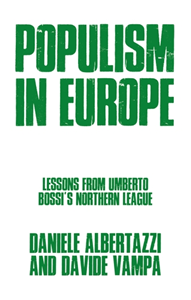
Populism in Europe
Lessons from Umberto Bossi's Northern League
by Davide Vampa, Daniele Albertazzi
Populism in Europe offers a detailed and systematic analysis of the ideology, electoral and governmental performances, organisational model, type of leadership and member activism of the Northern League under its founder, Umberto Bossi (1991-2012). Based on a wealth of original research, the book identifies the Northern League's consistent and coherent ideology, its strong leadership and its ability to create communities of loyal partisan activists as key ingredients of its success. Through their in-depth analysis, Albertazzi and Vampa show that the League has much to teach us about how populists can achieve durability and rootedness and how parties of all kinds can still benefit from a committed and dedicated membership today.


