
Thornapple Press
Publisher of bestselling and award-winning books including Polysecure, More Than Two and Love’s Not Color Blind.
View Rights Portal
Publisher of bestselling and award-winning books including Polysecure, More Than Two and Love’s Not Color Blind.
View Rights Portal
Home to poetry slammers / stage poets and their stages-texts as well as novels / fictional works. What have all our authors in common? They can perform on stages what make every reading quite entertaining. When a stage-experienced actor and poetry slammer writes a dragon-novel for yound readers / listeners, then it's beatuful to read, listen and his readings are always fascinating. That way, the young dragon Fionrir, princess Quirina and their most unusual pack gained a intensely interacting fanbase. As the other stage-performers do.
View Rights Portal


This collection tells the story of Thomas Becket's turbulent life, violent death and extraordinary posthumous acclaim in the words of his contemporaries. The only modern collection from the twelfth-century Lives of Thomas Becket in English and features all his major biographers, including many previously untranslated extracts. Providing both a valuable glimpse of the late twelfth-century world, and an insight into the minds of those who witnessed the events. By using contemporary sources, this book is the most accessible way to study this central episode in medieval history. Thomas Becket features prominently in most medieval core courses. This book allows the subject to be taught as never before, and is highly suitable as a set text.
 Trusted Partner
Trusted Partner
Trusted Partner
 Trusted Partner
 Trusted Partner

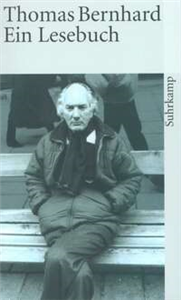
Das vorliegende Lesebuch versteht sich als Vorschlag und Einladung zu einer Erkundung des Bernhardschen Schreibens, dessen begriffs- und geschichtenzerstörende Irritationskraft den Leser in seinen Sog zieht und ihn jene Haltung einnehmen läßt, die Thomas Bernhard als die seinem Werk angemessene beschrieben hat: »Man soll sich vorstellen, man ist im Theater, man macht mit der ersten Seite einen Vorhang auf, der Titel erscheint, totale Finsternis – langsam kommen aus dem Hintergrund, aus der Finsternis heraus, Wörter, die langsam zu Vorgängen äußerer und innerer Natur, gerade wegen ihrer Künstlichkeit besonders deutlich zu einer solchen werden.«
Trusted Partner

30 Jahre alt, ohne Resonanz auf seine bis dahin veröffentlichten drei Gedichtbände, vom eigenen überragenden schriftstellerischen Können allerdings überzeugt, schreibt Thomas Bernhard im Oktober 1961 an Siegfried Unseld: "Vor ein paar Tagen habe ich an Ihren Verlag ein Prosamanuskript geschickt. Ich kenne Sie nicht, nur ein paar Leute, die Sie kennen. Aber ich gehe den Alleingang." Obwohl der Suhrkamp Verlag das Manuskript ablehnte, gingen der Alleingänger und der Verleger seit dem Erscheinen von Bernhards erstem Roman "Frost" 1963 gemeinsam den Weg, der den Autor in die Weltliteratur führte. In den etwa 500 Briefen zwischen beiden entwickelt sich ein einzigartiges Zwei-Personen-Schauspiel: Mal ist es eine Tragödie, wenn etwa Bernhard die aus seinen Werken bekannten Schimpftiraden auf den Verleger losläßt, der seinerseits auf die Überzeugungskraft des Arguments setzt. Dann gibt Bernhard ein Kammerspiel mit Unseld als Held – 1973 schreibt er ihm: "mit grösster Aufmerksamkeit, mit allen Möglichkeiten, gehe ich gern mit Ihnen." 1984 agieren beide, bei der Beschlagnahme von "Holzfällen", als Kämpfer für die Literatur in einem von Dritten inszenierten Schurkenstück. Es dominiert das Beziehungsdrama: Der Autor stellt die für sein Werk und seine Person unabdingbaren Forderungen. Der Verleger seinerseits weiß, daß gerade bei Bernhard rücksichtslose Selbstbezogenheit notwendige Voraussetzung der Produktivität ist. Solch einen dramatischen Briefwechsel zwischen Autor und Verleger, in dem bei jeder Zeile alles auf dem Spiel steht, kennt das Publikum bislang nicht.
Trusted Partner

»Wenn Shakespeare der größte Dichter und Mietti der größte Schauspieler, dann ist Unseld der größte Verleger.« »Thomas Bernhard und Frankfurt«, erzählt vom ersten Kontakt des Autors zum Verlag Suhrkamp und dessen Beziehung zum Verleger Siegfried Unseld.
Trusted Partner
 Trusted Partner


Rund 170 historische Fotos und Ansichtskarten, die hier zum größten Teil erstmals veröffentlicht werden, entführen den Leser in das Venedig Thomas Manns. Reinhard Pabst führt auf den Spuren des Dichters durch die Lagunenstadt und zu den Originalschauplätzen der Novelle Der Tod in Venedig. Wie einst Gustav Aschenbach, der Held der Novelle, kann sich der Leser im luxuriösen »Grand Hôtel des Bains« auf dem Lido ergehen, das mondäne Badeleben genießen und sich dem »Vergnügen an den Bildern eines soignierten Strandes« hingeben, an dem sich auch Arthur Schnitzler, Peter Altenberg, Karl Kraus, Georg Trakl und viele andere tummelten.Ein einzigartiges Buch über eine vergangene, faszinierende Epoche.
Trusted Partner
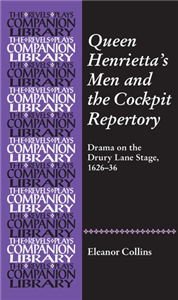
This book offers the first extended study of Queen Henrietta's Men, one of Caroline London's most important professional playing companies. The drama that the company performed at the Cockpit between 1626 and 1636 includes many underexplored and neglected plays from the period alongside more celebrated works by dramatists including James Shirley and John Ford, and a number of Elizabethan and Jacobean revivals. Queen Henrietta's Men and the Cockpit Repertory explores the material and cultural conditions under which the company operated, and offers an account of the dynamics that held between new drama written for the company and the revivals staged alongside that fare. In doing so, this account illuminates the ways in which an appreciation of the work of Queen Henrietta's Men can offer new perspectives on theatre history and the categories of company and repertory that have shaped it.
Trusted Partner

Victorian demons provides the first extensive exploration of largely middle-class masculinities in crisis at the fin de siècle. It analyses how ostensibly controlling models of masculinity became demonised in a variety of literary and medical contexts, revealing the period to be much more ideologically complex than has hitherto been understood, and makes a significant contribution to Gothic scholarship. Andrew Smith demonstrates how a Gothic language of monstrosity, drawn from narratives such as 'The Strange Case of Dr Jekyll and Mr Hyde' and 'Dracula', increasingly influenced a range of medical and cultural contexts, destabilising these apparently dominant masculine scripts. He provides a coherent analysis of a range of examples relating to masculinity drawn from literary, medical, legal and sociological contexts, including Joseph Merrick ('The Elephant Man'), the Whitechapel murders of 1888, Sherlock Holmes's London, the writings and trials of Oscar Wilde, theories of degeneration and medical textbooks on syphilis.
Trusted Partner

»Die Menschheit«, so Kant in seiner Vorlesung über Physische Geographie, »ist in ihrer größten Vollkommenheit in der Race der Weißen. Die gelben Indianer haben schon ein geringeres Talent. Die Neger sind weit tiefer, und am tiefsten steht ein Theil der amerikanischen Völkerschaften.« Die Vorstellung, der Entwicklungsstand der Menschen sei bedingt durch ihre ethnische Abstammung, ist tief verwurzelt im westlichen Denken. Thomas McCarthy zeigt, dass Rassismus und Imperialismus von Anfang an wesentliche Elemente der modernen Weltordnung waren. Ausgehend vom philosophischen Erbe der Aufklärung entwirft er eine kritische Theorie humaner Entwicklung, die für einen universalistischen Multikulturalismus eintritt.
Trusted Partner
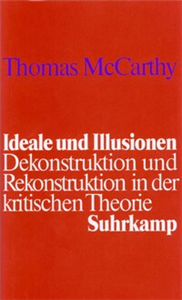
Kant kommt in seiner kritischen Theorie zu dem Schluß, dass unser Denken, das einerseits durch die Ideen der Vernunft immer wieder in die Irre geführt wird, andererseits nicht ohne diese Ideen auskommen kann. Wir bedürfen der Einsicht, daß es der »konstitutive Gebrauch« dieser Ideen ist, der uns notwendig zu verfehlten metaphysischen Annahmen verleitet, während ihr regulativer Gebrauch für uns Vernunftwesen unentbehrlich ist. Diese Grundeinsicht der kritischen Philosophie bringt Thomas McCarthy in den hier vorgelegten Untersuchungen in wechselnden Kontexten zur Anwendung. Die Vernunft, deren Kritik die Philosophen heute beschäftigt, kann allerdings nicht mehr dieselbe sein wie zu Kants Zeiten. Es ist eine Vernunft, die nicht mehr zu trennen ist von den gesellschaftlich geprägten Situationen, in denen sie sich manifestiert: Es ist eine verkörperte, durch kulturelle und soziale Praktiken vermittelte Vernunft. Kurz, die philosophische Kritik kann heute nicht mehr der »reinen« Vernunft gelten, sondern sie bezieht sich notgedrungen auf eine »unreine« Vernunft.
Trusted Partner

This book is our principal source for the history of the Kingdom of Sicily in the troubled years between the death of its founder, King Roger, in February 1154 and the spring of 1169. It covers the reign of Roger's son, King William I, known to later centuries as 'the Bad', and the minority of the latter's son, William II 'the Good'. The book illustrates the revival of classical learning during the twelfth-century renaissance. It presents a vivid and compelling picture of royal tyranny, rebellion and factional dispute at court. Sicily had historically been ruled by tyrants, and that the rule of the new Norman kings could be seen, for a variety of reasons, as a revival of that classical tyranny. A more balanced view of Sicilian history of the period 1153-1169 has been provided as an appendix to the translation in the section of the contemporary world chronicle ascribed to Archbishop Romuald II of Salerno, who died in April 1181. In particular the chronicle of Romuald enables us to see how the papal schism of 1159 and the simultaneous dispute between the German Emperor Frederick Barbarossa and the north Italian cities affected the destiny of the kingdom of Sicily. In contrast to the shadowy figure of Hugo Falcandus, the putative author of the principal narrative of mid-twelfth-century Sicilian history, Romuald II, Archbishop of Salerno 1153-1181, is well-documented.
Trusted Partner
 Trusted Partner
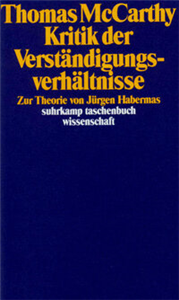
Thomas McCarthy liefert eine überzeugende Rekonstruktion der Einheit des Werkes von Habermas und vermittelt den historischen Zusammenhang, in dem die einzelnen Stücke dieses work in progress ihren Ort haben. So gelingt es ihm einerseits, Habermassche Theorie schärfer zu fassen, andererseits, präzise Einwände zu formulieren. Insbesondere bei der Diskussion von Fragen einer materialistischen Erkenntnistheorie, der Methodologie und philosophischen Hermeneutik sowie bei der Problematik allgemeiner Rationalitätsstrukturen erweist sie McCarthy als ein produktiver Kritiker, der vorgefundene Argumentationen entscheidend weiterführt. Das Ziel der Arbeit ist »einen genauen, systematischen und umfassenden Überblick über (die Habermasschen) Ideen selbst sowie über die ihnen zugrunde liegenden Argumente« zu liefern. Zu diesem Zweck wurden fünf Beiträge angefügt, die sich mit den wichtigsten Veröffentlichungen von Jürgen Habermas seit 1980 beschäftigen – der Theorie des kommunikativen Handelns und dem Philosophischen Diskurs der Moderne .
Trusted Partner
Trusted Partner
Trusted Partner

The French empire at war draws on original research in France and Britain to investigate the history of the divided French empire - the Vichy and the Free French empires - during the Second World War. What emerges is a fascinating story. While it is clear that both the Vichy and Free French colonial authorities were only rarely masters of their own destiny during the war, preservation of limited imperial control served them both in different ways. The Vichy government exploited the empire in an effort to withstand German-Italian pressure for concessions in metropolitan France and it was key to its claim to be more than the mouthpiece of a defeated nation. For Free France too, the empire acquired a political and symbolic importance which far outweighed its material significance to the Gaullist war effort. As the war progressed, the Vichy empire lost ground to that of the Free French, something which has often been attributed to the attraction of the Gaullist mystique and the spirit of resistance in the colonies. In this radical new interpretation, Thomas argues that it was neither of these. The course of the war itself, and the initiatives of the major combatant powers, played the greatest part in the rise of the Gaullist empire and the demise of Vichy colonial control.



