
Hotel de las Ideas
Hotel de las ideas is a cooperative, with 10 co-founders.
View Rights Portal


In this book Tatjana van Strien, the author of the Dutch Eating Behavior Questionnaire (DEBQ), presents a scientific alternative for all the ‘miracle solutions’ to lose weight. Based on more than 25 years of scientific research, she offers a self-test-method which enables readers to explore what is the cause of their eating problem, what they can do about it, and ultimately lose weight and keep it off. Target Group: people who want to lose weight, dieticians, doctors, psychologists.


For more than 500 years, the clock has dictated the rhythm of life in the Western World. Clocks were impossible to miss: they were on church towers, at railway stations and factories, they struck the hours and urged people to hurry. But these days, clocks and the punctuality they insisted upon are on the retreat. Nowadays, we are rarely asked “What is the time?” and it is no longer customary to present golden watches or clocks to commemorate important life events. Now we rely on mobile devices and displays to tell us the time, the steady stroke of the rigid clock has been replaced by a more flexible network: we stream TV programmes when we feel like it, we listen to podcasts at any time; chatting, flirting and dating no longer requires prior agreement on time and place. However, what will follow after we have freed ourselves from the chains of the clock god? Emeritus Professor of Economics and time expert Karlheinz A. Geißler shows us that when the influence of the clock disappears, liberating perspectives emerge for experiencing time in social relationships – beyond time pressure and dictates of punctuality.
 Trusted Partner

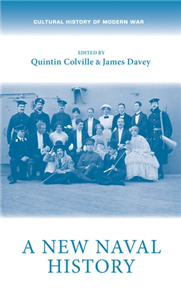
A New Naval History brings together the most significant and interdisciplinary approaches to contemporary naval history. The last few decades have witnessed a transformation in how this field is researched and understood and this volume captures the state of a field that continues to develop apace. It examines - through the prism of naval affairs - issues of nationhood and imperialism; the legacy of Nelson; the socio-cultural realities of life in ships and naval bases; and the processes of commemoration, journalism and stage-managed pageantry that plotted the interrelationship of ship and shore. This bold and original publication will be essential for undergraduate and postgraduate students of naval and maritime history. Beyond that, though, it marks an important intervention into wider historiographies that will be read by scholars from across the spectrum of social history, cultural studies and the analysis of national identity.
Trusted Partner
 Trusted Partner
A compelling biography of one of the most celebrated novels in the English language. The fourth and best-known of Virginia Woolf's novels, Mrs Dalloway is a modernist masterpiece that has remained popular since its publication in 1925. Its dual narratives follow a day in the life of wealthy housewife Clarissa Dalloway and shell-shocked war veteran Septimus Warren Smith, capturing their inner worlds with a vividness that has rarely been equalled. Mrs Dalloway: Biography of a novel offers new readers a lively introduction to this enduring classic, while providing Woolf lovers with a wealth of information about the novel's writing, publication and reception. It follows Woolf's process from the first stirrings in her diary through her struggles to create what was quickly recognised as a major advance in prose fiction. It then traces the novel's remarkable legacy to the present day. Woolf wrote in her diary that she wanted her novel 'to give life & death, sanity & insanity. to criticise the social system, & to show it at work, at its most intense.' Mrs Dalloway: Biography of a novel reveals how she achieved this ambition, creating a book that will be read by generations to come.
Trusted Partner

Jack Tar to Union Jack examines the intersection between empire, navy, and manhood in British society from 1870 to 1918. Through analysis of sources that include courts-martial cases, sailors' own writings, and the HMS Pinafore, Conley charts new depictions of naval manhood during the Age of Empire, a period which witnessed the radical transformation of the navy, the intensification of imperial competition, the democratisation of British society, and the advent of mass culture. Jack Tar to Union Jack argues that popular representations of naval men increasingly reflected and informed imperial masculine ideals in Victorian and Edwardian Britain. Conley shows how the British Bluejacket as both patriotic defender and dutiful husband and father stood in sharp contrast to the stereotypic image of the brave but bawdy tar of the Georgian navy. This book will be essential reading for students of British imperial history, naval and military history, and gender studies.
Trusted Partner
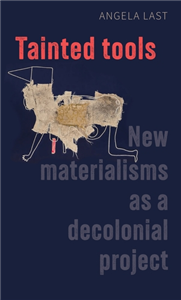
Tainted Tools makes a provocative intervention into the fraught intersection between new materialist and decolonial approaches. Despite a common project of challenging European philosophical and social categories and hierarchies, the discourses are considered incompatible. Most prominently, new materialisms have been accused of harbouring a White vision of the human while disregarding the racist resonances of the 'nonhuman'. The book traces this conflict to an earlier meeting point of new materialist and decolonial projects, which came about through the experimental combination of Marx and Nietzsche. Used to fight fascism, Stalinism and colonialism, this politically contentious fusion gradually became depoliticised, leading to unaddressed tensions today. While the book does not argue for a revival of these early 'new materialisms', it brings their strategies into dialogue with today's new materialisms and decolonial approaches to develop greater theoretical solidarity in times of crisis.
Trusted Partner

This book offers a new critical framework for understanding the processes of politicising and gendering care for older people and their manifestations in several European contexts. It interrogates how care for older adults varies across time and place while searching for an in-depth comprehension of how it becomes an arena of political struggle and the object of public policy in different countries and at various societal and political levels. It brings together multidisciplinary contributions that examine the issue of care for older people as a political concern from many angles, such as problematising care needs, long-term care policies, home care services, institutional services and family care. The contributions reveal the diversity of situations in which the processes of politicising and gendering care for older adults overlap, contradict or reinforce each other while leading to increased gender (in)equalities on different levels.
Trusted Partner
A unique guide to creating political theatre, produced by one of the UK's most exciting companies. Do It Yourself is a vital resource for anyone interested in exploring theatre culture grounded in and produced by working-class, multi-racial communities. Designed for artists, activists and community organisers, the book offers a step-by-step guide to creating political theatre that is relevant, impactful and rooted in the lives of everyday people. Common Wealth have spent fifteen years working at the cutting edge of political theatre. In Do It Yourself, they share their experimental and activist approach to performance-making, based on DIY principles and the belief that ground-breaking theatre can be made with anyone, anywhere, in ways that truly resonate with the communities it serves. Do It Yourself introduces Common Wealth's artistic and political ethos, provides unique insights into their most significant performances and offers practical exercises for creating your own work. But this is not just a manual. It is a celebration of culture as a collective endeavour, one that can challenge the status quo and inspire change.
Trusted Partner
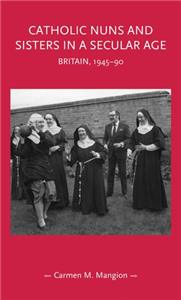
This is the first in-depth study of post-war female religious life. It draws on archival materials and a remarkable set of eighty interviews to place Catholic sisters and nuns at the heart of the turbulent 1960s, integrating their story of social change into a larger British and international one. Shedding new light on how religious bodies engaged in modernisation, it addresses themes such as the Modern Girl and youth culture, '1968', generational discourse, post-war modernity, the voluntary sector and the women's movement. Women religious were at the forefront of the Roman Catholic Church's movement of adaptation and renewal towards the world. This volume tells their stories in their own words.
Trusted Partner

We all die at the end offers a survey of contemporary end-of-the-world fiction, spanning literature, children's fiction, video games, theatre and film. It draws on eco-critical philosophy and narrative theory to show ways in which the climate crisis is reorienting storytelling in the face of foreseeable human extinction. In the process, it argues that such stories have a role to play in helping us come to terms with the severity and scale of the crisis that we face.
Trusted Partner
The double game of music imagines music education as a series of games - each with its own rules, play currency and players - to challenge readers to rethink the significance of music and musical upbringing in shaping social structures. Drawing on their own empirical research and a wide range of international contributions, the authors unravel the intertwining of social positioning and power hierarchies with players beliefs in the pure values and virtues of their games, whether these relate to parenting, children's play, schooling, academic pursuits, musical leisure activities or the television and music industries. In a world where music is often celebrated as an important tool for inclusion and democratisation, this groundbreaking book offers a timely critique, revealing complexities and contradictions that tend to be overlooked by teachers, researchers, politicians and others interested in the powers of music education.
Trusted Partner
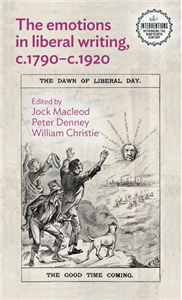
This volume of essays from a selection of distinguished international scholars is the first of its kind to explore in depth the emotional dimensions of liberal writing in Britain over the long nineteenth century. Addressing liberal writing in the public sphere rather than high political or parliamentary liberalism, it comprises a clear, context-setting introduction and eleven substantive chapters. The chapters analyse key texts and figures from the 1790s through to the 1920s and offer several different approaches to the central concern with the emotions and liberalism. These include examining the place of the emotions in the 'good life'; the social and political function of the emotions; emotional rhetoric in liberal writing; and liberal theories of the emotions. Both individually and as a collection, the essays provide an essential foundation for further scholarly work in this emerging field.
Trusted Partner

This book offers an original interpretation of Britain's relationship with Europe over a 25 year period: 1959-84 and advances the argument that the current problems over EU membership resulted from much earlier political machinations. This evidence based account of the seminal period analyses the applications for EEC membership, the 1975 referendum, and the role of the press. Was the British public misled over the true aims of the European project? How significant was the role of the press in changing public opinion from anti, to pro Common Market membership? Why, after over 40 years since Britain became a member of the European community, does the issue continue to deeply divide not only the political elite, but also the British public? These, and other pertinent questions are answered in this timely book on a subject that remains topical and highly controversial.
Trusted Partner

We moderns were the inhabitants of an age of impetuous forward movement and voracious discontent. Our main virtue was to increase our reach. Increasing our having and accelerating our being were the signposts towards the future. We just could not get enough. Using the blinkers of ignorance and self-anaesthesia, however, we managed to forget the tremendous costs incurred by this intoxication. Now disillusionment has set in. We look to the future with anxiety. We know that we have long since crossed a line and that a revision of our lifestyle is imminent. We have a bad feeling, and doubts about progress often give way to anger and rebellion. Which stocks of the modern narrative should we defend; which would we do better to let go? How will we even "be able to stop"? The path to a different society needs an attractive goal, because without the prospect of a different, better life, we will not move forward. We should start practising immediately. There is no time to lose.
Trusted Partner
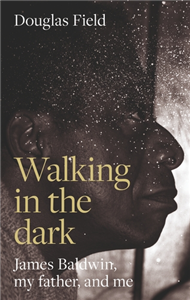
A moving exploration of the life and work of the celebrated American writer, blending biography and memoir with literary criticism. Since James Baldwin's death in 1987, his writing - including The Fire Next Time, one of the manifestoes of the Civil Rights Movement, and Giovanni's Room, a pioneering work of gay fiction - has only grown in relevance. Douglas Field was introduced to Baldwin's essays and novels by his father, who witnessed the writer's debate with William F. Buckley at Cambridge University in 1965. In Walking in the dark, he embarks on a journey to unravel his life-long fascination and to understand why Baldwin continues to enthral us decades after his death. Tracing Baldwin's footsteps in France, the US and Switzerland, and digging into archives, Field paints an intimate portrait of the writer's life and influence. At the same time, he offers a poignant account of coming to terms with his father's Alzheimer's disease. Interweaving Baldwin's writings on family, illness, memory and place, Walking in the dark is an eloquent testament to the enduring power of great literature to illuminate our paths.
Trusted Partner

This book is the first analysis of the dynamics of British press reporting of India and the attempts made by the British Government to manipulate press coverage as part of a strategy of imperial control. The press was an important forum for debate over the future of India and was used by significant groups within the political elite to advance their agendas. Focuses on a period which represented a critical transitional phase in the history of the Raj, witnessing the impact of the First World War, major constitutional reform initiatives, the tragedy of the Amritsar massacre, and the launching of Gandhi's mass movement. Asserts that the War was a watershed in official media manipulation and in the aftermath of the conflict the Government's previously informal and ad hoc attempts to shape press reporting were placed on a more formal basis.
Trusted Partner

At every level of human interaction new levels of identity-based tension are in evidence. Contributors to this book explore facets of fragmentation processes within systems of state and interstate organisation, how they influence the use of negotiation, and how negotiation might be used to effect renewed coherence. Following Anstey's (Ch1) introductory chapter framing the nature and shape of fragmentation dynamics, Zartman (Ch 2) argues that the use of negotiation as a process of conflict resolution is deeply shaped by identity groups whose internal coherence is dependent on sustaining a negative identity of others. International relations are no longer solely the realm of experienced diplomats but are shaped as Meerts (Ch3) points out by politicians seeking to be responsive to voting publics rather than wider concerns. Anstey digs into problems of fragmentation (Ch. 4) and Troitskiy (Ch 5) points out how a reluctant acceptance of the power of 'the other' can lead to a form of strategic stability in relations. Anstey and Meerts (Ch 6) point out in their analysis of the Israeli-Palestinian case as an identity conflict turned very bad. Guggenbuhl (Ch 7 ) reveals how structures and processes have been designed within the EU to prevent, contain and regulate conflicts to limit risks of confrontation and fragmentation. Schuessler (Ch 8) to advocates a shift away from a template or roadmap approach to EU membership to a cohesion based on non-dominance. There is still a strong desire on the part of some states, like Northern Macedonia, to become EU members, as reflected in Manton's (Ch 9). Paula Garzon and Frans Schram explain the success of the Colombia Peace Negotiations (Ch 10), while Odigie and da Rocha (Ch 11) analyse the struggle faced by ECOWAS to influence coup leaders in Mali to return to constitutional government and changes of government by constitutional means. Liang (Ch12) discusses how the internet as the modern vehicle of inter-state, inter-group and interpersonal communication has become weaponised. In Ch 13 Anstey draws some lessons from contributions to the compilation.
Trusted Partner

In this bold and exhilarating mix of memoir and writing guide, Melissa Febos tackles the emotional, psychological, and physical work of writing intimately while offering an utterly fresh examination of the storyteller's life and the challenges it presents. How do we write about the relationships that have formed us? How do we describe our bodies, their desires and traumas? What does it mean to have your writing, or living, dismissed as "navel-gazing"-or else hailed as "so brave, so raw"? And to whom, in the end, do our most intimate stories belong? Drawing on her journey from aspiring writer to acclaimed author and writing professor-via addiction and recovery, sex work and academia-Melissa Febos has created a captivating guide to the writing life, and a brilliantly unusual exploration of subjectivity, privacy, and the power of divulgence. Candid and inspiring, Body Work will empower readers and writers alike, offering ideas-and occasional notes of caution-to anyone who has ever hoped to see their true self reflecting back from the open page.
Trusted Partner

In this bold and exhilarating mix of memoir and writing guide, Melissa Febos tackles the emotional, psychological, and physical work of writing intimately while offering an utterly fresh examination of the storyteller's life and the challenges it presents. How do we write about the relationships that have formed us? How do we describe our bodies, their desires and traumas? What does it mean to have your writing, or living, dismissed as "navel-gazing"-or else hailed as "so brave, so raw"? And to whom, in the end, do our most intimate stories belong? Drawing on her journey from aspiring writer to acclaimed author and writing professor-via addiction and recovery, sex work and academia-Melissa Febos has created a captivating guide to the writing life, and a brilliantly unusual exploration of subjectivity, privacy, and the power of divulgence. Candid and inspiring, Body Work will empower readers and writers alike, offering ideas-and occasional notes of caution-to anyone who has ever hoped to see their true self reflecting back from the open page.


